The Application of Barcode Technology in Electronic Factory Material Management - A Deep Dive into Chapter 32: Future Roadmap - Barcode + Vision + AI |
Executive Summary (Chapter 32 Preview) |
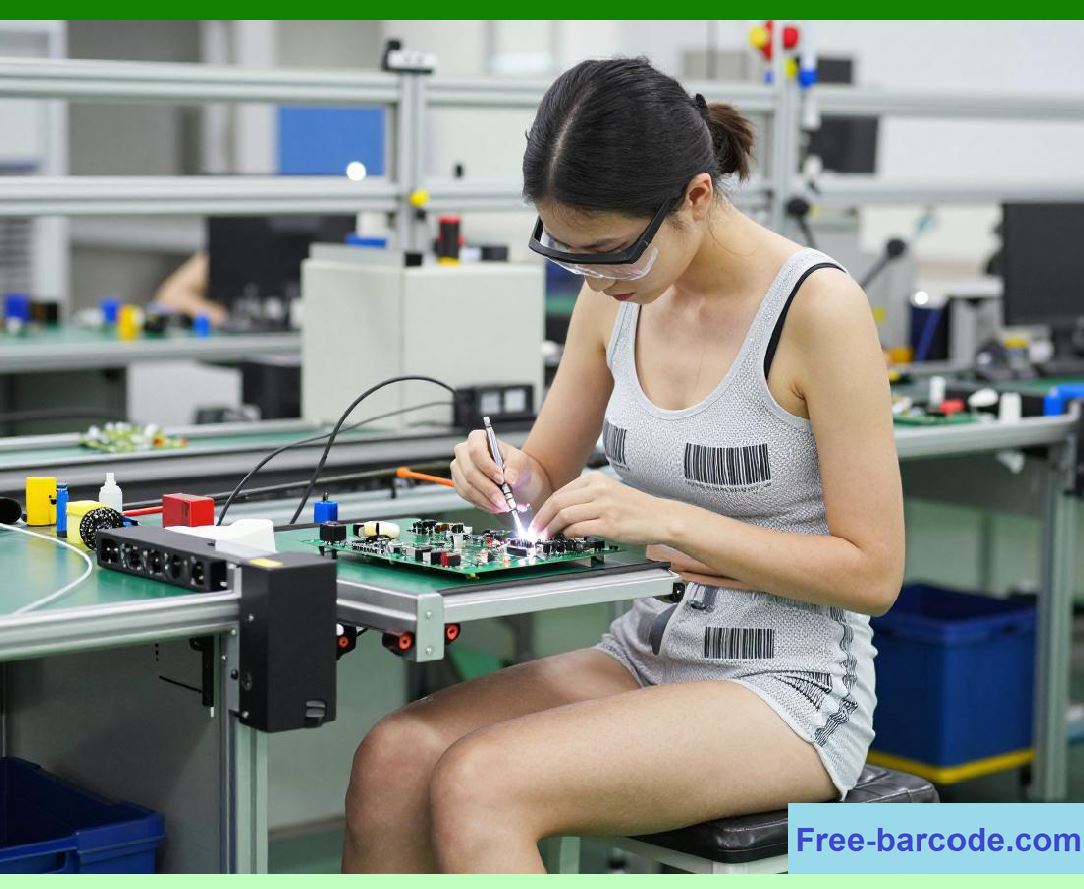
The barcode, in its simplest form, has been the backbone of electronics manufacturing for decades. But the future is not about replacing the barcode; it is about augmenting it. This chapter explores the next frontier: the convergence of barcode scanning with machine vision and Artificial Intelligence (AI). We will examine how advanced vision systems are now capable of reading barcodes and simultaneously inspecting component orientation, solder joint quality, and PCB fiducial alignment in a single pass. We will explore how AI is being applied to predict label wear and automatically request reprints before a barcode becomes unreadable, transforming a passive tracking system into a proactive governance system. This roadmap describes the shift from 'passive tracking' to 'predictive governance,' where material identification, quality inspection, and process control are fused into an intelligent, closed-loop ecosystem. Real-world examples from Honeywell, SATO, UnitX, ViTrox, and Hikrobot will illustrate how American and global technology leaders are building the factories of the future. |
|
Chapter 32: Future Roadmap - Barcode + Vision + AI |
32.1 Closing the Loop: From Tracking to Governance |
Throughout this guide, we have explored how barcode technology enables material tracking at every stage of the electronics manufacturing lifecycle. But the industry is at an inflection point. The fundamental question is no longer 'Can we track this component' but 'What can we do with the data generated by this scan' The future is not about replacing the barcode with something newer; it is about augmenting it with intelligence. |
The convergence of three technologies is driving this transformation: barcodes provide the foundational digital identity and the universal key to the material master database; machine vision provides the eyes that can read barcodes under challenging conditions while simultaneously inspecting the component and the assembly; and Artificial Intelligence (AI) provides the brain that can analyze scan data, predict failures, and close the loop between production, quality, and procurement . |
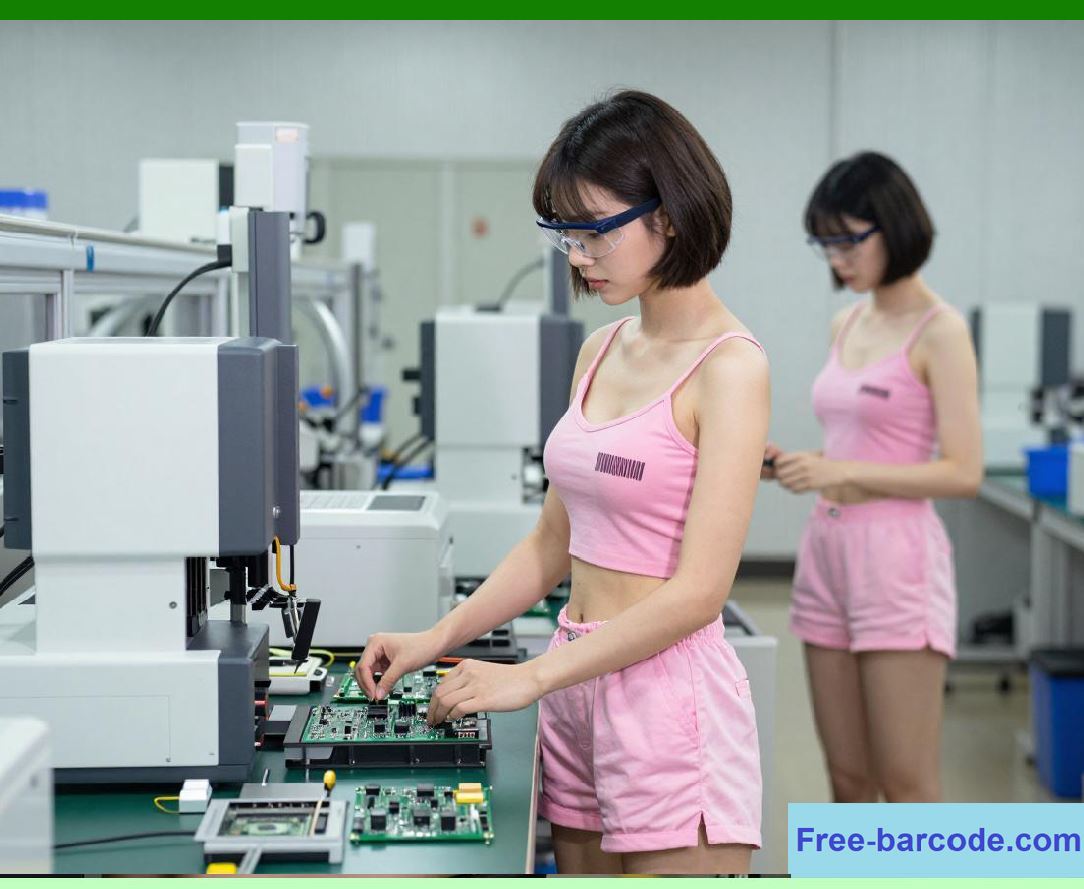
This chapter explores this convergence. We will examine how machine vision systems are now capable of reading barcodes and simultaneously inspecting the component's orientation, verifying solder joint quality, and checking PCB fiducial alignment . We will explore how AI is being applied to predict label wear and trigger automatic reprints before a barcode becomes unreadable . And we will see how these technologies are being integrated into a unified ecosystem that provides end-to-end traceability and intelligence. |
|
32.2 The State of the Art: Current Trends Shaping the Future |
The transformation is already underway. Market research indicates that the global machine vision market is valued at approximately USD 15.09 billion in 2024 and is expected to grow at a robust CAGR of 10.69% through 2035 . This growth is driven by the escalating need for faster production cycles, consistent product quality, and rising labor costs . Industries such as electronics, semiconductors, and logistics are integrating machine vision systems for tasks like barcode reading, assembly verification, and surface defect detection . |
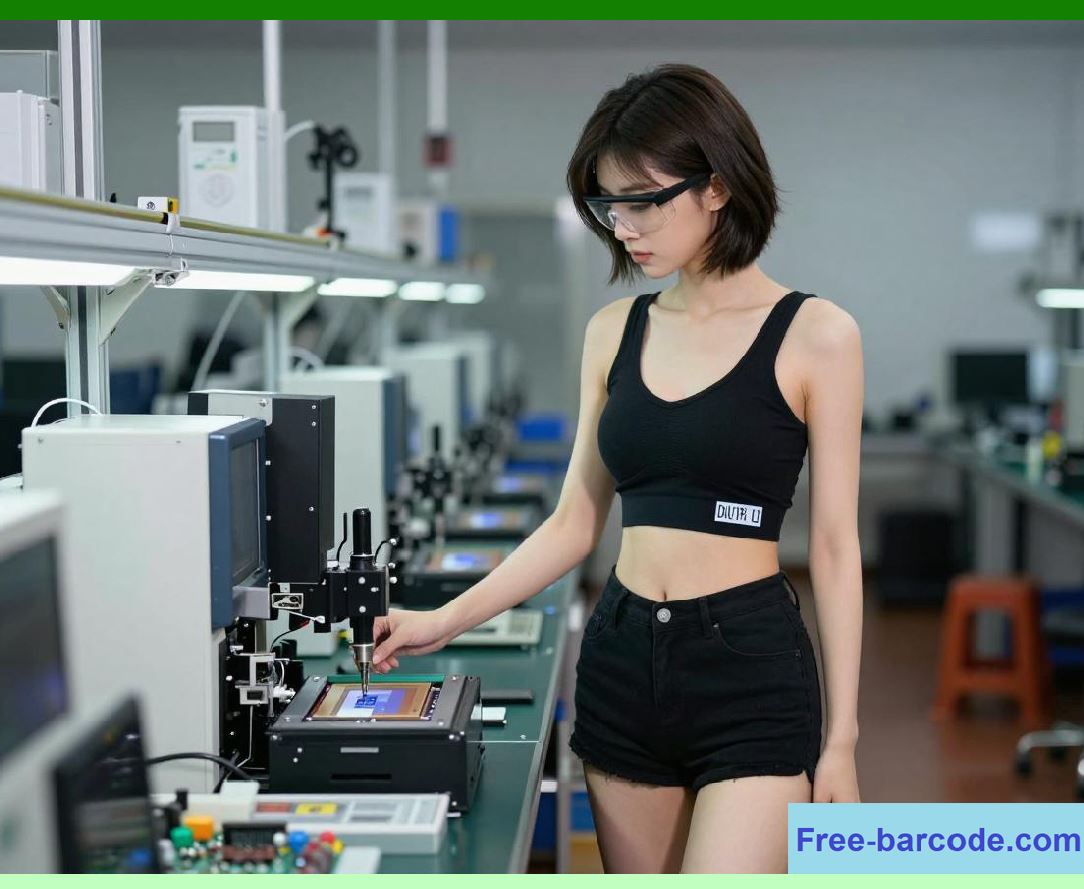
In electronics manufacturing, this integration is most visible in SMT assembly, advanced packaging, and semiconductor inspection . ViTrox Americas, for example, is demonstrating advanced inspection technologies designed to deliver 'unmatched accuracy, traceability, and efficiency across SMT, semiconductor, and box build applications' . Their VisionXpert XS Series offers 'high-speed 1D/2D code reading and barcode scanning for seamless traceability in demanding manufacturing operations' . |
A key driver of this trend is the recognition that a defect becomes exponentially more expensive the further it moves downstream. As a case study from UnitX notes, 'In SMT and wire harness assembly, the cost of a defect increases exponentially the further it gets down the line' . The solution is to integrate inspection and identification at the earliest possible stage. |
|
32.3 Vision: The Eyes That See Beyond the Barcode |
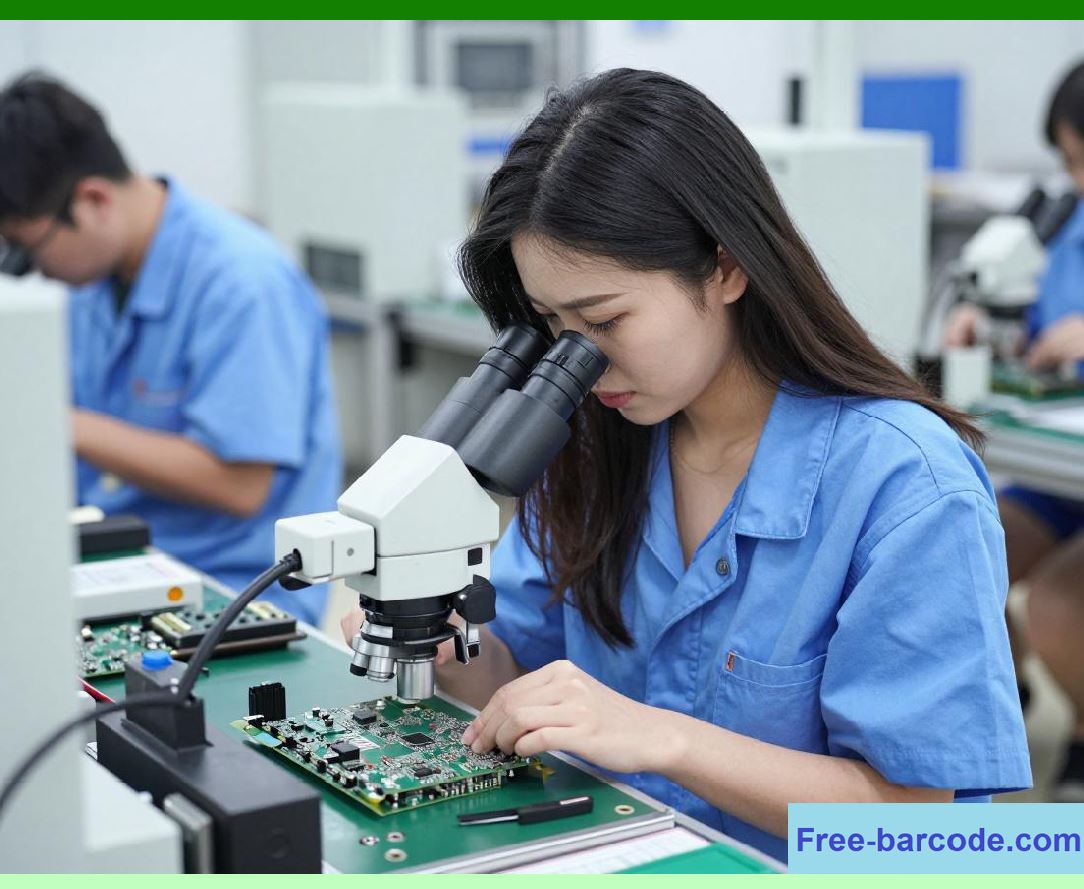
Machine vision is the 'eyes' of the smart factory. Modern machine vision systems are not limited to reading barcodes. They can inspect components for defects, verify orientation, and measure dimensions. |
32.3.1 Barcode Scanning and Quality Inspection in a Single Pass |
One of the most important trends is the integration of barcode scanning and quality inspection into a single device. Instead of a separate barcode reader and a separate inspection camera, a single smart camera or vision system performs both functions. |
As the Research and Markets report on PCB automatic labeling notes, 'High precision machine vision systems have moved from basic code verification to real-time, adaptive positioning that compensates for board warpage and component tolerance variations' . This leap in accuracy has reshaped expectations for labeling fidelity across sectors with zero-defect tolerances . |
The VisionXpert XS Series from ViTrox exemplifies this integration, offering 'high-speed 1D/2D code reading and barcode scanning for seamless traceability' . Similarly, the SC1000 Smart Camera from Hikrobot integrates 'six advanced tools---Pattern Matching, Colour Detection, Object Counting, Measurement Tools, Logic Functions, and Basic OCR---enabling versatile and precise visual inspection capabilities' . |
32.3.2 Micro-Inspection and Miniaturization |
As electronic components continue to shrink, the demands on vision systems increase. Components like 0201mm (008004) resistors are now common, and inspection systems must be able to read barcodes and inspect these tiny components with extreme precision . |
ViTrox offers the V510i 3D SEMI AOI with 8¦Ìm resolution, capable of inspecting mirrored and reflective surfaces, as well as 0201mm micro-components . For semiconductor applications, the V510i 3D MicroAOI delivers ultra-high 2.25¦Ìm resolution for precise wire bond and die inspection . |
32.3.3 Integration with Automated Handling |
Machine vision systems are also being integrated with robotics and automated handling equipment. ViTrox's V510iR combines '3D side imaging with inline robotics' for conformal coating inspection and thickness measurement . The V9i XL ARV is a 'large-format robotic vision platform (840mm x 620mm)' designed for post-selective and wave solder inspection . |
This integration enables a vision system to not only read a barcode but also guide a robotic arm to perform an inspection or repair operation based on the data encoded in the barcode. The barcode becomes the instruction set for the machine. |
|
32.4 AI: The Brain That Predicts and Governs |
Artificial Intelligence is the 'brain' that transforms passive tracking into proactive governance. Instead of simply recording transactions and raising alerts when errors occur, AI can analyze patterns, predict failures, and automatically trigger corrective actions. |
32.4.1 Predictive Label Maintenance and AI-Powered Printers |
One of the most promising applications of AI is in predictive label maintenance. Instead of waiting for a barcode to become unreadable and then initiating a manual repair, the system can use AI to predict when a barcode is about to fail and automatically trigger a reprint. |
SATO's new flagship industrial printer, the CL4/6-SXR, includes 'AI-driven predictive maintenance' that 'supports stable, continuous operation through AI-based condition monitoring, predicting potential failures before they occur and enabling predictive maintenance' . Honeywell's PX940 printer goes a step further, with 'integrated label verification technology' that prints 'barcodes that are 100% readable every time' . With 'pass/fail and ANSI grades from 0.0 (F) to 4.0 (A), bad labels that do not meet an established threshold are voided and a new label is reprinted' . This is an early example of a closed-loop system where the printer verifies its own output and corrects errors without human intervention. |
32.4.2 AI-Powered Barcode Decoding |
AI is also improving the ability to read damaged, low-contrast, or distorted barcodes. Hikrobot's ID3000 Series Smart Code Reader features 'AI-powered recognition' and is 'designed for the most demanding environments, featuring IP67-rated protection, compatibility with multiple industrial communication protocols, and rapid, reliable reading speeds' . This technology is 'particularly relevant to sectors such as automotive manufacturing, pharmaceuticals, electronics, and automated warehousing' . |
32.4.3 AI-Driven Defect Detection and Traceability |
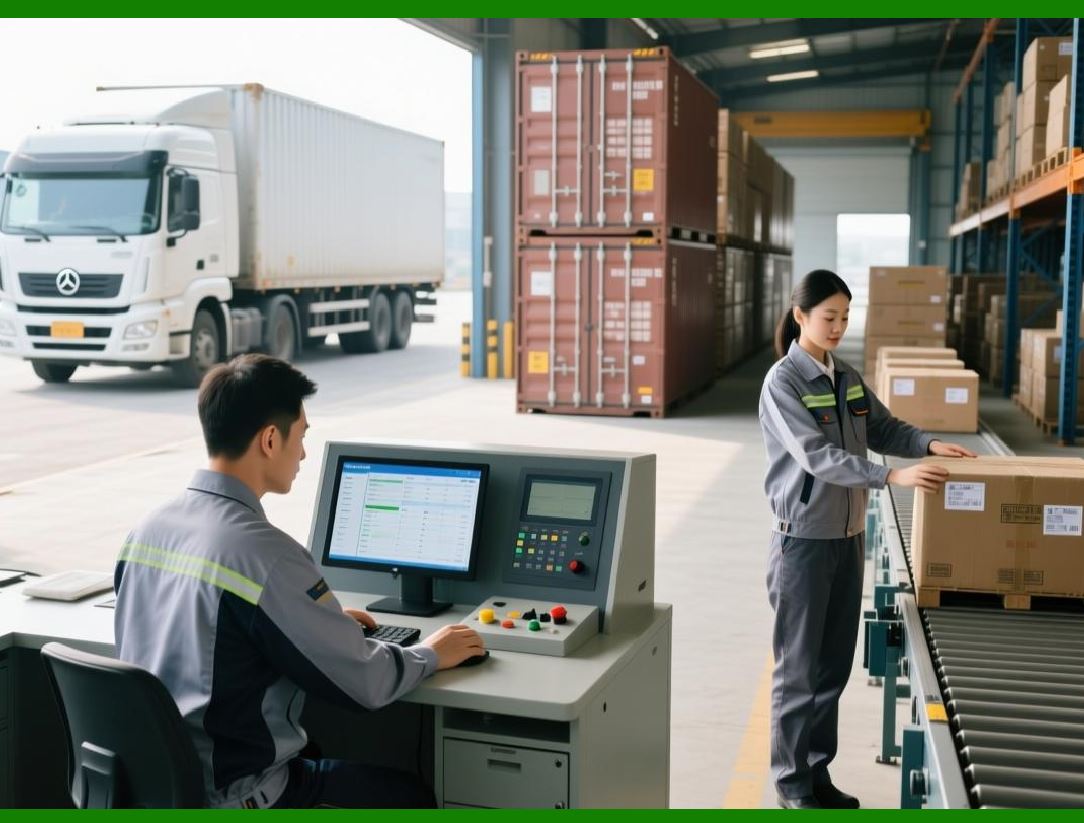
The UnitX case study on wire harness inspection illustrates how AI can combine identification and quality inspection. The system's process flow includes 'Integrated barcode scanning logs and tracks each unit to ensure complete production traceability' and 'Multi-Station AI Vision' that inspects 'the joints from optimal angles' . Defective units are 'automatically picked up and moved to a reject station, preventing them from reaching the reflow conveyor' . |
The results are dramatic: 'Fast Throughput' with a 'Cycle Time = 1.1 s,' 'High Precision' with a 'False Acceptance Rate ¡Ü 0.05%,' and 'Massive Labor Savings' that 'easily saves 4 operators per line, recovering over 20 labor hours in total every single day' . |
|
32.5 Real-World Example: Honeywell PX940 and 'Error-Free' Labeling |
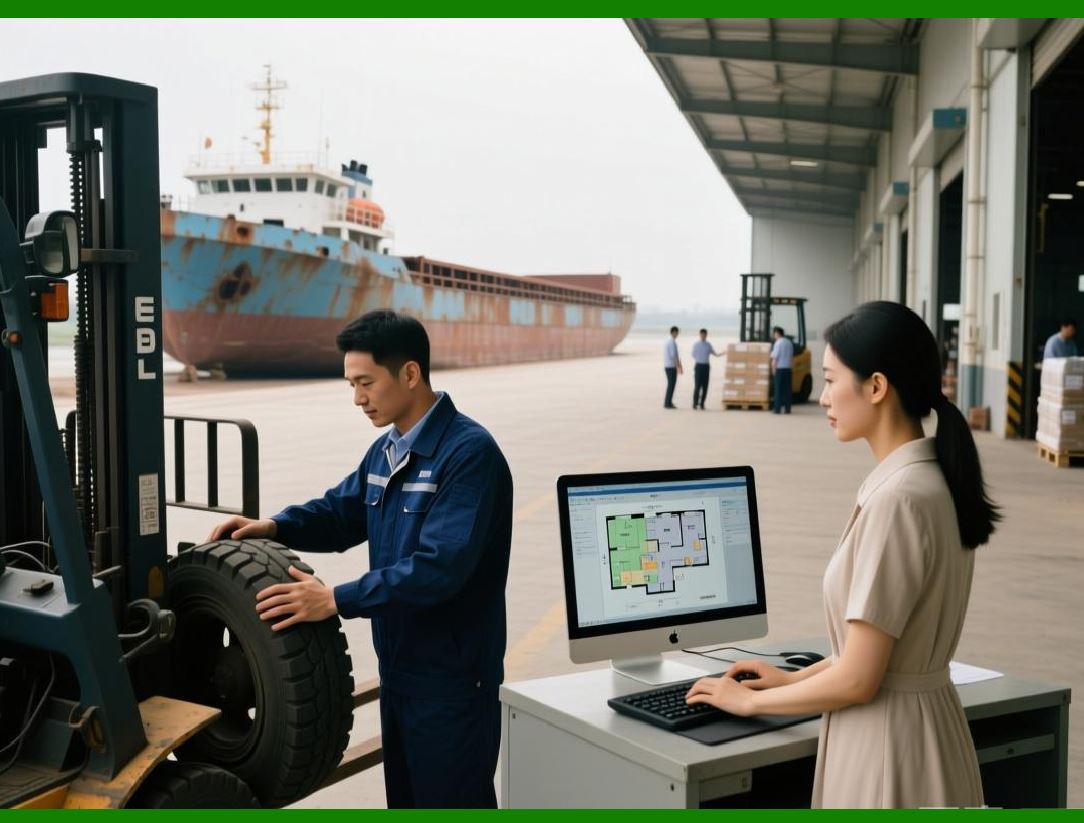
Honeywell's PX940 printer exemplifies the integration of barcode verification and AI. The printer is 'developed for companies that are subjected to fines levied for non-compliance to regulatory standards and returned shipments due to unreadable barcodes' . It prints barcodes that are '100% readable every time' . |
32.5.1 How It Works |
The PX940 includes an 'integrated verifier' that reads and grades each printed label. If the label does not meet a 'pass' threshold, the printer voids it and automatically reprints a new one . This is closed-loop quality control at the point of printing, preventing bad labels from ever entering the factory. |
32.5.2 The Trend Toward Miniaturization |
The printer supports 'print registration of up to +/- 0.2 mm (0.0079 in)' and will 'print accurately on small labels, edge to edge with high precision' . This is essential for the miniaturization trend in electronics. 'The trend toward miniaturization requires printing on smaller and smaller labels' . |
|
32.6 Real-World Example: ViTrox - AI-Driven Inspection and Traceability |
ViTrox, with its Americas headquarters in Hutto, Texas, is a leading example of an American company at the forefront of the barcode + vision + AI convergence. |
32.6.1 End-to-End Inspection and Traceability |
ViTrox offers a comprehensive portfolio of inspection solutions, including 'VisionXpert XS/XC Series - High-speed smart camera and barcode scanning to enhance traceability across production lines' . The V510i AOI series provides 'ultra-high resolution inspection for micro components and semiconductors, down to 2.25¦Ìm' . |
The company's Open House event in Hutto demonstrated 'hands-on demonstrations of ViTrox's comprehensive portfolio of inspection and smart manufacturing solutions' . The event attracted 'nearly 50 visitors from 22 companies,' highlighting the growing interest in integrated traceability and inspection solutions . |
32.6.2 Autonomous Mobile Robots (AMR) |
One of the highlights of ViTrox's event was an 'Autonomous Mobile Robot (AMR) demonstration,' which 'captured continuous attention and sparked lively conversations among attendees' . This AMR integration is a key element of the smart factory---robots that can move materials based on barcode-read data, closing the loop between identification, logistics, and production. |

|
32.7 Real-World Example: Hikrobot - AI-Powered Code Readers and Smart Cameras |
Hikrobot, a subsidiary of Hikvision with a strong presence in the Chinese and Asian markets, offers cutting-edge machine vision and robotics solutions, including AI-powered code readers and smart cameras . |
32.7.1 ID3000 Series Smart Code Reader |
The ID3000 Series features 'AI-powered recognition' and a 'modular, scalable architecture' . It is designed for 'the most demanding environments' with an IP67 rating . The system uses a 'liquid lens' for fast autofocus, enabling reliable reading of barcodes at varying distances . |
32.7.2 SC1000 Smart Camera |
The SC1000 Smart Camera integrates multiple vision tools into a single device: Pattern Matching, Colour Detection, Object Counting, Measurement Tools, Logic Functions, and Basic OCR . This enables a single camera to read barcodes, inspect components, and verify assembly. |

|
32.8 Smart Tags: The Future of Digital Product Passports |
Beyond the integration of vision and AI, a broader concept is emerging: the 'smart tag.' This is a tag that combines item identification with condition monitoring, providing dynamic lifecycle information . |
32.8.1 Digital Product Passports for Electronics |
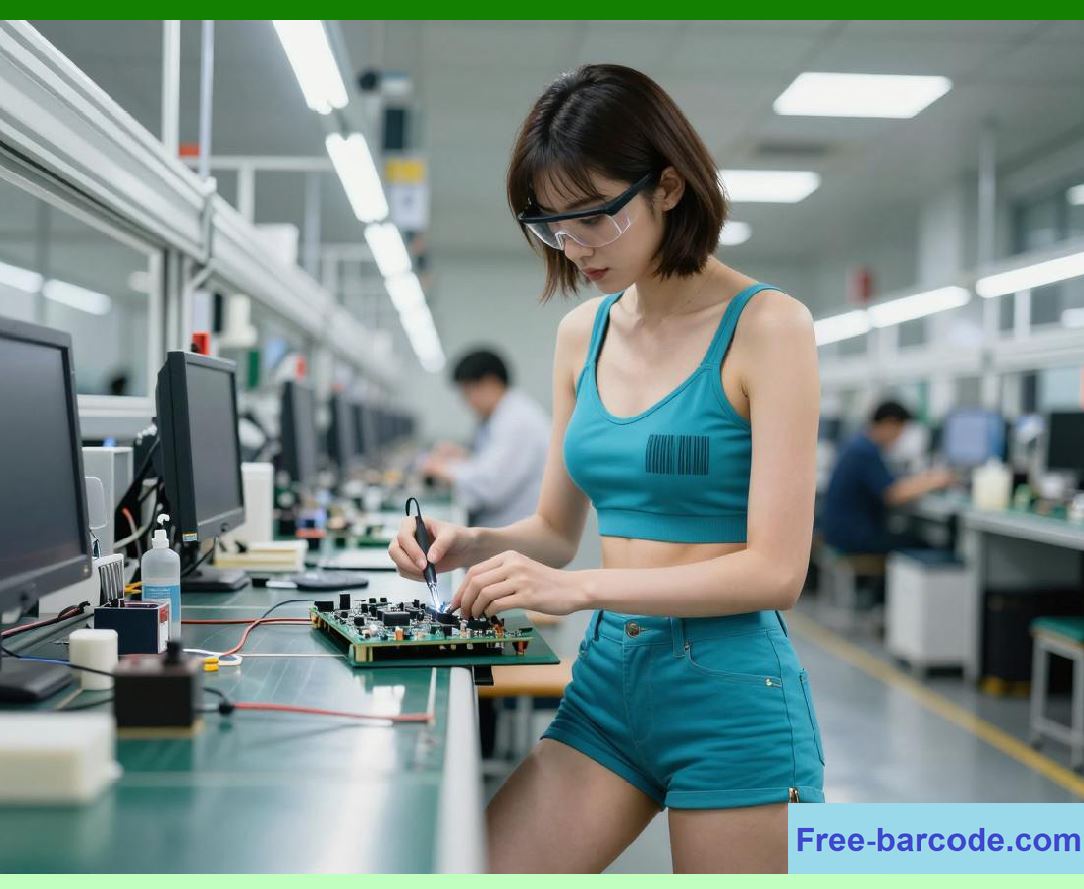
Research conducted at Aalto University has investigated 'smart tags that allow data access to different actors of the value chains' . A smart tag 'combines item identification with condition monitoring of the item or the surroundings to provide dynamic lifecycle information' . Examples include 'a combination of a 2D barcode with a visual sensor or a combination of an electronic tag with an electronic sensor' . |
In the context of electronics, smart tags can be used for 'digital product passports' that provide 'information of product lifecycle' . The EU legislation is driving the adoption of this concept, requiring that products provide information about their lifecycle, including repair and recycling options . |
32.8.2 Environmental Monitoring |
A key development is the integration of sensors into tags. The thesis describes a 'printed visual humidity sensor' that can be used 'to assess the condition of electronic products in repair or recycling phase' . This sensor monitors the environmental exposure of the product, providing data that can inform decisions about repair, reuse, or recycling. |
32.8.3 Durability and Sustainability |
Because smart tags must be used for several years, they must be 'easy to manufacture, durable and sustainable' . The research developed 'selection criteria for the smart tag concepts that consider requirements from manufacturing, usage and end-of-life management' . Factors such as readability, washability, and wash temperature resistance are considered . |
|
32.9 The Convergence: How It All Fits Together |
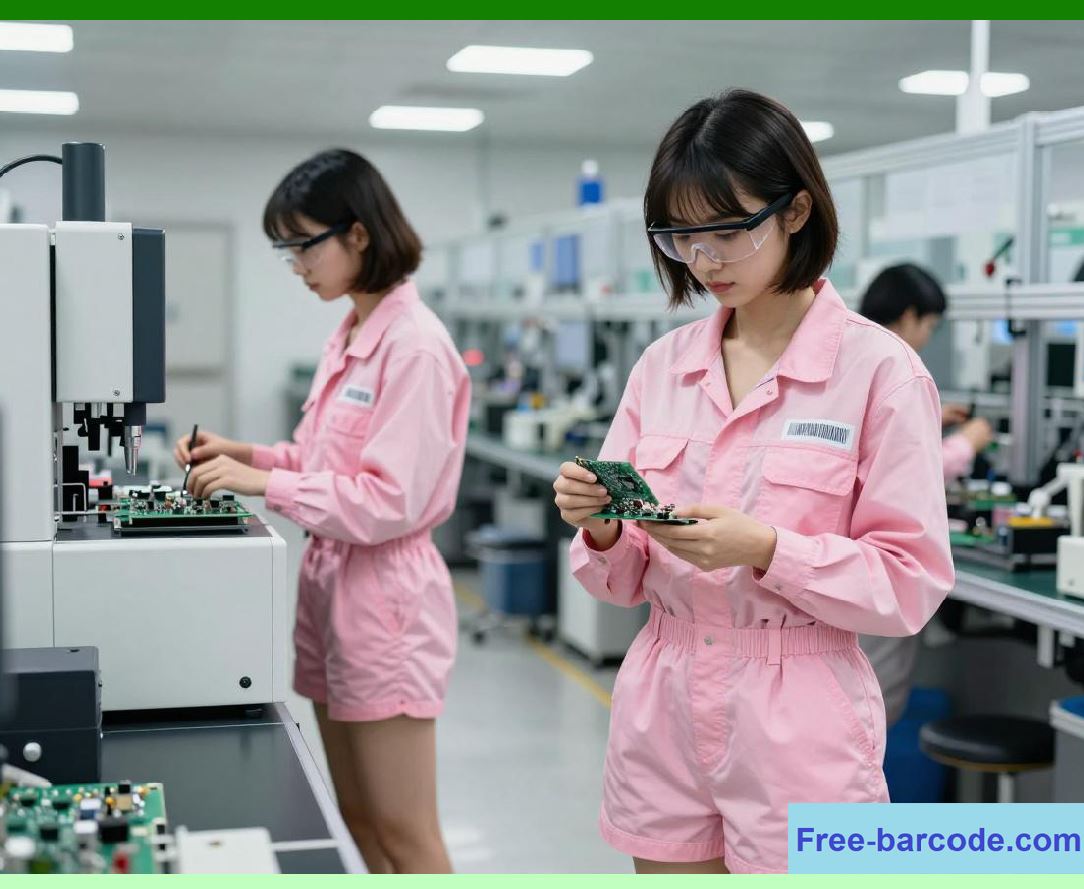
The integration of barcode, vision, and AI creates a powerful synergy. The barcode provides the identity; vision provides the inspection; AI provides the intelligence. |
32.9.1 Predictive Governance |
In the fully realized vision, the factory is governed by AI. The system predicts label wear and triggers reprints. It predicts component failures and schedules maintenance. It predicts quality issues and adjusts production parameters. The barcode is the key that unlocks this predictive governance. |
32.9.2 Data-Driven Procurement |
The component-level data captured by vision and AI flows into the broader operational and business intelligence ecosystem. If a defect is detected, procurement can be rerouted to validated alternatives. The loop between production, quality, and procurement is closed. |
32.9.3 The Digital Twin |
The barcode, vision, and AI data feeds into a 'digital twin' of the production line. This virtual representation of the factory can be used for simulation, optimization, and what-if analysis. |
|
32.10 Comparing American and Global Approaches |
Both American and global technology providers are at the forefront of the barcode + vision + AI convergence. |
32.10.1 American Emphasis: Integrated Solutions and Traceability |
American companies like Honeywell and ViTrox emphasize integrated solutions that combine labeling, inspection, and traceability. Honeywell's PX940 printer integrates barcode verification and AI-driven quality control . ViTrox offers a comprehensive portfolio of inspection and traceability solutions, from code reading to 3D AOI to robotic inspection . |
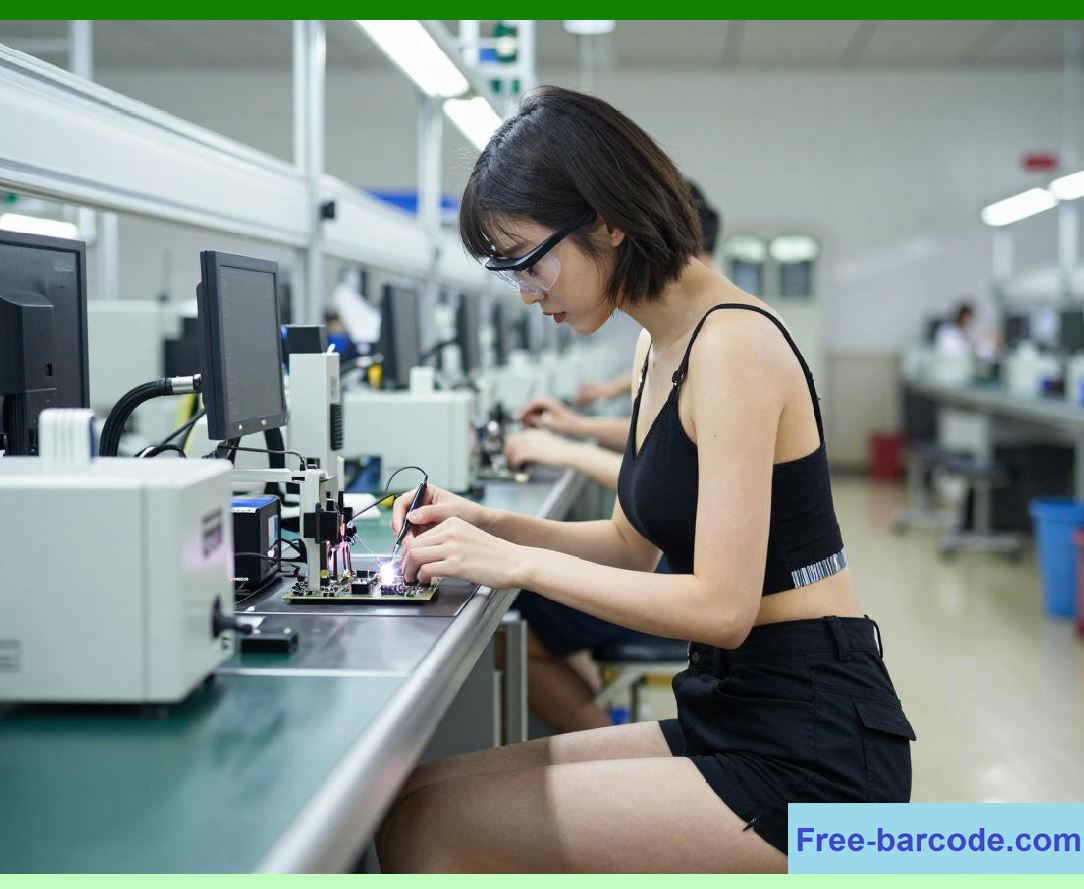
32.10.2 Chinese and Asian Emphasis: AI-Powered Recognition and Robotics |
Chinese and Asian companies like Hikrobot emphasize AI-powered code readers, smart cameras, and robotics . The ID3000 Series and SC1000 Smart Camera represent the cutting edge of AI-driven recognition and inspection . Japanese companies like SATO are also leading the way in AI-powered printers . |
|
32.11 The Future of the Factory Floor |
The future factory floor will be a connected, intelligent ecosystem where barcodes, vision systems, and AI work in harmony. Operators will be guided by AI. Machines will inspect their own output. Material flow will be governed by predictive algorithms. And the barcode---the humble pattern of black and white---will remain the foundational key that unlocks it all. |
|
Detailed Summary of Chapter 32 |
This chapter has provided a forward-looking roadmap for the convergence of barcode, machine vision, and Artificial Intelligence in electronics manufacturing. We began by establishing that the future is not about replacing the barcode but about augmenting it with intelligence. The convergence of barcodes (foundational identity), vision (inspection), and AI (prediction and governance) is driving a shift from passive tracking to proactive governance. |
We described the state of the art: the global machine vision market is growing at a CAGR of 10.69% . Industries are integrating machine vision for barcode reading, assembly verification, and defect detection . High-precision vision systems now compensate for board warpage and component tolerances . |
We explored how vision systems are 'the eyes that see beyond the barcode.' Smart cameras integrate barcode scanning and quality inspection in a single pass . Systems like ViTrox's VisionXpert XS offer high-speed code reading with traceability, and Hikrobot's SC1000 combines Pattern Matching, Colour Detection, and Object Counting with Basic OCR . |
We explored how AI is 'the brain that predicts and governs.' AI-powered printers like SATO's CL4/6-SXR include 'AI-driven predictive maintenance' . Honeywell's PX940 integrates label verification and reprints bad labels . AI-powered code readers like Hikrobot's ID3000 Series offer reliable reading in demanding environments . |
We profiled real-world examples of American companies at the forefront of this convergence. Honeywell's PX940 printer integrates an inline verifier that grades barcodes and automatically reprints those that fail . ViTrox's Americas headquarters in Hutto, Texas, demonstrated comprehensive inspection and smart manufacturing solutions, including AMRs and AI-driven 3D AOI . We profiled examples of Chinese and Asian companies leading the field. Hikrobot offers AI-powered code readers and smart cameras, with the ID3000 Series and SC1000 representing the state of the art . |
We also discussed the future concept of the 'smart tag,' which combines identification with condition monitoring, and the role of digital product passports enabled by EU legislation . |
We compared American and global approaches: American companies like Honeywell and ViTrox emphasize integrated solutions and traceability; Asian companies like Hikrobot emphasize AI-powered recognition and robotics. |
|
Finally, we looked to the future of the factory floor as a connected, intelligent ecosystem where barcodes, vision, and AI work in harmony. |
The bottom line is that the future of electronics manufacturing is not about choosing between barcode, vision, and AI. It is about integrating them into a unified, intelligent system. The barcode provides the identity; vision provides the eyes; AI provides the brain. Together, they enable a new paradigm of predictive governance---where the factory anticipates problems, self-corrects, and continuously improves. As the examples in this chapter demonstrate, American and global technology leaders are building the foundations of this future today. |
 cs@easiersoft.com