Part 3 |
Barcode Technology Fundamentals and Its Deep Integration with Chain Store Operations |
1. Introduction to Barcode Technology in Retail Ecosystems |
1.1 |
Barcode technology is one of the most influential automatic identification technologies ever introduced into the retail industry. Although barcodes appear visually simple, they represent a highly standardized and efficient machine-readable information system that transformed retail operations worldwide. Modern chain stores rely on barcode systems not only for product sales but also for procurement management, warehouse logistics, inventory tracking, asset management, customer services, and supply chain coordination. |
1.2 |
The fundamental purpose of barcode technology is to convert physical objects into digitally identifiable entities. Every product in a retail ecosystem can be assigned a unique identifier encoded into a barcode symbol. When scanned by optical devices, the barcode allows computer systems to instantly retrieve associated digital records from databases. This mechanism creates a direct bridge between the physical retail environment and digital information systems. |

|
1.3 |
In chain stores, barcode technology dramatically improves operational speed and accuracy. Without barcode systems, employees would need to manually enter product codes, inventory quantities, supplier numbers, or pricing information. Manual entry processes are slower, more labor-intensive, and more vulnerable to human error. Barcode scanning automates these operations and ensures data consistency across retail systems. |
1.4 |
The importance of barcode technology increases further when integrated with cloud databases and POS systems. Barcode scanners capture data from physical products, POS systems process operational transactions, and cloud databases store and synchronize the information across the enterprise. This integrated workflow forms the technological foundation of modern retail automation. |
1.5 |
Today, barcode technology extends far beyond traditional checkout scanning. Advanced barcode applications include mobile payment systems, product traceability, digital coupons, electronic shelf labels, warehouse automation, self-checkout kiosks, smart vending systems, and omnichannel retail operations. As retail technology evolves, barcode systems continue to serve as one of the most reliable and cost-effective identification technologies available. |

|
2. Historical Development of Barcode Technology |
2.1 |
The origins of barcode technology date back to the mid-20th century. Researchers sought methods to automate product identification and reduce manual data entry in commercial environments. Early retail operations relied entirely on handwritten pricing labels and manual bookkeeping systems, which created inefficiencies and operational bottlenecks. |
2.2 |
The first major breakthrough occurred when inventors developed optical code patterns capable of being scanned electronically. Early barcode experiments used circular patterns and various optical encoding designs. Eventually, linear barcode systems became dominant because they were relatively easy to print and scan using available technology. |
2.3 |
The development of the Universal Product Code (UPC) marked a turning point in retail automation. The UPC system introduced standardized product identification codes that could be used consistently across manufacturers, distributors, and retailers. This standardization enabled widespread interoperability throughout the retail supply chain. |

|
2.4 |
The first commercial UPC barcode scan occurred in a supermarket environment and demonstrated the practical viability of automated retail checkout systems. Following this success, supermarkets and retail chains rapidly adopted barcode technology to improve operational efficiency. |
2.5 |
As computing technology advanced, barcode applications expanded into logistics, manufacturing, healthcare, transportation, warehousing, and government operations. Additional barcode standards were developed to support different industries and operational requirements. |
2.6 |
The emergence of two-dimensional barcode systems further expanded barcode capabilities. Unlike one-dimensional barcodes, which primarily encode numeric identifiers, 2D codes can store much larger amounts of data including text, URLs, encryption keys, multimedia links, and product traceability information. |
2.7 |
Today, barcode technology has become deeply embedded in global commerce. Billions of barcode scans occur daily across retail stores, warehouses, hospitals, airports, factories, and logistics centers worldwide. |

|
3. Basic Principles of Barcode Encoding |
3.1 |
A barcode is essentially a visual encoding system that represents digital data through machine-readable optical patterns. In traditional one-dimensional barcodes, information is encoded using varying widths and spacing of black bars and white spaces. |
3.2 |
Barcode scanners use light sources and optical sensors to detect reflected light patterns. Black bars absorb light while white spaces reflect it. The scanner converts these optical variations into electrical signals, which are then decoded into digital data. |
3.3 |
Each barcode standard defines specific encoding rules. These rules determine how characters, numbers, start patterns, stop patterns, checksums, and error detection mechanisms are represented within the barcode symbol. |

|
3.4 |
Barcode systems typically include several important components. The quiet zone provides empty space surrounding the barcode to ensure proper scanning. Start and stop characters indicate the beginning and end of the barcode data. Data characters represent the encoded information itself. Check digits help verify scanning accuracy. |
3.5 |
Error detection is extremely important in barcode systems. Most barcode formats include mathematical checksum calculations that help scanners identify reading errors caused by damaged labels, poor printing quality, or scanning interference. |
3.6 |
Modern barcode scanners can decode symbols extremely quickly. In retail checkout environments, scanners may process multiple products per second, allowing high-speed transaction processing even during peak shopping periods. |
3.7 |
The efficiency and reliability of barcode encoding make it highly suitable for chain store operations where enormous transaction volumes require rapid and accurate data processing. |

|
4. One-Dimensional Barcode Technologies Used in Retail |
4.1 |
One-dimensional barcodes, also called linear barcodes, remain widely used in retail environments because of their simplicity, low printing cost, and high compatibility with existing systems. |
4.2 |
The Universal Product Code (UPC) is one of the most recognized retail barcode standards. UPC barcodes are commonly used in North American retail markets and typically encode 12-digit product identifiers. |
4.3 |
The European Article Number (EAN) system is another globally important barcode standard. EAN-13 barcodes encode 13-digit numbers and are widely used internationally for retail product identification. |

|
4.4 |
Code 128 is a high-density barcode format capable of encoding alphanumeric data. It is commonly used in warehousing, shipping labels, logistics tracking, and internal inventory management within chain store operations. |
4.5 |
Code 39 is another alphanumeric barcode standard frequently used for asset tracking, industrial labeling, and warehouse applications. Although less compact than Code 128, it remains widely supported. |
4.6 |
Interleaved 2 of 5 is commonly used in logistics and carton labeling. Retail warehouses often use this barcode format for shipping containers and bulk inventory tracking. |
4.7 |
Linear barcode systems remain extremely important because they provide fast scanning performance, low implementation costs, and compatibility with a vast global ecosystem of scanners, printers, software systems, and supply chain standards. |

|
5. Two-Dimensional Barcode Technologies in Modern Retail |
5.1 |
Two-dimensional barcodes represent a major advancement beyond traditional linear barcode systems. Unlike one-dimensional codes, which store data along a single horizontal axis, 2D barcodes encode information both horizontally and vertically. |
5.2 |
The QR Code is one of the most widely used 2D barcode formats in modern retail. Originally developed for industrial tracking applications, QR Codes later became highly popular in consumer applications because of smartphone scanning capabilities. |
5.3 |
QR Codes can store significantly more information than traditional UPC or EAN barcodes. They may contain URLs, product information, payment credentials, membership identifiers, coupon codes, authentication tokens, or marketing content. |

|
5.4 |
Retailers increasingly use QR Codes for mobile payment systems. Customers can scan payment codes using smartphone applications connected to digital wallets or banking systems. This technology became especially important during the growth of contactless retail transactions. |
5.5 |
Data Matrix codes are another important 2D barcode technology widely used for compact labeling applications. These codes are especially useful when products have limited printing space, such as pharmaceuticals or electronic components. |
5.6 |
PDF417 is a stacked linear barcode capable of storing large amounts of text data. Some retail logistics systems use PDF417 for shipping documentation and transportation tracking. |

|
5.7 |
2D barcode systems often include sophisticated error correction algorithms. Even if part of the barcode is damaged or obscured, scanners can still reconstruct the encoded data. This improves reliability in harsh retail and logistics environments. |
5.8 |
The rise of smartphone scanning significantly expanded the consumer-facing role of 2D barcodes. Customers now interact directly with barcode systems through mobile apps for promotions, loyalty programs, product verification, and self-service checkout experiences. |

|
6. Barcode Scanners and Data Capture Devices |
6.1 |
Barcode scanners are the primary hardware devices used to capture barcode information in retail environments. These devices convert optical barcode patterns into digital signals that can be processed by POS systems and databases. |
6.2 |
Several types of barcode scanners are commonly used in chain stores. Laser scanners use laser beams to detect barcode patterns and are highly effective for reading traditional linear barcodes at checkout counters. |
6.3 |
CCD scanners use arrays of light sensors to capture barcode images. These scanners are durable and suitable for short-range scanning applications. |
6.4 |
Imaging scanners, also called area imagers, use camera-based technology to capture barcode images. They can decode both one-dimensional and two-dimensional barcodes, making them increasingly popular in modern retail systems. |

|
6.5 |
Handheld scanners are widely used in inventory management and warehouse operations. Employees can move freely throughout stores and warehouses while performing stock counts, shelf replenishment, and receiving tasks. |
6.6 |
Fixed-mount scanners are commonly installed in checkout counters, conveyor systems, automated kiosks, and industrial sorting equipment. These scanners continuously monitor scanning zones for barcode activity. |
6.7 |
Mobile computers with integrated barcode scanners combine data capture, wireless communication, and software applications into portable devices. Retail staff use these devices for inventory management, price verification, and order fulfillment tasks. |
6.8 |
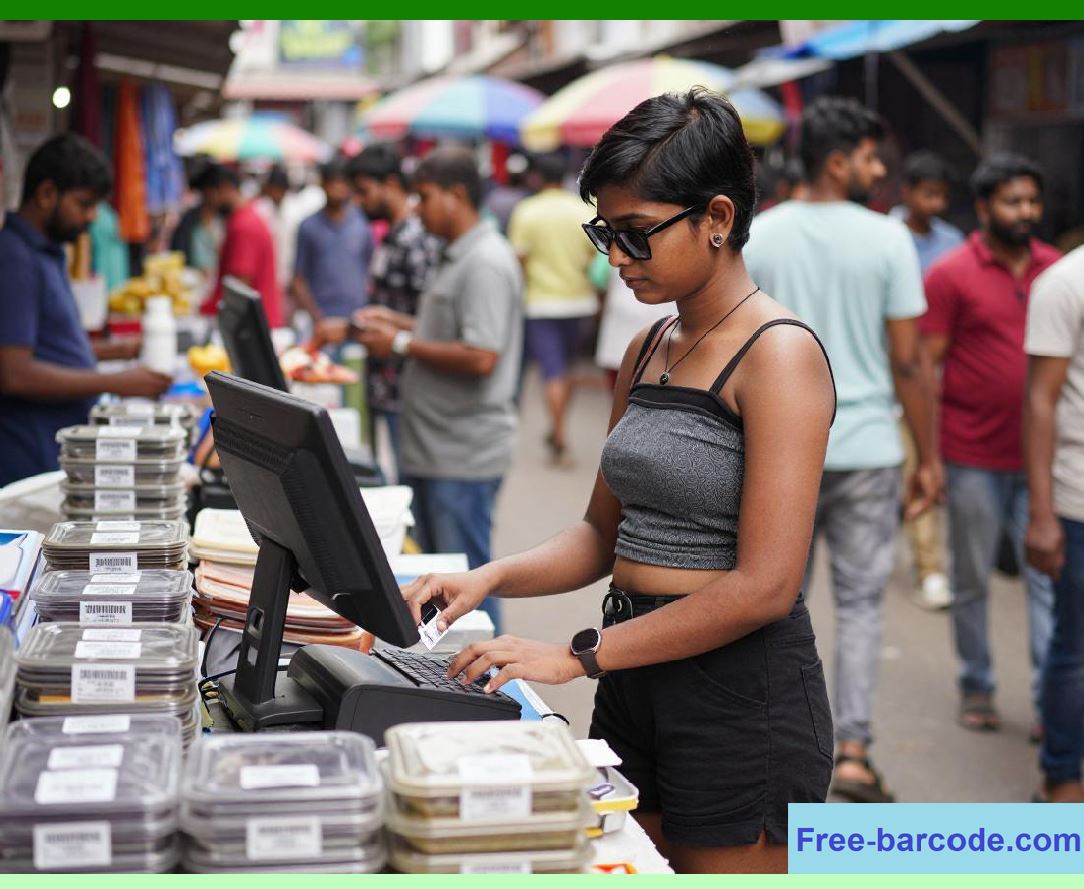
Smartphones themselves increasingly function as barcode scanners. Retail mobile applications can use built-in cameras to scan QR Codes and product barcodes for customer-facing services. |
|
7. Barcode Label Printing Technologies |
7.1 |
Barcode printing quality directly affects scanning reliability. Poorly printed labels can cause scanning failures, transaction delays, and operational inefficiencies. Therefore, chain stores invest heavily in reliable barcode printing systems. |
7.2 |
Thermal printing is one of the most common barcode printing technologies used in retail environments. Thermal printers are fast, reliable, and relatively inexpensive to operate. |
7.3 |
Direct thermal printing creates images by applying heat to specially coated thermal paper. This method is commonly used for receipts, temporary shipping labels, and short-term inventory labels. |
7.4 |
Thermal transfer printing uses heat to transfer ink from ribbons onto label materials. Thermal transfer labels are more durable and resistant to moisture, chemicals, abrasion, and sunlight exposure. |
|
7.5 |
Inkjet and laser printers may also produce barcode labels, especially for office-based operations. However, industrial barcode environments typically prefer dedicated thermal printers because of their reliability and speed. |
7.6 |
Retail barcode labels may include additional information such as product names, expiration dates, serial numbers, batch numbers, pricing, and promotional details. The barcode itself serves as the machine-readable identifier within the label design. |
7.7 |
Label materials vary depending on operational conditions. Retail environments may use paper labels, synthetic labels, adhesive labels, tamper-resistant labels, waterproof labels, or freezer-grade labels. |
7.8 |
Cloud-connected printing systems allow centralized label management. Headquarters can distribute standardized label templates and product information across all branches, ensuring consistent barcode formatting throughout the retail network. |

|
8. Barcode Technology in Inventory Management |
8.1 |
Inventory management is one of the most important operational areas benefiting from barcode technology. Accurate inventory visibility is essential for maintaining product availability, reducing stock shortages, minimizing overstock situations, and improving supply chain efficiency. |
8.2 |
When products arrive at warehouses or stores, barcode scanning systems record receiving transactions automatically. The cloud database updates inventory records immediately, making stock information visible across the organization. |
8.3 |
Warehouse employees use barcode scanners during put-away operations to ensure products are stored in correct locations. Shelf labels and bin labels also contain barcodes to support accurate location tracking. |
8.4 |
Periodic stock counting becomes much more efficient with barcode systems. Instead of manually writing down inventory counts, employees scan products using handheld devices connected to inventory management software. |

|
8.5 |
Barcode-based inventory management reduces human error significantly. Incorrect manual entries can create inventory discrepancies leading to stock shortages, inaccurate purchasing decisions, and financial losses. |
8.6 |
Retailers also use barcode systems for inventory transfers between stores. Each transfer transaction is tracked digitally, allowing real-time visibility into product movement throughout the retail network. |
8.7 |
Expiration date management is another important application. Food retailers and pharmacies often use barcode systems to monitor product shelf life and automate expiration tracking processes. |
8.8 |
Cloud database integration ensures that inventory information remains synchronized across POS systems, warehouse systems, e-commerce platforms, and procurement systems simultaneously. |
|
9. Barcode Applications in Supply Chain Management |
9.1 |
Barcode technology plays a critical role throughout the retail supply chain. Products move through manufacturers, distribution centers, transportation networks, warehouses, and retail stores before reaching customers. Barcode systems provide visibility and traceability across each stage. |
9.2 |
Manufacturers assign barcode identifiers during product production. These identifiers remain associated with products throughout their entire supply chain lifecycle. |
9.3 |
Distribution centers use barcode scanning to manage inbound shipments, pallet tracking, carton sorting, and outbound shipping operations. Automated conveyor systems often rely on barcode readers for package routing. |
9.4 |
Transportation companies use barcode labels for shipment tracking. Retailers can monitor delivery progress in real time through integrated logistics systems. |

|
9.5 |
Supply chain visibility helps retailers improve forecasting accuracy and reduce operational uncertainty. Managers can identify delayed shipments, missing inventory, or logistics bottlenecks quickly. |
9.6 |
Product traceability is especially important in food retail and pharmaceutical industries. Barcode systems help retailers track product origins, batch numbers, manufacturing dates, and distribution history. This information becomes critical during product recalls or safety investigations. |
9.7 |
Cloud database integration enables centralized supply chain analytics. Retailers can analyze supplier performance, delivery times, inventory turnover, and logistics efficiency across the entire network. |

|
10. Barcode Technology and Customer Experience |
10.1 |
Although barcode systems primarily operate behind the scenes, they significantly influence customer experiences in modern chain stores. Faster checkout, accurate pricing, reliable inventory availability, and efficient returns processing all depend heavily on barcode infrastructure. |
10.2 |
Barcode scanning accelerates checkout speed, reducing waiting times and improving customer satisfaction. High-speed scanning systems are particularly important during peak shopping periods. |
10.3 |
Self-checkout systems rely heavily on barcode technology. Customers scan products independently while POS systems verify prices, promotions, and payment transactions automatically. |
10.4 |
Mobile shopping applications increasingly allow customers to scan product barcodes for additional information such as reviews, nutritional data, ingredient lists, compatibility details, or online purchasing options. |

|
10.5 |
Digital coupon systems often use QR Codes or barcode-based redemption mechanisms. Customers present mobile coupons at checkout, and the POS system validates the barcode through cloud database verification. |
10.6 |
Membership systems also use barcode technology extensively. Loyalty cards may contain barcodes or QR Codes linked to customer accounts stored in cloud databases. |
10.7 |
Returns processing becomes more efficient with barcode-enabled receipts and transaction tracking. POS systems can quickly retrieve purchase history and verify product eligibility for returns or exchanges. |
10.8 |
As smart retail technologies continue evolving, barcode systems remain one of the most accessible and customer-friendly identification methods available. |

|
11. Technical Content Summary of Part 3 |
11.1 |
This part provided a comprehensive technical analysis of barcode technology and its central role within modern chain store ecosystems. The discussion began by explaining how barcode systems connect physical products with digital retail information systems. |
11.2 |
The historical evolution of barcode technology was explored, including the development of UPC standards, retail automation, and the emergence of two-dimensional barcode systems such as QR Codes and Data Matrix codes. |
11.3 |
The article explained the core principles of barcode encoding, optical scanning, error detection, and machine-readable data representation. Different barcode standards including UPC, EAN, Code 128, and Code 39 were analyzed within retail operational contexts. |
11.4 |
The discussion also covered modern two-dimensional barcode technologies and their applications in mobile payments, customer engagement, digital coupons, and product traceability systems. |
|
11.5 |
Various barcode scanner technologies were introduced, including laser scanners, CCD scanners, imaging scanners, handheld devices, fixed-mount systems, and smartphone-based scanning applications. |
11.6 |
Additional sections analyzed barcode printing technologies, inventory management applications, supply chain visibility, logistics coordination, and customer experience improvements enabled by barcode systems. |
11.7 |
Most importantly, this part emphasized that barcode technology serves as the primary data acquisition layer within integrated retail ecosystems. Barcode systems provide the operational visibility required for POS systems and cloud databases to function effectively in large-scale chain store environments. |
11.8 |
Future parts will continue exploring POS system architecture, cloud integration workflows, smart procurement systems, inventory synchronization mechanisms, multi-store operations, and advanced retail analytics technologies built upon barcode-enabled data infrastructures. |
 cs@easiersoft.com