Part 16 |
Cenveo Worldwide Limited Pressure-Sensitive Label Converting, Barcode Label Production Systems, Industrial Printing Supply Chains, and High-Volume Label Manufacturing Networks |
1. Introduction to Cenveo and Its Role in the Barcode Label Industry |
1.1 |
Cenveo Worldwide Limited is a historically significant participant in the North American printing, packaging, and labeling industry, with a major footprint in pressure-sensitive label manufacturing and barcode label converting operations. Although the company has undergone restructuring and business changes over time, its legacy in industrial label production remains important in understanding the evolution of large-scale barcode label supply chains. |
1.2 |
Cenveo operated as a major label converter, meaning it transformed raw labelstock materials produced by companies such as Avery Dennison, UPM Raflatac, Mondi, and LINTEC into finished barcode labels used in retail, logistics, healthcare, and industrial applications. |

|
1.3 |
Unlike upstream material manufacturers that produce adhesives, films, and paper substrates, Cenveo focused on downstream manufacturing, where pressure-sensitive materials are printed, die-cut, packaged, and distributed as finished labeling products. |
1.4 |
This position made the company an essential link between materials science innovation and real-world barcode deployment systems used in commerce and industrial logistics. |
1.5 |
At its peak, Cenveo was one of the largest diversified print and label production companies in North America. |

|
2. Corporate History and Industrial Expansion |
2.1 |
Cenveo was formed through a series of mergers and acquisitions in the printing and labeling industry, consolidating multiple regional printing and converting businesses into a large-scale industrial platform. |
2.2 |
The company expanded rapidly during the late twentieth and early twenty-first centuries as demand for printed materials, packaging, and barcode labels increased across retail and logistics sectors. |
2.3 |
Its growth strategy emphasized scale, vertical integration, and high-volume manufacturing capabilities. |

|
2.4 |
Cenveo developed production facilities capable of handling large-scale label printing, flexographic printing, digital printing, and die-cutting operations. |
2.5 |
The company served major retail chains, logistics providers, pharmaceutical companies, and industrial manufacturers requiring consistent and reliable barcode labeling systems. |
2.6 |
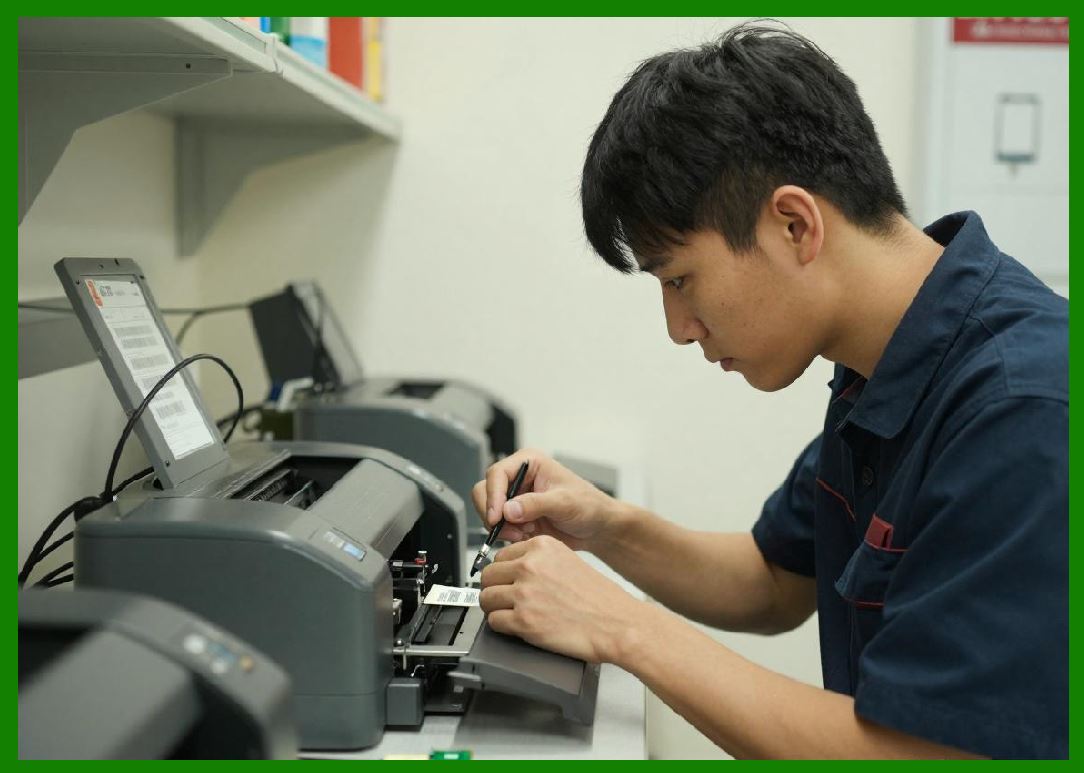
Over time, industry restructuring and financial pressures led to changes in its operational footprint, but its influence on label converting systems remains part of industry history. |
2.7 |
Cenveo development reflects broader trends in consolidation within the printing and labeling industry. |
|
3. Pressure-Sensitive Label Converting Operations |
3.1 |
Label converting is the industrial process of transforming raw pressure-sensitive labelstock into finished barcode labels ready for application in commercial and industrial environments. |
3.2 |
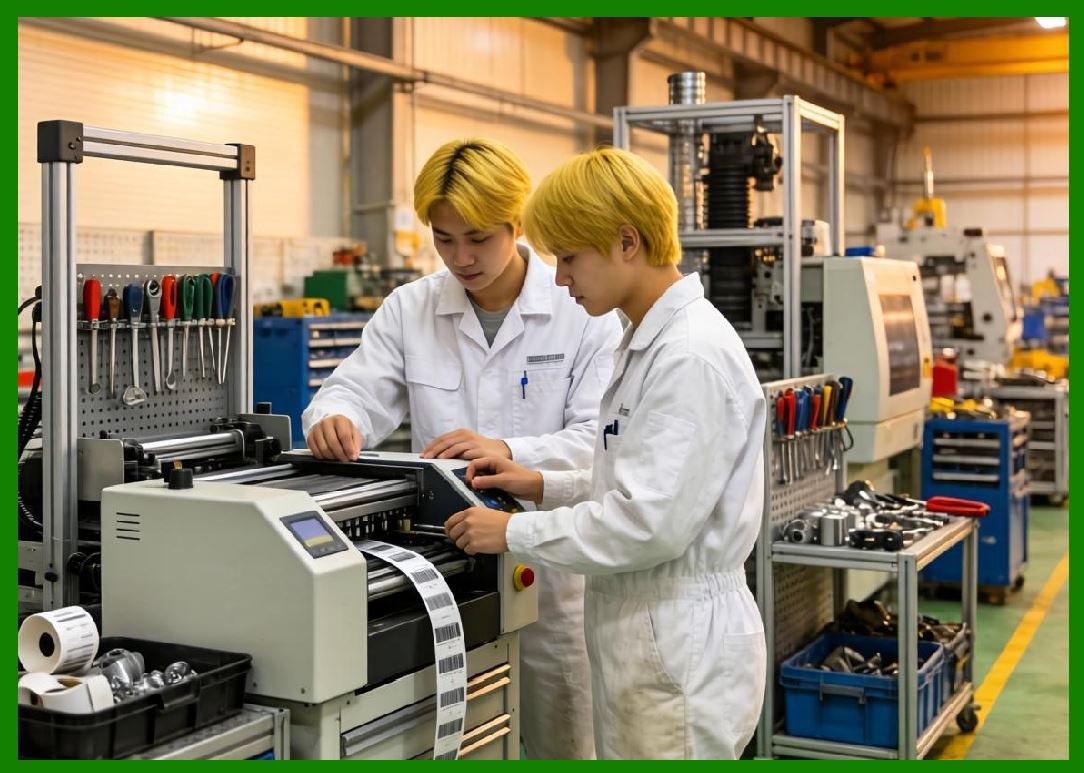
Cenveo operated large-scale converting facilities that performed multiple critical processes, including: |
1. Flexographic printing |
2. Digital variable data printing |
3. Thermal transfer overprinting |
4. Die-cutting and shaping |
5. Lamination and coating |
6. Slitting and rewinding |
7. Packaging and distribution |

|
3.3 |
Each stage of converting requires precise control to ensure barcode readability and label durability. |
3.4 |
Flexographic printing systems are widely used for high-volume production of barcode labels with consistent color and image quality. |
3.5 |
Digital printing allows variable data labeling, including serialized barcodes, QR codes, and batch tracking information. |
3.6 |
Die-cutting accuracy is essential for ensuring labels dispense correctly in automated labeling systems. |
3.7 |
Cenveo converting operations enabled mass production of barcode labels for global supply chains. |
|
4. Barcode Label Printing Technologies in Industrial Converting |
4.1 |
Cenveo utilized multiple printing technologies to produce barcode labels optimized for different industrial applications. |
4.2 |
Flexographic printing is a high-speed process that uses flexible relief plates to transfer ink onto label materials. |
4.3 |
This method is ideal for large-volume production runs of standardized barcode labels used in logistics and retail systems. |
4.4 |
Digital printing technologies allow for on-demand production and variable data printing, which is essential for modern supply chain tracking. |
4.5 |
Thermal transfer overprinting is often used for adding variable information such as expiration dates, batch numbers, and serial codes. |
4.6 |
Barcode readability depends heavily on print precision, ink density, and substrate compatibility. |
4.7 |
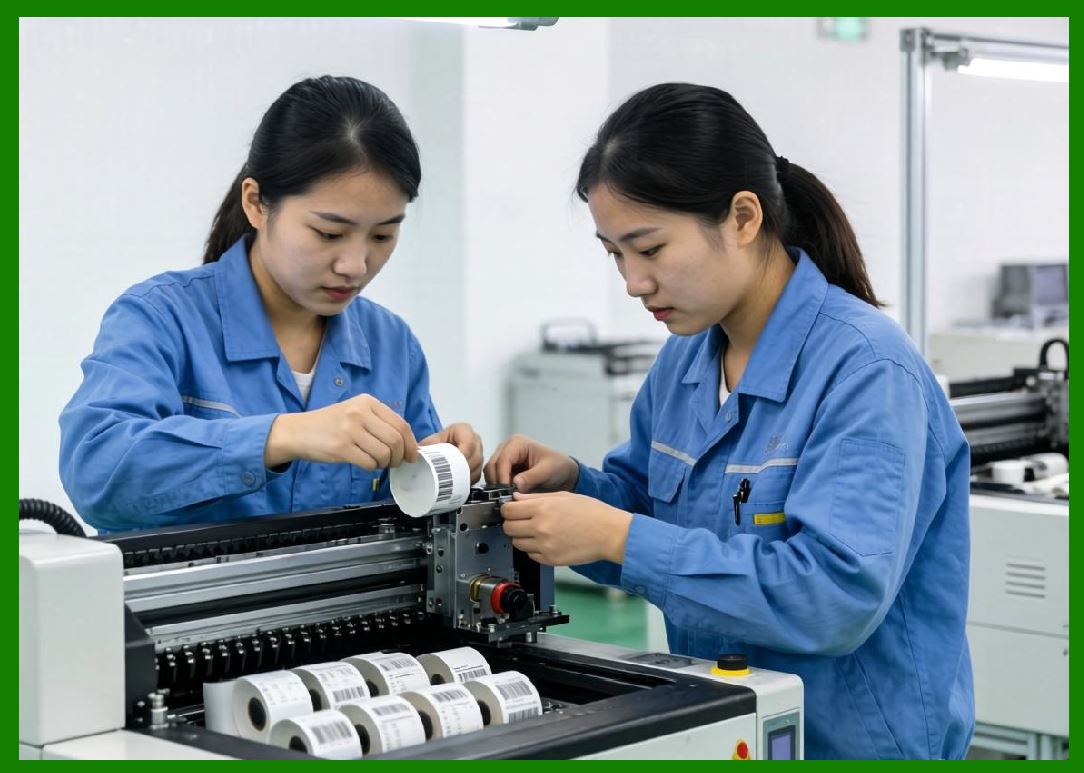
Cenveo printing systems were designed to maintain consistency across millions of labels produced for industrial distribution. |
|
5. Logistics and Supply Chain Label Applications |
5.1 |
One of Cenveo most important market segments was logistics and supply chain labeling. |
5.2 |
Barcode labels in logistics systems are used for tracking shipments, managing warehouse inventory, and automating distribution processes. |
5.3 |
Applications include: |
1. Shipping labels |
2. Carton identification labels |
3. Pallet tracking labels |
4. Warehouse shelving labels |
5. Transportation documentation labels |
5.4 |
Logistics labels must withstand handling, environmental exposure, and automated scanning systems. |
5.5 |
Cenveo supplied high-volume barcode labels to distribution centers and transportation companies. |
5.6 |
The rise of e-commerce significantly increased demand for high-speed label production systems. |
5.7 |
Efficient converting operations were essential for meeting global supply chain demands. |

|
6. Retail and Consumer Goods Labeling Systems |
6.1 |
Retail industries depend heavily on barcode labels for pricing, inventory control, and product identification. |
6.2 |
Cenveo produced large volumes of retail barcode labels used in supermarkets, department stores, and distribution networks. |
6.3 |
Retail labeling applications include: |
1. Price labels |
2. Shelf labels |
3. Product identification labels |
4. Promotional barcode labels |
6.4 |
Retail systems require cost-efficient and highly readable barcode labels. |
6.5 |
High-speed printing and distribution systems are essential to support dynamic retail environments. |
6.6 |
Cenveo converting operations enabled scalable production for national retail chains. |
6.7 |
Retail automation trends increased reliance on barcode-based inventory systems. |

|
7. Healthcare and Pharmaceutical Label Converting |
7.1 |
Healthcare labeling is one of the most demanding applications in the barcode industry due to strict regulatory requirements and patient safety considerations. |
7.2 |
Cenveo produced barcode labels used in pharmaceutical packaging, hospital systems, and laboratory environments. |
7.3 |
Applications include: |
1. Patient identification wristbands |
2. Specimen tracking labels |
3. Prescription labels |
4. Medical device identification |
7.4 |
These labels must remain readable under sterilization, refrigeration, and chemical exposure conditions. |
7.5 |
Accuracy is critical because barcode errors can affect medical treatment and patient safety. |
7.6 |
Cenveo converting systems ensured consistent production quality for healthcare applications. |
7.7 |
Healthcare digitization increased demand for reliable barcode labeling systems. |

|
8. Industrial Manufacturing and Asset Tracking Applications |
8.1 |
Industrial manufacturing systems rely on barcode labels for tracking components, managing production processes, and ensuring quality control. |
8.2 |
Cenveo produced durable labels used in automotive manufacturing, electronics assembly, aerospace systems, and heavy industry. |
8.3 |
Industrial labels must withstand oils, heat, abrasion, vibration, and long-term environmental exposure. |
8.4 |
Applications include: |
1. Component identification |
2. Work-in-progress tracking |
3. Equipment labeling |
4. Safety and compliance marking |
8.5 |
Barcode systems improve production efficiency and reduce operational errors. |
8.6 |
Cenveo large-scale converting operations supported industrial automation systems. |
8.7 |
Manufacturing traceability remains a key driver of barcode label demand. |

|
9. Material Sourcing and Labelstock Integration |
9.1 |
Cenveo relied heavily on upstream labelstock suppliers such as Avery Dennison, UPM Raflatac, LINTEC, Mondi, and 3M for raw materials. |
9.2 |
These materials included facestock papers, adhesive layers, and release liners used in pressure-sensitive labels. |
9.3 |
The converting process transforms these materials into finished barcode labels with printed information and die-cut shapes. |
9.4 |
Material compatibility is critical for ensuring print quality and adhesive performance. |
9.5 |
Cenveo operations required careful coordination with suppliers to ensure consistent material supply chains. |
9.6 |
High-quality substrates are essential for maintaining barcode scanning reliability. |
9.7 |
This integration highlights the interdependence of upstream material science and downstream label converting industries. |

|
10. Digital Transformation and Printing Innovation |
10.1 |
The labeling industry has undergone significant digital transformation, and Cenveo adapted by incorporating digital printing technologies. |
10.2 |
Digital printing allows for variable data, on-demand production, and personalized labeling systems. |
10.3 |
Barcode labels increasingly include serialized data, QR codes, and dynamic tracking information. |
10.4 |
Digital systems improve production flexibility and reduce inventory requirements. |
10.5 |
Cenveo integrated workflow automation systems to improve efficiency in label production. |
10.6 |
Software systems enabled real-time job tracking, print management, and quality control. |
10.7 |
Digital transformation has become essential in modern labeling operations. |

|
11. Sustainability and Industry Challenges |
11.1 |
Sustainability has become a major focus in the labeling and printing industry. |
11.2 |
Cenveo operated in a sector that generates significant material usage, including paper, adhesives, and packaging waste. |
11.3 |
Efforts to improve sustainability include: |
1. Waste reduction in converting operations |
2. Recycling of paper materials |
3. Efficient use of ink and coatings |
4. Optimization of production workflows |
11.4 |
Industry-wide challenges include balancing cost efficiency with environmental responsibility. |
11.5 |
Pressure-sensitive label systems are increasingly evaluated based on lifecycle environmental impact. |
11.6 |
Sustainability initiatives influence material selection and production strategies. |
11.7 |
These trends continue shaping the evolution of label converting companies. |

|
12. Future Prospects of Label Converting Industry (Cenveo Context) |
12.1 |
The future of label converting operations is closely tied to automation, digital printing, and intelligent supply chain systems. |
12.2 |
Demand for barcode labels will continue to grow with e-commerce expansion and global logistics development. |
12.3 |
RFID integration and hybrid labeling systems will increasingly complement traditional barcode labels. |
12.4 |
Artificial intelligence may improve production efficiency, defect detection, and workflow optimization. |
12.5 |
Sustainability requirements will continue driving innovation in recyclable materials and low-waste production systems. |
12.6 |
Cloud-based printing and distributed manufacturing systems may reshape label production networks. |
12.7 |
Cenveo legacy illustrates the importance of large-scale converting operations in the global barcode label ecosystem. |

|
Detailed Technical Content Summary of Part 16 |
This part provided a comprehensive analysis of Cenveo Worldwide Limited and its role in the pressure-sensitive barcode label industry as a major label converter. The article explained how Cenveo operated downstream from materials manufacturers, transforming raw labelstock into finished barcode labels used in logistics, retail, healthcare, and industrial applications. |
The discussion examined the company historical growth through mergers and expansion into large-scale printing and converting operations. Major emphasis was placed on flexographic printing, digital printing, die-cutting, and high-volume label production systems. |
The article explored applications in logistics, retail, healthcare, and industrial manufacturing, highlighting the importance of barcode readability, durability, and production efficiency. Additional sections covered material sourcing, upstream supplier relationships, digital transformation, sustainability challenges, and industry-wide trends. |
Finally, the article reviewed future prospects involving automation, AI-driven production systems, RFID integration, smart labeling technologies, and sustainability-driven manufacturing evolution. |

|
End of Part 16. |
 cs@easiersoft.com