Part 2 |
Avery Dennison Founder, History, Technological Innovations, Barcode Label Leadership, and Global Industrial Influence |
1. Introduction to Avery Dennison and Its Historical Importance |
1.1 |
Among all internationally renowned pressure-sensitive barcode label paper manufacturers, Avery Dennison occupies one of the most historically influential positions. The company is widely regarded as one of the foundational pioneers of the modern self-adhesive labeling industry. Its technological innovations transformed labeling from a manually intensive process into a highly automated industrial identification system that supports global commerce, logistics, retail operations, pharmaceutical traceability, and modern supply chain management. |
1.2 |
The company influence extends far beyond ordinary label production. Avery Dennison became one of the world leading developers of pressure-sensitive materials, adhesive technologies, intelligent labeling systems, RFID integration platforms, industrial coatings, and packaging identification technologies. Over many decades, the company established itself as a major research-driven materials science corporation serving industries in more than fifty countries. |

|
1.3 |
The rise of Avery Dennison parallels the evolution of modern barcode technology itself. As barcode systems expanded globally during the second half of the twentieth century, Avery Dennison continuously adapted its material technologies to support new generations of scanners, printers, automation systems, and digital supply chains. The company materials became deeply integrated into retail distribution, logistics management, healthcare tracking systems, and industrial manufacturing environments. |
1.4 |
One of the reasons Avery Dennison became so dominant in the pressure-sensitive barcode label industry was its ability to combine multiple scientific disciplines into commercially scalable manufacturing systems. The company invested simultaneously in adhesive chemistry, release coating technology, facestock engineering, converting machinery, printing compatibility, and industrial automation. This systems-level approach enabled it to deliver highly reliable label constructions for increasingly demanding applications. |
1.5 |
Today, Avery Dennison is recognized not merely as a label producer, but as a global intelligent materials company. Its operations include pressure-sensitive label materials, RFID inlays, industrial tapes, medical products, packaging solutions, garment branding technologies, and digital identification systems. However, its historical core remains deeply rooted in the invention and industrialization of pressure-sensitive self-adhesive labels. |

|
2. Founder: R. Stanton Avery |
2.1 |
The story of Avery Dennison begins with Ray Stanton Avery, one of the most influential inventors in the history of labeling technology. Born in 1907 in the United States, Avery demonstrated entrepreneurial and technical creativity from an early age. During the economic difficulties of the Great Depression, he identified a practical industrial problem that many businesses faced: labeling products efficiently and cleanly. |
2.2 |
Before Avery invention, labels typically used water-activated adhesives. Workers had to moisten the back of labels manually before application. This process was inefficient, messy, slow, and poorly suited for industrial automation. Avery believed there was an opportunity to create a more practical labeling system. |
2.3 |
In 1935, Avery developed and patented one of the first commercially successful self-adhesive labels. He reportedly began his early operations in a small converted space in Los Angeles. Using relatively simple equipment, he experimented with adhesive coatings, release materials, and paper constructions. His goal was to create labels that could easily peel from a backing liner while maintaining reliable adhesion after application. |
2.4 |
One of Avery most important contributions was the development of die-cut self-adhesive labels mounted on release liners. This construction allowed labels to be individually separated and dispensed efficiently. The basic architecture remains fundamental to modern pressure-sensitive barcode labels today. |

|
2.5 |
Avery also developed one of the first practical label dispensing machines. This invention significantly improved application efficiency and enabled industrial-scale labeling operations. The integration of labels and dispensing systems represented an early form of process automation. |
2.6 |
The company originally operated under the name Kum Kleen Products before evolving into Avery Adhesives and later Avery Dennison after merging with Dennison Manufacturing Company in 1990. Avery innovations laid the technical foundation for an entire global industry. |
2.7 |
R. Stanton Avery influence extended beyond technology alone. He helped establish the idea that labeling materials should be engineered systems rather than simple consumables. This philosophy later became central to the advanced materials science approach adopted by Avery Dennison. |

|
3. Early Development of Avery Adhesives |
3.1 |
During the late 1930s and 1940s, Avery Adhesives focused on refining self-adhesive technologies and expanding commercial applications. At the time, pressure-sensitive labels were still relatively new, and many businesses were unfamiliar with their advantages. |
3.2 |
The company invested heavily in improving adhesive consistency, release performance, and manufacturing precision. Early pressure-sensitive materials faced numerous technical problems including adhesive ooze, liner separation failures, poor aging characteristics, and inconsistent peel strength. Avery engineers worked systematically to improve reliability. |
3.3 |
World War II significantly accelerated industrial demand for pressure-sensitive products. Military operations required rapid identification systems for supplies, equipment, ammunition, and logistics packaging. Self-adhesive labels provided important operational advantages because they simplified application processes under demanding conditions. |
3.4 |
After World War II, consumer packaging industries expanded rapidly in the United States. Supermarkets, packaged foods, pharmaceuticals, household goods, and industrial products all required increasingly sophisticated labeling systems. Avery Adhesives was well positioned to support this growth. |

|
3.5 |
During the 1950s, the company expanded beyond simple paper labels into more specialized industrial materials. Research efforts focused on improving adhesive durability, chemical resistance, moisture stability, and compatibility with automated production systems. |
3.6 |
The company also recognized that different industries required different label properties. Food packaging, industrial chemicals, retail products, and pharmaceutical applications each demanded unique material characteristics. This realization encouraged Avery to develop highly specialized product lines. |
3.7 |
By the 1960s, Avery Adhesives had become one of the most recognized names in the global self-adhesive labeling industry. Its technologies were increasingly used in packaging, industrial identification, office products, and commercial printing applications. |

|
4. Merger with Dennison Manufacturing Company |
4.1 |
An important milestone in the company history occurred in 1990 when Avery International merged with Dennison Manufacturing Company. This merger created Avery Dennison Corporation, combining two historically important American industrial companies. |
4.2 |
Dennison Manufacturing Company itself had a long industrial history dating back to the nineteenth century. Founded in 1844, Dennison specialized in paper products, tags, labels, office supplies, and identification systems. The merger therefore combined Avery pressure-sensitive expertise with Dennison extensive paper converting and manufacturing capabilities. |
4.3 |
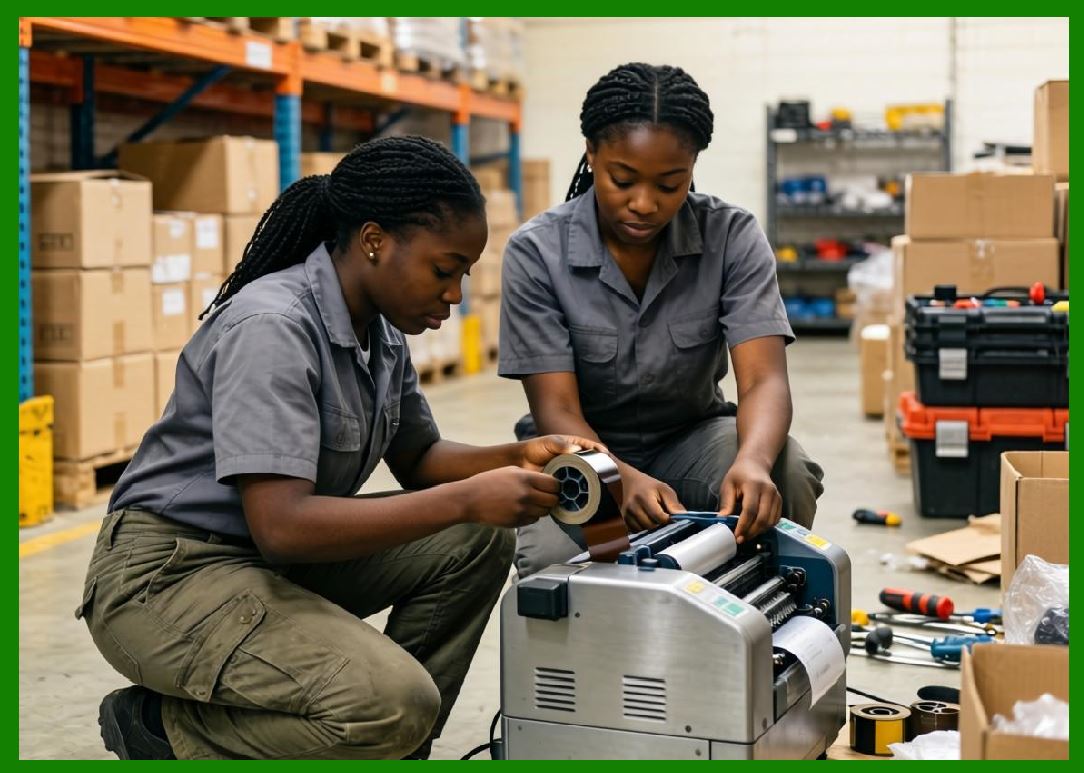
The merger significantly expanded the company global manufacturing scale and technological capabilities. It also strengthened its position in packaging materials, office products, industrial identification, and specialty papers. |
|
4.4 |
After the merger, Avery Dennison accelerated international expansion. Manufacturing plants, research centers, and converting operations were established across Europe, Asia-Pacific, Latin America, and emerging industrial markets. |
4.5 |
The combined company invested heavily in advanced coating technologies, high-speed converting equipment, adhesive research laboratories, and global supply chain infrastructure. This allowed Avery Dennison to support multinational customers operating across multiple continents. |
4.6 |
The merger also increased the company involvement in emerging barcode and automatic identification technologies. During the 1990s, barcode systems expanded rapidly due to globalization, retail automation, warehouse management systems, and computerized logistics operations. |
4.7 |
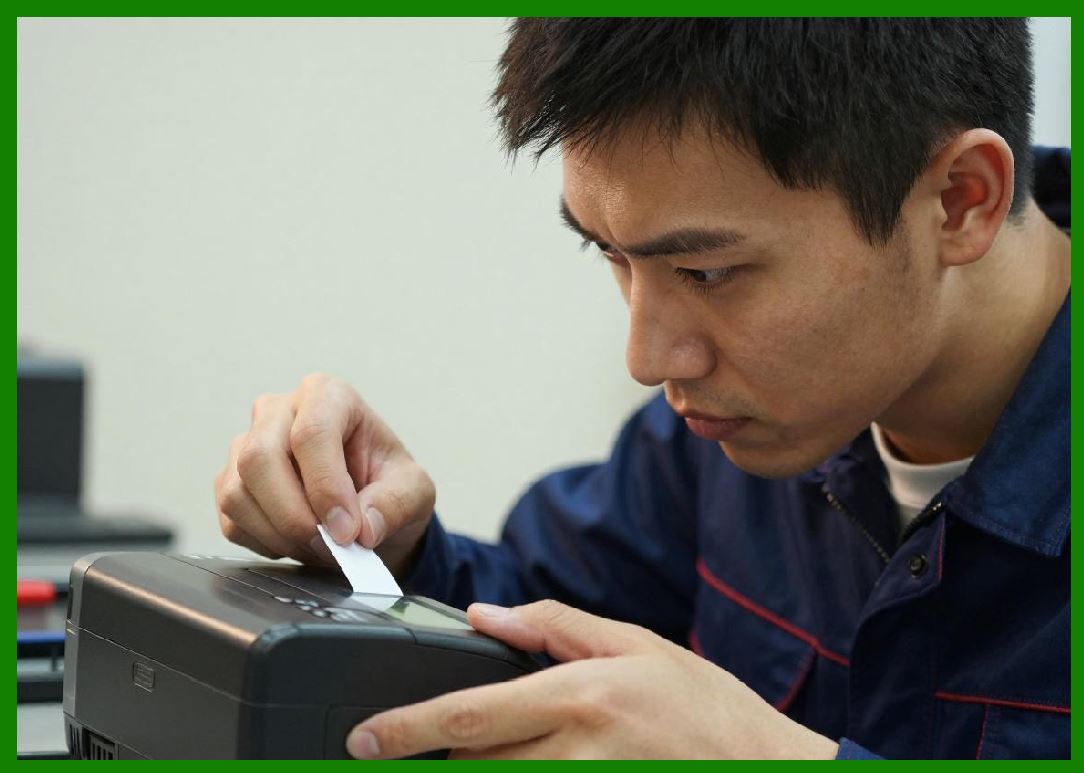
Avery Dennison became one of the key material suppliers supporting this transformation. Its pressure-sensitive barcode label materials became widely used in retail shelf labeling, shipping labels, warehouse tracking systems, and industrial manufacturing identification. |
|
5. Development of Barcode Label Technologies |
5.1 |
The rise of barcode technology created entirely new technical demands for label materials. Traditional decorative labels were no longer sufficient. Barcode labels required extremely precise print quality, high optical contrast, dimensional stability, and consistent scanning performance. |
5.2 |
Avery Dennison recognized early that barcode applications represented a major long-term growth opportunity. The company invested heavily in materials optimized for thermal transfer printing, direct thermal printing, laser printing, and impact printing technologies. |
5.3 |
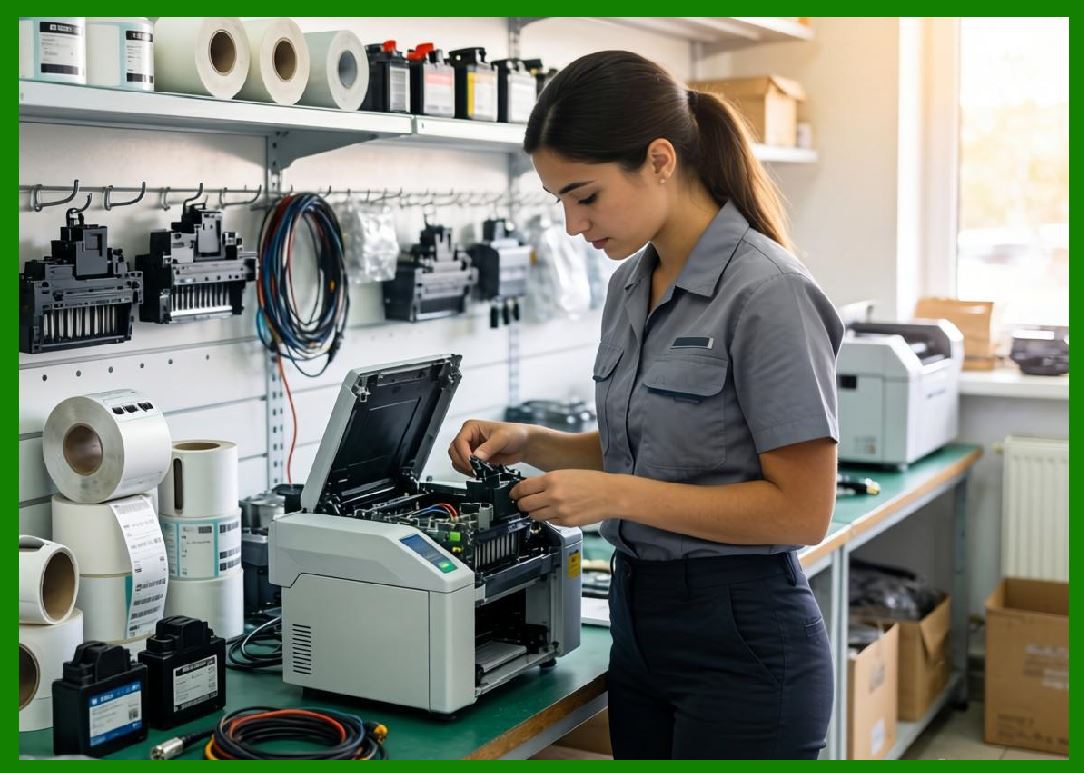
One of the company major achievements was the development of advanced thermal-sensitive label materials. Direct thermal labels became essential in shipping, retail pricing, logistics, airline baggage handling, and warehouse operations. Avery Dennison developed specialized thermal coatings capable of producing sharp barcode images with reliable scanner readability. |
|
5.4 |
Thermal transfer technologies represented another important area of innovation. Avery Dennison engineered facestock coatings optimized for wax, wax-resin, and resin ribbons. These materials supported highly durable barcode printing for industrial environments. |
5.5 |
The company also developed synthetic barcode label materials capable of surviving harsh environmental conditions. Polyester and polypropylene constructions offered superior moisture resistance, chemical resistance, abrasion resistance, and outdoor durability compared to ordinary paper labels. |
5.6 |
Another important innovation involved topcoat engineering. Avery Dennison introduced protective topcoats that improved print anchorage, scratch resistance, solvent resistance, and scanning reliability. These topcoats became especially important in healthcare, laboratory, and industrial applications. |
5.7 |
The company continuously refined barcode label surfaces to improve compatibility with evolving scanner technologies. Early laser scanners required strong print contrast and edge clarity, while later imaging scanners demanded different optical performance characteristics. |
|
6. Adhesive Technology Leadership |
6.1 |
Adhesive chemistry has always been one of Avery Dennison core technological strengths. The company developed numerous proprietary adhesive formulations optimized for different industrial environments and application surfaces. |
6.2 |
Avery Dennison adhesive technologies include permanent adhesives, removable adhesives, freezer-grade adhesives, high-temperature adhesives, low-energy surface adhesives, repositionable adhesives, and specialty industrial bonding systems. |
6.3 |
One major challenge in barcode labeling is maintaining reliable adhesion across diverse environmental conditions. Warehouse labels may encounter dust, humidity, cold temperatures, rough corrugated surfaces, or rapid temperature fluctuations. Pharmaceutical labels may require sterilization resistance. Food packaging labels may need refrigeration compatibility. |

|
6.4 |
The company therefore developed extensive adhesive testing systems involving peel analysis, shear testing, aging studies, environmental simulation, and surface energy evaluation. These tests help ensure reliable long-term label performance. |
6.5 |
Avery Dennison also pioneered adhesive systems compatible with automated label application equipment. High-speed packaging lines require labels that dispense cleanly without adhesive buildup or liner breakage. |
6.6 |
Environmental sustainability increasingly influenced adhesive development. Avery Dennison invested in solvent-free adhesives, water-based coating systems, and recycling-compatible formulations. Some adhesive systems were engineered to separate cleanly during plastic bottle recycling processes. |
6.7 |
Advanced adhesive science also became important for linerless labeling technologies. Since linerless labels lack traditional release liners, adhesive formulations must balance aggressive bonding with controlled unwind behavior. |
|
7. Manufacturing Technologies and Industrial Scale |
7.1 |
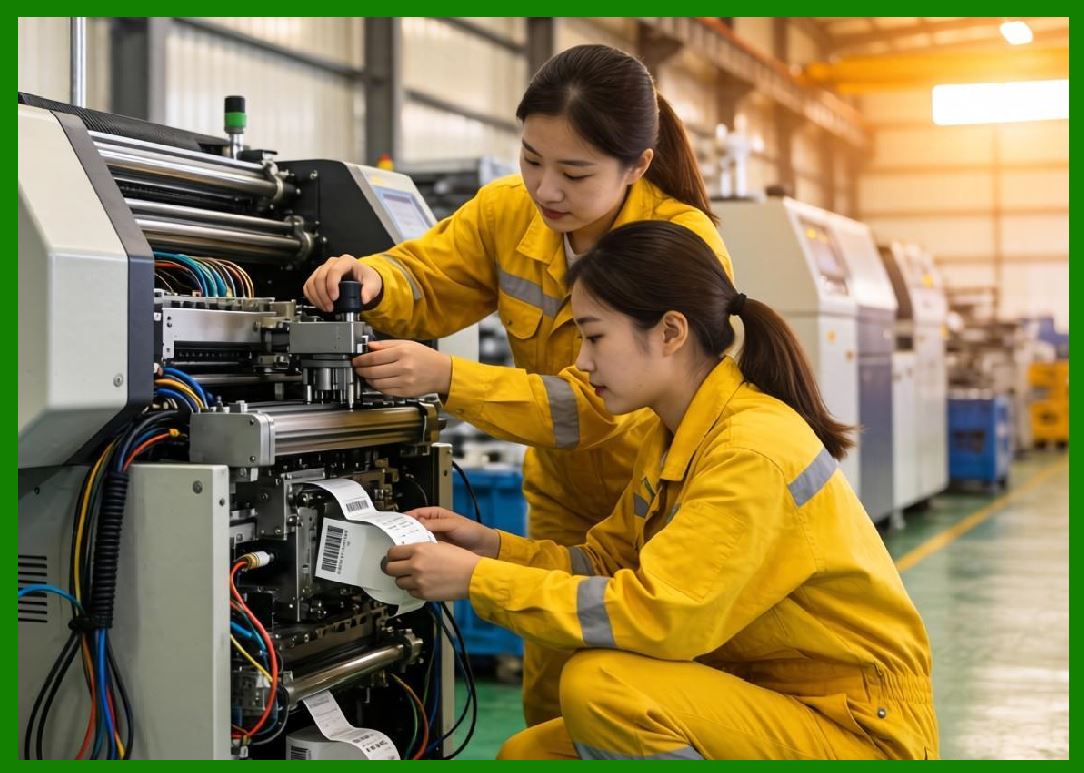
Avery Dennison operates some of the most advanced pressure-sensitive material manufacturing facilities in the world. These facilities utilize highly sophisticated coating, laminating, drying, slitting, and converting technologies. |
7.2 |
Modern label material production requires extremely precise coating control. Adhesive layers may only be a few microns thick, yet uniformity is essential for consistent label performance. Avery Dennison invested heavily in precision coating equipment capable of maintaining tight tolerances at very high production speeds. |
7.3 |
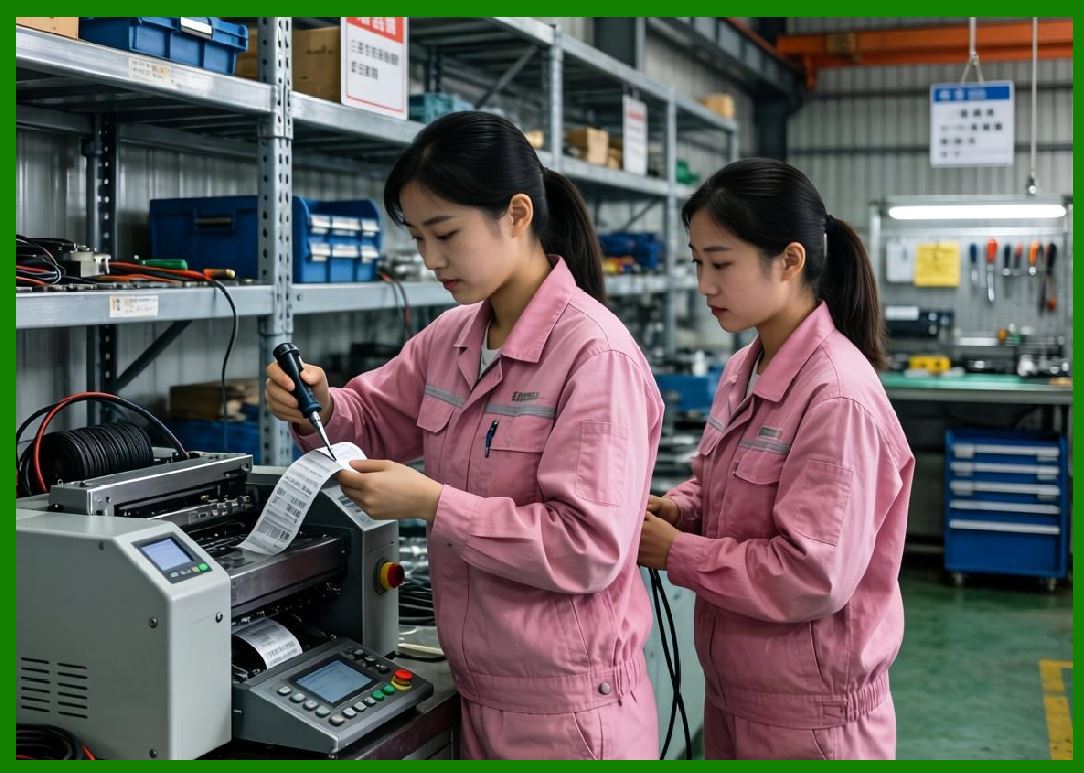
The company manufacturing systems integrate advanced quality control technologies including optical inspection systems, machine vision analysis, online defect detection, and automated process monitoring. |
|
7.4 |
Release liner production represents another technically demanding area. Silicone release coatings must provide highly controlled release force characteristics while maintaining stability during storage, printing, and application. |
7.5 |
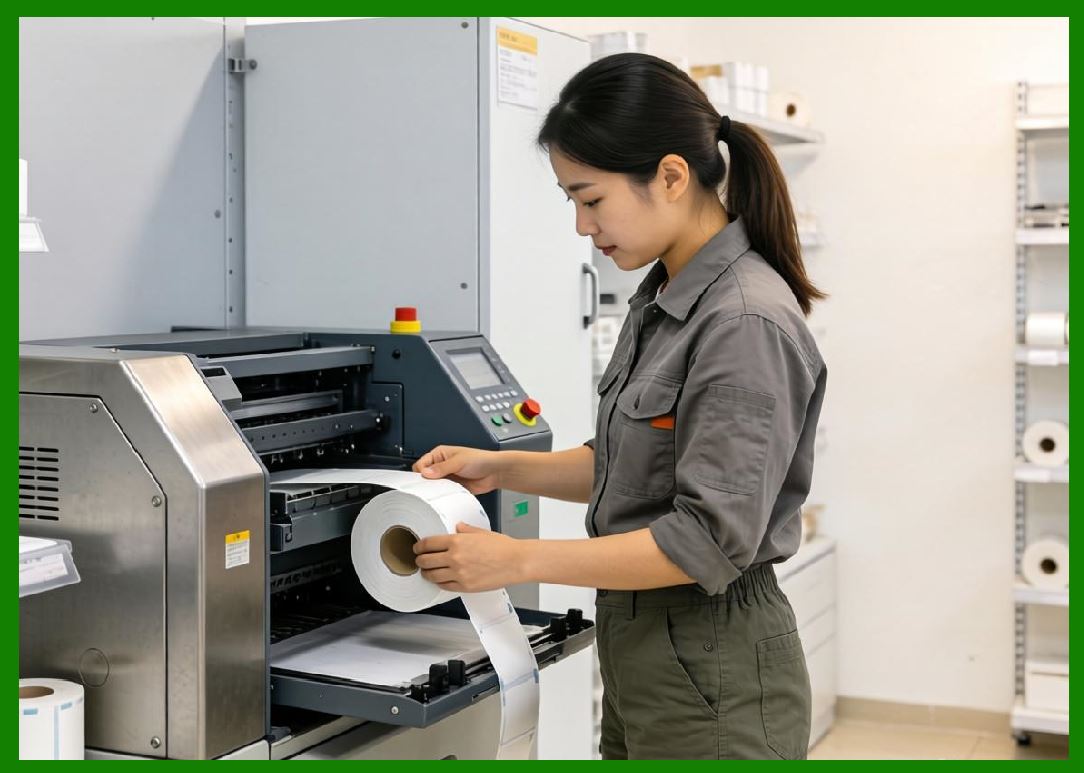
Avery Dennison also invested extensively in high-speed converting systems. Large master rolls are slit, die-cut, rewound, and packaged using highly automated machinery designed for industrial-scale output. |
7.6 |
Global manufacturing scale became increasingly important as multinational customers demanded consistent label materials across multiple regions. Avery Dennison established international production facilities to ensure local supply reliability while maintaining global quality standards. |
7.7 |
The company worldwide manufacturing infrastructure also helps support just-in-time inventory systems and rapid delivery requirements for industrial customers. |
|
8. RFID and Intelligent Label Technologies |
8.1 |
One of Avery Dennison most important modern innovation areas is RFID technology integration. Radio-frequency identification systems allow products to be tracked wirelessly without direct optical scanning. |
8.2 |
Avery Dennison recognized early that RFID would become increasingly important in logistics, retail inventory management, pharmaceutical traceability, and industrial automation. The company therefore invested heavily in RFID inlay manufacturing and smart label technologies. |
8.3 |
RFID labels combine traditional pressure-sensitive constructions with miniature integrated circuits and antennas. Manufacturing these systems requires highly precise assembly technologies because electronic components must remain functional while integrated into flexible label structures. |

|
8.4 |
The company developed RFID-enabled labels for retail apparel, warehouse management, healthcare tracking, airline baggage systems, and supply chain visibility applications. |
8.5 |
One major advantage of RFID systems is their ability to support non-line-of-sight identification. Unlike ordinary barcodes, RFID tags can often be read automatically without manual scanner positioning. |
8.6 |
Avery Dennison also explored hybrid systems combining traditional barcodes with RFID functionality. These dual-technology labels provide compatibility with both existing barcode infrastructure and emerging smart logistics systems. |
8.7 |
RFID integration significantly expanded the company role within the broader automatic identification industry. Avery Dennison evolved from a traditional label manufacturer into a major participant in intelligent supply chain technology. |

|
9. Sustainability and Environmental Initiatives |
9.1 |
Sustainability has become one of Avery Dennison central strategic priorities. The company has implemented numerous environmental initiatives aimed at reducing waste, improving recyclability, and lowering carbon emissions. |
9.2 |
One major sustainability focus involves liner recycling. Traditional pressure-sensitive labels generate large volumes of release liner waste. Avery Dennison introduced programs for collecting and recycling silicone-coated liners from industrial users. |
9.3 |
The company also developed thinner liner technologies that reduce raw material usage while increasing shipping efficiency. Lightweight liners improve roll yield and reduce transportation-related emissions. |

|
9.4 |
Another important initiative involves wash-off adhesive technologies. These systems enable labels to detach more easily during PET bottle recycling processes, improving recycled plastic quality. |
9.5 |
Avery Dennison additionally invested in bio-based materials, renewable fiber sourcing, and environmentally certified paper products. Sustainable forestry practices became increasingly important in facestock sourcing strategies. |
9.6 |
Manufacturing efficiency improvements also contribute to sustainability goals. Energy-efficient coating lines, water recycling systems, waste reduction programs, and renewable energy integration are increasingly common within the company operations. |
9.7 |
The company publicly promotes circular economy principles, recognizing that future packaging systems will require improved compatibility with global recycling infrastructure. |

|
10. Industrial Applications and Global Influence |
10.1 |
Avery Dennison materials are used across an enormous range of industries and applications. Few consumers realize how frequently they encounter Avery technologies during daily life. |
10.2 |
Retail environments represent one of the company largest application sectors. Barcode shelf labels, product labels, pricing labels, inventory labels, and promotional labels are widely produced using Avery materials. |
10.3 |
Logistics and e-commerce applications expanded dramatically during the twenty-first century. Shipping labels, warehouse tracking labels, fulfillment center identification systems, and courier routing labels became major product categories. |

|
10.4 |
Healthcare applications represent another important sector. Avery Dennison materials are used in specimen tracking, patient identification wristbands, pharmaceutical labeling, medical device tracking, and laboratory identification systems. |
10.5 |
Industrial manufacturing also depends heavily on durable barcode labels. Automotive, electronics, aerospace, and machinery manufacturers require long-lasting identification systems capable of surviving harsh environmental conditions. |
10.6 |
Food packaging applications require specialized adhesives and facestock materials compatible with refrigeration, moisture exposure, and food safety regulations. Avery Dennison developed numerous constructions optimized for these environments. |

|
10.7 |
The apparel industry also became an important market due to RFID adoption. Many clothing retailers use Avery RFID systems for inventory tracking and supply chain visibility. |
10.8 |
Because of its enormous scale and technological influence, Avery Dennison helped establish many of the technical standards and performance expectations that define the modern pressure-sensitive barcode label industry. |

|
11. Future Prospects of Avery Dennison |
11.1 |
The future of Avery Dennison will likely be shaped by several converging technological trends including digitalization, smart packaging, sustainability, supply chain automation, and intelligent materials engineering. |
11.2 |
RFID adoption is expected to continue expanding globally. Many retailers are transitioning toward item-level RFID tracking systems, creating significant opportunities for smart label manufacturers. |
11.3 |
Digital printing compatibility will remain an important research area. Increasing demand for variable information printing, personalized packaging, and rapid product turnover requires highly versatile printable materials. |
11.4 |
Sustainability pressures will also accelerate material innovation. Avery Dennison is expected to continue investing in recyclable label systems, compostable materials, linerless technologies, and circular economy initiatives. |

|
11.5 |
The rise of connected packaging may further expand intelligent label capabilities. Future labels may integrate sensors, authentication systems, freshness indicators, and cloud-connected tracking technologies. |
11.6 |
Artificial intelligence and machine vision technologies may also influence manufacturing operations, enabling more advanced quality control and predictive process optimization. |
11.7 |
Despite emerging technologies, traditional barcode labels will likely remain essential for decades because of their simplicity, low cost, universal compatibility, and proven reliability. |
11.8 |
Avery Dennison therefore remains positioned as one of the most influential and technologically advanced companies in the global pressure-sensitive barcode label industry. |

|
Detailed Technical Content Summary of Part 2 |
This part provided a detailed examination of Avery Dennison, one of the most historically important and technologically influential pressure-sensitive barcode label material manufacturers in the world. The article began by explaining the company foundational role in the evolution of modern self-adhesive labeling systems and barcode material technologies. |
The section discussed founder R. Stanton Avery in detail, including his invention of commercially successful self-adhesive labels during the 1930s and his pioneering work in label dispensing systems and die-cut pressure-sensitive constructions. The article also examined the early development of Avery Adhesives and its growth during the postwar industrial expansion period. |
A major portion of the discussion focused on the 1990 merger between Avery International and Dennison Manufacturing Company, which created Avery Dennison Corporation and significantly expanded its global scale and technological capabilities. |
The article then explored Avery Dennison role in the development of barcode label technologies, including direct thermal papers, thermal transfer materials, synthetic film labels, protective topcoats, and advanced scanner-compatible surfaces. Extensive attention was given to the company adhesive technology leadership, including permanent adhesives, freezer-grade adhesives, recycling-compatible systems, and automated application compatibility. |
The discussion also covered manufacturing technologies, precision coating systems, quality control infrastructure, and international production networks. Avery Dennison major investments in RFID and intelligent labeling technologies were explained in detail, including hybrid barcode-RFID systems and smart supply chain applications. |
Finally, the article analyzed Avery Dennison sustainability initiatives, industrial applications across multiple sectors, and future prospects involving smart packaging, digital printing, circular economy technologies, and intelligent materials engineering. |
End of Part 2. |
 cs@easiersoft.com