Part 3 |
UPM Raflatac Finnish Innovation, Sustainable Label Technologies, Global Barcode Materials Leadership, and Industrial Development |
1. Introduction to UPM Raflatac |
1.1 |
UPM Raflatac is one of the world most internationally respected manufacturers of pressure-sensitive barcode label materials and self-adhesive paper technologies. The company is especially recognized for its advanced sustainability initiatives, high-performance label constructions, forest-based industrial expertise, and globally integrated manufacturing systems. Over many decades, UPM Raflatac evolved from a regional Finnish paper-industry operation into one of the leading global suppliers of pressure-sensitive materials for barcode labels, logistics systems, retail packaging, pharmaceuticals, industrial identification, and smart labeling technologies. |
1.2 |
Unlike some labeling companies that originated primarily from adhesive technology businesses, UPM Raflatac developed from the strong Nordic tradition of forestry, paper manufacturing, pulp engineering, and renewable materials science. This background gave the company unique advantages in paper facestock development, fiber engineering, environmental sustainability, and large-scale industrial manufacturing. |
1.3 |
UPM Raflatac became especially important during the rapid globalization of retail logistics and barcode adoption in the late twentieth century. As supply chains became increasingly dependent on automatic identification systems, demand grew for highly reliable barcode label materials capable of supporting thermal printing, variable information printing, and automated scanning environments. |

|
1.4 |
The company product portfolio expanded far beyond traditional paper labels. UPM Raflatac developed sophisticated materials including direct thermal papers, thermal transfer materials, film labels, RFID-ready constructions, wash-off labels, linerless systems, durable industrial labels, and environmentally optimized adhesive technologies. |
1.5 |
One of the most distinctive characteristics of UPM Raflatac is its long-term emphasis on sustainability leadership. The company has consistently promoted renewable raw materials, carbon footprint reduction, recycling compatibility, responsible forestry, and circular economy initiatives. These priorities significantly influenced the technological direction of the modern barcode label industry. |

|
2. Origins of the Parent Company UPM-Kymmene |
2.1 |
To understand the development of UPM Raflatac, it is necessary to examine the broader history of UPM-Kymmene, one of Finland most important industrial corporations. Finland possesses vast forest resources, and the forest industry historically played a central role in the country economic development. |
2.2 |
The roots of UPM-Kymmene extend back to several nineteenth-century pulp mills, sawmills, and paper companies established during Finland industrialization period. Over time, mergers and consolidations created larger industrial groups capable of competing internationally in paper and forestry markets. |
2.3 |
The modern UPM-Kymmene Corporation was officially formed in 1996 through the merger of several Finnish forest-industry companies including Kymmene Corporation, Repola Ltd, and its subsidiary United Paper Mills. However, the industrial heritage behind these companies stretches back more than one hundred years. |

|
2.4 |
UPM-Kymmene became one of the world major producers of paper, pulp, specialty papers, packaging materials, and renewable forest-based products. The company invested heavily in advanced paper engineering, coating technologies, industrial automation, and global manufacturing infrastructure. |
2.5 |
This strong paper-industry background proved highly valuable for pressure-sensitive label manufacturing. High-quality barcode labels require extremely precise paper surfaces with controlled smoothness, opacity, brightness, dimensional stability, and print receptivity. UPM expertise in paper science provided a strong foundation for advanced label material production. |
2.6 |
The company also benefited from Finland strong engineering culture and emphasis on industrial research. Nordic industrial companies traditionally invested heavily in process optimization, energy efficiency, environmental responsibility, and high-quality manufacturing systems. |
2.7 |
These industrial traditions later became central characteristics of UPM Raflatac global business strategy and technological identity. |

|
3. Formation and Development of UPM Raflatac |
3.1 |
UPM Raflatac originated from the label materials business operations within UPM-Kymmene. The company gradually expanded its pressure-sensitive materials activities during the second half of the twentieth century as global demand for self-adhesive labels increased. |
3.2 |
The name Raflatac itself has historical significance in the label industry. It originated from earlier self-adhesive labeling operations that later became integrated into the broader UPM corporate structure. Over time, the Raflatac name became internationally associated with high-quality pressure-sensitive label materials. |
3.3 |
As barcode systems expanded worldwide during the 1970s and 1980s, UPM Raflatac recognized that self-adhesive barcode labels represented a rapidly growing industrial sector. Retail automation, computerized logistics, and warehouse management systems created enormous demand for reliable pressure-sensitive materials. |

|
3.4 |
The company therefore invested aggressively in coating technologies, adhesive systems, silicone release chemistry, thermal printing compatibility, and global manufacturing expansion. |
3.5 |
UPM Raflatac established production facilities across Europe, Asia, North America, and Latin America. This international manufacturing strategy allowed the company to support multinational customers with consistent product quality and reliable regional supply chains. |
3.6 |
The company also built extensive research and development operations focused on label performance optimization, sustainability engineering, adhesive innovation, and printing technology compatibility. |
3.7 |
Over time, UPM Raflatac became recognized not only as a large-scale manufacturer but also as one of the industry most technically sophisticated and environmentally progressive companies. |

|
4. Expansion of Barcode Label Technologies |
4.1 |
The rapid global adoption of barcode systems significantly transformed the pressure-sensitive label industry. UPM Raflatac responded by developing specialized label constructions optimized for barcode printing and scanning applications. |
4.2 |
Barcode labels impose much stricter technical requirements than ordinary decorative labels. Barcode readability depends on factors including surface smoothness, print contrast, coating uniformity, dimensional stability, and environmental durability. |
4.3 |
UPM Raflatac invested heavily in direct thermal label technologies. Direct thermal labels became increasingly important for shipping, warehousing, transportation, retail pricing, and logistics operations because they eliminated the need for ink ribbons. |

|
4.4 |
The company developed advanced thermal-sensitive coatings capable of producing sharp barcode images with reliable scanner performance. These coatings were engineered for controlled heat sensitivity, image density, and environmental resistance. |
4.5 |
One major technical challenge in direct thermal materials involves image durability. Early thermal papers were vulnerable to fading caused by heat, ultraviolet light, moisture, oils, and plasticizer exposure. UPM Raflatac therefore developed improved thermal chemistries designed for longer-lasting barcode readability. |
4.6 |
Thermal transfer label technologies also became an important product category. UPM Raflatac engineered specialized facestock surfaces compatible with wax, wax-resin, and resin ribbons. These materials supported durable barcode printing for industrial applications requiring long-term identification reliability. |
4.7 |
The company also developed premium coated papers optimized for laser printing, inkjet printing, flexographic printing, offset printing, and digital printing systems. This versatility became increasingly important as printing technologies diversified. |

|
5. Paper Engineering and Facestock Technologies |
5.1 |
One of UPM Raflatac greatest technical strengths lies in paper engineering. Because of its deep roots in the forest products industry, the company possesses extensive expertise in fiber processing, coating chemistry, paper surface optimization, and industrial papermaking technologies. |
5.2 |
Barcode label facestocks require highly controlled physical properties. Surface smoothness affects barcode edge definition and print consistency. Opacity influences scanner readability. Dimensional stability affects registration accuracy during converting and printing. |
5.3 |
UPM Raflatac developed numerous paper facestock categories including: |
1. Uncoated papers |
2. Semi-gloss papers |
3. High-gloss papers |
4. Cast-coated papers |
5. Thermal-sensitive papers |
6. Lightweight papers |
7. Recycled-content papers |
8. Specialty industrial papers |

|
5.4 |
The company also engineered paper surfaces optimized for different printer technologies. Thermal transfer printing, direct thermal printing, inkjet printing, and laser printing each impose different surface requirements. |
5.5 |
Moisture resistance represents another important technical consideration. Paper labels used in refrigerated food packaging or logistics operations may encounter condensation, humidity, and freezing conditions. UPM Raflatac developed coatings and treatments designed to improve moisture stability. |
5.6 |
The company additionally invested in ultra-lightweight facestock technologies aimed at reducing raw material consumption and transportation costs. These developments contributed both economic and environmental benefits. |
5.7 |
Sustainable fiber sourcing also became a major strategic priority. UPM Raflatac increasingly emphasized certified forestry, renewable raw materials, and environmentally responsible paper production systems. |

|
6. Adhesive Innovations |
6.1 |
Adhesive technology represents one of the most technically complex areas of pressure-sensitive barcode label manufacturing. UPM Raflatac developed extensive expertise in adhesive formulation science to support diverse industrial applications. |
6.2 |
The company adhesive systems include permanent adhesives, removable adhesives, freezer-grade adhesives, high-tack adhesives, UV-resistant adhesives, food-safe adhesives, and wash-off recycling-compatible adhesives. |
6.3 |
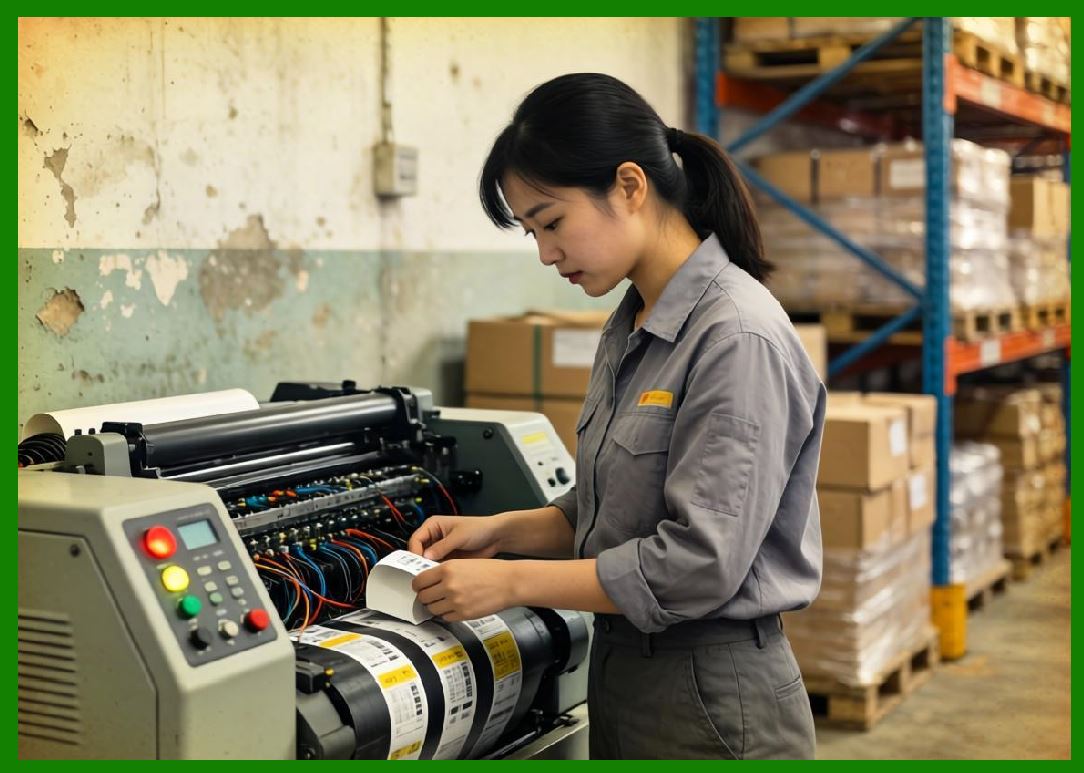
One of the most important technical challenges involves balancing initial tack, long-term adhesion, environmental resistance, and process compatibility. Labels must adhere reliably while still dispensing cleanly during high-speed automated application. |
|
6.4 |
UPM Raflatac engineered specialized adhesives for corrugated packaging applications. Recycled corrugated cardboard often presents difficult surface conditions due to dust, variable porosity, and fiber contamination. Adhesive systems therefore require strong wetting performance and reliable bond formation. |
6.5 |
Cold-temperature adhesive technology became especially important for food logistics and refrigerated packaging industries. Some adhesives lose flexibility or tack at low temperatures. UPM Raflatac developed freezer-grade systems capable of maintaining adhesion in frozen environments. |
6.6 |
Wash-off adhesive systems became another major innovation area. These technologies support PET bottle recycling by allowing labels to detach during recycling processes. This improves the purity and value of recycled plastics. |
6.7 |
The company also explored solvent-free coating systems and water-based adhesives to reduce environmental impact and improve workplace safety. |

|
7. Release Liner and Silicone Coating Technologies |
7.1 |
Although consumers rarely notice release liners, they are essential components of pressure-sensitive label systems. UPM Raflatac invested heavily in liner engineering and silicone release coating technologies. |
7.2 |
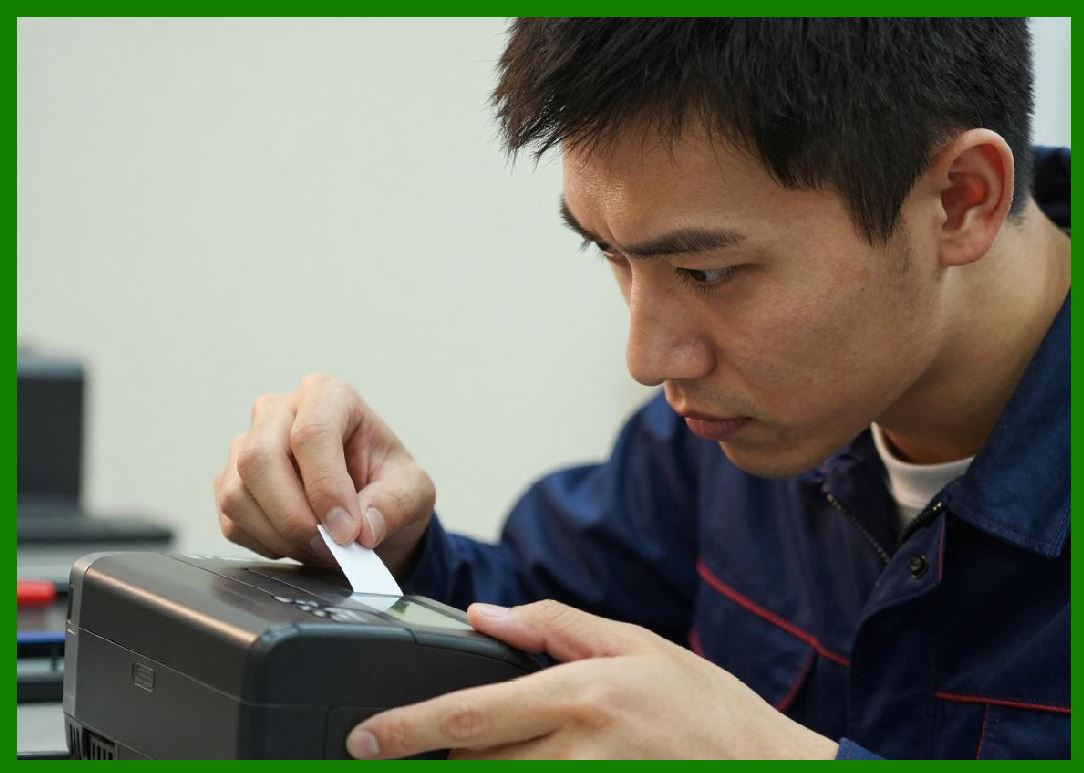
The release liner must support the label during printing, die cutting, transportation, storage, and dispensing while still allowing clean label separation during application. |
7.3 |
UPM Raflatac developed liners using glassine paper, kraft paper, polyethylene-coated papers, and film-based substrates. Each material category offers different strength, flexibility, and dimensional characteristics. |
|
7.4 |
Silicone release coatings require extremely precise formulation and application control. If release force is too low, labels may detach prematurely. If release force is too high, dispensing problems may occur during automated application. |
7.5 |
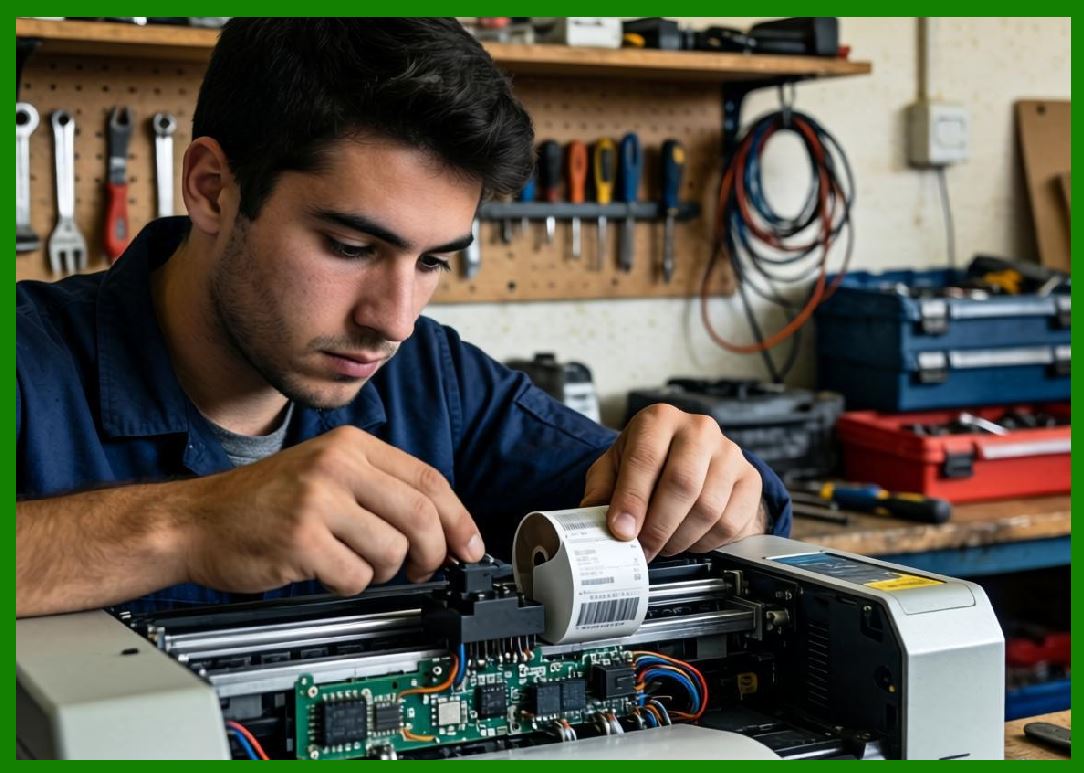
The company optimized silicone chemistries for compatibility with different adhesive systems and converting processes. This became particularly important in high-speed industrial labeling operations. |
7.6 |
Thinner liner technologies emerged as another important innovation area. By reducing liner thickness, UPM Raflatac improved roll yield efficiency, reduced transportation weight, and lowered material consumption. |
7.7 |
The company also promoted liner recycling initiatives aimed at reducing industrial waste from pressure-sensitive label applications. |
|
8. Sustainable Label Materials Leadership |
8.1 |
UPM Raflatac became internationally recognized as one of the most environmentally progressive companies in the pressure-sensitive label industry. Sustainability is deeply integrated into its corporate strategy, manufacturing systems, and product development activities. |
8.2 |
The company forest-industry background strongly influenced its environmental philosophy. Responsible forestry, renewable resource management, and circular economy thinking became central aspects of its industrial identity. |
8.3 |
UPM Raflatac invested heavily in life-cycle assessment methodologies to evaluate the environmental impact of label materials. This included analysis of raw materials, energy usage, transportation, manufacturing emissions, recycling compatibility, and end-of-life disposal. |

|
8.4 |
One major sustainability initiative involved reducing the carbon footprint of label constructions. Lightweight materials, thinner liners, optimized logistics systems, and renewable energy integration all contributed to emissions reduction efforts. |
8.5 |
The company also introduced renewable and recycled-content materials for certain label applications. Sustainable forestry certification programs became important components of raw material sourcing. |
8.6 |
UPM Raflatac promoted recycling-compatible label systems designed to improve packaging recyclability. Wash-off adhesives, clean-removal constructions, and sustainable packaging solutions became major innovation areas. |
8.7 |
Another important development involved liner recycling programs. Release liners historically represented a major waste stream in pressure-sensitive labeling. UPM Raflatac helped establish collection and recycling systems aimed at reducing landfill disposal. |
8.8 |
Environmental transparency became increasingly important as global brands demanded more sustainable packaging supply chains. UPM Raflatac therefore expanded sustainability reporting and environmental performance documentation. |

|
9. RFID and Smart Label Development |
9.1 |
Like other major global label manufacturers, UPM Raflatac recognized the growing importance of RFID technology in modern supply chains. The company expanded beyond conventional barcode labels into intelligent labeling systems capable of wireless identification. |
9.2 |
RFID labels integrate microchips and antennas into pressure-sensitive constructions. These systems allow automatic identification without direct scanner line-of-sight requirements. |
9.3 |
UPM Raflatac developed RFID-enabled label materials for retail inventory tracking, logistics automation, pharmaceutical traceability, warehouse management, and industrial asset identification. |

|
9.4 |
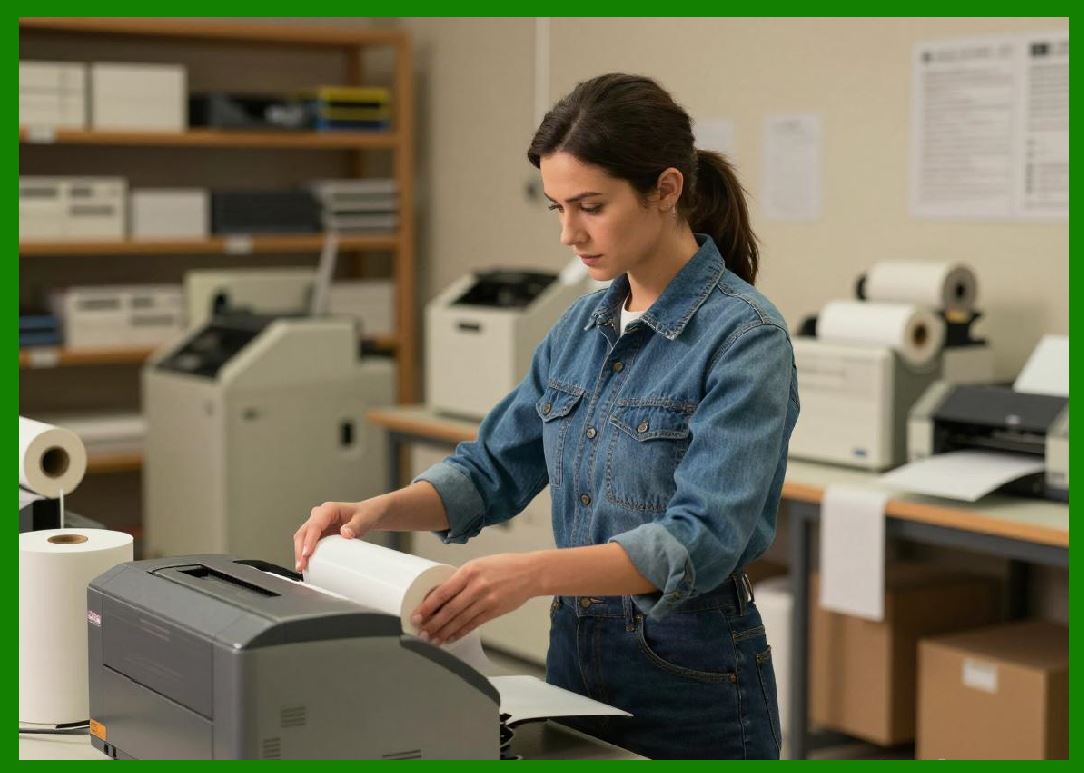
The company invested in advanced inlay integration technologies to ensure electronic reliability within flexible label structures. RFID manufacturing requires highly precise assembly processes because electronic components must survive converting, printing, and application operations. |
9.5 |
Hybrid systems combining barcodes and RFID functionality became increasingly important. These dual-mode labels allow compatibility with both traditional barcode infrastructure and newer smart logistics systems. |
9.6 |
RFID adoption accelerated particularly in apparel retail applications. Item-level RFID tracking improved inventory accuracy, supply chain visibility, and loss prevention. |
9.7 |
UPM Raflatac also explored future intelligent packaging concepts involving sensors, authentication technologies, and cloud-connected product tracking systems. |
|
10. Global Manufacturing and Industrial Infrastructure |
10.1 |
UPM Raflatac operates a highly international manufacturing network supporting customers across Europe, North America, Latin America, Asia-Pacific, and emerging industrial regions. |
10.2 |
Modern pressure-sensitive label production requires extremely sophisticated coating and converting infrastructure. UPM Raflatac invested heavily in precision manufacturing systems capable of maintaining consistent product quality at industrial scale. |
10.3 |
The company coating lines utilize advanced process controls for adhesive application, silicone coating, drying, laminating, and surface treatment operations. |

|
10.4 |
Automated inspection systems monitor defects, coating uniformity, surface quality, and dimensional accuracy during production. Machine vision technologies became increasingly important for maintaining high-speed manufacturing consistency. |
10.5 |
UPM Raflatac also established regional distribution centers and logistics systems designed to support just-in-time manufacturing environments. Global customers increasingly required rapid delivery and localized technical support. |
10.6 |
Research and development facilities play a critical role in product innovation. Laboratories evaluate adhesive performance, barcode print quality, environmental durability, thermal sensitivity, and recycling compatibility. |
10.7 |
The company industrial infrastructure supports not only large-scale production but also customized product development for specialized industrial applications. |

|
11. Applications Across Industries |
11.1 |
UPM Raflatac materials are used across a wide range of industrial sectors. Barcode labels produced using the company materials appear in retail stores, logistics warehouses, hospitals, manufacturing plants, food packaging facilities, laboratories, and transportation systems worldwide. |
11.2 |
Retail pricing and inventory management remain major application categories. Supermarkets, department stores, and retail chains depend heavily on barcode labeling systems supported by pressure-sensitive materials. |
11.3 |
Logistics and shipping applications represent another enormous market. Thermal shipping labels used in warehouse automation and parcel delivery systems require highly reliable printing and scanning performance. |

|
11.4 |
Food packaging applications require specialized constructions capable of surviving refrigeration, freezing, moisture exposure, and food handling environments. |
11.5 |
Healthcare and pharmaceutical sectors demand labels resistant to sterilization, chemicals, refrigeration, and long-term storage conditions. Barcode readability is especially critical in patient safety applications. |
11.6 |
Industrial manufacturing environments require durable labels capable of surviving heat, abrasion, oils, solvents, and outdoor exposure. |
11.7 |
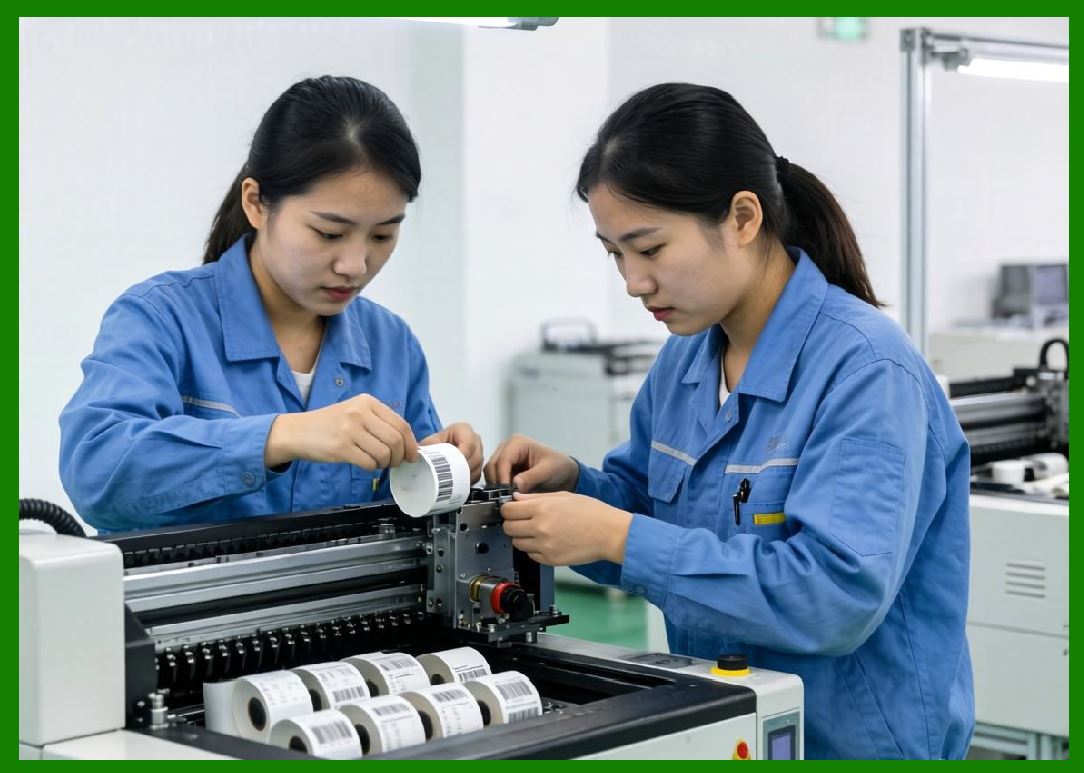
E-commerce growth dramatically increased global demand for direct thermal shipping labels, one of the company important product categories. |
|
12. Future Prospects of UPM Raflatac |
12.1 |
UPM Raflatac future development will likely continue emphasizing sustainability, intelligent labeling, advanced materials engineering, and digital supply chain technologies. |
12.2 |
Environmental regulations and corporate sustainability goals are expected to accelerate demand for recyclable label systems, renewable materials, and low-carbon manufacturing. |
12.3 |
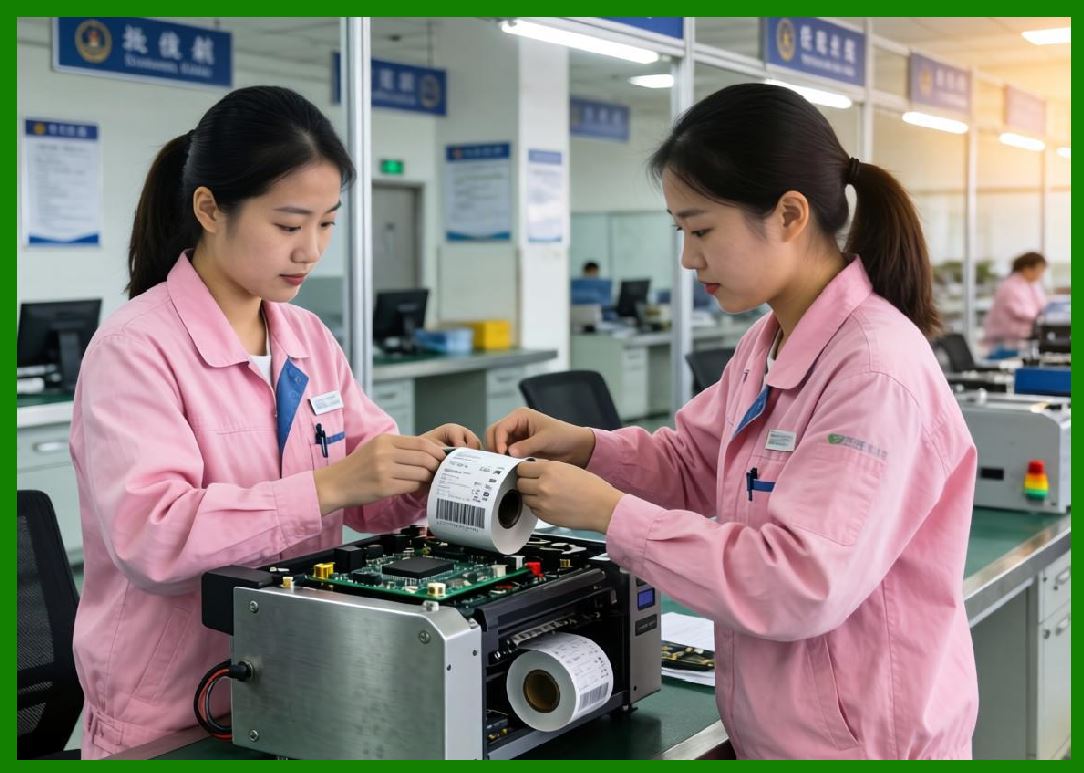
RFID adoption may significantly expand over the coming decades, particularly in retail, healthcare, logistics, and industrial automation sectors. |
|
12.4 |
Digital printing technologies will also continue influencing label material development. Variable information printing, short production runs, and personalized packaging require highly versatile printable surfaces. |
12.5 |
The company is likely to continue investing in circular economy initiatives including liner recycling, recyclable adhesives, and environmentally optimized packaging systems. |
12.6 |
Smart packaging technologies combining barcodes, RFID, sensors, and digital authentication systems may become increasingly important innovation areas. |
12.7 |
Automation and robotics in logistics systems will require even more reliable barcode scanning performance and durable identification materials. |
12.8 |
Because of its strong technical expertise, sustainability leadership, and global industrial infrastructure, UPM Raflatac is expected to remain one of the world most influential pressure-sensitive barcode label material manufacturers for many years. |
|
Detailed Technical Content Summary of Part 3 |
This part provided a comprehensive analysis of UPM Raflatac, one of the world leading manufacturers of pressure-sensitive barcode label materials. The discussion began with an introduction to the company global importance and its distinctive origins within Finland forest-products and paper-engineering industries. |
The article examined the historical development of the parent company UPM-Kymmene and explained how expertise in papermaking, fiber science, and industrial manufacturing created a strong foundation for advanced barcode label material production. The formation and expansion of UPM Raflatac were discussed in detail, including its international manufacturing growth and technological investments. |
A major portion of the article focused on barcode label technologies, including direct thermal materials, thermal transfer constructions, premium coated papers, and scanner-optimized surfaces. The discussion also explored UPM Raflatac advanced paper engineering capabilities, including surface smoothness optimization, moisture resistance, lightweight constructions, and sustainable fiber sourcing. |
The section analyzed the company adhesive innovations, including freezer-grade adhesives, corrugated packaging adhesives, wash-off recycling-compatible systems, and solvent-free formulations. Release liner engineering and silicone coating technologies were also examined extensively. |
Another major focus involved sustainability leadership. The article explained UPM Raflatac investments in life-cycle assessment, carbon footprint reduction, liner recycling, renewable materials, recyclable packaging systems, and circular economy initiatives. |
The discussion further explored RFID and intelligent labeling technologies, including hybrid barcode-RFID systems and smart packaging applications. Finally, the article reviewed the company global manufacturing infrastructure, industrial applications across multiple sectors, and future prospects involving digital printing, sustainability, smart packaging, and intelligent supply chain technologies. |
End of Part 3. |
 cs@easiersoft.com