Part 6 |
LINTEC Corporation Japanese Precision Coating Technologies, Advanced Pressure-Sensitive Materials, Barcode Label Innovation, and High-Performance Industrial Identification Systems |
1. Introduction to LINTEC Corporation |
1.1 |
LINTEC Corporation is one of the most technologically advanced and internationally respected manufacturers in the global pressure-sensitive barcode label paper industry. Headquartered in Japan, the company became famous for its highly sophisticated coating technologies, precision adhesive engineering, advanced industrial materials, and high-performance identification systems. Over decades of technological development, LINTEC evolved into one of the world leading suppliers of pressure-sensitive materials used in barcode labels, electronics manufacturing, logistics systems, pharmaceuticals, automotive production, semiconductor processing, and industrial automation. |
1.2 |
The company occupies a particularly important position within the Asian pressure-sensitive materials industry. Japan industrial culture emphasizes precision manufacturing, materials science innovation, quality assurance, miniaturization technologies, and process optimization. LINTEC successfully integrated these engineering principles into its barcode label and self-adhesive material technologies. |

|
1.3 |
Unlike companies focused mainly on conventional paper labeling products, LINTEC expanded aggressively into highly specialized industrial sectors including electronics, semiconductor manufacturing, optical films, automotive systems, and advanced functional materials. This diversification strengthened its expertise in high-performance adhesive systems and engineered films. |
1.4 |
LINTEC became especially influential in applications where ordinary barcode labels could not survive environmental stress conditions. The company developed durable identification systems capable of resisting chemicals, heat, abrasion, solvents, moisture, ultraviolet exposure, and demanding industrial processing operations. |
1.5 |
Today, LINTEC is widely recognized as one of the world most advanced developers of pressure-sensitive materials and precision coating technologies. Its products are deeply integrated into modern logistics systems, electronics manufacturing infrastructure, industrial asset management, healthcare labeling, and automated barcode identification environments. |

|
2. Historical Origins and Founding Development |
2.1 |
LINTEC origins trace back to 1934 in Japan. The company initially operated under a different corporate structure before evolving into the modern LINTEC Corporation. Its early activities focused on specialty papers, adhesive materials, and industrial coating technologies. |
2.2 |
Japan during the early twentieth century was rapidly industrializing and modernizing its manufacturing infrastructure. Demand for advanced industrial materials, packaging systems, and identification technologies steadily increased. |
2.3 |
Following World War II, Japan experienced extraordinary industrial growth. Electronics manufacturing, automotive production, machinery industries, and export-oriented manufacturing expanded rapidly. These developments created strong demand for advanced adhesive materials and industrial labeling systems. |
|
2.4 |
LINTEC recognized early that self-adhesive technologies represented a strategically important industrial sector. The company invested heavily in pressure-sensitive materials research, coating technologies, release liner systems, and specialty industrial applications. |
2.5 |
During the postwar economic expansion period, Japan became internationally recognized for manufacturing quality and technological sophistication. LINTEC benefited greatly from this industrial environment and adopted strong engineering-focused operational principles. |
2.6 |
The company gradually expanded its capabilities beyond conventional paper products into high-performance films, industrial tapes, specialty coatings, optical materials, and electronic component technologies. |
2.7 |
This broad technological foundation later became extremely valuable in the development of durable barcode label materials and advanced industrial identification systems. |

|
3. Development of Pressure-Sensitive Materials Technologies |
3.1 |
Pressure-sensitive materials became one of LINTEC core technological specialties. The company developed extensive expertise in multilayer construction engineering involving facestock materials, adhesives, release coatings, liners, and surface treatments. |
3.2 |
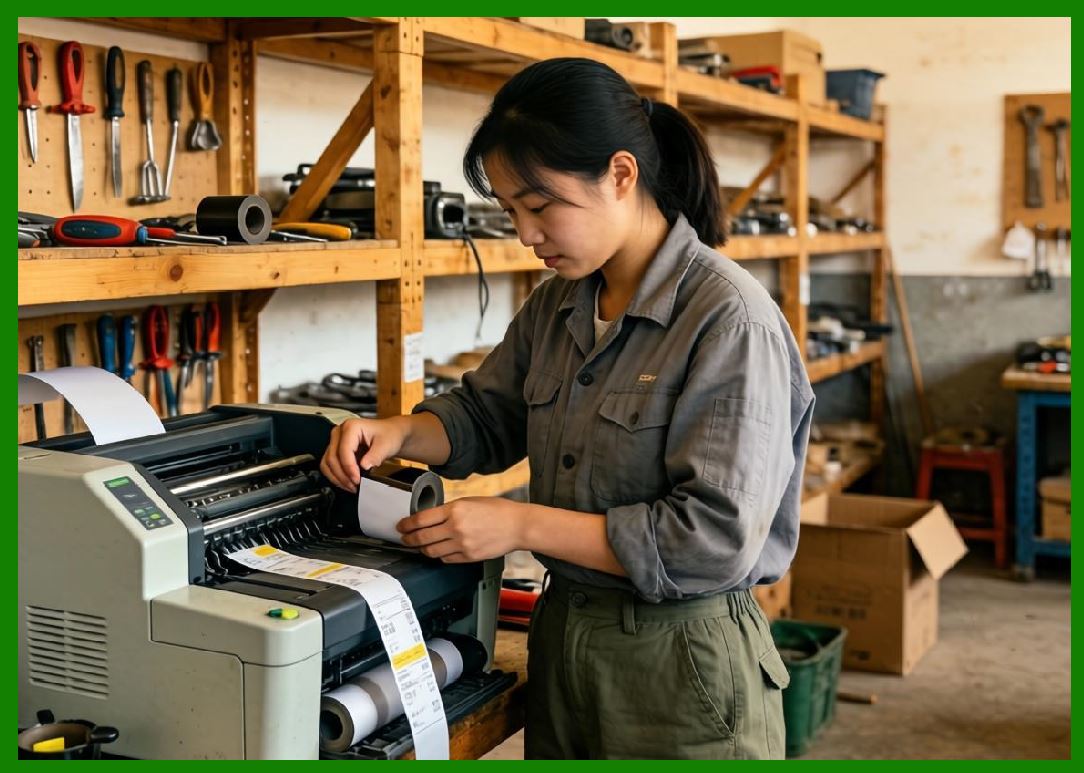
One major strength of LINTEC is its advanced coating technology. Pressure-sensitive label manufacturing requires highly uniform adhesive and silicone coating application at microscopic thickness levels. Even minor coating irregularities can negatively affect barcode print quality and label dispensing reliability. |
3.3 |
The company invested heavily in precision coating machinery, drying systems, laminating technologies, and process monitoring equipment. Japanese manufacturing philosophy strongly emphasized consistency, repeatability, and defect reduction. |
|
3.4 |
LINTEC developed numerous pressure-sensitive material categories including: |
1. Paper barcode labels |
2. Film barcode labels |
3. Direct thermal labels |
4. Thermal transfer labels |
5. Durable industrial labels |
6. Electronic component labels |
7. Tamper-evident labels |
8. Pharmaceutical identification materials |

|
3.5 |
The company also engineered specialized constructions optimized for automated dispensing systems and high-speed industrial application equipment. |
3.6 |
Pressure-sensitive material durability became increasingly important as barcode systems expanded into more demanding industrial environments. |
3.7 |
LINTEC therefore focused heavily on environmental resistance, print stability, dimensional accuracy, and long-term identification reliability. |
|
4. Barcode Label Technologies and Scanner Performance Optimization |
4.1 |
As barcode systems became globally standardized during the late twentieth century, LINTEC expanded aggressively into barcode-compatible pressure-sensitive materials. |
4.2 |
Barcode labels require extremely high print precision because scanner readability depends on accurate edge definition, optical contrast, and surface consistency. LINTEC invested extensively in surface engineering technologies designed to improve barcode scanning reliability. |
4.3 |
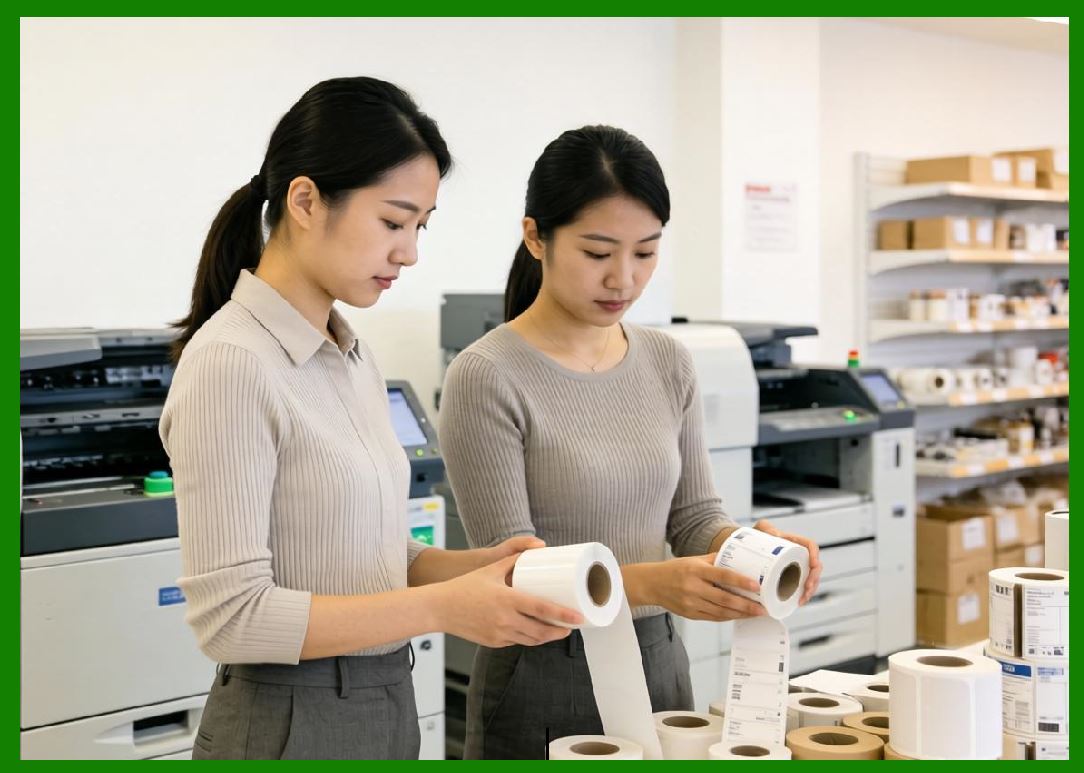
Direct thermal label materials became an important product category for logistics, warehousing, retail pricing, transportation, and shipping applications. |
|
4.4 |
The company developed advanced thermal-sensitive coatings capable of generating sharp barcode images under controlled heat exposure from thermal printheads. |
4.5 |
One of the major technical challenges in direct thermal technology involves balancing image sensitivity with environmental durability. LINTEC engineered thermal formulations resistant to fading caused by heat, moisture, ultraviolet light, oils, and chemical contamination. |
4.6 |
Thermal transfer printing systems represented another major innovation area. The company optimized facestock coatings for compatibility with wax, wax-resin, and resin thermal ribbons. |
4.7 |
LINTEC also developed highly smooth and dimensionally stable surfaces optimized for modern imaging scanners and automated machine-vision barcode reading systems. |

|
5. Adhesive Engineering and Advanced Bonding Technologies |
5.1 |
Adhesive science became one of LINTEC most important research and development areas. Pressure-sensitive adhesives must maintain highly balanced mechanical and chemical properties while supporting industrial automation and environmental durability. |
5.2 |
The company developed extensive adhesive product lines including: |
1. Permanent adhesives |
2. Removable adhesives |
3. Repositionable adhesives |
4. Freezer-grade adhesives |
5. High-temperature adhesives |
6. Solvent-resistant adhesives |
7. Electronics-compatible adhesives |
8. Pharmaceutical-grade adhesives |

|
5.3 |
One of the company major strengths involves bonding difficult surfaces. Industrial packaging, plastics, low-surface-energy materials, coated metals, and electronic substrates often present significant adhesion challenges. |
5.4 |
LINTEC conducted extensive research into surface energy interactions, viscoelastic behavior, polymer chemistry, wetting mechanisms, and long-term adhesive aging. |
5.5 |
The company also optimized adhesives for automated dispensing systems where release consistency and application reliability are critical. |
5.6 |
Chemical resistance became especially important for industrial and electronics applications. Some labels must survive exposure to solvents, cleaning chemicals, oils, and industrial fluids. |
5.7 |
Environmental sustainability increasingly influenced adhesive development strategies, leading to research into solvent-free systems, low-emission coatings, and recyclable label constructions. |
|
6. Electronics and Semiconductor Labeling Technologies |
6.1 |
One of LINTEC most distinctive competitive advantages is its strong position within electronics and semiconductor manufacturing industries. Japan became one of the world major electronics manufacturing centers, and LINTEC developed highly specialized labeling technologies for this sector. |
6.2 |
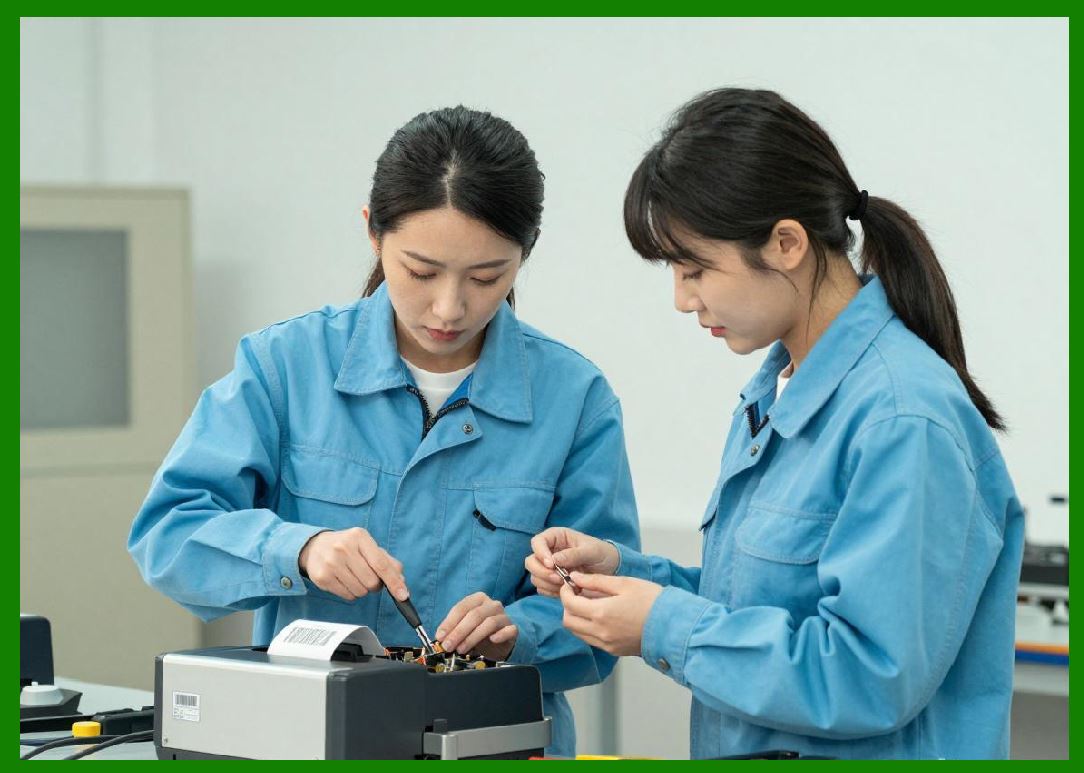
Electronics manufacturing environments impose extremely demanding technical requirements on barcode labels. Materials must resist heat, solvents, humidity, electrostatic discharge, and industrial cleaning processes. |
6.3 |
LINTEC developed durable polyester and polyimide barcode labels specifically designed for printed circuit boards, semiconductor wafers, electronic assemblies, and industrial electronic components. |

|
6.4 |
Polyimide materials became especially important because they can survive high-temperature soldering and reflow processes common in electronics manufacturing. |
6.5 |
The company also engineered antistatic label systems designed to reduce electrostatic discharge risks in semiconductor environments. |
6.6 |
Dimensional stability became critically important in electronics identification systems because even small distortions can affect automated scanning and machine handling accuracy. |
6.7 |
LINTEC expertise in electronics labeling significantly strengthened its global reputation for advanced industrial identification technologies. |

|
7. Film Technologies and Durable Industrial Labels |
7.1 |
LINTEC became internationally recognized for its advanced film technologies used in durable barcode label systems. Film-based labels offer major advantages over ordinary paper labels in harsh environments. |
7.2 |
The company developed barcode labels using materials such as: |
1. Polyester |
2. Polypropylene |
3. Polyethylene |
4. Polyimide |
5. Vinyl |
6. Specialty engineered films |
|
7.3 |
Polyester labels became widely used in industrial manufacturing because of their excellent dimensional stability, moisture resistance, chemical durability, and mechanical strength. |
7.4 |
Polypropylene materials provided flexibility and moisture resistance suitable for logistics, consumer products, and outdoor applications. |
7.5 |
The company also developed multilayer film constructions incorporating protective topcoats, UV-resistant coatings, and chemical-resistant surface treatments. |
|
7.6 |
Outdoor durability represented another important technical area. Industrial asset tracking systems often require barcode labels capable of surviving years of weather exposure. |
7.7 |
LINTEC engineered durable identification systems resistant to sunlight, temperature cycling, moisture, abrasion, and industrial contaminants. |

|
8. Release Liner and Silicone Coating Innovations |
8.1 |
Release liners are essential components of pressure-sensitive label systems. LINTEC invested heavily in advanced silicone release coating technologies and liner engineering. |
8.2 |
The release liner supports the label during manufacturing, printing, storage, transportation, and dispensing operations. Clean and consistent label release is critical for automated application systems. |
8.3 |
The company developed highly controlled silicone coating formulations optimized for different adhesive systems and dispensing conditions. |

|
8.4 |
One major technical challenge involves balancing release force. Excessively low release force may cause premature label separation, while excessively high release force can create dispensing problems. |
8.5 |
LINTEC engineered release liners using glassine paper, kraft paper, polyester films, and specialty substrates. |
8.6 |
The company also developed thinner liner technologies aimed at improving roll efficiency, reducing transportation costs, and minimizing material consumption. |
8.7 |
Environmental sustainability initiatives encouraged research into recyclable liner systems and reduced-waste label constructions. |

|
9. Healthcare and Pharmaceutical Applications |
9.1 |
Healthcare and pharmaceutical industries became increasingly important application sectors for LINTEC barcode label technologies. |
9.2 |
Medical environments require extremely reliable identification systems because barcode accuracy directly affects patient safety, medication management, and laboratory traceability. |
9.3 |
LINTEC developed pharmaceutical-grade label materials resistant to sterilization processes, refrigeration, alcohol exposure, moisture, and long-term storage conditions. |
|
9.4 |
Laboratory specimen labels represented another technically demanding application category. These labels may experience freezing temperatures, centrifugation, chemical exposure, and biological contamination risks. |
9.5 |
The company also engineered tamper-evident pharmaceutical labels designed to improve product authentication and anti-counterfeiting protection. |
9.6 |
Medical device tracking systems increasingly rely on durable barcode identification technologies compatible with regulatory traceability requirements. |
9.7 |
Healthcare applications strengthened LINTEC position as a supplier of highly reliable industrial-grade labeling systems. |
|
10. Sustainability and Environmental Strategies |
10.1 |
Environmental sustainability became an increasingly important strategic priority for LINTEC as global regulations and customer expectations evolved. |
10.2 |
The company invested heavily in reducing environmental impact through energy-efficient manufacturing, solvent reduction, waste minimization, and sustainable material development. |
10.3 |
One important initiative involved reducing volatile organic compound emissions associated with coating and adhesive processes. |
|
10.4 |
LINTEC also researched water-based adhesive systems and solvent-free coating technologies aimed at improving environmental performance. |
10.5 |
The company explored recycling-compatible label constructions and sustainable packaging materials designed to support circular economy systems. |
10.6 |
Thinner liners and lightweight facestock materials contributed to reduced raw material usage and improved transportation efficiency. |
10.7 |
Environmental compliance became increasingly important as international packaging regulations and sustainability standards continued evolving. |

|
11. Manufacturing Infrastructure and Quality Control |
11.1 |
LINTEC operates highly advanced manufacturing facilities utilizing precision coating systems, automated converting equipment, and sophisticated quality-control technologies. |
11.2 |
Japanese manufacturing philosophy strongly influenced the company operational systems. Continuous improvement, defect reduction, process optimization, and precision engineering became central organizational principles. |
11.3 |
The company implemented advanced machine vision systems capable of detecting coating defects, dimensional variations, surface irregularities, and converting inconsistencies. |

|
11.4 |
Online inspection technologies monitor coating thickness, adhesive uniformity, print quality, and release performance during production. |
11.5 |
LINTEC also invested heavily in laboratory testing systems involving peel strength analysis, thermal aging studies, environmental durability testing, and barcode readability verification. |
11.6 |
Global manufacturing expansion allowed the company to support multinational industrial customers with consistent product quality and regional supply capabilities. |
11.7 |
Manufacturing reliability became especially important because many industrial barcode applications involve mission-critical identification systems. |
|
12. Global Industrial Applications and Market Influence |
12.1 |
LINTEC barcode label materials are used across a wide range of industries including electronics manufacturing, logistics, pharmaceuticals, automotive production, industrial equipment manufacturing, healthcare, transportation, and consumer packaging. |
12.2 |
Logistics systems represent one of the company major application sectors. Warehouse labels, shipping labels, inventory tracking systems, and transportation identification labels require reliable scanning performance and environmental durability. |
12.3 |
Electronics manufacturing remains one of LINTEC strongest specialty markets because of its expertise in high-temperature and chemically resistant label systems. |

|
12.4 |
Automotive manufacturing applications require labels capable of surviving oils, fuels, vibration, heat, and mechanical stress. |
12.5 |
Healthcare and pharmaceutical sectors increasingly depend on advanced barcode identification systems for regulatory compliance and patient safety. |
12.6 |
Industrial asset management systems also rely heavily on durable barcode labels capable of surviving long operational lifetimes. |
12.7 |
The company broad technological capabilities helped establish it as one of the world leading advanced industrial identification materials manufacturers. |
|
13. Future Prospects of LINTEC Corporation |
13.1 |
The future development of LINTEC will likely continue emphasizing high-performance industrial materials, intelligent labeling technologies, sustainability engineering, and advanced manufacturing systems. |
13.2 |
RFID and smart packaging technologies are expected to expand significantly in logistics, healthcare, and industrial automation sectors. |
13.3 |
Electronics manufacturing will likely remain an important growth area because semiconductor and electronic component traceability requirements continue increasing. |
|
13.4 |
Advanced coatings and multifunctional materials may further improve durability, scanner reliability, and environmental performance. |
13.5 |
Automation and Industry 4.0 trends are expected to increase demand for machine-readable identification systems integrated with digital manufacturing infrastructure. |
13.6 |
Sustainability pressures may accelerate development of recyclable label constructions, reduced-material systems, and environmentally optimized adhesives. |
13.7 |
Digital printing technologies will also continue influencing material design and surface engineering strategies. |
13.8 |
Because of its strong expertise in precision coatings, electronics materials, adhesive science, and industrial identification technologies, LINTEC is expected to remain one of the world leading pressure-sensitive barcode label material manufacturers. |
|
Detailed Technical Content Summary of Part 6 |
This part provided a detailed examination of LINTEC Corporation, one of Japan leading manufacturers of pressure-sensitive barcode label materials and advanced industrial identification systems. The article began by introducing LINTEC importance within the global pressure-sensitive materials industry and its strong foundation in Japanese precision manufacturing culture. |
The discussion explored the company historical origins beginning in 1934 and traced its development from specialty papers into advanced adhesive technologies, industrial coatings, electronics materials, and high-performance barcode labeling systems. Significant attention was given to LINTEC development of pressure-sensitive material technologies, including precision multilayer constructions, advanced coating systems, and automated dispensing compatibility. |
The article analyzed the company barcode label innovations, including direct thermal materials, thermal transfer systems, scanner performance optimization, and environmentally durable printing surfaces. Extensive discussion focused on adhesive engineering, including permanent adhesives, freezer-grade systems, electronics-compatible adhesives, and industrial bonding technologies. |
A major portion of the article examined LINTEC leadership in electronics and semiconductor labeling applications, including polyimide labels, antistatic systems, solder-resistant materials, and high-temperature barcode identification technologies. Film engineering and durable industrial label technologies were also covered extensively. |
Additional sections discussed release liner innovations, silicone coating technologies, pharmaceutical labeling systems, healthcare applications, sustainability strategies, advanced manufacturing infrastructure, and global industrial applications. |
Finally, the article reviewed LINTEC future prospects involving RFID integration, Industry 4.0 automation, intelligent packaging, advanced coatings, sustainable materials engineering, and digital manufacturing systems. |
End of Part 6. |
 cs@easiersoft.com