Part 7 |
Mondi Group Packaging Paper Engineering, Sustainable Barcode Label Materials, Industrial Coating Technologies, and Global Logistics Label Solutions |
1. Introduction to Mondi Group and Its Role in the Barcode Label Industry |
1.1 |
Mondi Group is one of the world most important paper, packaging, and industrial materials companies, with a significant influence on the global pressure-sensitive barcode label paper industry. Although the company is widely known for packaging and paper manufacturing, its expertise in paper engineering, coating technologies, industrial converting systems, and sustainable materials development made it an important participant in barcode label materials and logistics identification systems. |
1.2 |
The company became particularly influential in applications involving thermal papers, industrial packaging labels, logistics identification materials, warehouse barcode systems, and sustainable packaging-related labeling technologies. As global trade and e-commerce expanded rapidly during the late twentieth and early twenty-first centuries, demand increased for reliable shipping labels, inventory management labels, and barcode-compatible packaging materials. Mondi became one of the major suppliers supporting these industries. |

|
1.3 |
Unlike some companies that specialized primarily in adhesives or synthetic films, Mondi historical strength originated from paper manufacturing, fiber science, forestry resources, industrial packaging systems, and large-scale converting operations. This foundation gave the company extensive expertise in printable surfaces, paper durability, coating chemistry, and sustainable raw material sourcing. |
1.4 |
Mondi also became widely recognized for its commitment to environmental sustainability and circular economy principles. Increasing global concern about packaging waste, plastic reduction, recycling compatibility, and carbon emissions significantly influenced the company product development strategies. |
1.5 |
Today, Mondi operates internationally across numerous industrial sectors including paper production, packaging systems, industrial converting, flexible packaging, specialty papers, release liners, and pressure-sensitive materials. Its technologies support logistics systems, retail packaging, industrial manufacturing, healthcare applications, and global transportation networks. |

|
2. Historical Origins and Corporate Development |
2.1 |
The historical roots of Mondi can be traced to the broader European paper and packaging industry during the twentieth century. The company modern structure developed through industrial expansion, mergers, acquisitions, and integration of multiple paper manufacturing operations. |
2.2 |
Mondi early industrial activities were strongly connected to forestry resources and pulp production. Access to raw fiber materials played a critical role in the development of large-scale paper manufacturing industries across Europe. |
2.3 |
During the twentieth century, increasing demand for commercial packaging, industrial paper products, printing materials, and logistics systems accelerated the growth of paper manufacturers worldwide. |

|
2.4 |
Mondi gradually expanded beyond basic paper production into higher-value specialty materials including coated papers, industrial packaging products, flexible packaging systems, release liners, and engineered label materials. |
2.5 |
As globalization accelerated during the late twentieth century, supply chains became increasingly dependent on automated identification systems and barcode-based logistics management. Mondi recognized the strategic importance of barcode-compatible paper materials and industrial packaging identification systems. |
2.6 |
The company expanded internationally across Europe, Africa, Asia, and the Americas. This global manufacturing infrastructure allowed Mondi to support multinational logistics networks and industrial packaging operations. |
2.7 |
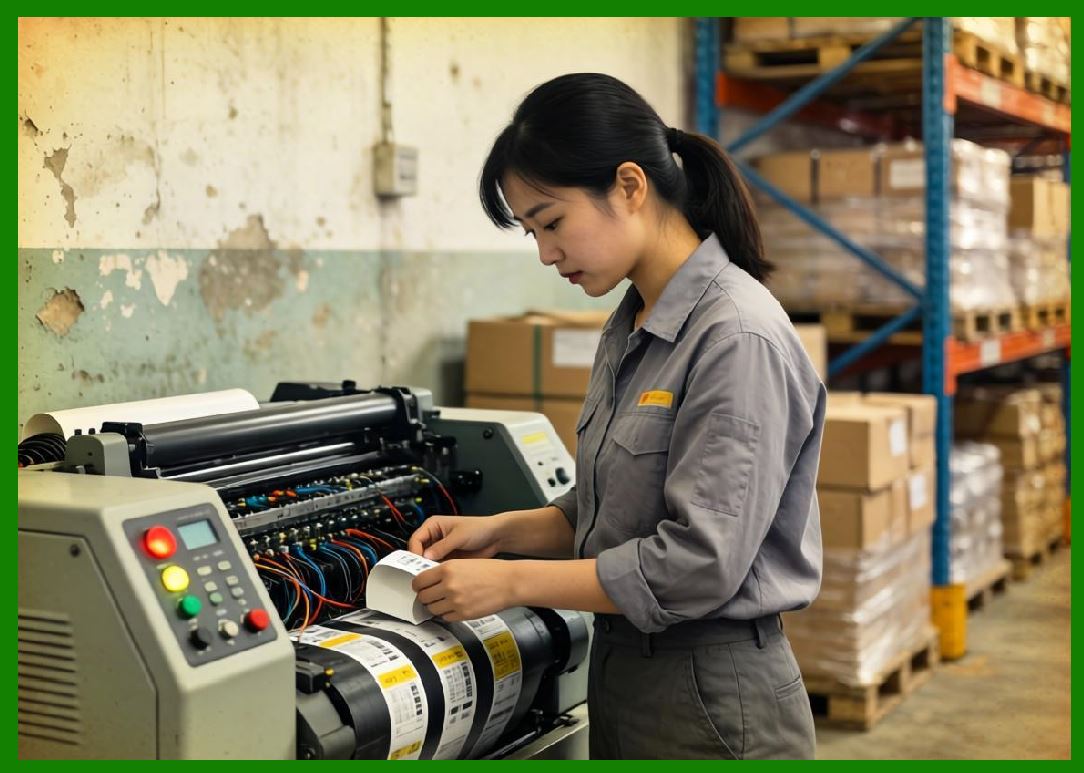
Over time, Mondi became one of the world major integrated paper and packaging companies, combining expertise in forestry, pulp production, paper engineering, coating technologies, packaging systems, and industrial materials science. |
|
3. Paper Engineering and Specialty Label Materials |
3.1 |
One of Mondi greatest strengths lies in paper engineering and specialty paper manufacturing. Barcode label materials require highly controlled surface properties, dimensional stability, print receptivity, and environmental performance. |
3.2 |
The company developed numerous specialty paper grades suitable for barcode labeling and industrial identification systems. These included thermal papers, coated papers, semi-gloss papers, machine-finished papers, and packaging-compatible label substrates. |
3.3 |
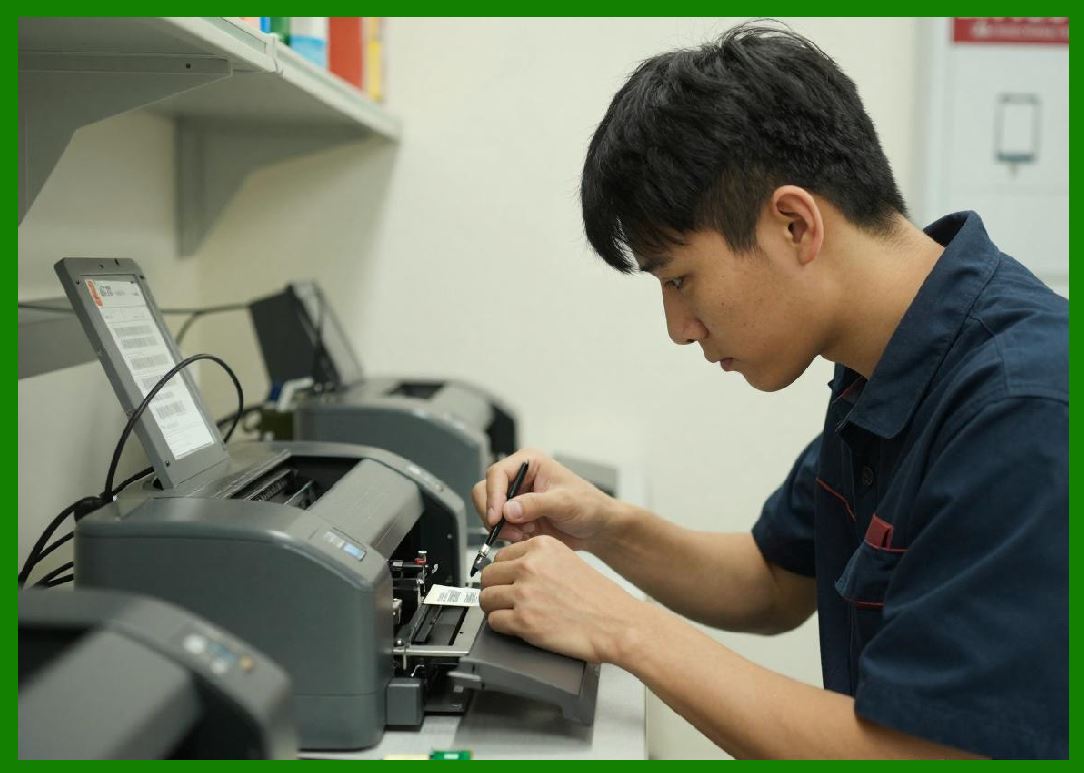
Paper surface smoothness is critically important in barcode applications because scanner readability depends heavily on print sharpness and optical contrast. Mondi optimized paper coatings and fiber structures to support high-quality barcode printing. |

|
3.4 |
The company also engineered papers for compatibility with different printing technologies including thermal transfer printing, direct thermal printing, flexographic printing, digital printing, and inkjet systems. |
3.5 |
Dimensional stability became another important technical focus. Barcode labels used in automated packaging and logistics systems must maintain consistent dimensions during printing, converting, storage, and application. |
3.6 |
Mondi additionally developed lightweight paper constructions aimed at reducing material consumption while maintaining mechanical performance and print quality. |
3.7 |
The company expertise in industrial papermaking enabled high-volume production of barcode-compatible materials suitable for large-scale logistics and packaging operations. |
|
4. Thermal Paper Technologies and Logistics Labels |
4.1 |
Thermal paper technology became one of Mondi most important contributions to the barcode label industry. Direct thermal printing systems became widely used in logistics, transportation, retail pricing, shipping operations, and warehouse management. |
4.2 |
Direct thermal labels operate using heat-sensitive coatings that darken when exposed to thermal printheads. This eliminates the need for ink ribbons and simplifies printing systems. |
4.3 |
Mondi invested heavily in thermal coating technologies capable of producing high-contrast barcode images with reliable scanner readability. |

|
4.4 |
One major technical challenge in thermal paper manufacturing involves balancing image sensitivity with environmental durability. Thermal labels must print efficiently while resisting fading caused by heat, ultraviolet exposure, oils, moisture, and plasticizer contamination. |
4.5 |
The company developed thermal coatings optimized for shipping labels, logistics tracking systems, retail receipts, warehouse identification systems, and transportation applications. |
4.6 |
Thermal imaging consistency became increasingly important as automated logistics systems expanded. High-speed scanning environments require reliable barcode quality and minimal print defects. |
4.7 |
Mondi thermal paper expertise became particularly valuable during the explosive growth of global e-commerce, which dramatically increased demand for thermal shipping labels and logistics identification systems. |

|
5. Release Liner Manufacturing and Silicone Coating Technologies |
5.1 |
Release liners are essential components of pressure-sensitive barcode label constructions. Mondi became an important manufacturer of release liner materials and silicone-coated papers. |
5.2 |
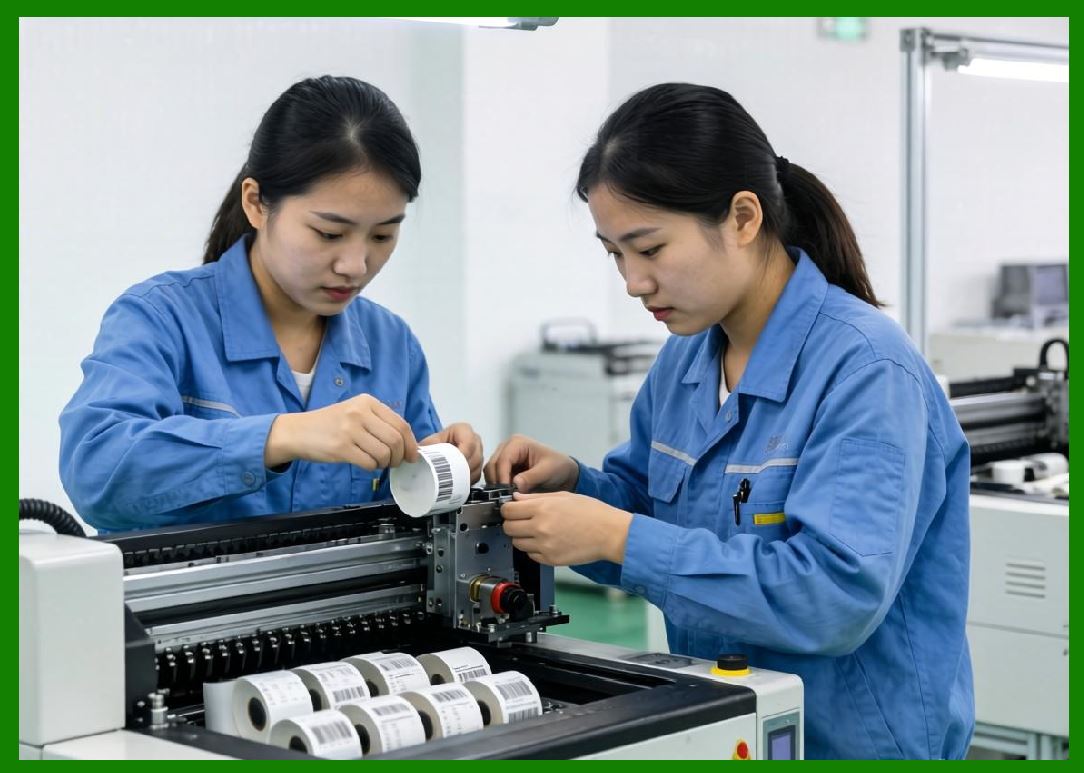
The release liner supports the label during printing, converting, transportation, and dispensing operations while allowing clean separation during application. |
5.3 |
Mondi developed release liners using highly engineered paper substrates designed for strength, dimensional stability, flexibility, and controlled release performance. |

|
5.4 |
Silicone release coatings require extremely precise application control. If release properties are inconsistent, automated labeling equipment may experience dispensing failures or application defects. |
5.5 |
The company optimized silicone coating systems for compatibility with different adhesive chemistries and industrial application conditions. |
5.6 |
Thinner liner technologies became increasingly important as companies sought to reduce waste and improve transportation efficiency. Lightweight liners allow more labels per roll and reduce shipping weight. |
5.7 |
Mondi also invested in liner recycling initiatives and environmentally optimized liner production systems aimed at reducing industrial waste streams. |
|
6. Sustainable Packaging and Environmental Leadership |
6.1 |
Sustainability became one of Mondi most defining strategic priorities. The company strongly emphasized renewable raw materials, recyclable packaging systems, circular economy initiatives, and responsible forestry practices. |
6.2 |
Because Mondi operates extensively within the paper and packaging industries, environmental concerns significantly influenced its product development strategies. Global pressure to reduce plastic waste and improve packaging recyclability created major opportunities for paper-based solutions. |
6.3 |
The company invested heavily in certified forestry systems, renewable fiber sourcing, and environmentally responsible pulp production. |
6.4 |
Mondi also developed recyclable packaging materials and recyclable label constructions designed to improve overall packaging sustainability. |

|
6.5 |
One major technical challenge involves ensuring that barcode labels remain compatible with recycling systems. Adhesives, coatings, and liners can interfere with paper and plastic recycling processes if not carefully engineered. |
6.6 |
The company therefore explored wash-off adhesive systems, recyclable coatings, lightweight constructions, and reduced-material packaging designs. |
6.7 |
Energy efficiency and carbon reduction became important operational priorities across Mondi manufacturing infrastructure. |
6.8 |
The company additionally promoted circular economy principles emphasizing material reuse, renewable resources, waste reduction, and sustainable industrial design. |

|
7. Packaging Systems and Industrial Logistics Applications |
7.1 |
Mondi became especially influential in industrial packaging and logistics systems. Modern global supply chains depend heavily on barcode labels for tracking, routing, inventory management, and transportation automation. |
7.2 |
Warehouse operations require barcode labels capable of maintaining readability under dust, abrasion, humidity, and rapid handling conditions. |
7.3 |
Shipping labels became one of the largest application sectors for thermal barcode materials. The rise of e-commerce dramatically increased global demand for logistics labeling systems. |

|
7.4 |
Mondi developed packaging-compatible barcode materials optimized for corrugated cardboard, shipping envelopes, industrial sacks, and transportation containers. |
7.5 |
Corrugated packaging applications present specific technical challenges because cardboard surfaces vary in porosity, roughness, and contamination levels. |

|
7.6 |
The company engineered paper surfaces and adhesive-compatible liners designed to support reliable printing and label application on industrial packaging materials. |
7.7 |
Automated warehouse systems increasingly rely on high-speed barcode scanning and machine vision technologies, requiring highly consistent print quality and surface characteristics. |

|
8. Industrial Coating Technologies |
8.1 |
Coating technology represents one of the most technically sophisticated aspects of paper and label manufacturing. Mondi invested extensively in coating systems designed to improve printability, durability, moisture resistance, and barcode readability. |
8.2 |
Surface coatings influence many important label properties including smoothness, brightness, opacity, ink absorption, thermal sensitivity, and environmental stability. |
8.3 |
Mondi developed specialty coatings optimized for thermal printing systems, allowing controlled heat activation and improved image density. |

|
8.4 |
Barrier coatings became another important innovation area. Some packaging and logistics applications require resistance to moisture, oils, grease, or environmental contamination. |
8.5 |
The company also engineered coatings compatible with digital printing technologies and variable information printing systems. |
8.6 |
Protective topcoats improved abrasion resistance and print durability in warehouse and transportation environments. |
8.7 |
Industrial coating consistency is especially important in barcode applications because surface irregularities can negatively affect scanner performance and print quality. |

|
9. Digital Printing Compatibility and Variable Information Systems |
9.1 |
The growth of digital printing technologies significantly influenced the barcode label industry. Businesses increasingly demanded flexible printing systems capable of short production runs, variable data printing, and rapid customization. |
9.2 |
Mondi developed paper materials compatible with multiple printing technologies including: |
1. Inkjet printing |
2. Laser printing |
3. Thermal transfer printing |
4. Direct thermal printing |
5. Electrophotographic printing |
6. Hybrid digital printing systems |
9.3 |
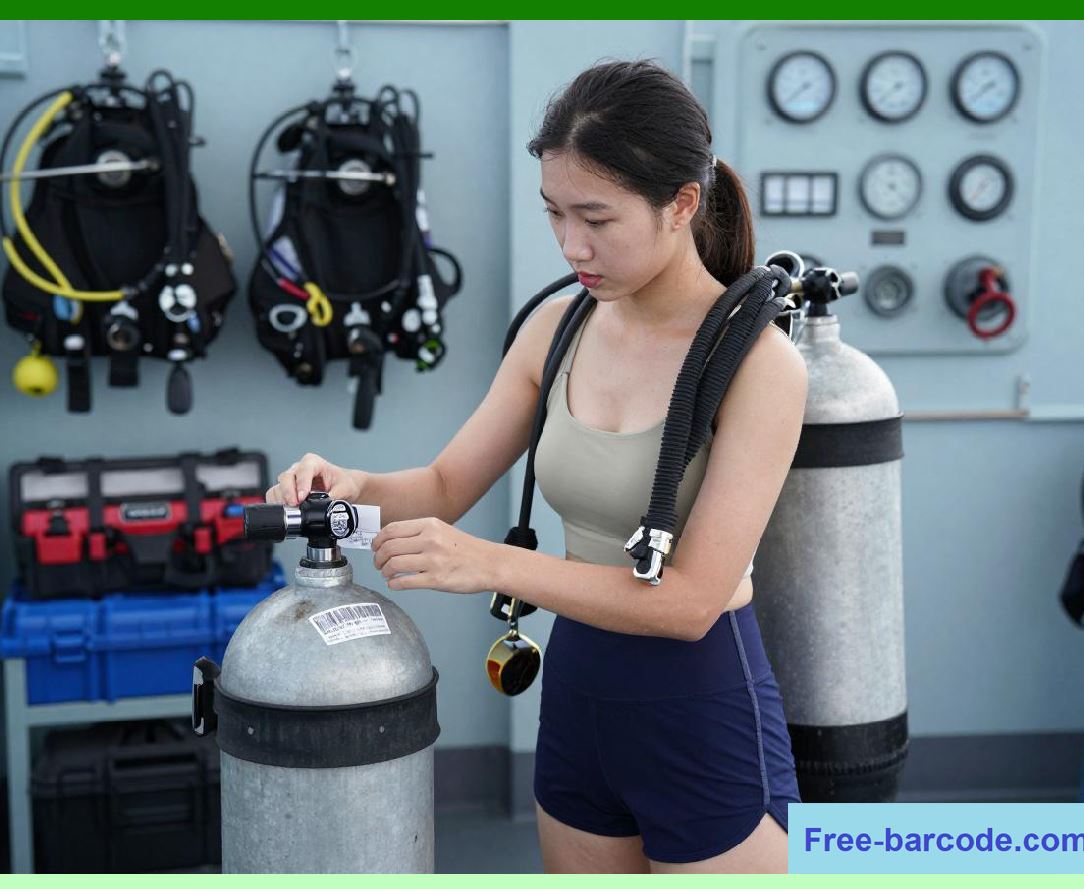
Variable information printing became especially important in logistics and e-commerce operations where each package may require unique barcode data. |
|
9.4 |
The company optimized surface coatings to support rapid ink drying, controlled absorption, print sharpness, and scanner readability. |
9.5 |
Digital printing compatibility also became important in pharmaceutical labeling, food packaging traceability, and industrial inventory systems. |
9.6 |
As supply chains became increasingly data-driven, label materials required greater consistency and compatibility with automated printing infrastructure. |
9.7 |
Mondi expertise in paper engineering and coating technologies supported these evolving industrial requirements. |

|
10. Research, Innovation, and Product Development |
10.1 |
Research and development became central components of Mondi industrial strategy. The company invested heavily in paper science, coating chemistry, sustainability engineering, packaging innovation, and manufacturing optimization. |
10.2 |
Laboratories conducted extensive testing involving thermal imaging performance, barcode readability, moisture resistance, mechanical durability, environmental aging, and print quality analysis. |
10.3 |
The company also explored advanced fiber technologies, lightweight paper constructions, renewable materials, and recyclable barrier coatings. |

|
10.4 |
One major innovation area involved balancing sustainability with industrial performance requirements. Environmentally optimized materials must still maintain reliable barcode readability and packaging durability. |
10.5 |
Mondi also invested in automation technologies and machine vision inspection systems capable of improving manufacturing consistency. |
10.6 |
Packaging optimization became increasingly important as transportation costs and environmental concerns continued rising globally. |
10.7 |
Innovation remained essential because logistics systems, packaging standards, and barcode technologies continued evolving rapidly. |

|
11. Global Industrial Applications |
11.1 |
Mondi barcode-compatible materials are used across numerous industries including logistics, transportation, warehousing, retail packaging, industrial manufacturing, food packaging, pharmaceuticals, and e-commerce distribution systems. |
11.2 |
E-commerce shipping labels represent one of the company largest application categories. Millions of thermal barcode labels are used daily in parcel delivery systems worldwide. |
11.3 |
Retail distribution networks rely heavily on barcode-compatible packaging materials for inventory management and automated supply chain operations. |

|
11.4 |
Industrial manufacturing facilities require labels capable of surviving handling, transportation, and warehouse storage conditions. |
11.5 |
Food packaging applications require materials compatible with refrigeration, moisture exposure, and food safety standards. |
11.6 |
Pharmaceutical logistics systems increasingly depend on barcode traceability technologies for regulatory compliance and product tracking. |
11.7 |
The company broad paper and packaging expertise allowed it to support highly diverse industrial applications across global markets. |

|
12. Future Prospects of Mondi Group |
12.1 |
The future of Mondi will likely continue emphasizing sustainable packaging systems, renewable materials, recyclable label technologies, and environmentally optimized logistics solutions. |
12.2 |
Global e-commerce growth is expected to maintain strong demand for thermal shipping labels and warehouse barcode systems. |
12.3 |
Circular economy initiatives may accelerate the adoption of recyclable paper-based packaging and reduced-plastic labeling systems. |

|
12.4 |
Digital printing technologies will likely continue influencing paper coating development and barcode surface optimization. |
12.5 |
Smart packaging systems integrating barcodes, RFID, sensors, and digital traceability technologies may create new innovation opportunities. |
12.6 |
Environmental regulations are expected to encourage further development of lightweight constructions, recyclable coatings, and low-carbon manufacturing systems. |
|
12.7 |
Automation in logistics and warehouse operations will continue increasing performance requirements for barcode readability and print consistency. |
12.8 |
Because of its strong expertise in paper engineering, industrial packaging, thermal paper technologies, and sustainable manufacturing, Mondi is expected to remain an influential company in the global pressure-sensitive barcode label industry. |
|
Detailed Technical Content Summary of Part 7 |
This part provided a detailed analysis of Mondi Group and its important role within the global pressure-sensitive barcode label paper industry. The article began by introducing Mondi as a major paper, packaging, and industrial materials company with strong expertise in paper engineering, thermal papers, release liners, and sustainable packaging technologies. |
The discussion examined the company historical development from forestry and pulp production into an internationally integrated paper and packaging manufacturer. Significant attention was given to Mondi expertise in specialty paper engineering, including thermal papers, coated papers, dimensional stability optimization, and lightweight paper constructions. |
The article extensively explored thermal paper technologies used in logistics labels, shipping systems, warehouse identification, and transportation applications. Release liner manufacturing and silicone coating technologies were also analyzed in detail, including liner strength, controlled release properties, and lightweight liner innovations. |
A major focus involved sustainability leadership, including certified forestry systems, recyclable packaging materials, renewable fibers, wash-off adhesives, circular economy initiatives, and environmentally optimized manufacturing systems. The discussion also examined Mondi role in industrial packaging and logistics applications, particularly within e-commerce and warehouse automation systems. |
Additional sections covered industrial coating technologies, digital printing compatibility, variable information printing systems, research and development activities, and global industrial applications across logistics, retail, pharmaceuticals, food packaging, and manufacturing. |
Finally, the article reviewed Mondi future prospects involving sustainable packaging, smart logistics systems, recyclable materials, digital printing expansion, automation technologies, and intelligent supply chain infrastructure. |
End of Part 7. |
 cs@easiersoft.com