Part 12 Synthetic Barcode Label Materials: Polypropylene, Polyethylene, Polyester, Polyimide, Vinyl, and Advanced Engineered Film Technologies |
1. Introduction to Synthetic Barcode Label Materials |
Synthetic barcode label materials are engineered polymer-based substrates designed for applications where traditional paper labels cannot survive environmental, mechanical, thermal, or chemical stresses. |
As barcode systems expanded into increasingly demanding industries such as: |
1. Chemical manufacturing. |
2. Automotive production. |
3. Electronics assembly. |
4. Healthcare sterilization. |
5. Outdoor asset tracking. |
6. Laboratory identification. |
7. Aerospace systems. |
8. Defense logistics. |
9. Industrial warehousing. |
10. Harsh-environment manufacturing. |
Paper labels became insufficient for many applications. |
|
Synthetic label materials emerged to provide: |
1. Water resistance. |
2. Tear resistance. |
3. Chemical durability. |
4. Thermal stability. |
5. UV resistance. |
6. Dimensional stability. |
7. Long-term readability. |
Modern synthetic barcode materials involve highly sophisticated polymer engineering, surface chemistry, film extrusion technology, coating science, and converting systems. |
This part explores synthetic barcode label materials in extensive technical detail. |

|
2. Fundamentals of Synthetic Label Materials |
2.1 Definition |
Synthetic labels use polymer films instead of cellulose paper. |
These films may be: |
1. Monolayer structures. |
2. Multilayer laminates. |
3. Coextruded films. |
4. Surface-coated composites. |
2.2 Core Advantages |
Compared with paper labels, synthetic materials generally provide: |
1. Greater durability. |
2. Moisture resistance. |
3. Better dimensional stability. |
4. Longer lifespan. |
|
2.3 Core Limitations |
Disadvantages may include: |
1. Higher cost. |
2. More difficult recycling. |
3. Surface treatment requirements. |
4. Static electricity challenges. |
2.4 Polymer Engineering Importance |
The performance of synthetic labels depends heavily on polymer molecular structure. |

|
3. Polymer Science Fundamentals |
3.1 Polymer Structure |
Synthetic films consist of long-chain polymer molecules. |
These chains determine: |
1. Flexibility. |
2. Strength. |
3. Thermal behavior. |
4. Chemical resistance. |
3.2 Crystalline and Amorphous Regions |
Most polymers contain both: |
1. Crystalline regions. |
2. Amorphous regions. |
Crystallinity strongly affects material properties. |
|
3.3 Glass Transition Temperature |
The glass transition temperature influences flexibility. |
The transition may be represented conceptually as: |
T_g |
Below this temperature, polymers become more rigid. |
3.4 Melting Temperature |
The melting temperature determines thermal resistance. |
|
4. Polypropylene Barcode Labels |
4.1 Overview of Polypropylene |
Polypropylene (PP) is one of the most widely used synthetic label materials. |
Advantages include: |
1. Low cost. |
2. Moisture resistance. |
3. Good printability. |
4. Flexibility. |
4.2 Molecular Structure |
Polypropylene is a polyolefin polymer. |
Its repeating structure may be represented as: |
[-CH_2-CH(CH_3)-]_n |
|
4.3 Types of Polypropylene Films |
Common forms include: |
1. Cast polypropylene. |
2. Biaxially oriented polypropylene. |
3. Cavitated films. |
4.4 Biaxially Oriented Polypropylene (BOPP) |
BOPP films are stretched in two directions. |
This improves: |
1. Strength. |
2. Clarity. |
3. Dimensional stability. |

|
5. Surface Treatment of Polypropylene |
5.1 Low Surface Energy Problem |
Untreated polypropylene has poor ink adhesion. |
5.2 Corona Treatment |
Corona treatment increases surface energy. |
This improves: |
1. Ink wetting. |
2. Adhesion. |
3. Coating anchoring. |
5.3 Flame Treatment |
Flame treatment oxidizes the polymer surface. |
5.4 Plasma Treatment |
Plasma systems provide highly controlled surface activation. |
|
6. Polyethylene Barcode Labels |
6.1 Overview |
Polyethylene (PE) is softer and more flexible than polypropylene. |
Advantages include: |
1. Excellent flexibility. |
2. Squeeze resistance. |
3. Chemical resistance. |
6.2 Types of Polyethylene |
Common types include: |
1. Low-density polyethylene (LDPE). |
2. High-density polyethylene (HDPE). |
3. Linear low-density polyethylene (LLDPE). |
6.3 Flexibility Characteristics |
PE labels conform well to curved surfaces. |
6.4 Chemical Resistance |
Polyethylene resists many chemicals and solvents. |
|
7. Polyester Barcode Labels |
7.1 Overview of Polyester (PET) |
Polyester labels are among the most durable barcode materials. |
Advantages include: |
1. Excellent dimensional stability. |
2. High temperature resistance. |
3. Chemical resistance. |
4. Mechanical strength. |
7.2 PET Molecular Structure |
Polyethylene terephthalate contains aromatic ester structures. |
These contribute to rigidity and stability. |
7.3 High-Temperature Performance |
PET withstands elevated temperatures better than many other films. |
7.4 Dimensional Stability |
PET exhibits very low expansion and shrinkage. |
This is critical for precision barcodes. |

|
8. Polyimide Barcode Labels |
8.1 Overview |
Polyimide labels are designed for extreme environments. |
8.2 Thermal Resistance |
Polyimide materials tolerate very high temperatures. |
They are widely used in electronics manufacturing. |
8.3 Soldering Compatibility |
Polyimide labels survive solder reflow processes. |
8.4 Chemical Resistance |
Polyimides resist aggressive industrial chemicals. |

|
9. Vinyl Barcode Labels |
9.1 Polyvinyl Chloride (PVC) |
PVC labels provide flexibility and durability. |
9.2 Outdoor Durability |
Vinyl labels perform well outdoors. |
9.3 Plasticizer Effects |
Plasticizers improve flexibility but may migrate over time. |
9.4 Environmental Concerns |
PVC creates environmental and recycling concerns. |
|
10. Specialty Synthetic Films |
10.1 Polycarbonate Labels |
Polycarbonate provides high impact resistance. |
10.2 Fluoropolymer Labels |
Fluoropolymers offer exceptional chemical resistance. |
10.3 Acrylic Films |
Acrylic films provide excellent clarity and UV resistance. |
10.4 Composite Laminates |
Multilayer laminates combine multiple functional properties. |
|
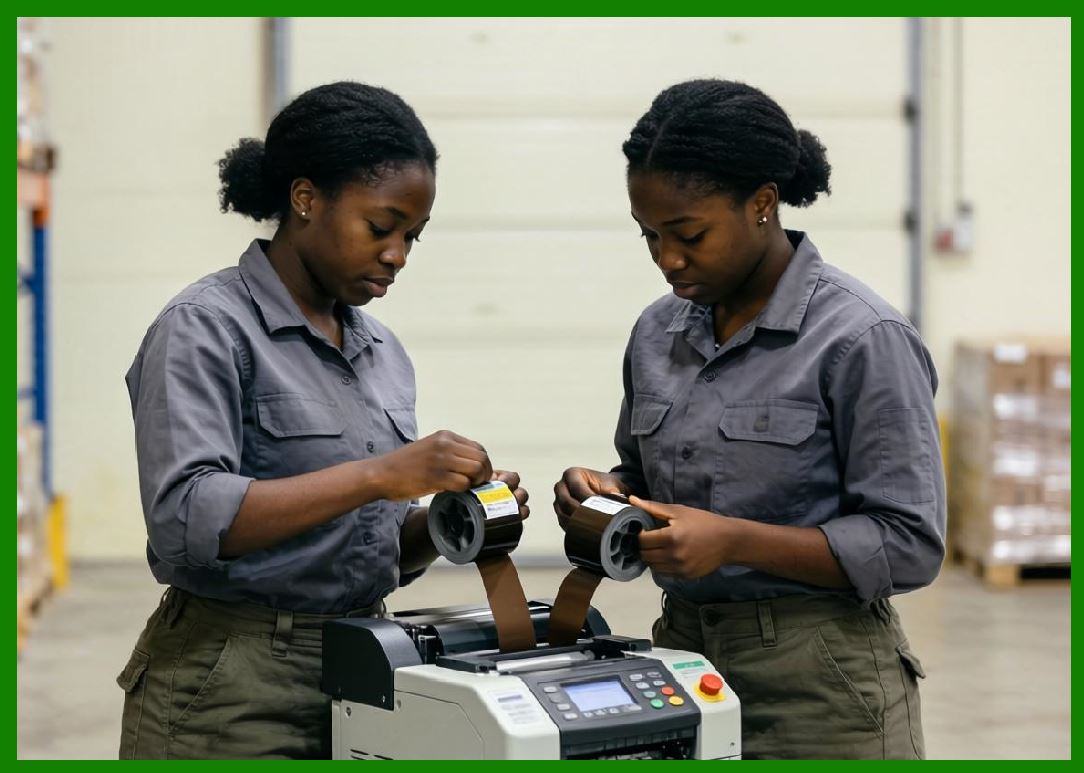
11. Film Manufacturing Processes |
11.1 Extrusion |
Molten polymer is extruded into thin films. |
11.2 Cast Film Production |
Cast films are cooled on polished rollers. |
11.3 Blown Film Production |
Blown films are expanded into bubbles. |
11.4 Orientation Processes |
Stretching aligns polymer chains. |
This improves strength and clarity. |
|
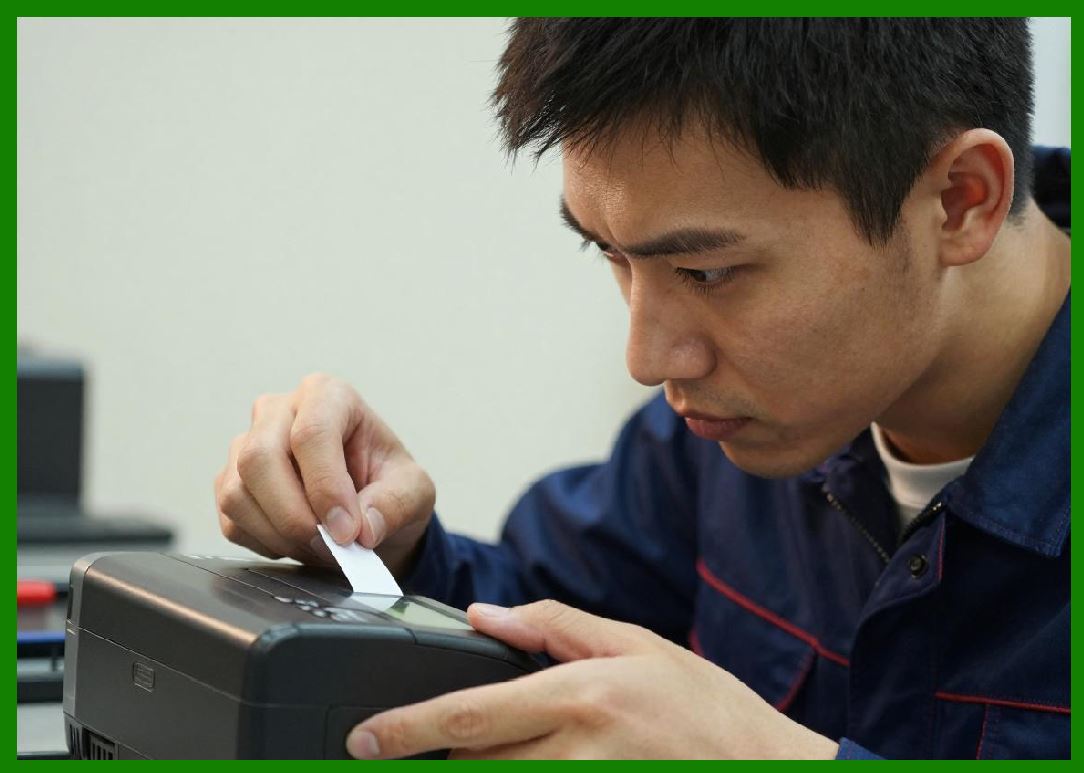
12. Surface Coatings for Synthetic Labels |
12.1 Print-Receptive Coatings |
Synthetic films often require specialized print coatings. |
12.2 Topcoat Functions |
Topcoats improve: |
1. Ink anchoring. |
2. Scratch resistance. |
3. Chemical durability. |
12.3 Matte and Gloss Finishes |
Surface finish affects scanner performance and appearance. |
12.4 Anti-Static Coatings |
Anti-static systems reduce dust attraction. |
|
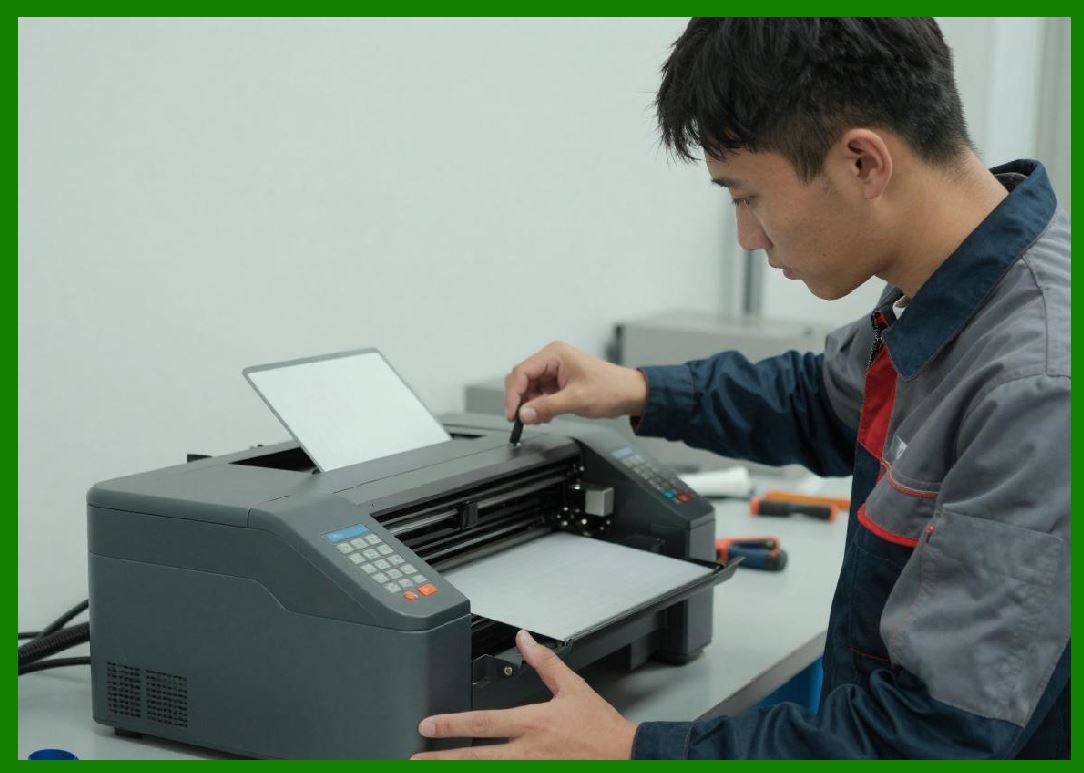
13. Thermal Transfer Printing on Synthetic Labels |
13.1 Resin Ribbon Compatibility |
Synthetic labels often require resin ribbons. |
13.2 Heat Resistance |
Films must tolerate printhead temperatures. |
13.3 Ribbon Anchoring |
Coating chemistry affects ribbon adhesion. |
13.4 Abrasion Durability |
Proper ribbon-film combinations provide excellent durability. |
|
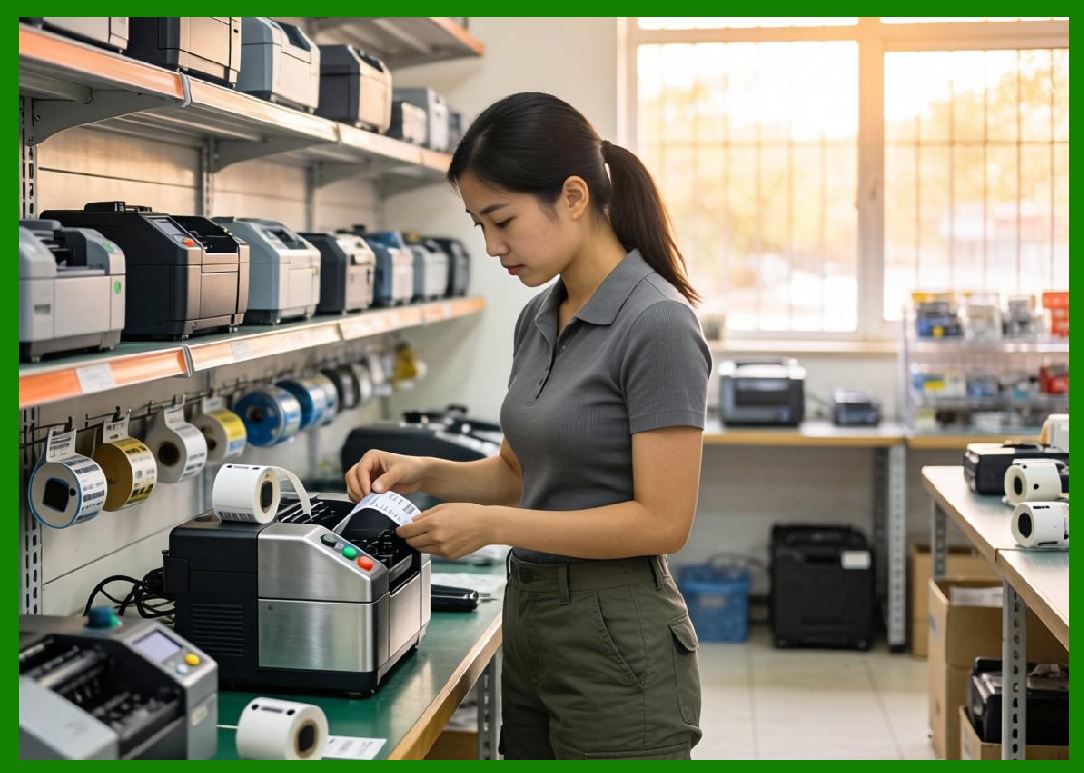
14. Inkjet and Laser Printing |
14.1 Inkjet Challenges |
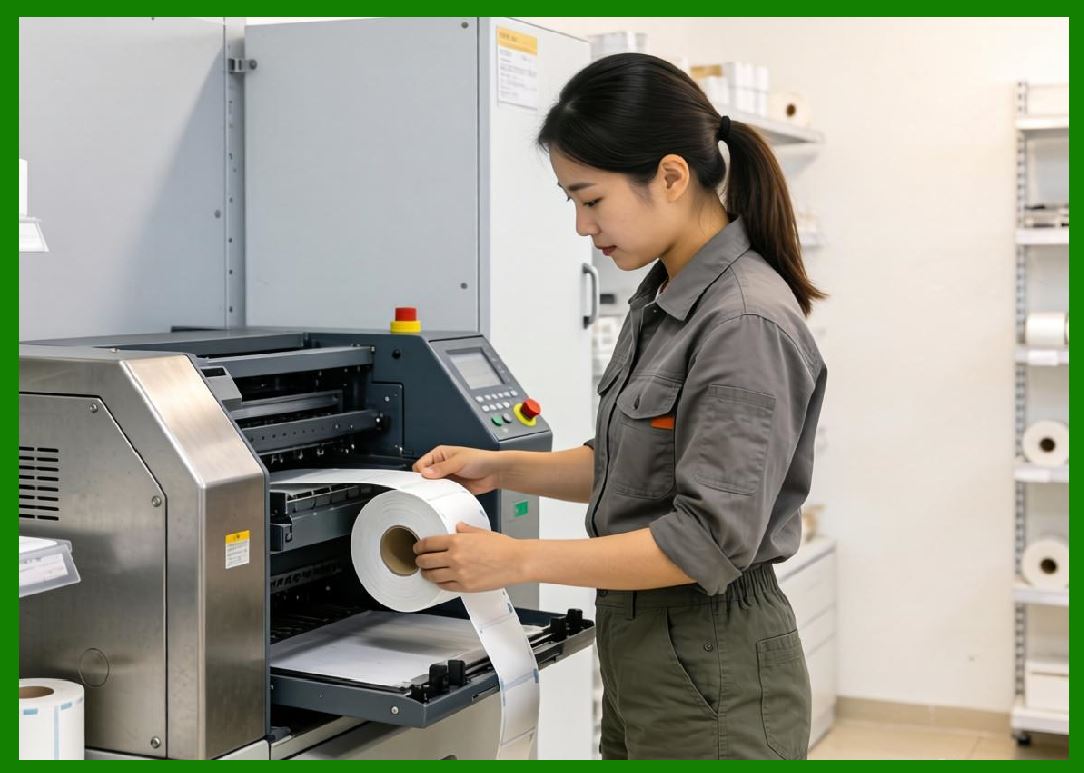
Synthetic films are often non-absorbent. |
Special coatings are necessary. |
14.2 UV Inkjet Systems |
UV-curable inks perform well on films. |
14.3 Laser Printing Compatibility |
Films must withstand fuser heat. |
14.4 Toner Adhesion |
Surface energy strongly affects toner anchoring. |
|
15. Mechanical Properties |
15.1 Tear Resistance |
Synthetic films are highly tear resistant. |
15.2 Tensile Strength |
Oriented films provide high tensile strength. |
15.3 Flex Fatigue Resistance |
Flexible films resist repeated bending. |
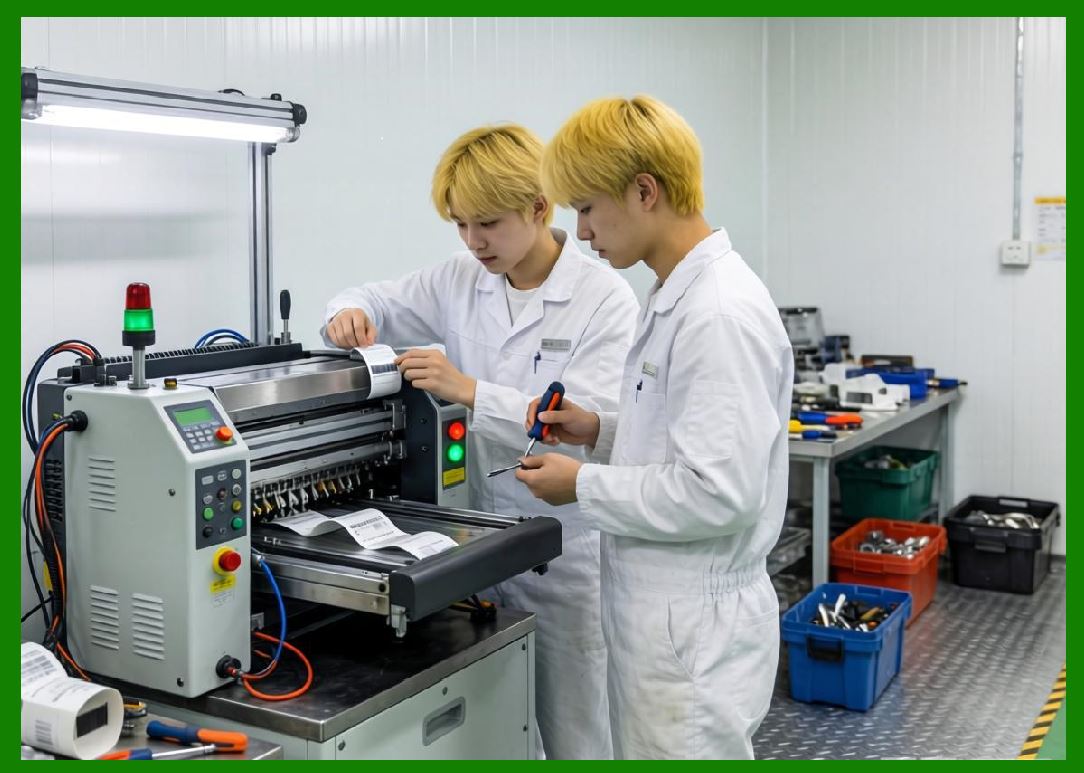
15.4 Dimensional Stability |
Dimensional stability is critical for small barcodes. |
|
16. Environmental Resistance |
16.1 Water Resistance |
Synthetic films resist water penetration. |
16.2 UV Resistance |
UV stabilizers improve outdoor lifespan. |
16.3 Chemical Resistance |
Many synthetic films resist oils, solvents, and acids. |
16.4 Temperature Resistance |
Temperature performance varies widely among polymers. |
|
17. Barcode Scanner Performance |
17.1 Reflectivity |
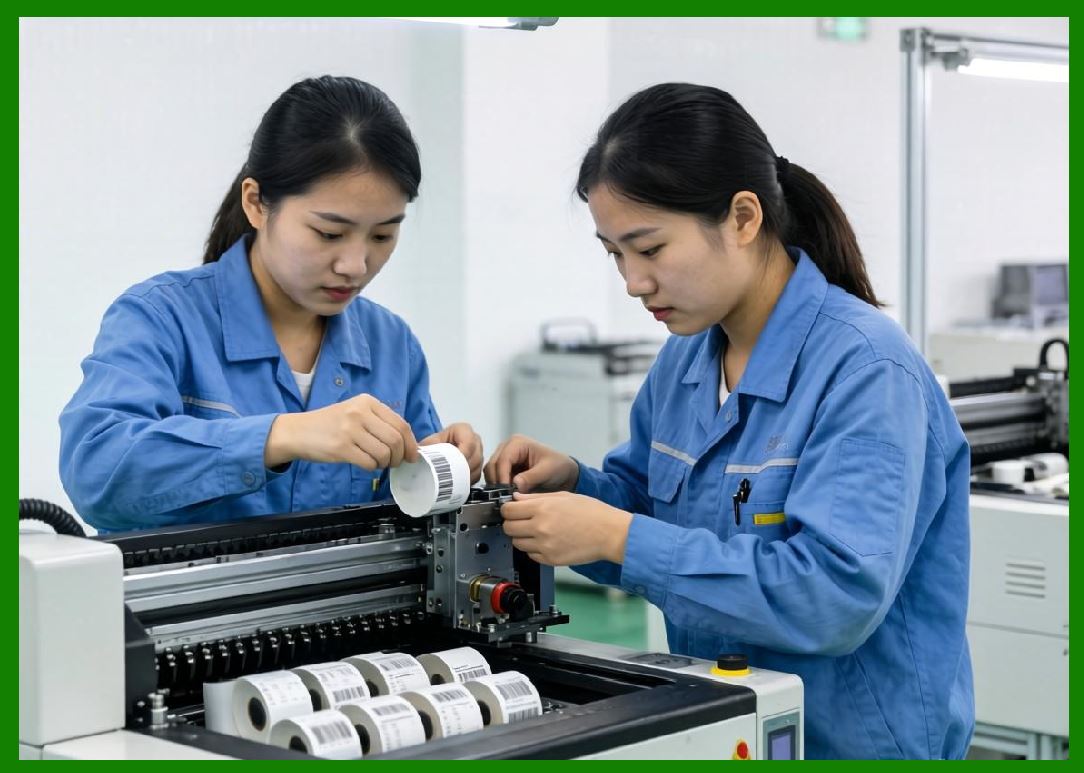
Film surfaces must be engineered for scanner readability. |
17.2 Gloss Effects |
High gloss may create specular reflections. |
17.3 Matte Coatings |
Matte surfaces improve diffuse reflectance. |
17.4 Optical Stability |
Stable surfaces maintain barcode quality over time. |
|
18. Adhesive Compatibility |
18.1 Surface Energy Challenges |
Low-energy polymers require specialized adhesives. |
18.2 Permanent Adhesives |
Industrial applications often use aggressive adhesives. |
18.3 Removable Adhesives |
Some applications require clean removability. |
18.4 High-Temperature Adhesives |
Electronics applications require heat-resistant adhesive systems. |

|
19. Industrial Applications |
19.1 Chemical Drum Labels |
Chemical labels require high durability and solvent resistance. |
19.2 Electronics Labels |
Electronics manufacturing uses polyester and polyimide labels extensively. |
19.3 Outdoor Asset Labels |
Outdoor applications require weather resistance. |
19.4 Automotive Labels |
Automotive labels must survive oils, heat, and abrasion. |

|
20. Regulatory and Safety Requirements |
20.1 UL Certification |
Many industrial labels require UL recognition. |
20.2 RoHS Compliance |
Electronics labels may require hazardous substance compliance. |
20.3 REACH Regulations |
Chemical safety regulations affect material selection. |
20.4 Food Contact Requirements |
Some synthetic labels require food-safe compliance. |
|
21. Environmental and Sustainability Issues |
21.1 Recycling Challenges |
Synthetic labels are more difficult to recycle than paper. |
21.2 Mono-Material Systems |
Mono-material packaging improves recyclability. |
21.3 Bio-Based Polymers |
Renewable polymers are increasingly important. |
21.4 Thin-Gauge Films |
Reducing film thickness lowers material consumption. |
|
22. Emerging Technologies |
22.1 Nano-Engineered Films |
Nano-additives improve: |
1. Barrier properties. |
2. Durability. |
3. Surface functionality. |
22.2 Smart Label Films |
Future films may integrate: |
1. Sensors. |
2. Conductive layers. |
3. Flexible electronics. |
22.3 Self-Healing Coatings |
Advanced coatings may repair scratches automatically. |
22.4 Hybrid RFID-Barcode Labels |
Integrated identification systems are increasingly common. |
|
23. Comparison Between Major Synthetic Materials |
23.1 Polypropylene |
Polypropylene offers economical versatility. |
23.2 Polyethylene |
Polyethylene excels in flexibility. |
23.3 Polyester |
Polyester provides high durability and dimensional stability. |
23.4 Polyimide |
Polyimide supports extreme-temperature applications. |
|
24. Technical Content Summary |
This part provided a highly detailed technical deep dive into synthetic barcode label materials and advanced polymer film technologies. |
The article began by explaining the importance of synthetic labels in demanding industrial environments where paper materials cannot provide sufficient durability. |
Extensive discussion was devoted to polymer science fundamentals, including: |
1. Polymer chain structures. |
2. Crystalline regions. |
3. Amorphous regions. |
4. Glass transition temperature. |
5. Thermal behavior. |
Detailed analysis was provided for major synthetic barcode label materials including: |
1. Polypropylene. |
2. Polyethylene. |
3. Polyester (PET). |
4. Polyimide. |
5. Vinyl (PVC). |
6. Specialty engineered films. |
The discussion explored molecular structures, flexibility, dimensional stability, thermal resistance, chemical durability, and outdoor performance characteristics of each polymer system. |
|
Film manufacturing technologies were examined extensively, including: |
1. Extrusion. |
2. Cast film production. |
3. Blown film production. |
4. Orientation processes. |
Surface treatment technologies such as: |
1. Corona treatment. |
2. Flame treatment. |
3. Plasma treatment. |
were analyzed in detail for improving printability and coating adhesion. |
The article further explored print-receptive coatings, thermal transfer compatibility, resin ribbon systems, inkjet and laser printing behavior, mechanical properties, and environmental resistance. |
Industrial applications in: |
1. Chemical labeling. |
2. Electronics manufacturing. |
3. Outdoor asset tracking. |
4. Automotive systems. |
were discussed comprehensively. |
Regulatory topics including UL certification, RoHS compliance, REACH regulations, and food-contact requirements were also examined. |
Finally, sustainability challenges and emerging technologies such as nano-engineered films, smart label materials, self-healing coatings, and hybrid RFID-barcode systems were explored. |
|
The next part will provide a highly detailed technical examination of adhesive systems used in barcode labels, including acrylic adhesives, rubber adhesives, silicone adhesives, hot-melt systems, solvent-based technologies, adhesive chemistry, tack mechanisms, peel strength engineering, and environmental durability performance. |
 cs@easiersoft.com