Part 14 Barcode Label Manufacturing Machinery and Industrial Production Systems: Papermaking Equipment, Coating Lines, Converting Machines, Slitting Systems, Rotary Presses, Inspection Technologies, and Automation Engineering |
1. Introduction to Barcode Label Manufacturing Systems |
The barcode label industry depends on highly advanced manufacturing systems capable of producing enormous volumes of precision-engineered label materials at high speed with extremely tight quality tolerances. |
Modern barcode labels may appear simple, but their manufacturing involves: |
1. Large-scale papermaking systems. |
2. Polymer film extrusion. |
3. Coating technologies. |
4. Adhesive application systems. |
5. Lamination machinery. |
6. High-precision printing presses. |
7. Rotary die-cutting systems. |
8. Slitting and rewinding equipment. |
9. Automated inspection systems. |
10. Computerized process control. |

|
Industrial barcode label production requires integration of: |
1. Mechanical engineering. |
2. Chemical engineering. |
3. Electrical engineering. |
4. Materials science. |
5. Automation systems. |
6. Machine vision technology. |
7. Thermal control engineering. |
8. Web handling science. |
Modern production facilities may operate continuously at web speeds exceeding hundreds of meters per minute while maintaining micron-level coating uniformity and highly precise barcode registration accuracy. |
This part explores barcode label manufacturing machinery and industrial production systems in extensive technical detail. |

|
2. Overview of Barcode Label Manufacturing Workflow |
2.1 Major Production Stages |
Typical barcode label production includes: |
1. Raw material preparation. |
2. Base material manufacturing. |
3. Surface coating. |
4. Adhesive coating. |
5. Lamination. |
6. Printing. |
7. Die-cutting. |
8. Slitting. |
9. Inspection. |
10. Packaging. |
2.2 Roll-to-Roll Manufacturing |
Most barcode labels are manufactured using continuous roll-to-roll processes. |
2.3 Web Handling Importance |
Continuous material webs must remain stable during production. |
2.4 Production Speed Requirements |
High-volume facilities prioritize extremely high throughput. |

|
3. Papermaking Machinery |
3.1 Paper Machine Fundamentals |
Paper machines convert pulp slurry into continuous paper webs. |
3.2 Headbox Systems |
The headbox distributes pulp evenly across the machine width. |
Uniform distribution is critical. |
3.3 Forming Section |
Water drains while fibers interlock into sheets. |
3.4 Press Section |
Mechanical pressing removes water and densifies the sheet. |

|
4. Drying Systems in Papermaking |
4.1 Steam-Heated Dryers |
Large steam cylinders evaporate remaining moisture. |
4.2 Moisture Profile Control |
Uniform moisture is essential for dimensional stability. |
4.3 Infrared Moisture Correction |
Infrared systems adjust local moisture variations. |
4.4 Curl Prevention |
Uneven drying may create curl defects. |

|
5. Calendering Machinery |
5.1 Purpose of Calendering |
Calendering smooths and densifies paper surfaces. |
5.2 Steel Roll Systems |
Steel rolls apply high pressure to paper webs. |
5.3 Soft-Nip Calenders |
Soft surfaces reduce sheet damage. |
5.4 Supercalenders |
Supercalenders create very smooth high-gloss surfaces. |

|
6. Synthetic Film Manufacturing Equipment |
6.1 Polymer Extruders |
Extruders melt and process polymer pellets. |
6.2 Flat Die Extrusion |
Flat dies create continuous film sheets. |
6.3 Blown Film Towers |
Blown-film systems inflate polymer tubes into bubbles. |
6.4 Orientation Equipment |
Stretching systems improve film properties. |
|
7. Coating Machinery |
7.1 Purpose of Coating Systems |
Coating systems apply functional surface layers. |
7.2 Coating Uniformity |
Uniform thickness is critical for barcode quality. |
7.3 Multi-Layer Coating |
Advanced systems apply several layers simultaneously. |
7.4 Cleanroom Requirements |
Certain coatings require contamination-free environments. |
|
8. Blade Coating Systems |
8.1 Operating Principle |
Blade coaters meter coating thickness mechanically. |
8.2 Metering Precision |
Blade geometry controls coat weight. |
8.3 High-Speed Capability |
Blade systems support very high production speeds. |
8.4 Wear Challenges |
Blades experience mechanical wear over time. |
|
9. Gravure Coating Machinery |
9.1 Engraved Rollers |
Gravure rolls contain microscopic engraved cells. |
9.2 Coating Transfer |
Cells transfer precise coating volumes. |
9.3 Fine Thickness Control |
Gravure systems provide excellent uniformity. |
9.4 Maintenance Requirements |
Roll cleaning is essential. |

|
10. Slot-Die Coating Systems |
10.1 Precision Fluid Delivery |
Slot-die systems deliver coatings through narrow slots. |
10.2 Coat Weight Accuracy |
Slot dies enable very accurate coating control. |
10.3 Closed System Advantages |
Closed systems reduce contamination and solvent evaporation. |
10.4 Advanced Functional Coatings |
Many modern electronic coatings use slot-die systems. |

|
11. Drying and Curing Equipment |
11.1 Hot-Air Ovens |
Hot-air systems evaporate solvents or water. |
11.2 Infrared Drying |
Infrared systems provide rapid surface heating. |
11.3 UV Curing Systems |
UV lamps rapidly cure radiation-sensitive coatings. |
11.4 Electron Beam Curing |
Electron beams cure coatings without photoinitiators. |

|
12. Adhesive Coating Lines |
12.1 Pressure-Sensitive Adhesive Application |
Adhesive coaters apply uniform PSA layers. |
12.2 Solvent Handling Systems |
Solvent-based adhesives require vapor recovery systems. |
12.3 Hot-Melt Coating Systems |
Molten adhesives are applied at elevated temperatures. |
12.4 Coat Weight Monitoring |
Sensors continuously measure adhesive thickness. |

|
13. Lamination Machinery |
13.1 Multi-Layer Construction |
Lamination joins multiple materials into composites. |
13.2 Pressure Lamination |
Pressure rollers bond layers together. |
13.3 Thermal Lamination |
Heat assists bonding. |
13.4 Registration Alignment |
Accurate layer alignment is critical. |
|
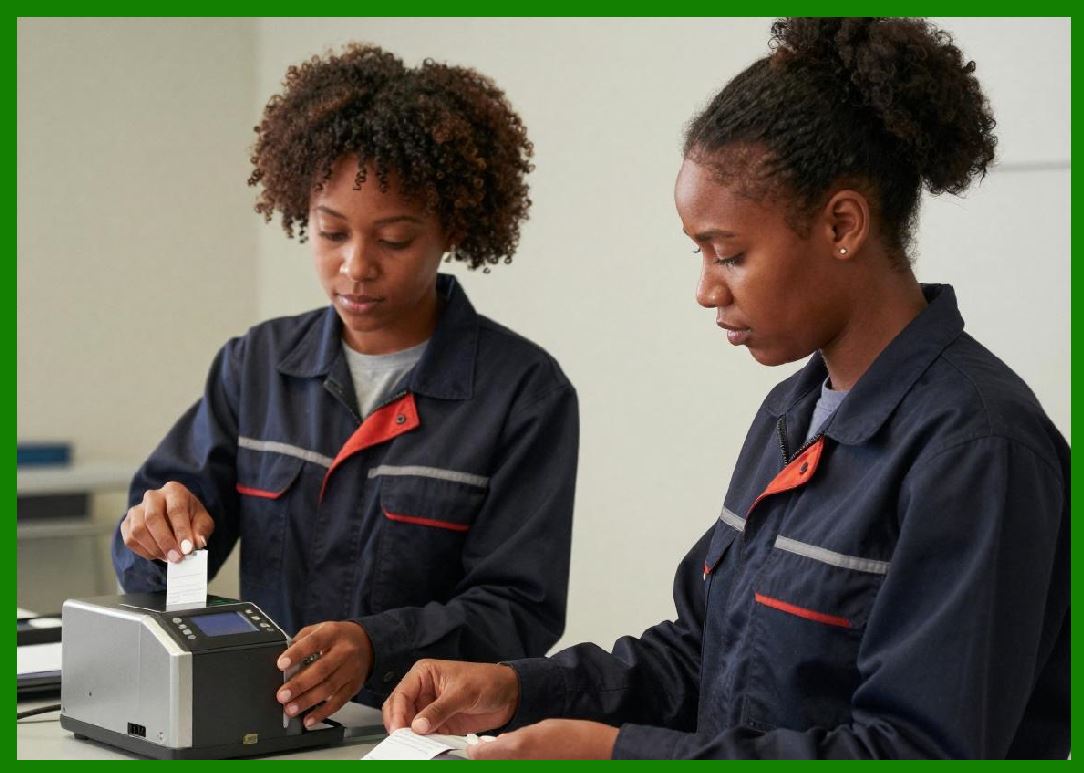
14. Printing Presses for Barcode Labels |
14.1 Flexographic Printing |
Flexography dominates industrial label printing. |
14.2 Digital Printing Systems |
Digital systems enable variable-data printing. |
14.3 Thermal Printing Integration |
Some converting lines integrate thermal imaging systems. |
14.4 Hybrid Presses |
Hybrid systems combine analog and digital technologies. |
|
15. Flexographic Press Engineering |
15.1 Anilox Rollers |
Anilox rollers meter ink precisely. |
15.2 Photopolymer Plates |
Flexible printing plates transfer images onto labels. |
15.3 Registration Control |
Precise alignment is essential for barcode accuracy. |
15.4 Multi-Color Stations |
Complex labels may use multiple print stations. |

|
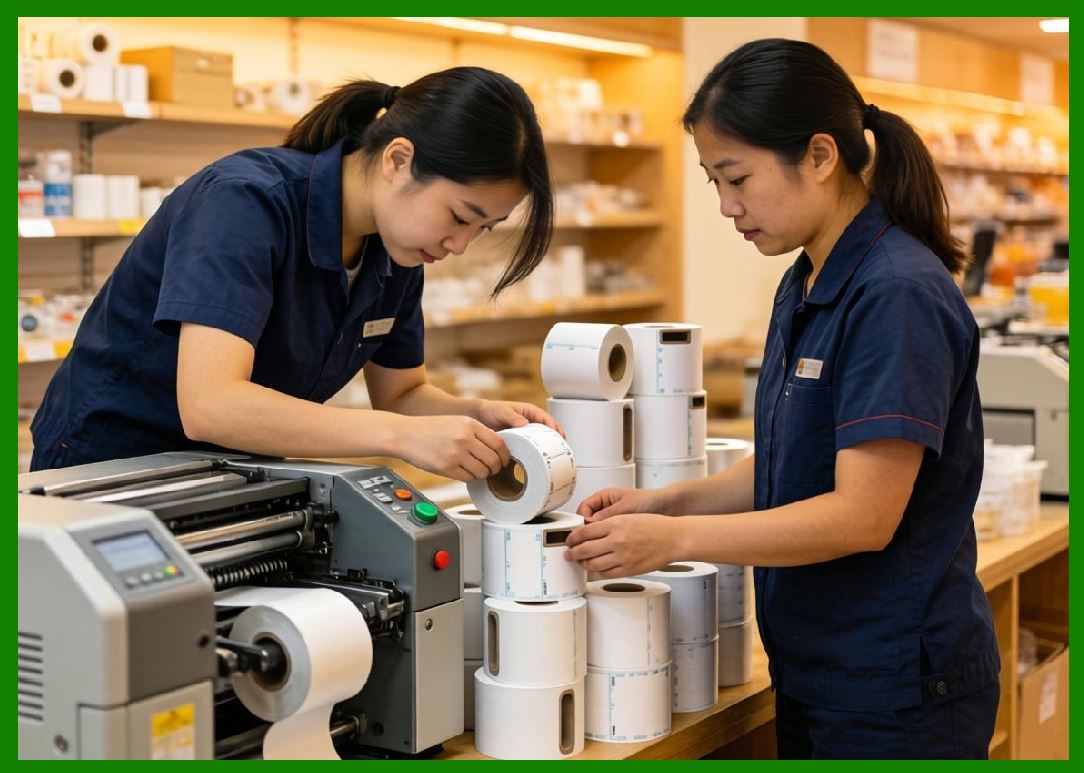
16. Digital Label Printing Systems |
16.1 Inkjet Label Printing |
Industrial inkjet systems support variable information. |
16.2 Laser Printing Systems |
Laser systems use toner electrophotography. |
16.3 UV Inkjet Technology |
UV curing enables printing on synthetic films. |
16.4 High-Resolution Imaging |
Digital systems support fine barcode geometry. |
|
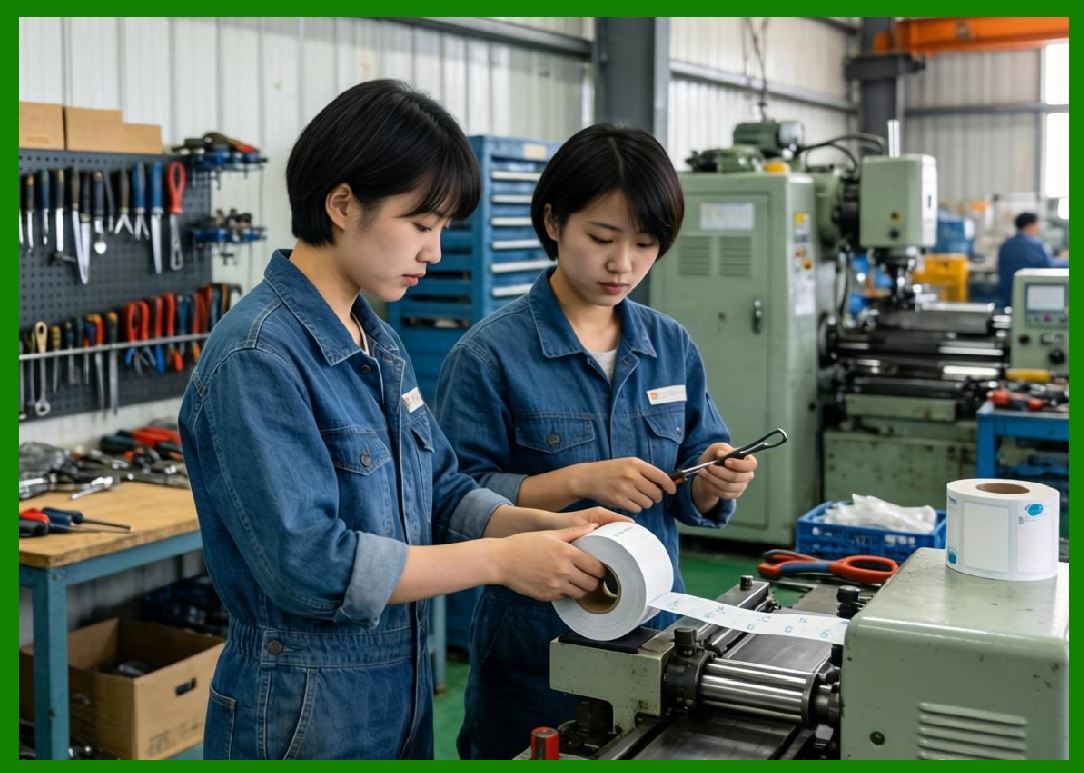
17. Rotary Die-Cutting Systems |
17.1 Die-Cutting Fundamentals |
Die-cutting creates individual label shapes. |
17.2 Rotary Dies |
Cylindrical dies cut continuously moving webs. |
17.3 Magnetic Cylinder Systems |
Flexible dies attach magnetically to cylinders. |
17.4 Cutting Depth Control |
Depth precision prevents liner damage. |
|
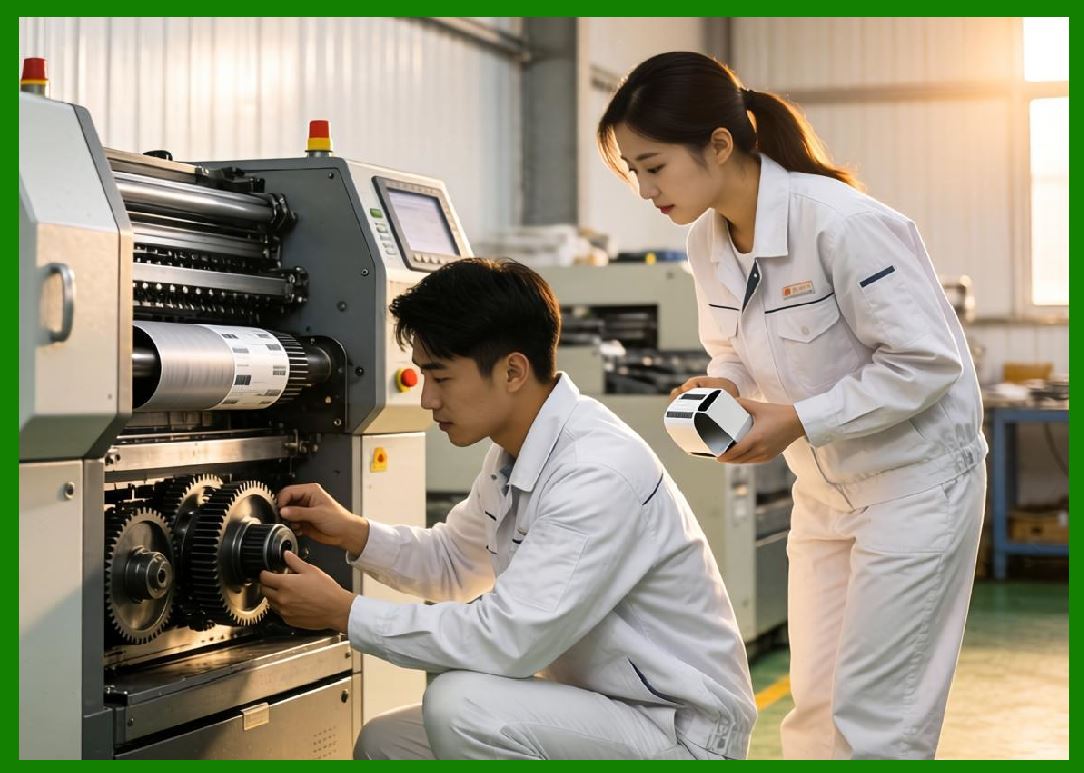
18. Laser Die-Cutting Systems |
18.1 Digital Cutting |
Laser systems eliminate physical dies. |
18.2 Rapid Job Changes |
Laser cutting supports flexible production. |
18.3 Precision Advantages |
Laser systems create intricate shapes. |
18.4 Thermal Damage Risks |
Improper settings may damage materials. |
|
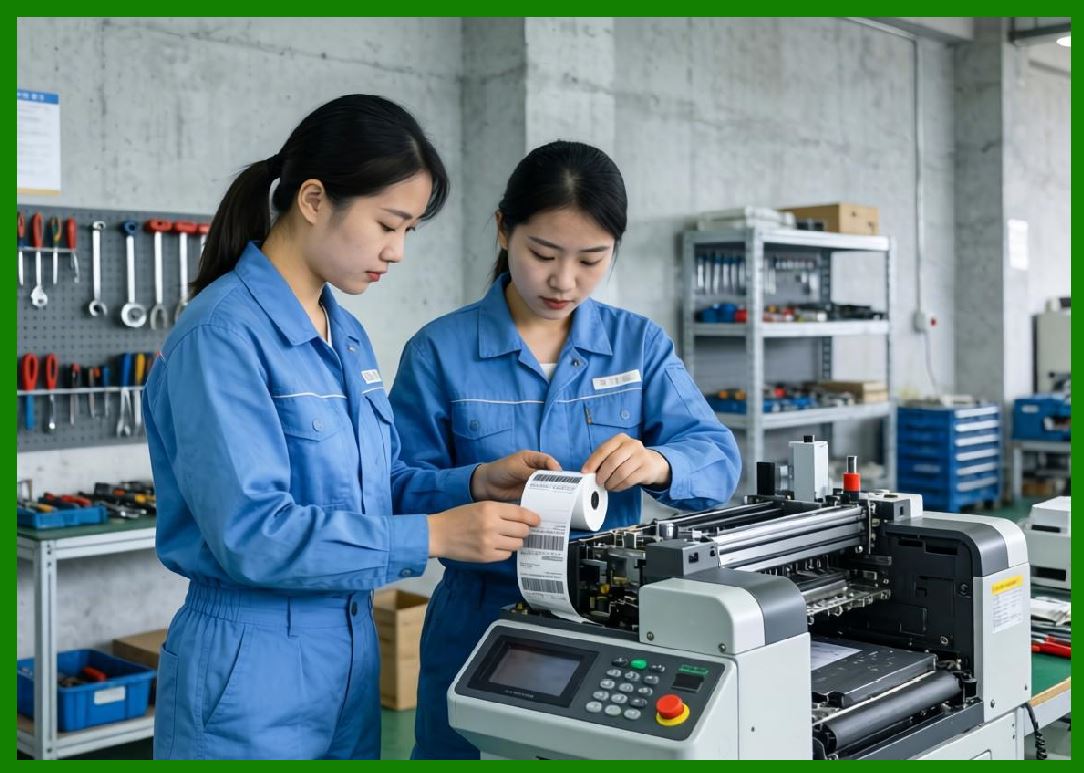
19. Slitting and Rewinding Machinery |
19.1 Slitting Operations |
Large master rolls are slit into smaller rolls. |
19.2 Razor Slitting |
Razor blades cut thin materials efficiently. |
19.3 Shear Slitting |
Rotary knives provide precise cutting. |
19.4 Tension Control |
Proper tension prevents wrinkles and stretching. |
|
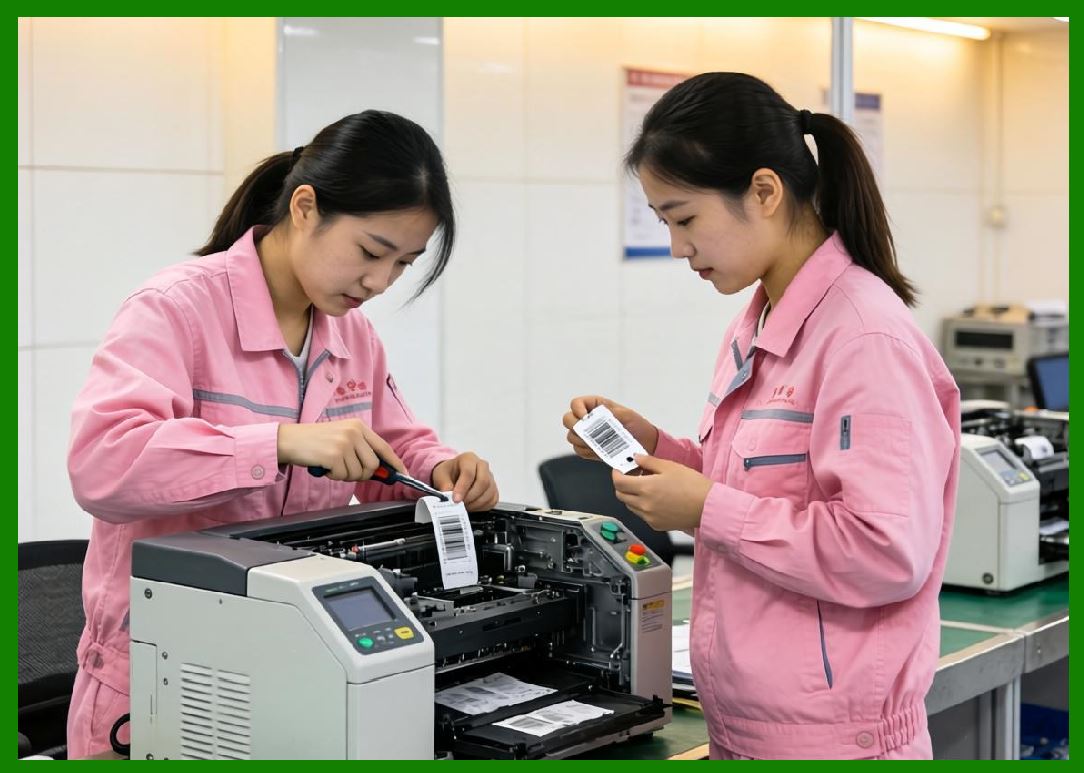
20. Web Handling Engineering |
20.1 Web Tension Dynamics |
Stable web tension is essential. |
20.2 Roller Alignment |
Misalignment causes tracking problems. |
20.3 Wrinkle Prevention |
Wrinkles damage barcode quality. |
20.4 Static Electricity Control |
Static buildup attracts dust and disrupts handling. |
|
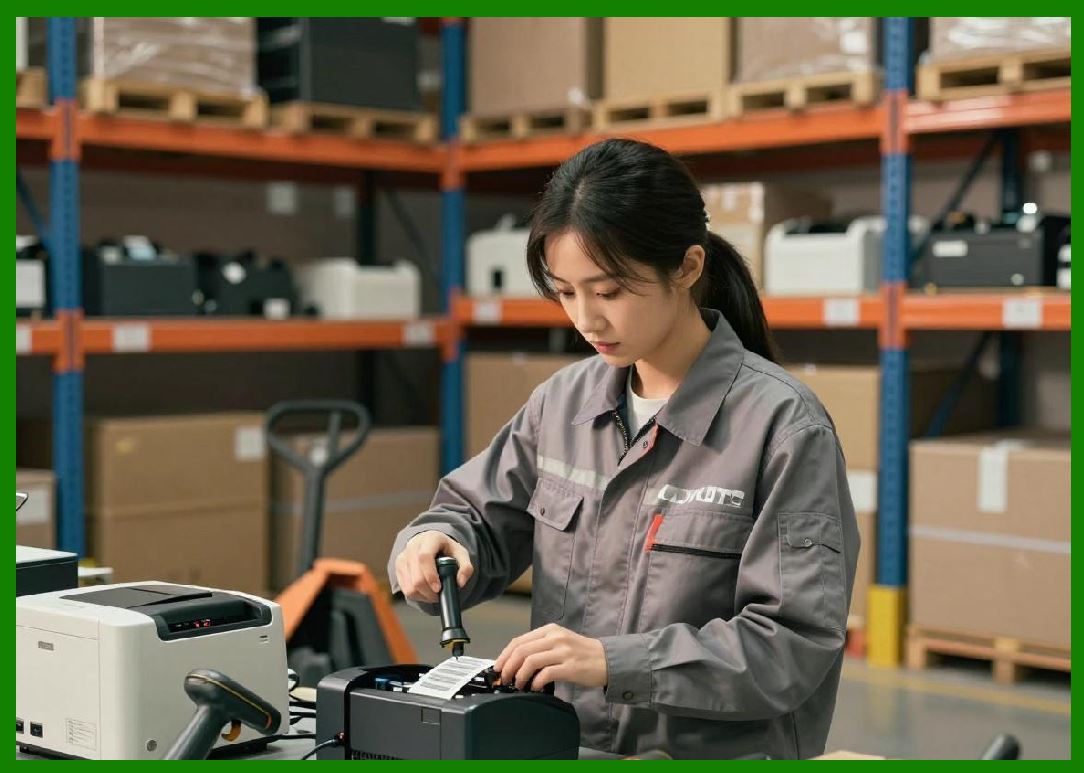
21. Inspection and Quality Control Systems |
21.1 Machine Vision Inspection |
Cameras inspect labels continuously. |
21.2 Barcode Verification |
Automated systems verify barcode readability. |
21.3 Defect Detection |
Inspection systems identify: |
1. Missing labels. |
2. Print defects. |
3. Coating streaks. |
4. Registration errors. |
21.4 Real-Time Process Feedback |
Modern systems automatically adjust processes. |
|
22. Barcode Verification Equipment |
22.1 ISO Barcode Standards |
Verification systems measure barcode compliance. |
22.2 Contrast Measurement |
Optical contrast strongly affects readability. |
22.3 Modulation Analysis |
Signal consistency is evaluated. |
22.4 Edge Determination |
Edge sharpness affects decoding accuracy. |

|
23. Automation and Computer Control |
23.1 PLC Systems |
Programmable logic controllers automate machinery. |
23.2 Servo Motors |
Servo systems provide precise motion control. |
23.3 HMI Interfaces |
Human-machine interfaces simplify operation. |
23.4 Industry 4.0 Integration |
Modern factories increasingly use connected automation systems. |

|
24. Robotics in Label Manufacturing |
24.1 Automated Roll Handling |
Robots transport heavy rolls safely. |
24.2 Packaging Automation |
Automated systems package finished products. |
24.3 Palletizing Systems |
Robotic palletizers improve efficiency. |
24.4 Vision-Guided Robotics |
Vision systems enhance robotic accuracy. |

|
25. Environmental Control Systems |
25.1 Temperature Control |
Environmental stability improves process consistency. |
25.2 Humidity Control |
Humidity strongly affects paper behavior. |
25.3 Dust Filtration |
Contamination causes print defects. |
25.4 Solvent Recovery Systems |
VOC recovery improves environmental compliance. |
|
26. Production Defects and Troubleshooting |
26.1 Coating Streaks |
Uneven coatings create print inconsistencies. |
26.2 Registration Errors |
Misalignment reduces barcode readability. |
26.3 Curl Defects |
Improper tension or moisture balance causes curl. |
26.4 Delamination |
Poor bonding weakens label structures. |
|
27. Industrial Safety Considerations |
27.1 Rotating Machinery Hazards |
Production lines contain high-speed moving components. |
27.2 Solvent Safety |
Solvent vapors may create fire risks. |
27.3 Thermal Hazards |
Dryers and heaters operate at high temperatures. |
27.4 Automation Safety |
Robotic systems require protective safeguards. |
|
28. Sustainability in Manufacturing |
28.1 Energy Consumption |
Large production facilities consume substantial energy. |
28.2 Water Usage |
Papermaking requires large water volumes. |
28.3 Waste Reduction |
Modern systems reduce trim waste. |
28.4 Closed-Loop Recycling |
Facilities increasingly recycle process materials. |
|
29. Future Manufacturing Technologies |
29.1 AI Process Optimization |
Artificial intelligence improves process control. |
29.2 Smart Sensors |
Advanced sensors improve predictive maintenance. |
29.3 Fully Digital Production |
Digital workflows increase flexibility. |
29.4 Autonomous Factories |
Future facilities may operate with minimal human intervention. |
|
30. Technical Content Summary |
This part provided a highly detailed technical examination of barcode label manufacturing machinery and industrial production systems. |
The article began by explaining the complete workflow of barcode label production, including: |
1. Raw material preparation. |
2. Surface coating. |
3. Adhesive application. |
4. Printing. |
5. Die-cutting. |
6. Slitting. |
7. Inspection. |
8. Packaging. |
Extensive discussion was devoted to papermaking machinery, including: |
1. Headbox systems. |
2. Forming sections. |
3. Press sections. |
4. Drying cylinders. |
5. Moisture control systems. |
6. Calendering machinery. |
Synthetic film production technologies such as extrusion, blown-film systems, and orientation equipment were also analyzed in detail. |
|
The article thoroughly explored coating machinery including: |
1. Blade coaters. |
2. Gravure systems. |
3. Slot-die coaters. |
4. Multi-layer coating technologies. |
Drying and curing technologies involving: |
1. Hot-air ovens. |
2. Infrared drying. |
3. UV curing. |
4. Electron beam curing. |
were discussed extensively. |
The discussion further examined adhesive coating lines, lamination machinery, flexographic printing systems, digital presses, and hybrid printing technologies. |
Rotary die-cutting, laser die-cutting, slitting, rewinding, and web-handling engineering were analyzed comprehensively. |
Advanced inspection technologies such as: |
1. Machine vision systems. |
2. Barcode verification equipment. |
3. Real-time process monitoring. |
were also explored in depth. |
The article additionally covered: |
1. PLC automation. |
2. Servo motion control. |
3. Robotics integration. |
4. Environmental control systems. |
5. Safety engineering. |
6. Sustainability initiatives. |
7. AI-based manufacturing optimization. |
Finally, future autonomous manufacturing technologies and Industry 4.0 integration trends were examined. |
|
The next part will provide a highly detailed technical deep dive into thermal transfer ribbons used for barcode labels, including wax ribbons, resin ribbons, wax-resin formulations, ribbon coating chemistry, ink transfer mechanisms, durability engineering, and printer compatibility systems. |
 cs@easiersoft.com