Part 1 |
Overview of the Global Pressure-Sensitive Barcode Label Paper Industry and the Rise of International Manufacturers |
1. Introduction to Pressure-Sensitive Barcode Label Paper |
1.1 |
Pressure-sensitive barcode label paper is one of the most important material categories in the modern automatic identification and data capture industry. It is widely used in retail, logistics, warehousing, healthcare, manufacturing, transportation, postal systems, e-commerce, food packaging, pharmaceuticals, chemical management, and industrial asset tracking. Unlike traditional labels that require water, heat, or solvents for adhesion, pressure-sensitive labels use specially engineered adhesive systems that bond to surfaces when pressure is applied. This simple but highly effective mechanism revolutionized labeling technology during the twentieth century and became the foundation of modern barcode identification systems. |
1.2 |
The development of barcode label paper is closely connected to the evolution of barcode technology itself. When linear barcodes such as UPC and Code 39 became commercially important during the 1970s and 1980s, industries needed label materials capable of supporting precise print contrast, durable adhesion, environmental resistance, and mass-scale automated printing. Manufacturers of pressure-sensitive materials recognized that barcode systems demanded extremely high print quality and dimensional stability. Even minor imperfections in the label surface could reduce barcode readability and scanning reliability. |

|
1.3 |
As barcode technology expanded into increasingly demanding environments, pressure-sensitive label manufacturers invested heavily in chemistry, coating science, paper engineering, synthetic film technology, silicone release systems, and adhesive innovation. The industry evolved from simple paper sticker production into a highly specialized global materials science sector. Today leading manufacturers are not merely paper producers. They are multinational technology companies operating advanced research laboratories focused on nanocoatings, sustainable substrates, RFID integration, digital printing compatibility, food safety compliance, and smart packaging systems. |
1.4 |
The phrase pressure-sensitive barcode label paperactually includes a broad family of products. These include direct thermal papers, thermal transfer papers, coated papers, synthetic films, polypropylene labels, polyester labels, polyethylene labels, linerless materials, removable labels, permanent labels, freezer-grade labels, chemical-resistant labels, tamper-evident labels, pharmaceutical-grade labels, and industrial durable labels. Each category requires different manufacturing technologies and chemical formulations. |

|
1.5 |
Internationally renowned manufacturers in this industry have spent decades building technological expertise in five major technical areas: |
1. Surface facestock engineering |
2. Adhesive formulation technology |
3. Silicone release coating systems |
4. Thermal imaging chemistry |
5. Converting and coating precision manufacturing |
These companies operate massive coating facilities, paper mills, chemical laboratories, adhesive plants, and global logistics networks capable of supplying billions of square meters of label stock annually. |

|
2. Historical Origins of the Pressure-Sensitive Label Industry |
2.1 |
The roots of pressure-sensitive label technology can be traced to the early twentieth century. Before pressure-sensitive adhesives were commercially practical, labels typically relied on water-activated gum adhesives. These traditional systems required moistening before application, which limited automation and industrial productivity. As industrialization accelerated, manufacturers sought faster and cleaner labeling methods. |
2.2 |
One of the most important pioneers in the field was R. Stanton Avery, who is widely credited with inventing the first commercially successful self-adhesive label during the 1930s. His innovation fundamentally transformed the labeling industry. Avery recognized that businesses needed labels that could be peeled from a release liner and instantly applied to products without additional processing steps. |
2.3 |
The earliest pressure-sensitive labels were relatively simple. They consisted of a paper facestock coated with adhesive and attached to a backing liner treated with release material. However, even these early systems required sophisticated engineering. The adhesive had to maintain bonding strength while remaining removable from the liner. The liner required carefully controlled release properties. The face material needed sufficient smoothness and printability. |
|
2.4 |
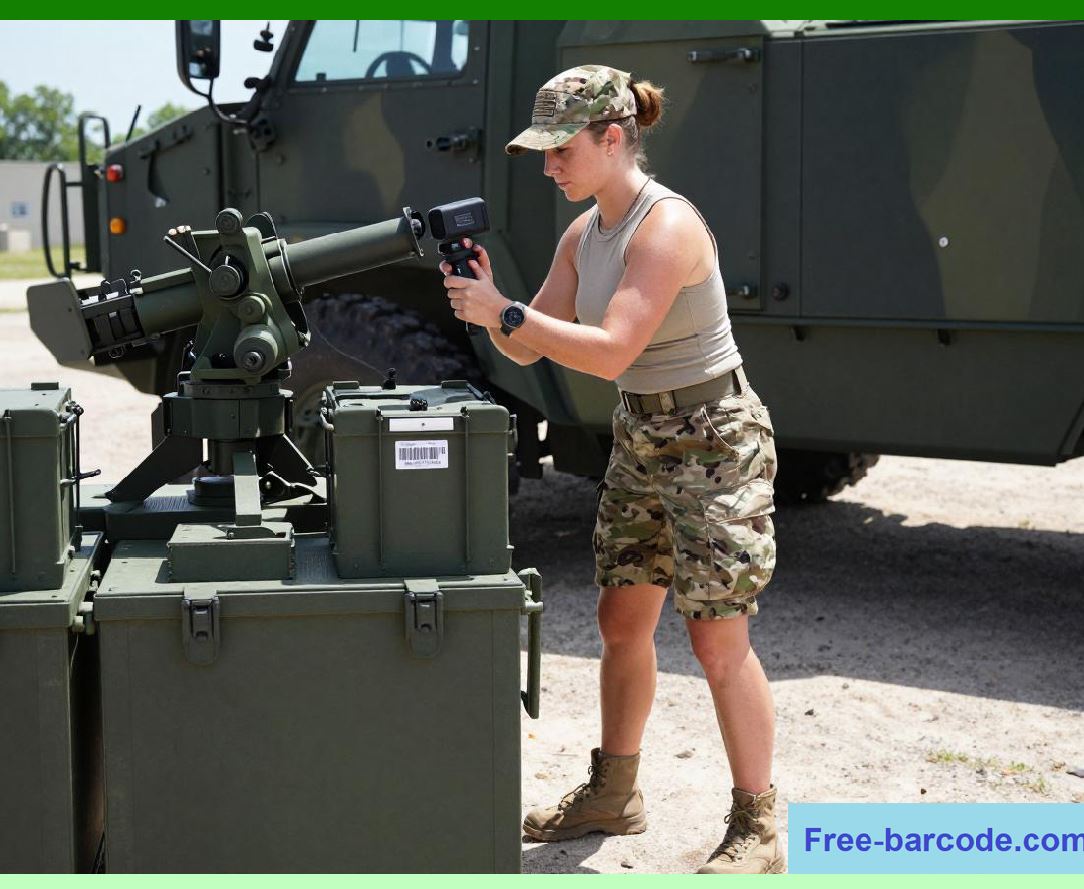
World War II accelerated the development of pressure-sensitive technologies. Military logistics required rapid identification systems for equipment, supplies, and packaging. After the war, many industrial technologies developed for wartime applications transitioned into civilian commercial manufacturing. During the 1950s and 1960s, pressure-sensitive labeling began expanding into food packaging, consumer products, pharmaceuticals, and shipping. |
2.5 |
The invention and commercialization of barcode technology during the 1970s dramatically increased the importance of high-quality label materials. The introduction of the UPC barcode in retail created entirely new performance requirements. Labels now needed excellent optical properties, consistent print contrast, and dimensional stability to ensure accurate scanning. |
2.6 |
By the 1980s, the barcode revolution created explosive demand for thermal printing technologies. Thermal transfer and direct thermal printers became widely used in shipping, warehousing, manufacturing, and retail. This transformation triggered rapid growth among label material manufacturers, particularly companies specializing in thermal-sensitive coatings and durable adhesive systems. |

|
3. Structure of Modern Pressure-Sensitive Barcode Label Materials |
3.1 |
Modern pressure-sensitive barcode label materials are multilayer engineered composites consisting of several highly specialized functional components. Although labels may appear simple externally, their internal structure represents decades of materials science development. |
3.2 |
The primary layer is the facestock. This is the printable surface that receives barcode images, text, graphics, and variable information. Facestock materials can be paper-based or film-based. Common paper facestocks include uncoated paper, semi-gloss paper, cast-coated paper, and thermal-sensitive paper. Film facestocks include polypropylene, polyethylene, polyester, and polyimide materials. |
3.3 |
The second major layer is the adhesive system. Pressure-sensitive adhesives must balance multiple competing properties including tack, peel strength, shear resistance, temperature tolerance, aging stability, chemical resistance, and surface compatibility. Leading manufacturers invest enormous resources into adhesive chemistry because adhesive performance largely determines real-world label reliability. |

|
3.4 |
The third component is the release liner. The liner supports the label during printing, die cutting, storage, and dispensing. Silicone release coatings allow the label to separate cleanly during application. Liners may be made from glassine paper, kraft paper, polyester film, or other engineered substrates. |
3.5 |
In thermal barcode labels, an additional thermal coating layer exists within the facestock. This coating contains heat-sensitive dyes and developers that react during thermal printing. Direct thermal papers are particularly sophisticated because they must maintain image sensitivity while resisting environmental degradation caused by heat, moisture, oils, and ultraviolet exposure. |
3.6 |
Many premium barcode labels also incorporate topcoats. These protective coatings improve print durability, scratch resistance, solvent resistance, and scanning reliability. Topcoats are especially important in logistics, laboratory, healthcare, and industrial environments where labels experience abrasion and chemical exposure. |
3.7 |
Advanced manufacturers often customize material constructions for specific industries. For example: |
1. Frozen food labels require low-temperature adhesives. |
2. Pharmaceutical labels require sterilization resistance. |
3. Chemical drum labels require solvent durability. |
4. Automotive labels require high heat resistance. |
5. Electronics labels require antistatic properties. |
6. Logistics labels require rapid thermal imaging performance. |

|
4. Emergence of Global Manufacturing Leaders |
4.1 |
As barcode systems became essential to international commerce, a small number of manufacturers emerged as dominant global suppliers of pressure-sensitive label materials. These companies distinguished themselves through technological innovation, manufacturing scale, research investment, and worldwide distribution capabilities. |
4.2 |
Among the most influential companies in the industry are: |
1. Avery Dennison |
2. UPM Raflatac |
3. Mondi Group |
4. Fedrigoni Group |
5. 3M |
6. CCL Industries |
7. LINTEC Corporation |
8. Herma |
9. SATO Holdings |
10. Nitto Denko |

|
4.3 |
These companies collectively shaped the technological direction of the modern labeling industry. Their innovations include: |
1. High-speed coating systems |
2. Ultra-thin release liners |
3. Eco-friendly adhesives |
4. RFID-ready label constructions |
5. Wash-off labels for recycling |
6. Linerless label systems |
7. UV-resistant thermal papers |
8. Durable synthetic barcode films |
9. Antimicrobial label coatings |
10. Smart packaging integration |
4.4 |
Many of these manufacturers expanded globally through acquisitions and strategic partnerships. The label materials industry became increasingly international during the late twentieth century. Manufacturing plants were established across North America, Europe, Asia-Pacific, and Latin America to support multinational supply chains. |
4.5 |
Global manufacturers also benefited from the rise of e-commerce. Companies such as Amazon and international logistics operators created enormous demand for shipping labels, warehouse barcode systems, and variable information printing. This transformed barcode labels from a specialized industrial product into a massive global consumable category. |

|
5. Technological Evolution of Barcode Label Papers |
5.1 |
One of the most important technological milestones in the industry was the development of direct thermal barcode paper. Direct thermal technology eliminated the need for ink ribbons by using heat-sensitive coatings that darken during printing. This simplified printer mechanisms and enabled high-speed label generation. |
5.2 |
Direct thermal labels became extremely important in shipping, retail, healthcare, airline baggage handling, and logistics operations. However, early direct thermal papers suffered from several limitations including fading, poor heat resistance, and environmental sensitivity. Manufacturers invested heavily in improving coating chemistry to enhance durability. |
5.3 |
Thermal transfer label materials represented another major technological advance. In thermal transfer systems, a heated printhead transfers ink from a ribbon onto the label surface. This approach provides superior durability and supports long-term barcode readability under harsh conditions. |

|
5.4 |
Manufacturers developed specialized coatings optimized for different ribbon chemistries including wax, wax-resin, and full resin formulations. Matching label surfaces to ribbon technologies became a critical technical discipline. |
5.5 |
The rise of synthetic label materials further transformed the industry. Polypropylene and polyester barcode labels offered superior moisture resistance, chemical resistance, tear resistance, and outdoor durability compared to traditional paper labels. These materials became essential in industrial and laboratory applications. |
5.6 |
Another major innovation involved release liner optimization. Traditional liners contributed significant waste volume and transportation costs. Manufacturers therefore pursued thinner liners, recyclable liners, and linerless technologies. These developments reduced environmental impact while improving operational efficiency. |
5.7 |
Digital printing compatibility became increasingly important during the 2000s and 2010s. Label materials needed to support inkjet, laser, electrophotographic, and hybrid printing systems. Leading manufacturers introduced multifunctional topcoats capable of supporting multiple printing technologies simultaneously. |

|
6. Importance of Adhesive Technology |
6.1 |
Adhesive science is arguably the most technically sophisticated aspect of pressure-sensitive barcode label manufacturing. The adhesive must maintain reliable bonding across diverse environmental conditions while remaining compatible with automated converting and dispensing systems. |
6.2 |
Modern adhesives are generally classified into three major categories: |
1. Acrylic adhesives |
2. Rubber-based adhesives |
3. Silicone adhesives |
Each category has distinct performance characteristics and industrial applications. |
6.3 |
Acrylic adhesives are widely used because they provide excellent aging resistance, UV stability, and temperature performance. They are commonly used in durable barcode labels for logistics, pharmaceuticals, and industrial identification. |

|
6.4 |
Rubber-based adhesives provide aggressive initial tack and strong adhesion to difficult surfaces. These adhesives are often used in warehouse labeling and corrugated packaging applications. However, they may exhibit lower long-term environmental stability than acrylic systems. |
6.5 |
Silicone adhesives are highly specialized materials used for extreme-temperature environments and difficult low-energy surfaces. Although more expensive, silicone systems are essential in aerospace, electronics, and specialized industrial sectors. |
6.6 |
Leading manufacturers continuously refine adhesive formulations to support emerging applications. For example, e-commerce packaging requires adhesives capable of bonding reliably to recycled corrugated cardboard with varying surface conditions. Food packaging requires FDA-compliant formulations. Medical labels require sterilization-resistant adhesives. |
6.7 |
Environmental sustainability is now reshaping adhesive technology. Manufacturers increasingly focus on solvent-free coatings, water-based adhesives, bio-based materials, and recycling-compatible formulations. Some companies are developing wash-off adhesives that enable easier plastic container recycling. |
|
7. Rise of Sustainable Label Materials |
7.1 |
Sustainability has become one of the most important strategic priorities for internationally renowned pressure-sensitive label manufacturers. Environmental regulations, consumer awareness, and corporate ESG goals are driving major technological changes across the industry. |
7.2 |
Traditional label systems generate significant waste through liners, silicone coatings, plastic films, and non-recyclable adhesive residues. Manufacturers are therefore investing heavily in circular economy initiatives. |
7.3 |
One major innovation area involves recyclable facestock materials. Companies are developing paper and film constructions compatible with existing recycling infrastructure. For example, wash-off adhesive technologies allow labels to separate cleanly during PET bottle recycling processes. |

|
7.4 |
Linerless labeling systems are another important sustainability development. By eliminating the release liner entirely, linerless systems significantly reduce material waste and transportation volume. However, linerless technologies require advanced adhesive engineering to prevent labels from sticking together during storage. |
7.5 |
Many manufacturers are also reducing liner thickness to decrease raw material consumption. Ultra-thin glassine liners lower shipping weights and improve roll yield efficiency. These seemingly small improvements create major environmental benefits at global production scales. |
7.6 |
Bio-based facestock materials are emerging as another promising area. Some companies are experimenting with renewable fibers, agricultural residues, and biodegradable polymers. However, balancing sustainability with barcode print performance remains technically challenging. |
7.7 |
Carbon footprint reduction is now integrated into manufacturing strategy. Major manufacturers operate energy-efficient coating lines, renewable energy projects, water recycling systems, and waste recovery programs. Sustainability reporting has become a major aspect of corporate branding in the label materials sector. |

|
8. Global Applications of Pressure-Sensitive Barcode Labels |
8.1 |
Pressure-sensitive barcode labels are now fundamental to modern economic infrastructure. Nearly every consumer product, industrial component, medical item, and logistics package depends on barcode identification at some stage of the supply chain. |
8.2 |
In retail environments, barcode labels enable automated checkout, inventory management, pricing accuracy, and supply chain visibility. The global adoption of UPC and EAN barcode systems created massive demand for consistent high-quality label materials. |
8.3 |
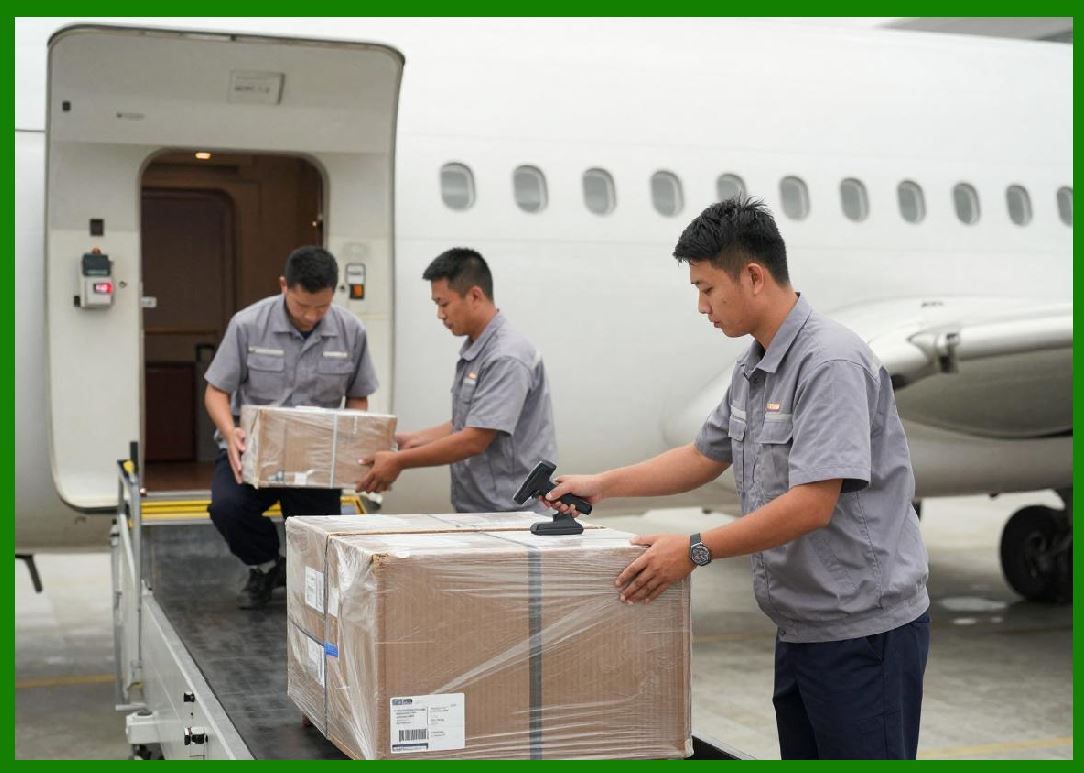
In logistics and warehousing, shipping labels represent one of the largest application categories. Companies such as FedEx, UPS, and DHL process millions of barcode labels daily. These applications require high-speed thermal printing performance and durable scanning reliability. |

|
8.4 |
Healthcare represents another technically demanding application sector. Hospitals and laboratories use barcode labels for specimen tracking, patient identification, pharmaceutical management, blood banking, and surgical instrument control. These labels must resist moisture, chemicals, sterilization processes, and refrigeration conditions. |
8.5 |
Food packaging applications require compliance with strict safety regulations. Labels must maintain adhesion under refrigeration and freezing conditions while supporting traceability requirements. Increasing regulatory emphasis on food transparency has further expanded barcode labeling usage. |
8.6 |
Manufacturing industries rely heavily on barcode labels for asset tracking, work-in-process identification, quality control, and traceability systems. Automotive manufacturers, electronics producers, and aerospace companies require durable labels capable of surviving harsh industrial environments. |
8.7 |
The rapid growth of e-commerce during the 2010s and 2020s dramatically expanded demand for thermal shipping labels. Billions of packages now move through global distribution networks annually, each requiring multiple barcode identification labels. |

|
9. Importance of Research and Development |
9.1 |
The world leading pressure-sensitive barcode label manufacturers invest enormous financial resources into research and development. This is necessary because the industry operates at the intersection of chemistry, physics, materials science, mechanical engineering, printing technology, and supply chain automation. |
9.2 |
Research laboratories focus on numerous technical areas including: |
1. Adhesive chemistry |
2. Thermal coating development |
3. Surface energy optimization |
4. Silicone release technologies |
5. Environmental durability |
6. Optical scanning performance |
7. Sustainability engineering |
8. RFID integration |
9. Antimicrobial coatings |
10. Smart label systems |

|
9.3 |
Advanced analytical instruments are used to evaluate label performance. These include spectroscopy systems, environmental chambers, peel testing machines, thermal analyzers, microscopy systems, and accelerated aging equipment. |
9.4 |
Barcode scanning reliability itself is a major research area. Label surfaces must produce sufficient contrast and edge definition for modern laser and imaging scanners. Manufacturers therefore optimize smoothness, brightness, opacity, coating uniformity, and print receptivity. |
9.5 |
Future-oriented manufacturers are increasingly integrating digital technologies into label systems. Smart labels combining barcodes, RFID chips, NFC communication, sensors, and cloud connectivity are becoming important innovation areas. |
9.6 |
Artificial intelligence and machine vision are also influencing label manufacturing. Automated inspection systems now monitor coating quality, defect detection, print uniformity, and converting precision at extremely high production speeds. |
9.7 |
The competitive advantage of major international manufacturers increasingly depends on intellectual property. Large companies hold extensive patent portfolios covering adhesive formulations, thermal coatings, release chemistries, liner technologies, and smart labeling systems. |
|
10. Future Direction of the Industry |
10.1 |
The future of the pressure-sensitive barcode label paper industry will likely be shaped by five major trends: |
1. Sustainability |
2. Digitalization |
3. Smart packaging |
4. Automation |
5. Global supply chain transformation |
10.2 |
Sustainability pressures will continue driving material innovation. Manufacturers will increasingly adopt recyclable constructions, bio-based substrates, solvent-free coatings, and reduced-waste production systems. |
10.3 |
Digital printing technologies will become even more important as brands demand customization, short production runs, variable information printing, and rapid product turnover. Label materials must support increasingly diverse printing platforms. |
10.4 |
RFID integration represents one of the most transformative future directions. Many leading label manufacturers are investing heavily in RFID-enabled pressure-sensitive constructions capable of supporting real-time supply chain visibility. |

|
10.5 |
Smart packaging systems may eventually combine traditional barcodes with sensors capable of monitoring temperature, humidity, freshness, tampering, and authentication. This could significantly expand the technical complexity of label materials. |
10.6 |
Global e-commerce growth will continue driving massive demand for thermal shipping labels and logistics identification systems. Automation in warehouses and distribution centers will require even higher scanning reliability and print consistency. |
10.7 |
The industry is also likely to experience continued consolidation. Large multinational corporations possess significant advantages in research investment, global distribution, regulatory compliance, and manufacturing scale. However, specialized niche manufacturers will continue contributing important innovations in high-performance applications. |
10.8 |
In the coming decades, pressure-sensitive barcode label manufacturers will remain essential participants in global commerce. Although consumers rarely notice label materials directly, these products quietly support the infrastructure of modern retail, healthcare, logistics, manufacturing, and digital supply chains worldwide. |
|
Detailed Technical Content Summary of Part 1 |
This first part introduced the global pressure-sensitive barcode label paper industry and explained how pressure-sensitive labeling became a critical foundation of modern barcode identification systems. The discussion covered the historical origins of self-adhesive labeling technology, especially the pioneering role of early inventors such as R. Stanton Avery. It also explained how barcode adoption during the twentieth century accelerated the demand for advanced label materials. |
The article examined the multilayer engineering structure of modern barcode labels, including facestock materials, adhesives, release liners, thermal coatings, and protective topcoats. It discussed the emergence of major international manufacturers such as Avery Dennison, UPM Raflatac, 3M, Herma, LINTEC, Mondi, and Fedrigoni, emphasizing their role in transforming label production into a sophisticated materials science industry. |
Major technological developments were analyzed, including direct thermal technology, thermal transfer systems, synthetic film labels, liner optimization, and digital printing compatibility. The section also explored adhesive chemistry in detail, explaining the differences between acrylic, rubber-based, and silicone adhesive systems. |
Sustainability trends were introduced as a major force reshaping the industry through recyclable materials, linerless labeling, wash-off adhesives, and carbon reduction initiatives. The article also described the massive global application scope of barcode labels in retail, logistics, healthcare, manufacturing, food packaging, and e-commerce. |
Finally, the section explored research and development priorities and examined future industry trends such as RFID integration, smart packaging, AI-assisted manufacturing, digital printing expansion, and global supply chain automation. |
End of Part 1. |
 cs@easiersoft.com