1. Introduction |
3D barcode (also known as stereo barcode) is an innovative technology that combines traditional two-dimensional barcode technology with three-dimensional elements. This technology not only relies on the familiar flat information encoding method, but also introduces depth and three-dimensional structure to store more information and support more complex application scenarios. With the development of barcode technology, 3D barcodes are gradually becoming an important tool in modern Internet of Things, logistics management, medical health and other fields. |
|
2. Basic Concepts of 3D Barcodes |
2.1 Definition and Characteristics |
3D barcodes are a technology that encodes data in three-dimensional space. Unlike traditional two-dimensional barcodes, which only contain data on a plane (such as QR code, PDF417, etc.), 3D barcodes use a three-dimensional coordinate system to store and read information. It combines the depth dimension in physical space, allowing information to be encoded in three directions: X, Y and Z. |
2.2 Working Principle |
Traditional barcodes decode the information stored in them by reading black and white stripes in the image through a scanner. 3D barcodes not only rely on the two-dimensional form of barcodes, but also add new elements in the depth direction (Z axis). Through special 3D scanning equipment, 3D barcodes can provide higher storage density and richer encoding methods. |

|
3. History and development of 3D barcodes |
3.1 Early research and exploration |
The concept of 3D barcodes is not new. Early 3D barcode technology mainly focused on how to encode data through different layers and heights. Initially, this technology was mainly used in industrial and military fields, because equipment in these fields usually requires higher fault tolerance and stronger anti-interference ability. |
3.2 Commercialization and popularization |
With the development of computer graphics and 3D printing technology, 3D barcodes have gradually begun to be used in the commercial field. For example, the application of 3D barcodes makes the tracking of goods more accurate, and also brings more advantages to supply chain management. Higher data storage capacity and stronger security are one of the reasons why 3D barcodes are widely used. |
|
4. Structure and types of 3D barcodes |
4.1 3D barcodes |
3D barcodes are usually composed of multiple layers, each of which represents different coded information. These layers can be distinguished by different materials or different surface morphologies. For example, each layer of some 3D barcodes may be a tiny micro-protrusion, so that when the barcode is scanned, the scanner can identify each layer and parse the information in it. |
4.2 3D dot matrix code |
3D dot matrix code is a more advanced 3D barcode technology that encodes information by creating a dot matrix structure in three-dimensional space. Each dot matrix can contain multiple information points, which are arranged in the form of spatial coordinates to form a highly complex coding pattern. 3D dot matrix codes have a very large storage capacity and can effectively avoid interference and counterfeiting. |
4.3 Stacked barcodes |
Stacked barcodes form a three-dimensional structure by stacking multiple traditional two-dimensional barcodes together. These layers can not only improve the storage density of the barcode, but also realize more functions, such as bidirectional scanning, automatic verification, etc. |
|
5. Technical Implementation of 3D Barcodes |
5.1 3D Scanning Technology |
The basis for realizing 3D barcode technology is high-precision 3D scanning technology. These scanners can identify each layer of the barcode and parse the information encoded in the barcode. Common 3D scanning technologies include laser scanning, structured light scanning, and stereo vision scanning. These technologies can reconstruct three-dimensional models based on slight differences in the surface of the barcode, thereby accurately obtaining the encoded information. |
5.2 3D Printing Technology |
3D printing technology plays an important role in the application of 3D barcodes. Through 3D printing, 3D barcodes can be printed directly on the surface of an object to form a physical structure. This printing method can be used to manufacture product labels with high security and anti-counterfeiting functions to ensure the authenticity and accuracy of information. |
5.3 Software and Decoding Technology |
Unlike traditional barcode decoding technology, 3D barcodes require more complex software and decoding algorithms. These decoding software can extract effective information from the scanned three-dimensional data and restore the data. Usually, these software rely on efficient image processing algorithms and three-dimensional geometric analysis technology. |
|
6. Application fields of 3D barcodes |
6.1 Logistics and supply chain management |
In modern logistics and supply chain management, the application of 3D barcodes provides great convenience for tracking and managing goods. Through 3D barcodes, logistics companies can obtain more detailed information, such as the production batch, transportation route, and storage conditions of goods. At the same time, 3D barcodes can carry more information, reducing the need for multiple labels for traditional barcodes. |
6.2 Medical industry |
In the medical industry, 3D barcodes are used in the fields of drug traceability and patient information management. For example, 3D barcodes can be printed on drug packaging so that drugs can be effectively tracked at every circulation link. This not only improves the safety of drugs, but also helps reduce the circulation of counterfeit and substandard drugs. |
6.3 Security and Anti-Counterfeiting |
Due to its complex structure and high-density information storage capacity, 3D barcodes have become an ideal anti-counterfeiting tool. Through 3D barcodes, manufacturers can ensure the uniqueness of products and effectively prevent counterfeiting and tampering. This technology is particularly suitable for high-end consumer goods, luxury goods and electronic products. |
6.4 Consumer Goods and Retail |
In the retail industry, 3D barcodes are used to provide more product information. Consumers can obtain detailed information about the product by scanning the 3D barcode, such as production date, raw materials, manufacturer information, etc. In addition, 3D barcodes can also provide consumers with interactive experiences, such as augmented reality (AR) functions. |

|
7. Advantages and Challenges of 3D Barcodes |
7.1 Advantages |
Large storage capacity: 3D barcodes can hold more information than traditional barcodes and are suitable for the storage needs of complex data. |
Improve security: Due to its three-dimensional structure, 3D barcodes have higher advantages in anti-counterfeiting and anti-tampering. |
Strong anti-interference ability: Compared with traditional barcodes, 3D barcodes are less sensitive to external interference and can work stably in harsh environments. |
Multifunctional application: 3D barcodes can not only store information, but also combine with technologies such as the Internet of Things and augmented reality to provide a richer interactive experience. |
7.2 Challenges |
High cost: The production, scanning and decoding equipment of 3D barcodes are expensive, which limits their popularity in some fields. |
High technical threshold: The development and application of 3D barcodes require a high technical threshold, especially in decoding and data processing. |
Device compatibility issues: Currently, not all devices can support the scanning and decoding of 3D barcodes, especially in the field of ordinary consumer goods, where the device penetration rate is not high. |
|
8. Future development trends |
8.1 Integration with the Internet of Things |
In the future, 3D barcodes may be deeply integrated with the Internet of Things technology and become an important carrier for transmitting information between smart devices. For example, through 3D barcodes, detailed information of items can be transmitted to the cloud platform in real time, providing more accurate data support for warehouse management and logistics tracking. |
8.2 Wider industry applications |
With the advancement of technology, 3D barcodes will enter more industry applications, especially in fields that require high security and high storage capacity. For example, the military, aerospace, medical equipment and other fields have high requirements for information accuracy and security, and the application of 3D barcodes will be more extensive. |
8.3 Combination with augmented reality (AR) technology |
The rise of augmented reality technology has provided a new opportunity for the application of 3D barcodes. By combining 3D barcodes with AR technology, consumers can scan barcodes through smart devices to obtain more product information, usage instructions, and even virtual interactive experiences. |

|
9. Conclusion |
As a new direction for the development of barcode technology, 3D barcodes have shown great potential in multiple industries with their stronger storage capacity, anti-interference ability and higher security. With the continuous advancement of technology, the application of 3D barcodes will be more extensive in the future, especially in the fields of Internet of Things, intelligent manufacturing and consumer interaction, showing a more diversified application prospect. |
|
What industries are already using 3D barcodes? |
Due to its unique advantages, 3D barcodes have begun to be used in many industries. The following are some industries that are already using 3D barcodes: |
1. Logistics and supply chain management |
3D barcodes are widely used in logistics and supply chain management, especially in scenarios that require efficient tracking, warehousing management and cargo transportation. Compared with traditional two-dimensional barcodes, 3D barcodes can carry more information, helping logistics companies to track the location and status of goods more accurately. |
Application scenarios: |
Cargo tracking: Through 3D barcodes, logistics companies can track the path of each item in more detail, from production to transportation, and then to final delivery. |
Warehouse management: 3D barcodes can help warehouse managers quickly and accurately manage inventory information, reduce errors and improve efficiency. |

|
2. Medical industry |
The medical industry is an important field for 3D barcode applications, especially in drug traceability, patient information management and medical device management. |
Application scenarios: |
Drug traceability: Using 3D barcodes on drug packaging can effectively trace the production, circulation and use of drugs, which helps prevent counterfeit drugs from entering the market. |
Medical record management: 3D barcodes are used in medical records, patient labels, etc. to accurately record the patient's treatment process, reduce errors and improve management efficiency. |
Medical equipment management: Hospitals use 3D barcodes to manage medical devices to ensure that the use and maintenance records of equipment are more transparent and traceable. |

|
3. Retail and consumer goods |
In the retail and consumer goods industries, 3D barcodes are not only used for product tracking and inventory management, but also can enhance consumers' shopping experience. |
Application scenarios: |
Smart product labels: Using 3D barcodes on products can provide more information, such as product raw materials, production date, manufacturer information, etc. Consumers scan 3D barcodes to obtain detailed information about products. |
Anti-counterfeiting function: High-end consumer goods, luxury goods and electronic products use 3D barcodes as an anti-counterfeiting measure to prevent counterfeit and inferior products from entering the market. |
Augmented reality (AR) experience: In some retail stores, consumers can get virtual product experience, 3D display, and even real-time interaction by scanning 3D barcodes. |

|
4. Aviation and air cargo |
Airlines and the air cargo industry have begun to use 3D barcodes to simplify boarding procedures and cargo tracking. Boarding passes, baggage tags, cargo tags, etc. using 3D barcodes can improve the efficiency and accuracy of transportation. |
Application scenarios: |
Boarding passes and baggage tags: 3D barcodes are used on boarding passes and baggage tags, which increases the storage capacity of information, facilitates airports to quickly read passenger information, and reduces queuing time. |
Cargo tracking: Air cargo companies use 3D barcodes to track the transportation status of goods, ensuring that the transportation of high-value and sensitive goods is safer and more reliable. |
|
5. Automobile and Manufacturing |
3D barcodes have also been used in the automobile industry and manufacturing industry, mainly for production line management, parts traceability and quality monitoring during production. |
Application scenarios: |
Parts traceability: By using 3D barcodes on parts, automakers can accurately track the production information, supplier information and quality inspection records of each part. |
Production line management: 3D barcodes help production line managers quickly check the production process to ensure that each step is executed correctly. |
Equipment management: Using 3D barcodes to identify and manage equipment in production facilities can enable timely maintenance and inspection to improve production efficiency. |

|
6. Smart Manufacturing and Industrial Internet of Things |
In the field of smart manufacturing and industrial Internet of Things (IoT), 3D barcodes are being combined with sensors, RFID and other technologies to improve the degree of production automation and intelligent tracking of items. |
Application scenarios: |
Automated equipment management: Automated equipment in factories can be identified using 3D barcodes to achieve item identification and processing in automated operating systems. |
IoT device tracking: In the industrial IoT, 3D barcodes can be used for real-time tracking of equipment or goods, combined with sensors to obtain real-time data, and further enhance the intelligence of the production process. |
|
7. Government and military |
In the government and military fields, the application of 3D barcodes is mainly reflected in security and anti-counterfeiting. By using 3D barcodes, governments and military agencies can ensure the authenticity and security of information and avoid tampering or forgery. |
Application scenarios: |
Secure identity authentication: Governments and military agencies may use 3D barcodes on important documents such as ID cards, passports, and military officer certificates to ensure the security and accuracy of identity information. |
Material management: In military warehouses and equipment management, 3D barcodes are used to mark various military supplies, equipment, and weapons to ensure accurate management and tracking. |

|
8. Education and publishing industry |
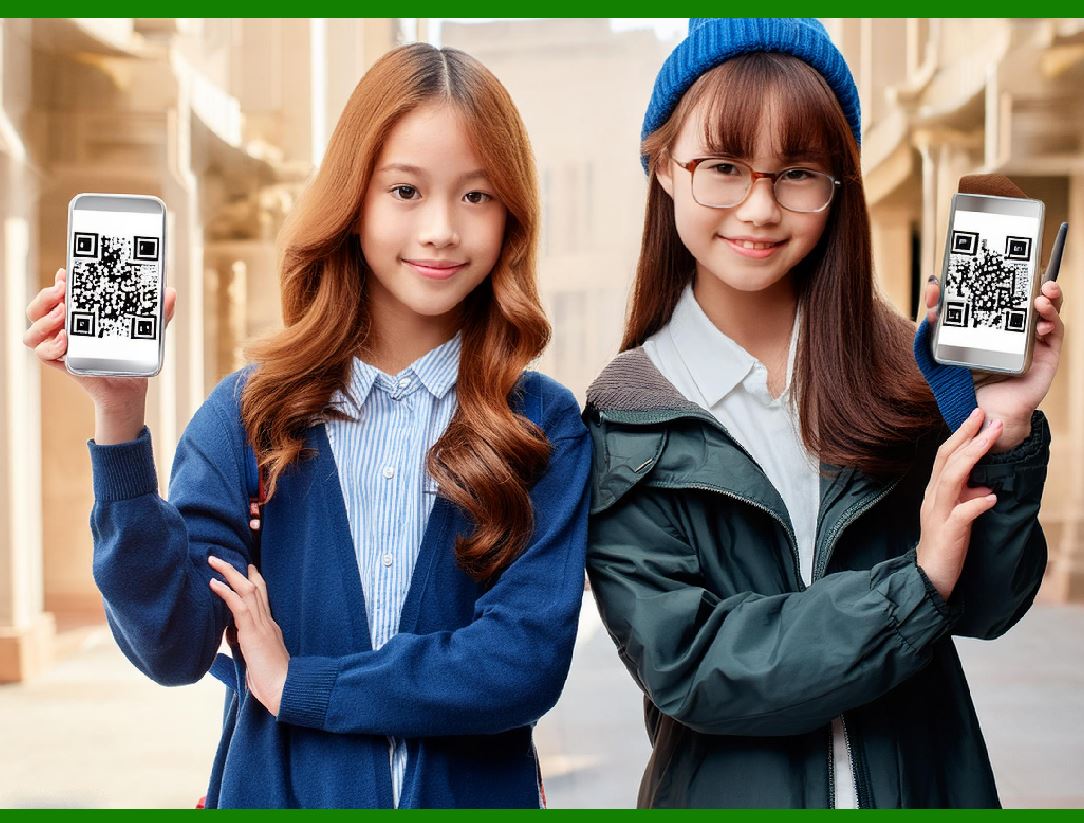
The application of 3D barcodes in the education and publishing industry is mainly focused on the management, distribution, and interaction of books, teaching materials, and educational resources. With the development of AR and VR technology, 3D barcodes can provide users with a richer interactive learning experience. |
Application scenarios: |
Book and textbook management: Publishers and bookstores print 3D barcodes on book covers to provide more information about books, such as author introduction, latest content, chapter summaries, etc. |
Interactive learning: Educational institutions apply 3D barcodes to textbooks, and students can obtain augmented reality content such as video explanations and interactive exercises by scanning barcodes. |
|
9. Food and agriculture |
In the food industry, 3D barcodes are mainly used for food traceability, production process monitoring and anti-counterfeiting. Consumers can also obtain detailed information about food by scanning 3D barcodes. |
Application scenarios: |
Food traceability: 3D barcodes can be used to mark food packaging to help consumers understand important information such as the source, production process and expiration date of food. |
Agricultural product traceability: Agricultural products (such as fruits, vegetables, etc.) can also be traced using 3D barcodes to ensure product quality and safety. |
|
10. Smart Home and Consumer Electronics |
In smart home and consumer electronics, 3D barcodes can be used to identify products, provide user manuals, technical support and product registration. |
Application scenarios: |
Smart home device management: By printing 3D barcodes on smart home devices, users can quickly scan and obtain device information, such as installation tutorials, troubleshooting steps and maintenance records. |
Electronic product anti-counterfeiting and quality assurance: 3D barcodes are applied to high-end consumer electronic products to ensure that users can verify the authenticity of their products and enhance brand trust. |
In general, 3D barcodes have gradually entered various industries, especially in areas with high requirements for information storage, accuracy and security. With the further development of technology, it is expected that more industries will adopt 3D barcodes in the future to further improve work efficiency and data management accuracy. |

|
Which companies or institutions have already applied 3D barcodes in practice? |
At present, many companies and institutions have begun to apply 3D barcode technology in different fields, especially in industries that require high security, high storage capacity, and complex tracking and anti-counterfeiting functions. The following are some companies or institutions that have already applied 3D barcodes in practice: |
1. United Parcel Service (UPS) |
UPS is one of the world's largest express delivery companies and has extensive 3D barcode applications in logistics and supply chain management. UPS uses enhanced barcode technology, including 3D barcodes, in its cargo tracking system. These 3D barcodes not only provide more accurate cargo tracking information, but also greatly improve work efficiency and reduce manual intervention. |
Application scenarios: |
Cargo tracking and management: UPS has integrated 3D barcodes into its cargo labels to accurately track the transportation status of each cargo. |
Augmented reality support: Customers and staff can obtain more information by scanning 3D barcodes, and display the location and transportation status of cargo through augmented reality (AR) technology. |

|
2. Siemens |
As a leading global industrial equipment and automation company, Siemens has adopted 3D barcode technology in multiple manufacturing projects, especially in factory automation and the management of Internet of Things (IoT) devices. 3D barcodes provide Siemens with efficient parts tracking and quality monitoring solutions for production line management. |
Application scenarios: |
Equipment and parts tracking: Through 3D barcodes, Siemens can track and manage its manufacturing equipment and parts in real time, ensuring that every link in the production process is recorded. |
Industrial Internet of Things: Siemens uses 3D barcodes to achieve remote monitoring and automated operation of equipment in its smart manufacturing factories. |

|
3. Walmart |
Walmart is one of the world's largest retailers, and its supply chain management system has integrated 3D barcode technology. Walmart has achieved more efficient inventory management and product tracking through 3D barcodes, especially for high-value goods and products with anti-counterfeiting requirements. |
Application scenarios: |
Product anti-counterfeiting and traceability: Walmart uses 3D barcodes on high-end products to ensure the authenticity of the products through anti-counterfeiting functions and provide more detailed product information. |
Inventory management: 3D barcodes help Walmart track inventory more accurately in warehouse management, reduce errors and improve efficiency. |
|
4. Boeing |
Boeing, as the world's leading aerospace manufacturer, has begun using 3D barcodes in aircraft manufacturing and maintenance. By printing 3D barcodes on aircraft parts and tools, Boeing is able to achieve more accurate parts tracking and maintenance management. |
Application scenarios: |
Parts traceability: Boeing uses 3D barcodes to track the history of each part during the manufacturing and maintenance of aircraft to ensure that each part meets quality standards. |
Production process optimization: Through 3D barcodes, Boeing is able to improve accuracy and efficiency in production line management and reduce errors and delays. |

|
5. Procter & Gamble (P&G) |
P&G has applied 3D barcodes in its supply chain and product management, especially in areas such as high-end consumer goods and pharmaceuticals. 3D barcodes help them provide more product information and improve anti-counterfeiting capabilities. |
Application scenarios: |
Anti-counterfeiting and quality assurance: P&G uses 3D barcodes to ensure the authenticity of its products, especially on high-value products sold worldwide. |
Customer interaction: Consumers can obtain information such as product ingredients, instructions for use, and brand history after scanning 3D barcodes. |

|
6. Intel |
Intel uses 3D barcodes in its manufacturing and technology management, especially in the management and tracking of high-tech parts. Through 3D barcodes, Intel can effectively monitor the quality and safety of its products and ensure the accuracy of each technology. |
Application scenarios: |
Parts quality control: Intel uses 3D barcodes to track and inspect the quality of important parts during its manufacturing process. |
Supply chain transparency: By using 3D barcodes, Intel can provide detailed product information for each link in its supply chain, ensuring the efficiency and transparency of the process. |

|
7. Disney |
Disney uses 3D barcodes in its theme parks and entertainment products, especially in ticket management and anti-counterfeiting. Visitors can get information about park facilities, performances and shopping by scanning 3D barcodes. |
Application scenarios: |
Ticket and admission management: Disney uses 3D barcodes to manage visitors' admission credentials, reduce the problem of counterfeit tickets, and provide a richer visitor experience. |
Interaction and Entertainment: 3D barcodes help provide augmented reality and interactive features in Disney products and facilities to enhance the visitor experience. |
|
8. Amazon |
Amazon applies 3D barcode technology in its warehousing and logistics management, especially in an environment with high storage requirements, 3D barcodes can help Amazon efficiently manage a large number of products and orders. |
Application scenarios: |
Product tracking: Amazon uses 3D barcodes to achieve more accurate product tracking and inventory management, reduce errors and improve delivery efficiency. |
Product anti-counterfeiting: For certain products (such as high-value electronic products), Amazon uses 3D barcodes for anti-counterfeiting to ensure the authenticity of the product. |
|
9. Samsung Electronics |
Samsung applies 3D barcode technology in its production lines, product tracking and repair services, especially in consumer electronics such as smartphones, TVs and home appliances. 3D barcodes help improve product management and anti-counterfeiting capabilities. |
Application scenarios: |
Production line management: Samsung uses 3D barcodes to efficiently manage its electronic product parts and ensure the smooth progress of the production process. |
Consumer interaction: Consumers can scan 3D barcodes to obtain detailed information about the product, such as warranty information, usage instructions and technical support. |
|
10. UPS Airlines |
UPS Airlines has begun to apply 3D barcodes in its air cargo transportation to help improve logistics efficiency and accuracy. Through 3D barcodes, UPS can track the status and location of goods more accurately. |
Application scenarios: |
Air cargo tracking: UPS Airlines uses 3D barcodes to track the transportation status and location of each air cargo to ensure the accuracy of global logistics. |
Cargo security management: 3D barcodes help improve cargo security, avoid counterfeiting and tampering, and ensure that customers' cargo is safe and reliable. |
|
Summary |
Many large multinational companies and institutions have applied 3D barcodes in their operations, especially in logistics, medical, manufacturing, retail and high-end consumer goods. By adopting 3D barcodes, companies can not only increase data storage and tracking accuracy, but also enhance anti-counterfeiting capabilities, improve production efficiency, and provide a richer user experience. With the continuous advancement of technology, it is expected that more companies and institutions will adopt this technology in the future, further promoting its widespread application. |
 cs@easiersoft.com