Will 1D barcodes like Code128 be completely phased out? |
Introduction |
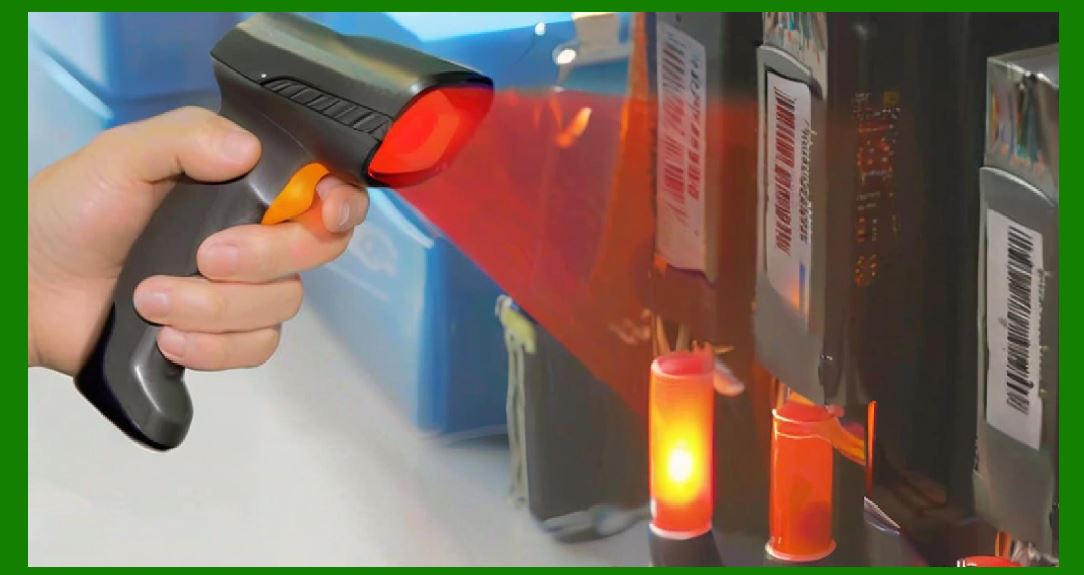
In the wave of digital transformation, barcode technology, as the cornerstone of data identification, has attracted much attention regarding its evolution path. Code128, as a benchmark for 1D barcodes, faces competition from 2D barcodes and RFID technologies, but its irreplaceable nature in specific scenarios ensures it will not completely disappear from the market. |
This article explores the survival space and development trend of 1D barcodes by combining technical characteristics and industry needs. |
|
I. The Irreplaceability of 1D Barcodes |
(I) Cost and Compatibility Advantages |
Outstanding Economic Efficiency |
The generation and recognition costs of 1D barcodes are significantly lower than those of 2D barcodes and RFID technologies. For example, in the retail sector, the cost of a single 1D barcode tag is less than 0.01 yuan, while the unit price of an RFID tag can reach 0.3-0.5 yuan, resulting in a significant cost difference in large-scale applications. |
The existing infrastructure (such as barcode scanners and printers) has already established industry inertia in its compatibility with 1D barcodes. Upgrading to 2D barcodes requires equipment replacement, increasing the burden on enterprises. |
Standardization and Universality |
One-dimensional barcodes such as Code128 comply with the ISO/IEC 15417 international standard, offering strong global compatibility. In multinational supply chains, data interoperability can be achieved without additional adaptation, while the diverse encoding rules of two-dimensional barcodes may cause compatibility issues. |
(II) Adaptability to Specific Scenarios |
Simple Information Identification Needs |
In scenarios such as logistics sorting and inventory counting, where only basic information such as product ID and batch number needs to be transmitted, one-dimensional barcodes are simpler and more efficient. For example, express delivery labels using Code128 encoding are scanned more than 30% faster than two-dimensional barcodes. |
In the medical field, the management of disposable consumables requires rapid identification of equipment models and expiration dates; one-dimensional barcodes are easier to use than two-dimensional barcodes, which require complex parsing. |
Environmental Adaptability |
One-dimensional barcodes have lower requirements for print quality and can still be recognized on rough surfaces (such as corrugated cardboard boxes), while two-dimensional barcodes are sensitive to print precision and are prone to recognition failure due to dirt. |

|
II. Limitations of One-Dimensional Barcodes |
(I) Insufficient Functional Expansion |
Data Capacity Limitation |
Code 128 can only hold a maximum of 50 characters, making it unsuitable for storing multimedia information such as images and URLs. For example, in smart warehousing, multiple one-dimensional barcodes need to be stitched together to achieve full lifecycle tracking of equipment, resulting in low efficiency. |
In contrast, QR codes can store thousands of characters and support direct links to databases for dynamic data updates. |
Weak Security Protection |
One-dimensional barcodes lack encryption, making data easily copied or tampered with. In drug traceability, counterfeit barcodes could lead to counterfeit drugs entering the market, threatening public safety. |
Two-dimensional barcodes can achieve data anti-counterfeiting through encryption algorithms, improving supply chain transparency. |
(II) Pressure from Technological Iteration |
The Impact of IoT and AI |
With the widespread adoption of IoT devices, RFID technology, with its advantages of contactless identification and batch reading, is gradually replacing one-dimensional barcodes in fields such as smart manufacturing and unmanned retail. |
AI-driven visual recognition systems can bypass barcodes and directly read product information, further diminishing the necessity of one-dimensional barcodes. |
Upgraded User Experience Needs |
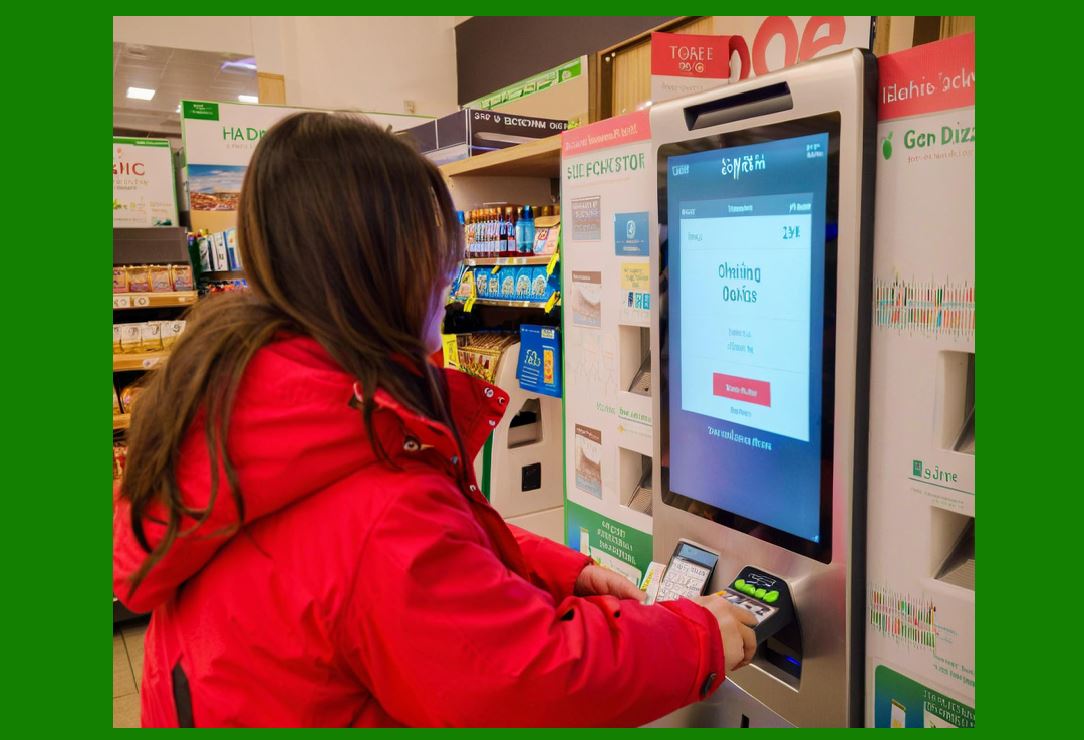
Consumers' demands for faster checkout and information traceability are driving the widespread adoption of 2D barcodes. For example, supermarkets use QR codes for 'one-code payment,' which is more than 50% more efficient than scanning 1D barcodes. |

|
III. Future Positioning of 1D Barcodes |
(I) Layered Application Strategy |
Basic Information Layer |
1D barcodes are retained for core identifiers such as product IDs and batch numbers, while 2D barcodes are combined to store extended information (such as production dates and expiration dates), enabling layered data management. |
In the medical field, 1D barcodes are used to identify basic patient information, which is then linked to electronic medical record systems for data expansion. |
Cost-Sensitive Scenarios |
In developing countries or low-value-added industries, the economics of 1D barcodes remain attractive. For example, some African countries still widely use 1D barcodes for product tracking due to limited equipment investment. |
(II) Technological Integration and Innovation |
Hybrid Encoding System |
Develop hybrid encoding systems combining 1D and 2D barcodes to achieve coexistence of basic and extended information within a limited space. For example, in industrial labels, the upper part uses Code 128 to encode the product model, while the lower part embeds a QR code to store maintenance records. |
Intelligent Upgrade |
Combining AI technology, automatic recognition and data parsing of one-dimensional barcodes can be achieved. For example, through deep learning algorithms, even if the barcode is partially damaged, the original data can still be recovered, improving fault tolerance. |
|
IV. Conclusion |
One-dimensional barcodes such as Code 128 will not be completely eliminated, but will gradually be relegated to specific scenarios. Their survival depends on the following factors: |
Cost-effectiveness: In budget-constrained or large-scale applications, one-dimensional barcodes remain economically competitive. |
Scenario adaptability: In scenarios such as simple information identification and harsh environments, the simplicity and reliability of one-dimensional barcodes are difficult to replace. |
Technology integration capability: Through innovations such as hybrid coding and AI enhancement, the lifespan of one-dimensional barcodes can be extended. |
In the future, one-dimensional barcodes will coexist with two-dimensional barcodes, RFID, and other technologies, forming a multimodal identification system of 'basic layer - extended layer - intelligent layer,' jointly supporting the needs of a digital society. |
 cs@easiersoft.com