Barcode Scanner: Signal Processing and Data Decoding Technologies |
Barcode scanning technology has revolutionized industries such as retail, logistics, healthcare, and more, enabling fast and reliable data capture for inventory management, point-of-sale systems, and data tracking. Barcode scanners rely on various signal processing and data decoding technologies to capture, interpret, and convert optical data encoded in barcodes into usable digital information. This comprehensive guide will explore these technologies in detail, focusing on the components, methodologies, and processes involved in barcode scanning systems. |
|
1. Introduction to Barcode Scanning |
Barcode scanning is the process by which a scanner reads the encoded data on a barcode and translates it into a format that a computer or system can process. Barcodes are images of parallel black and white lines, arranged in a specific pattern. These lines represent data in a visually encoded format. Barcode scanners use optical sensors to capture the reflected light from the barcode, with variations in light intensity indicating the bars and spaces that make up the barcode's pattern. |
There are several types of barcode symbols in use today, with the most common being the one-dimensional (1D) barcodes like UPC (Universal Product Code), EAN (European Article Number), and Code 39. Additionally, two-dimensional (2D) barcodes such as QR codes and Data Matrix codes are also gaining popularity, enabling the encoding of more complex data. |
|
2. Types of Barcode Scanners |
Barcode scanners vary in their design and functionality, and each type uses different methods of signal processing and data decoding. Below are the main categories of barcode scanners: |
Laser Scanners: These scanners use laser diodes to emit a focused light beam that scans the barcode. Laser scanners are the most common type of barcode reader used for 1D barcodes and are known for their speed and accuracy. |
CCD (Charge Coupled Device) Scanners: CCD scanners use an array of photodiodes to detect the light reflected from a barcode. The reflected light is converted into electrical signals, which are then processed to determine the barcode's information. Unlike laser scanners, CCD scanners do not use a laser beam, but they can still provide high-quality readings. |
Imager Scanners: These scanners are more advanced and use a camera-based system to capture images of barcodes. They convert the captured image into digital data. Imager scanners can read both 1D and 2D barcodes and can often scan barcodes from different angles, making them versatile. |
Omnidirectional Scanners: These scanners use a series of laser beams or LEDs arranged in multiple directions to scan a barcode from any angle. This makes omnidirectional scanners more user-friendly, as they do not require precise alignment of the barcode with the scanner. |

|
3. Components of Barcode Scanners |
A barcode scanner consists of several components that work together to read and decode the barcode data. These components include: |
Light Source (Illumination): The light source is used to illuminate the barcode to enhance the contrast between the bars (black) and spaces (white). In laser scanners, a laser beam acts as the light source, while in imager scanners, white LEDs or infrared lights are typically used. |
Sensor (Receiver): The sensor detects the light reflected from the barcode. Laser scanners use photodiodes, while CCD and imager scanners use arrays of photodiodes or CCD chips. |
Signal Processor: The signal processor converts the analog signals received by the sensor into a digital format. This processing is critical for accurately interpreting the data encoded in the barcode. It may include amplification, filtering, and noise reduction processes to ensure the signal is clear and usable. |
Decoder: The decoder is responsible for interpreting the processed signal and converting it into usable data. It examines the sequence of light and dark areas in the barcode to determine the encoded data. The decoding process varies depending on the type of barcode used. |
|
4. Signal Processing in Barcode Scanners |
Signal processing is a crucial step in the barcode scanning process. The signals received by the scanner are typically in analog form and must be converted into a digital format before they can be interpreted. This process involves several stages: |
4.1. Light Detection |
When a barcode scanner illuminates a barcode, the white spaces and black bars reflect light at different intensities. White spaces reflect more light, while black bars absorb it. The scanner's sensor detects this reflected light and converts it into an electrical signal. |
4.2. Signal Amplification |
The electrical signal from the sensor is often weak and may need to be amplified before further processing. Amplification helps ensure that the signal is strong enough to be interpreted correctly by the decoder. This step reduces the possibility of misinterpretation caused by weak signals. |
4.3. Signal Filtering |
Filtering is performed to eliminate any noise or interference from the signal, which might be caused by environmental factors such as ambient light, reflections, or the quality of the barcode. Digital filters are used to smooth the signal, ensuring that the resulting waveform is a clean representation of the barcode. |
4.4. Signal Conditioning |
In some systems, the analog signal may require conditioning to improve its shape or form. This might involve adjusting the signal's amplitude, offset, or frequency characteristics to ensure that the scanner can reliably distinguish the dark bars and light spaces in the barcode. |
4.5. Analog-to-Digital Conversion |
Once the signal has been amplified and conditioned, the analog signal is converted into a digital signal using an Analog-to-Digital Converter (ADC). The digital signal consists of discrete values that represent the intensity of the reflected light at specific points along the barcode. |

|
5. Barcode Decoding Process |
Once the signal has been processed, the next step is decoding the data embedded in the barcode. This process involves interpreting the variations in the reflected light intensity (or the digital signal) as binary data. |
5.1. Data Extraction |
For 1D barcodes, the decoder interprets the alternation between dark and light segments as binary values (usually 1 for dark bars and 0 for light spaces). The decoder must also consider the width of the bars and spaces, which determine the binary data that is extracted. |
For 2D barcodes, such as QR codes, the decoding process is more complex due to the two-dimensional nature of the encoding. Each square in the grid of a 2D barcode represents a binary value (1 or 0). These values are read from the image in a raster pattern, where the rows and columns correspond to different bits of data. |
5.2. Error Detection and Correction |
One of the key challenges in barcode decoding is dealing with errors caused by misreads, such as when a barcode is partially obscured, damaged, or scanned at an incorrect angle. Many barcode formats include error detection and correction algorithms, such as Reed-Solomon coding, which allow the decoder to identify and correct certain types of errors in the scanned data. |
For instance, QR codes use error correction algorithms that allow them to remain scannable even if a portion of the barcode is damaged or obscured. The higher the level of error correction, the more damage a barcode can tolerate without becoming unreadable, but this also increases the size of the barcode. |
5.3. Data Interpretation |
After successfully decoding the raw binary data, the decoder interprets this data according to the structure of the barcode. In the case of 1D barcodes like UPC or EAN, the decoded data might correspond to a product identifier or other information. For 2D barcodes like QR codes, the decoded data may represent URLs, contact details, or other types of information, which can then be used by a device or system for further processing. |
|
6. Advanced Decoding Techniques for 2D Barcodes |
While 1D barcode scanning is relatively straightforward, the decoding of 2D barcodes presents additional challenges due to the complexity of the data and the requirement for higher accuracy in reading the code. Several advanced decoding techniques are employed to read 2D barcodes, including: |
6.1. Image Preprocessing |
Before decoding, the image of a 2D barcode may undergo preprocessing to improve its quality. This can involve techniques like edge detection, contrast enhancement, and noise reduction to ensure that the barcode is clearly distinguishable from its background. |
6.2. Geometric Pattern Recognition |
In addition to recognizing the data encoded in the barcode, the decoding system must first locate the position and orientation of the barcode. For QR codes and other 2D barcodes, geometric pattern recognition algorithms are used to identify the position markers and alignment patterns in the barcode. These features help the system identify the orientation of the barcode, even if it is rotated or tilted. |
6.3. Matrix Decoding Algorithms |
For 2D barcodes, matrix decoding algorithms are applied to interpret the grid of black and white modules. These algorithms involve identifying the individual modules (or squares) and mapping them to the corresponding data values. The data is then reconstructed into a readable format. |

|
7. Conclusion |
The technologies behind barcode scanners are multifaceted, involving complex signal processing and data decoding algorithms to ensure accurate and fast data capture. Whether using laser scanners, CCD scanners, or imager-based systems, barcode scanners rely on highly sophisticated technologies to detect, process, and decode the information encoded in barcodes. As barcode technology continues to evolve, advancements in signal processing, error correction, and decoding methods will continue to enhance the performance and reliability of barcode scanning systems. With the ongoing development of 2D barcodes and other advanced encoding schemes, barcode scanners will remain an indispensable tool in modern industries, providing businesses with the means to efficiently capture and manage data. |

|
Common Failures of Barcode Scanner's Signal Processing and Data Decoding and How to Prevent Them |
Barcode scanners, while essential tools for many industries, are not immune to failures in their signal processing and data decoding systems. These failures can arise due to various reasons, including environmental factors, hardware malfunctions, or issues with the barcode itself. Below are some common failures in barcode scanning systems and the methods to prevent or mitigate these problems. |
1. Poor Barcode Quality (Low Print Quality or Damage) |
Problem: |
Barcodes with poor print quality or physical damage often lead to failures in signal detection and decoding. This can be caused by several factors, such as low-resolution printing, smudging, fading, or distortion due to wear and tear. |
Causes: |
Low contrast between the bars and spaces in the barcode. |
Smudges, scratches, or tears on the barcode. |
Low-quality printing or incomplete barcodes. |
Incorrect barcode size for the scanning system. |
How to Prevent: |
Ensure Proper Printing: Make sure barcodes are printed with the correct resolution (typically at least 300 DPI) and contrast. The bars should be dark enough and the spaces sufficiently light to ensure high readability. |
Regular Barcode Quality Checks: Implement regular quality checks to verify the print quality of barcodes before they are used in production. |
Use Protective Measures: For barcodes in high-wear environments, consider using laminated or overlaid barcodes to protect them from physical damage. |
Use High-Quality Printing Equipment: Ensure that the printers used for generating barcodes are of good quality and have been calibrated properly. |
Barcode Size: Ensure that the size of the barcode adheres to the industry standards and is large enough to be read by the scanner from the required distance. |

|
2. Barcode Misalignment and Orientation Issues |
Problem: |
Barcode scanners may fail to correctly decode the data if the barcode is misaligned or positioned incorrectly in relation to the scanner's reading angle. This can occur with omnidirectional scanners or when using fixed-position scanners that need the barcode to be positioned in a particular orientation. |
Causes: |
Improper positioning of the barcode in front of the scanner. |
Scanning at incorrect angles, especially with handheld scanners that require manual alignment. |
Obstructions between the scanner and barcode, causing partial scanning or misreads. |
How to Prevent: |
Educate Operators: Ensure that operators are trained to present the barcode in the optimal orientation for the scanner. For handheld scanners, this may include instructions on positioning the barcode correctly in the field of view. |
Omnidirectional Scanners: Use omnidirectional barcode scanners that can read barcodes from any orientation. These scanners use multiple laser beams or light sensors to capture barcodes in all directions, reducing the need for precise alignment. |
Scanner Configuration: For fixed-position scanners, make sure that the area where the barcode is scanned is properly aligned with the scanning field. Set up the scanner so it can easily read barcodes in various orientations. |
|
3. Environmental Interference (Lighting and Reflective Surfaces) |
Problem: |
Ambient light, reflections, and glare can interfere with barcode scanning, especially in bright environments or areas with reflective surfaces. This issue is particularly problematic for laser scanners and imager scanners that rely on detecting variations in light intensity. |
Causes: |
Overhead fluorescent lights, direct sunlight, or high-intensity artificial lights that cause glare. |
Reflections from shiny or glossy surfaces near the barcode. |
How to Prevent: |
Use Scanners with Redundant Light Detection Systems: Use barcode scanners with enhanced light sensitivity and built-in algorithms to handle different lighting conditions. Imager scanners tend to perform better in varied lighting environments compared to traditional laser scanners. |
Environmental Control: Ensure that the scanning environment has controlled lighting, reducing direct sunlight or reflective surfaces near barcode scanners. |
Anti-glare Coating on Barcodes: Consider using special labels with anti-glare coatings to reduce the effects of reflections when scanning barcodes. |
Infrared Sensors: Use scanners with infrared light sources that are less prone to interference from ambient light. |
|
4. Poor Signal Processing (Noise and Signal Distortion) |
Problem: |
Signal noise and distortion can occur when the scanner receives a corrupted or weak signal. This can result from damaged barcodes, low-quality sensors, or poor signal amplification. It leads to incomplete or inaccurate readings. |
Causes: |
Weak or noisy signals due to sensor quality. |
Inadequate amplification or filtering in the signal processing stage. |
Noise from environmental factors (e.g., static electricity, electromagnetic interference). |
How to Prevent: |
Advanced Signal Processing: Use barcode scanners with advanced signal processing capabilities, such as noise filtering and adaptive amplification, to improve signal quality. |
Regular Maintenance and Calibration: Regularly clean and calibrate barcode scanners to ensure their sensors are working properly. Ensure that the scanner's optics are free from dirt, dust, or other obstructions. |
Use High-Quality Sensors: Invest in barcode scanners with high-quality photodetectors or imaging sensors to reduce signal distortion and improve accuracy. |
|
5. Barcode Scanner Calibration and Configuration Issues |
Problem: |
Improper calibration or configuration settings can cause the scanner to misinterpret the signal or fail to decode the barcode correctly. Calibration settings may need to be adjusted based on the type of barcode, scanner model, or the environment in which it is used. |
Causes: |
Misconfigured scanner settings (e.g., scan width, resolution, scan frequency). |
Calibration errors, such as incorrect threshold settings for reading light and dark bars. |
Incorrect reading distance or angle settings for the specific application. |
How to Prevent: |
Regular Calibration: Regularly calibrate barcode scanners according to the manufacturer's recommendations. Calibration should include adjusting parameters like contrast, light intensity, and barcode width for optimal performance. |
Factory Reset and Reconfiguration: Ensure that scanners are reset to factory settings after any changes in environment or usage conditions. If scanners are used in different environments (e.g., indoor and outdoor), they should be reconfigured accordingly. |
Consult Manufacturer Guidelines: Follow the manufacturer's guidelines for specific barcode types and scanner settings. Many modern scanners offer configuration utilities to adjust settings for different barcode formats and environmental conditions. |
|
6. Failure to Decode Certain Barcode Types (Unsupported Formats) |
Problem: |
Barcode scanners may fail to decode certain types of barcodes if they are not equipped to handle specific formats. For example, a 2D barcode scanner may not be able to read a 1D barcode, or vice versa, unless it is designed to support both formats. |
Causes: |
Barcode scanner limited to specific formats (e.g., 1D vs. 2D). |
Scanner incompatibility with newer or less common barcode types. |
Outdated firmware or software that lacks support for newer barcode formats. |
How to Prevent: |
Use Multi-Format Scanners: Choose barcode scanners that support a wide range of barcode formats (e.g., 1D and 2D barcodes like QR codes, Data Matrix, PDF417). This ensures compatibility with various barcode types in different settings. |
Regular Software Updates: Keep the scanner's firmware and software up to date to ensure support for new barcode formats and improvements in decoding algorithms. |
Educate Users on Barcode Selection: Ensure that the barcodes being generated are compatible with the scanner's capabilities. When selecting a barcode format for an application, take into account the scanner's supported formats. |
|
7. Failure Due to Overheating or Power Issues |
Problem: |
Barcode scanners, especially those that are used continuously or in industrial environments, can experience power failures or overheating, leading to reduced performance or total failure. |
Causes: |
Continuous use without adequate cooling. |
Power surges or inconsistent power supply. |
Battery or power management system failure in wireless scanners. |
How to Prevent: |
Proper Ventilation and Cooling: Ensure that barcode scanners, especially high-performance models, are used in environments with proper ventilation to avoid overheating. |
Use Surge Protectors: Protect barcode scanning systems from power surges by using surge protectors or uninterruptible power supplies (UPS). |
Battery Management: For wireless barcode scanners, ensure that batteries are properly maintained, charged, and replaced when necessary. Avoid using scanners for extended periods without charging them. |
|
8. Software or System Integration Failures |
Problem: |
Even if the barcode scanner is working perfectly, issues can arise when integrating the scanned data into the broader system, such as a point-of-sale (POS) or inventory management system. Software errors or miscommunication between the scanner and the system can lead to data transmission errors. |
Causes: |
Incorrect software settings or data formats. |
Compatibility issues between the scanner and the host system. |
Communication failures due to hardware or software bugs. |
How to Prevent: |
Regular Software Testing: Ensure that the software used for barcode data processing is regularly tested for compatibility with the scanner. Perform integration testing to verify that the data captured by the scanner is correctly processed and stored. |
Use Standard Data Formats: Implement standardized data formats for barcode input to reduce compatibility issues. Ensure that the system is configured to handle the specific barcode format being scanned. |
Ensure Proper System Configuration: Set up barcode scanners to communicate effectively with the host system through compatible interfaces (e.g., USB, Bluetooth). Properly configure data transmission protocols to prevent communication failures. |
|
Conclusion |
Barcode scanners can experience a variety of failures due to issues in signal processing, data decoding, and environmental factors. However, many of these issues can be prevented or mitigated through proper system setup, regular maintenance, and ensuring the quality of barcodes and the surrounding environment. By addressing common failures related to barcode quality, misalignment, signal processing, and software integration, businesses can ensure smooth and efficient barcode scanning operations. |
|
Case Studies on Barcode Scanner's Signal Processing and Data Decoding Circuit Design |
The design of signal processing and data decoding circuits in barcode scanners is crucial to ensuring that they can accurately interpret barcode data under varying environmental conditions. These systems must be designed to capture and process signals with high reliability, speed, and accuracy. Below are several case studies that focus on the signal processing and data decoding circuit design of barcode scanners. |
Case Study 1: Low-Cost CCD Barcode Scanner Design |
Background: |
A retail company wanted to design an affordable, high-performance CCD (Charge-Coupled Device) barcode scanner for use in inventory management and point-of-sale systems. The challenge was to develop a cost-effective scanner capable of decoding 1D barcodes in various lighting conditions while maintaining accuracy. CCD scanners use arrays of photodiodes to detect light reflected off the barcode. |
Design Challenges: |
1.Signal Sensitivity: CCD sensors are more sensitive to ambient lighting conditions compared to laser scanners. Ensuring accurate signal processing even under varying light sources was a key challenge. |
2.Signal Amplification and Noise Reduction: The analog signals received by the CCD sensor often have noise due to fluctuating light levels, which could result in misreads or slow scanning. |
Signal Processing Circuit Design: |
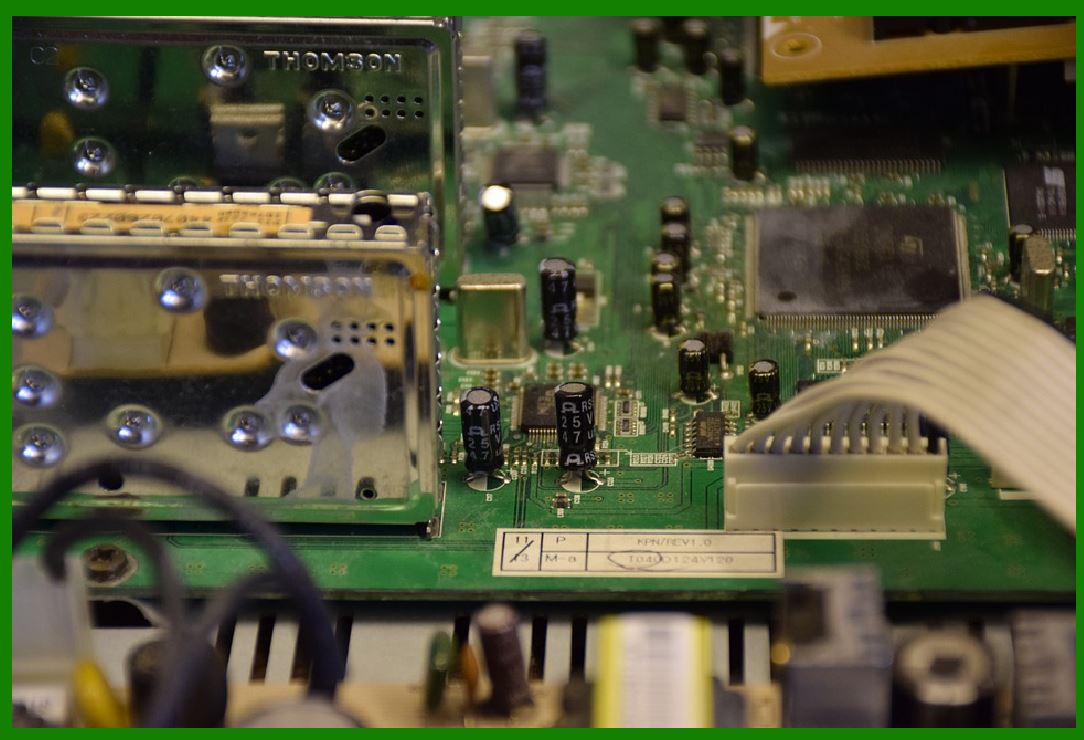
1.Amplification Circuit: To address signal sensitivity, the design incorporated an operational amplifier (op-amp) circuit to amplify the weak signal received by the photodiodes. This amplification step was followed by a band-pass filter to ensure that only signals corresponding to the barcode were amplified, reducing background noise from the environment. |
2.Analog-to-Digital Conversion: The amplified and filtered signal was then sent to an analog-to-digital converter (ADC). A 12-bit ADC was chosen for its balance between accuracy and processing speed. The ADC converted the signal into a digital format for further processing. |
3.Noise Filtering: A low-pass filter was used to smooth the signal and eliminate high-frequency noise that could cause errors in decoding. This step improved the signal clarity and reduced the impact of environmental noise. |
4.Microcontroller Integration: The decoded signal was processed by a microcontroller, which analyzed the binary data representing the black and white bars of the barcode. The microcontroller decoded the data and sent it to the POS system via a USB interface. |
Outcome: |
The design successfully achieved reliable barcode scanning in various lighting conditions. The scanner could read both UPC and EAN codes with high accuracy. The cost-effective design made it suitable for large-scale deployment in retail environments. By implementing a simple yet effective signal processing circuit, the scanner performed well under typical ambient light conditions while maintaining reasonable costs. |
|
Case Study 2: High-Speed Laser Barcode Scanner for Logistics |
Background: |
A logistics company required a high-speed laser barcode scanner for sorting packages in a large warehouse. The scanner had to handle high-volume scanning with minimal errors while reading 1D barcodes such as Code 128 and Code 39. |
Design Challenges: |
1.High-Speed Processing: The scanner had to decode barcodes quickly in a fast-moving environment, meaning that the signal processing and decoding system needed to be highly efficient. |
2.Precision in Signal Detection: Due to the varying distances between the barcode scanner and the packages, the system had to maintain precision even when the barcode was not perfectly aligned with the scanner. |
3.Handling Low Contrast Barcodes: Some barcodes were printed with lower contrast, especially those printed on damaged or worn packaging materials. |
Signal Processing Circuit Design: |
1.Laser Emission and Reflection Detection: The laser scanner used a modulated laser diode to emit a focused light beam that reflected off the barcode. A photodiode was used to detect the reflected light. The signal from the photodiode was then amplified using a high-speed operational amplifier circuit, which ensured that even weak signals could be detected. |
2.High-Speed ADC: Given the need for high-speed scanning, a high-speed ADC with a sampling rate of over 1 MSPS (Million Samples Per Second) was implemented. The ADC converted the analog signals into a digital form, enabling rapid processing of barcode data. |
3.Adaptive Thresholding: To compensate for low contrast barcodes, the circuit employed adaptive thresholding, where the signal's intensity was dynamically adjusted based on the reflected light's strength. This allowed the scanner to read barcodes even under suboptimal conditions, such as low contrast. |
4.Microcontroller-Based Decoding: A fast microcontroller with a dedicated hardware multiplier was used to handle the complex data decoding algorithms required for Code 39 and other barcodes. The microcontroller decoded the signal using pattern recognition algorithms that identified the start, stop, and data characters of the barcode. |
5.Data Output: Once the barcode was decoded, the microcontroller transmitted the data via a serial interface to the logistics system for sorting. |
Outcome: |
The laser scanner achieved high throughput with minimal errors, allowing the logistics company to sort packages rapidly and accurately. The adaptive thresholding and high-speed processing allowed the system to handle barcodes printed on a wide variety of packaging materials, even when contrast levels were low. The high-speed design ensured that the scanner could handle fast-moving packages without sacrificing performance. |
|
Case Study 3: 2D Imager Barcode Scanner for Healthcare Applications |
Background: |
A healthcare provider sought a barcode scanning solution that could read both 1D and 2D barcodes (such as QR codes) on medical products, patient wristbands, and drug containers. The scanner had to work in a hospital environment where hygiene, accuracy, and reliability were paramount. |
Design Challenges: |
1.Reading 2D Barcodes: Unlike 1D barcodes, 2D barcodes contain data in both dimensions, requiring more complex image processing algorithms to decode the data. |
2.Hygiene and Durability: The scanner needed to be easy to clean and resistant to physical damage, as it would be used in a healthcare setting. |
3.Accurate Decoding in Various Lighting Conditions: The scanner had to function reliably in areas with variable lighting, such as operating rooms and patient rooms. |
Signal Processing Circuit Design: |
1.Camera-Based Imaging: The scanner used a CMOS image sensor to capture images of the barcode. The sensor captured both 1D and 2D barcodes by scanning the image across the barcode at multiple angles. |
2.Image Preprocessing: The captured image was sent to an onboard digital signal processor (DSP) that handled image preprocessing. The DSP applied edge detection algorithms to identify the boundaries of the barcode and remove background noise. It also enhanced the contrast between the black and white modules of the 2D barcode to improve decoding accuracy. |
3.Focal Length Adjustment: To handle different scanning distances, the imager scanner was designed with an adjustable focal length. This feature allowed the scanner to adapt to different sizes and distances of barcodes. |
4.Pattern Recognition Algorithms: For 2D barcode decoding, the system used a pattern recognition algorithm to identify the unique positioning markers in QR codes and other 2D formats. These markers provided orientation information, enabling the scanner to decode the data even if the barcode was rotated or tilted. |
5.Error Correction: Given the high importance of accurate data in healthcare, the scanner incorporated advanced error correction algorithms, such as Reed-Solomon codes, to handle damaged or partially obscured barcodes. This allowed the system to recover data from imperfect barcodes. |
Outcome: |
The imager scanner successfully met the needs of the healthcare provider. It could read both 1D and 2D barcodes with high accuracy, even under varying lighting conditions. The system was also durable and easy to clean, meeting the hygiene requirements of a healthcare environment. The error correction system ensured that even partially damaged barcodes could be reliably decoded, providing an extra layer of confidence in critical healthcare scenarios. |
|
Case Study 4: Wireless Barcode Scanner for Field Service |
Background: |
A field service company needed a wireless barcode scanner that could be used by technicians to scan product serial numbers and maintenance records in the field. The scanner needed to decode a wide range of barcodes (both 1D and 2D) and transmit the data wirelessly to a central database. |
Design Challenges: |
1.Battery Efficiency: The scanner had to be energy-efficient to support long working hours in the field. |
2.Wireless Connectivity: The scanner needed to be designed with reliable wireless communication, ensuring that the decoded data could be transmitted to the central system without failure. |
3.Handling a Range of Barcodes: The scanner needed to support multiple barcode formats, including traditional 1D barcodes and newer 2D barcodes, such as QR codes. |
Signal Processing Circuit Design: |
1.Low Power Consumption Design: The signal processing circuit was designed for low power consumption, using low-power microcontrollers and power-efficient imaging sensors. The imager used an ultra-low-power CMOS sensor that only consumed significant power when actively scanning a barcode. |
2.Wireless Module Integration: The scanner integrated a Bluetooth module for wireless communication. Data from the decoded barcode was transmitted in real-time to the technician's mobile device or central database. The Bluetooth module was chosen for its low power consumption and reliable range. |
3.Multi-Format Decoding: The signal processing circuit was designed to handle a wide range of barcode formats. A hybrid decoding algorithm was implemented, capable of recognizing both 1D and 2D barcodes. The circuit could quickly switch between different decoding algorithms based on the barcode format detected by the sensor. |
4.Error Detection: A checksum validation was implemented for data integrity. If the decoded data had discrepancies (e.g., incorrect or incomplete barcode), the scanner would prompt the technician to scan the barcode again. |
Outcome: |
The wireless barcode scanner proved successful in the field service application, providing reliable performance even in remote areas with limited infrastructure. The long battery life and wireless capabilities allowed field technicians to scan barcodes on the go without worrying about frequent recharges. The multi-format decoding feature ensured that the scanner could handle a variety of barcode types, providing flexibility for different applications. |
|
Conclusion |
These case studies highlight the importance of signal processing and data decoding circuit design in ensuring that barcode scanners operate effectively in diverse environments. Each case demonstrates the need for careful circuit design choices, including amplification, filtering, ADC conversion, error correction, and wireless communication. By addressing specific design challenges, these systems can offer reliable, high-speed, and accurate barcode scanning for applications ranging from retail to healthcare and logistics. |
|
What new technologies will improve the function of the Barcode Scanner's Signal Processing and Data Decoding and reduce the failure rate in the future? |
As barcode scanning technology continues to evolve, various emerging technologies promise to significantly improve the performance, reliability, and versatility of barcode scanners. These advancements are expected to enhance signal processing, data decoding, and error reduction, ultimately leading to more accurate, faster, and robust systems. Below are some key future technologies that could transform the way barcode scanners operate. |
1. Artificial Intelligence (AI) and Machine Learning (ML) for Enhanced Decoding |
How It Improves Function: |
Adaptive Decoding Algorithms: AI-powered barcode scanners can use machine learning to adapt to different types of barcodes, environmental conditions, and print qualities. Over time, these systems can 'learn' the specific characteristics of barcodes in a given setting, allowing them to improve their decoding efficiency and reduce errors. |
Error Correction: AI can be applied to error correction by detecting and compensating for damaged or partially unreadable barcodes. Through pattern recognition, AI systems can reconstruct missing or corrupted parts of the barcode data, ensuring higher accuracy in scenarios where traditional systems would fail. |
Predictive Analysis: AI algorithms can predict the likelihood of misreads based on environmental factors such as lighting conditions, barcode quality, and the distance between the scanner and the target. This could help improve the scanner's response time and reliability by adjusting scanning parameters in real time. |
Example: |
AI-Based Barcode Classification: Machine learning models can be trained to recognize different types of barcodes (e.g., QR codes, Data Matrix, PDF417) based on their patterns, improving the scanner's ability to process multiple barcode formats without manual intervention. |
|
2. Quantum Dot Sensors for Enhanced Sensitivity |
How It Improves Function: |
Quantum dot sensors, which use nanotechnology, are expected to revolutionize barcode scanning by providing sensors with exceptional sensitivity and high-resolution capabilities. These sensors are capable of detecting even the faintest light variations, enabling barcode scanners to work in low-light conditions and read barcodes with higher contrast and clarity. |
Increased Signal Sensitivity: Quantum dot-based photodetectors can improve the sensitivity of barcode scanners, enabling them to detect barcodes at greater distances or in suboptimal lighting conditions. |
Wide Spectrum Range: Quantum dots can be tuned to detect light across a broad spectrum, including infrared, which can help scanners read barcodes on surfaces with various reflective properties, such as glossy or transparent labels. |
Example: |
Low-Light Environments: A quantum dot-enhanced scanner could accurately decode barcodes in dimly lit areas, such as storage rooms or warehouses, where traditional CCD or laser scanners struggle. |
|
3. LiDAR Technology for 3D Barcode Scanning |
How It Improves Function: |
LiDAR (Light Detection and Ranging) is a technology that uses laser pulses to measure distances and create 3D representations of objects. When integrated into barcode scanners, LiDAR can help detect barcodes on curved or irregular surfaces, making it ideal for scanning products with complex packaging or difficult angles. |
Improved Scanning Angles: LiDAR can enable 3D scanning, allowing barcode scanners to read codes from multiple angles and surfaces that would be challenging for traditional 2D scanners. |
Handling Curved or Cylindrical Objects: LiDAR-based systems will be able to scan barcodes on objects like bottles, cans, and other cylindrical shapes, providing a more versatile scanning solution. |
Example: |
Flexible Barcode Scanning: A LiDAR-enabled scanner could be used to scan barcodes on rounded packaging like bottles or on irregular surfaces, such as those found in manufacturing or the medical industry, where products are often not flat or easily aligned with the scanner. |
|
4. 5G and Edge Computing for Real-Time Decoding and Data Transmission |
How It Improves Function: |
5G technology and edge computing promise faster data processing and reduced latency in barcode scanning systems, especially for applications requiring real-time data transmission and processing. |
Real-Time Data Processing: With 5G networks, barcode scanners can send captured data to cloud-based servers or edge devices instantly, allowing for near-instantaneous decoding, processing, and feedback. This is particularly useful in environments where immediate actions need to be taken based on scanned data, such as in manufacturing or logistics. |
Edge Computing: By processing data closer to the source (on edge devices), barcode scanners can offload computational work from centralized cloud servers, reducing delays and enhancing speed, especially in remote locations with limited connectivity. |
Example: |
Autonomous Warehouses: In an autonomous warehouse, barcode scanners integrated with 5G and edge computing would quickly transmit scanning data to a central system for inventory tracking and management, improving efficiency and reducing errors from slower data transfer speeds. |
|
5. Next-Generation Imaging Sensors (e.g., Time-of-Flight, CMOS) for Better Depth and Accuracy |
How It Improves Function: |
Next-generation imaging sensors, such as Time-of-Flight (ToF) and advanced CMOS sensors, offer improved depth perception, higher resolution, and faster scanning speeds. These sensors can enhance the barcode scanning process by improving accuracy in challenging environments. |
Depth Sensing and Enhanced Focus: Time-of-Flight sensors can capture depth information along with traditional 2D imaging data. This can help scanners focus on barcodes at varying distances, ensuring accurate readings even when the barcode is not perfectly aligned with the scanner. |
Faster Scanning and Higher Resolution: Advanced CMOS sensors offer greater resolution and faster scanning speeds, improving the overall performance of barcode scanners in high-volume applications. |
Example: |
High-Speed Scanning in Logistics: In a logistics setting, an advanced CMOS or ToF-based scanner could quickly read barcodes on moving items on a conveyor belt, even if those items are stacked or positioned at various distances from the scanner. |
|
6. Multi-Spectral Scanning for Improved Contrast and Barcode Quality |
How It Improves Function: |
Multi-spectral scanning uses sensors that can capture light across a range of wavelengths, from visible to infrared light. This allows barcode scanners to read barcodes on materials or surfaces that would be difficult for traditional scanners, such as those with poor contrast, reflective surfaces, or materials that absorb visible light. |
Improved Barcode Readability: By scanning in multiple spectral bands (e.g., UV, visible, and infrared), scanners can detect barcodes on surfaces with different reflectance properties. This is particularly useful in environments with high glare or for reading barcodes printed on non-traditional materials like plastic or metal. |
Enhanced Image Processing: Multi-spectral scanners can use data from different wavelengths to create a more accurate image of the barcode, improving the contrast and clarity of the barcode even under challenging conditions. |
Example: |
Scanners for Industrial Applications: In manufacturing, multi-spectral scanners could read barcodes on shiny or metallic surfaces, such as those found in electronics or automotive parts, where traditional scanners struggle to read barcodes due to glare or reflections. |
|
7. Blockchain for Data Integrity and Error Detection |
How It Improves Function: |
Blockchain technology can be used in barcode scanning systems to ensure the integrity and security of the scanned data. By linking scanned data to an immutable blockchain ledger, systems can guarantee that the information hasn't been tampered with during the scanning or data transmission process. |
Secure Data Transmission: Blockchain can help prevent errors due to unauthorized data manipulation, ensuring that the scanned information is trustworthy and accurate. |
Error Detection and Audit Trails: Blockchain creates an unalterable record of every scanned barcode and its corresponding data, providing a clear audit trail. This can help quickly identify and resolve scanning errors or discrepancies in real-time. |
Example: |
Supply Chain Tracking: In industries like pharmaceuticals or food safety, where the integrity of scanned data is crucial, a blockchain-based barcode system can ensure that scanned information, such as expiration dates or product origins, is accurate and secure from point to point in the supply chain. |
|
8. Flexible and Transparent Barcode Technology (e.g., Printable QR Codes on Flexible Materials) |
How It Improves Function: |
With the rise of flexible electronics and printable QR codes on non-traditional materials, barcode scanners will need to adapt to scanning flexible, transparent, or even deformable surfaces. |
Readable on Flexible Surfaces: New barcode printing technologies can create barcodes that remain readable even when printed on flexible, stretchable materials, such as textiles or packaging that bend or stretch. |
Transparent and Invisible Barcodes: Emerging technologies will allow barcodes to be printed on transparent or invisible materials (e.g., invisible ink QR codes), which could be scanned by specific sensors designed to detect them. |
Example: |
Fashion and Wearable Tech: In the fashion or wearables industry, flexible barcode scanning could allow for the use of QR codes or RFID tags printed on clothing or accessories that can be scanned for inventory management or product information. |
|
Conclusion |
The future of barcode scanning technology will rely on the integration of cutting-edge advancements in sensors, AI, connectivity, and materials science. By leveraging technologies like machine learning, quantum dot sensors, LiDAR, 5G, and multi-spectral scanning, the functionality and reliability of barcode scanners will improve significantly. These innovations will not only reduce the failure rates of scanners but also expand their versatility and accuracy across a wider range of applications and environments. Whether in logistics, healthcare, manufacturing, or retail, these advancements will push the boundaries of what barcode scanners can achieve. |
 cs@easiersoft.com