Industrial Robot: Motion Control Algorithms |
1.Introduction to Motion Control Algorithms in Industrial Robots |
Industrial robots are designed to perform a wide range of tasks with high precision and repeatability. The core of their functionality lies in motion control algorithms, which govern how the robot's joints and end effector move. Motion control is responsible for determining the precise position, velocity, acceleration, and trajectory of the robot at any given moment. These algorithms translate high-level commands into specific motor actions, ensuring the robot executes tasks with minimal error. |
Motion control algorithms are essential for applications that demand high accuracy, such as machining, assembly, painting, and welding. In these scenarios, even slight deviations from the intended path can lead to defects, inefficiencies, or safety risks. As a result, the design and implementation of motion control algorithms are critical for ensuring industrial robots perform their jobs effectively. |
|
2.Fundamentals of Motion Control |
At a basic level, motion control algorithms aim to manipulate the robot's actuators (typically electric motors) to move its links and end effectors to desired positions, velocities, and accelerations. This involves two main components: the kinematic model of the robot and the control system. |
Kinematics describes the relationship between the robot's joint parameters (like angles or displacements) and its end-effector position in space. It provides the mathematical framework for understanding how each joint movement impacts the overall position and orientation of the robot's end effector. |
Control Systems are responsible for computing the necessary actions to achieve the desired motion. These systems include sensors, feedback loops, and controllers that adjust the motor commands in real time to correct any discrepancies from the desired path. |
Motion control algorithms are often classified into two broad categories: open-loop control and closed-loop control. |
|
3.Open-Loop Control |
Open-loop control refers to a control system where no feedback from the output is used to adjust the system's behavior. In the context of industrial robots, open-loop motion control means that the robot performs a predefined set of commands without receiving updates about the actual position or velocity of the robot's components. |
While open-loop systems are simpler and faster, they are not suitable for high-precision tasks. Open-loop control assumes that the robot's actuators will behave predictably and consistently, but external disturbances like friction, payload changes, or wear can cause errors. In many industrial applications, open-loop control is used for tasks that do not require extremely high precision or where the robot operates in a controlled environment with minimal disturbances. |

|
4.Closed-Loop Control |
Closed-loop control, on the other hand, incorporates feedback from sensors to continually adjust the robot's movements. Feedback systems typically include position sensors (such as encoders) and force sensors, which provide real-time data about the robot's state. This data is compared to the desired state, and adjustments are made to ensure the robot's movement follows the intended trajectory. |
One of the most common forms of closed-loop control in industrial robotics is Proportional-Integral-Derivative (PID) Control, which calculates the error between the desired and actual positions, velocities, or accelerations and adjusts the motor commands accordingly. |
Proportional (P): Corrects the error by applying a force proportional to the magnitude of the error. |
Integral (I): Addresses accumulated errors over time, which helps in removing steady-state errors. |
Derivative (D): Predicts future errors based on the rate of change, providing damping to prevent overshooting. |
This closed-loop system ensures that the robot's movements remain smooth and accurate, even when facing variations in the environment or wear and tear on components. |
|
5.Trajectory Planning |
Trajectory planning is a critical aspect of motion control algorithms. It refers to the process of calculating a sequence of movements that the robot must make to transition from its current position to the desired position while satisfying constraints like velocity, acceleration, and path smoothness. |
In trajectory planning, the primary goal is to ensure that the motion is continuous and smooth, avoiding sharp changes in velocity or acceleration that could cause mechanical stress or reduce the quality of work. Additionally, the robot must respect constraints such as joint limits, physical workspace boundaries, and obstacles within its environment. |
A trajectory is typically described as a set of waypoints, which are intermediate positions along the desired path. The motion control algorithm computes the necessary joint movements to connect these waypoints, ensuring that the robot moves in a smooth, optimized path. |
There are two main approaches to trajectory planning: |
Point-to-Point (PTP) Motion: In this approach, the robot moves directly from one point to the next. It is simpler to compute but can result in jerky or abrupt movements if not properly planned. |
Continuous Path (CP) Motion: Here, the robot follows a more complex, continuous trajectory that considers smoothness and acceleration limits. This approach is often used for tasks like painting or welding, where the robot's end effector needs to follow a specific curve or surface with high precision. |
|
6.Interpolation Techniques |
To achieve smooth trajectories, robots often use interpolation techniques that define intermediate positions between key waypoints. The most common interpolation methods are: |
Linear Interpolation: Linear interpolation involves calculating the straight-line path between two points. This method is straightforward but does not always account for velocity or acceleration constraints. |
Cubic Spline Interpolation: This method generates a smooth curve through a series of waypoints, ensuring smooth changes in velocity and acceleration. Cubic spline interpolation is widely used in robotics because it provides a good balance between smoothness and computational efficiency. |
Quintic Spline Interpolation: Quintic splines are higher-order polynomials that provide even smoother transitions between waypoints, often used in tasks requiring higher precision, such as micro-machining or assembly operations. |
B¨¦zier Curves: These are also used to generate smooth curves, especially in path planning for robotic arms that need to follow complex curves during operations like painting or coating. |
|
7.Inverse Kinematics and Inverse Dynamics |
Inverse kinematics (IK) and inverse dynamics (ID) play key roles in motion control algorithms, as they determine the appropriate joint movements required for a specific end-effector position or trajectory. |
Inverse Kinematics: The task of inverse kinematics is to compute the joint angles or positions necessary for a robot's end effector to reach a desired position in 3D space. For a given end-effector position, there may be multiple valid solutions (or sometimes no solution at all, depending on the robot's configuration). Solving inverse kinematics equations involves solving nonlinear equations, which can be done using numerical methods like Newton-Raphson, Jacobian inverse, or gradient descent. |
Inverse Dynamics: In contrast, inverse dynamics computes the required joint torques or forces needed to execute a desired motion. Given the robot's mass distribution, joint positions, velocities, and accelerations, inverse dynamics provides the control inputs necessary to achieve the desired movement. |
The relationship between kinematics and dynamics is crucial for motion control algorithms, as kinematic models provide the geometric foundation, while dynamic models ensure that the robot can physically perform the calculated motions. |
|
8.Model Predictive Control (MPC) |
Model Predictive Control (MPC) is an advanced control strategy used in industrial robots for motion control. Unlike PID control, which reacts to error in real-time, MPC uses a dynamic model of the robot to predict future states and optimize control inputs over a finite horizon. The goal is to find the optimal set of actions that minimize an objective function, typically related to trajectory tracking and energy consumption, while satisfying constraints like joint limits and velocity constraints. |
MPC is especially useful for high-speed robots or tasks involving dynamic environments, as it anticipates the robot's movements and adjusts accordingly. It has the advantage of handling multivariable systems and constraints more effectively than traditional methods. |
|
9.Handling External Disturbances |
In real-world industrial applications, robots often encounter external disturbances, such as changes in payload, sudden forces, or unexpected contact with objects. A key challenge for motion control algorithms is to handle these disturbances while maintaining accuracy and performance. |
There are several strategies to handle disturbances: |
Disturbance Observer (DO): A disturbance observer estimates external disturbances based on the robot's dynamics and sensor measurements. The observer then compensates for these disturbances in the control signal, improving the robot's robustness to unexpected forces. |
Adaptive Control: Adaptive control algorithms adjust the controller parameters in real-time to account for changes in the robot's dynamics, such as varying payloads or joint friction. This ensures that the robot maintains optimal performance even in the face of uncertainty. |
Force and Impedance Control: Force control techniques allow the robot to adjust its movements in response to external forces. Impedance control, in particular, regulates the robot's stiffness and damping properties to control the interaction between the robot and the environment. These methods are particularly important for tasks like assembly, where the robot needs to apply a specific amount of force without damaging delicate parts. |
|
10.Simulation and Optimization in Motion Control |
Before deploying motion control algorithms in real-world applications, simulations are essential to evaluate their performance. Simulation tools allow engineers to model the robot, test different control strategies, and fine-tune parameters without the risk of damaging hardware. These simulations can take into account the robot's kinematics, dynamics, and external environment. |
Optimization techniques are also used to improve the performance of motion control algorithms. For instance, optimization methods can be employed to minimize energy consumption, reduce cycle times, or ensure smoother movements. Common techniques include genetic algorithms, gradient-based optimization, and reinforcement learning. |
|
11.Future Directions in Motion Control Algorithms |
As industrial robots become increasingly sophisticated, motion control algorithms continue to evolve. Key areas of future development include: |
AI and Machine Learning: Incorporating artificial intelligence into motion control could lead to more adaptive and efficient robots. Machine learning algorithms could optimize motion planning and control in real-time, improving performance in dynamic environments. |
Cooperative Motion: Collaborative robots (cobots) that work alongside human operators require highly sophisticated motion control algorithms to ensure safety and efficiency. Future algorithms may use advanced sensing and AI to enable robots to predict human actions and adapt their movements accordingly. |
Soft Robotics: The development of soft robots, which are made of flexible materials, requires new motion control algorithms that take into account the unique properties of soft actuators, such as elasticity and deformability. |
|
12.Conclusion |
Motion control algorithms are at the heart of industrial robots, enabling them to perform precise, repeatable, and efficient tasks across a wide range of applications. From basic open-loop control to advanced techniques like Model Predictive Control, the algorithms that govern robot movement ensure that robots can operate safely and effectively in complex environments. As robotics technology continues to advance, motion control will remain a critical area of research, driving improvements in efficiency, precision, and adaptability across industries. |
|
What new technologies will be related to this in the future? |
As industrial robots continue to evolve, several emerging technologies are poised to significantly impact motion control algorithms, enhancing the capabilities of robots and enabling them to perform more complex tasks with greater precision and efficiency. Below are some of the key technologies that will shape the future of motion control in robotics: |
1. Artificial Intelligence (AI) and Machine Learning |
AI and Machine Learning (ML) are increasingly being integrated into motion control algorithms, particularly to optimize robot behavior in real-time. These technologies will drive the development of adaptive, self-learning systems that can improve their performance autonomously based on experience and environmental feedback. Key areas where AI and ML are expected to have an impact include: |
Trajectory Prediction and Optimization: AI can be used to predict future robot movements and adjust trajectories dynamically. This could allow robots to anticipate and avoid obstacles, react to sudden environmental changes, or adapt to variations in workload. |
Reinforcement Learning: This subfield of machine learning enables robots to learn optimal motion strategies through trial and error. By receiving feedback on the success or failure of each motion or task, robots can refine their behavior to improve efficiency and accuracy over time. For example, robots could learn how to minimize energy consumption or adapt to unexpected changes in task requirements. |
Adaptive Motion Control: AI-based motion control systems can adapt to various operating conditions, such as changes in payload, environmental factors, or wear and tear on mechanical components. Such adaptive systems will allow robots to operate with minimal human intervention, adjusting their actions to maintain optimal performance in dynamic environments. |
|
2. Collaborative Robots (Cobots) |
Collaborative robots, or cobots, are designed to work alongside human operators in a shared workspace. These robots need highly sophisticated motion control systems to ensure safety and smooth interaction with humans. Cobots typically employ a variety of sensors and AI-driven algorithms to: |
Human-Robot Interaction (HRI): Advanced motion control algorithms will enable cobots to detect and predict human actions, allowing them to adjust their movements accordingly. This requires robust sensor fusion techniques, integrating data from cameras, LiDAR, and force sensors to understand the robot's environment in real-time. |
Force Control: To ensure safe collaboration with humans, cobots will require highly refined force and compliance control algorithms. These systems allow the robot to interact gently with humans or delicate parts, adjusting its stiffness and damping to avoid injury or damage. |
Safety Standards and Compliance: As cobots are introduced into more dynamic environments, ensuring they comply with safety standards such as ISO 10218 and ISO/TS 15066 (for collaborative robots) will be critical. Future motion control algorithms will be designed to automatically adhere to these safety guidelines, providing a balance between flexibility and safety. |

|
3. Soft Robotics |
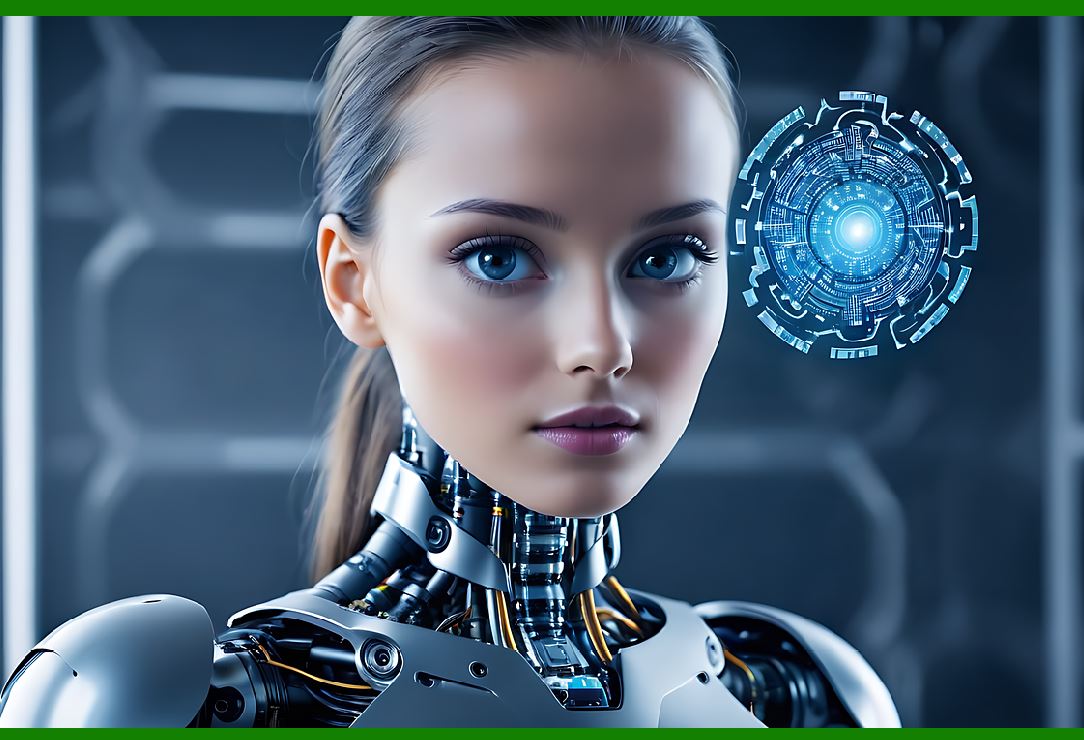
Soft robotics, which involves the use of flexible, deformable materials for robot actuators and structures, is an emerging field that challenges traditional motion control algorithms designed for rigid-body robots. The unique properties of soft robots, such as compliance and adaptability, require new control strategies: |
Deformable Actuators and Sensors: Soft robots often rely on actuators made from materials like silicone or elastomers that can change shape. The motion control algorithms must account for these non-rigid movements, often involving complex continuum mechanics. As soft robotics technology matures, motion control systems will be developed to account for dynamic changes in the robot's shape and force distribution. |
Bio-Inspired Motion: Soft robots often draw inspiration from biological systems, such as octopuses or worms, which move with incredible flexibility and adaptability. Future motion control systems may mimic these biological motion strategies, requiring algorithms that simulate bio-mechanics and fluid dynamics to achieve lifelike movements. |
Flexible Grasping and Manipulation: Soft robotics can be particularly useful in tasks involving delicate materials or intricate manipulation, such as in agriculture, food processing, or medical applications. Advanced motion control systems will enable soft robots to grasp and manipulate objects with a high degree of dexterity and sensitivity. |
|
4. Quantum Computing |
While still in its early stages, quantum computing has the potential to revolutionize motion control in robotics. The ability to process vast amounts of data at unprecedented speeds could enable robots to perform complex motion planning and control tasks that are currently too computationally expensive. Potential applications include: |
Complex Optimization Problems: Quantum computers could solve highly complex motion planning and trajectory optimization problems in real-time. For example, robots may need to calculate optimal paths with many constraints (e.g., avoiding obstacles, ensuring smoothness, minimizing energy consumption). Quantum algorithms could dramatically speed up these calculations, enabling robots to make better decisions faster. |
Simulations and Modeling: Quantum computing could also improve the simulation of robot dynamics, allowing for more accurate modeling of physical systems and faster predictions of robot behavior in real-world environments. This could lead to more effective control strategies, particularly in environments with highly dynamic or unpredictable variables. |
Enhancing Machine Learning: Quantum machine learning algorithms could enhance the training of AI models for motion control, allowing robots to learn from larger datasets and faster processing times. This could lead to faster deployment of intelligent, adaptive robots capable of handling more complex tasks. |
|
5. 5G and Edge Computing |
5G networks and edge computing are set to transform industrial robotics by enabling faster data transfer and computation closer to the robot. The combination of low-latency communication, high bandwidth, and distributed computing will support the development of real-time, decentralized motion control systems. Key impacts include: |
Real-Time Control: With 5G's low latency, robots will be able to communicate with cloud-based systems or remote operators with minimal delay, enabling real-time adjustments to motion plans. This is particularly valuable for tasks that require high levels of precision, such as autonomous inspection or surgery. |
Collaborative Motion: In scenarios where multiple robots need to coordinate their actions, such as in assembly lines or warehouse logistics, 5G and edge computing will enable faster communication between robots, allowing for more synchronized and efficient motion control. |
Autonomous Decision Making: With edge computing, robots can perform data processing locally, making decisions and adjusting motion control parameters without needing to communicate with a central server. This will reduce dependency on cloud connectivity and ensure robots can operate autonomously in remote or hazardous environments. |
|
6. Autonomous Robotics and Multi-Robot Systems |
As autonomous robots become more prevalent in industries like manufacturing, logistics, and agriculture, motion control algorithms will need to become more sophisticated to handle complex environments and multi-robot systems. These advancements will include: |
Multi-Robot Coordination: In environments where multiple robots are working together, motion control algorithms will need to handle cooperative motion, where robots must adjust their movements to avoid collisions and share workspace efficiently. This requires complex algorithms for path planning, obstacle avoidance, and communication between robots. |
Autonomous Path Planning: Future robots will increasingly be required to navigate unstructured environments without human guidance. Motion control systems will need to be capable of adaptive path planning, accounting for real-time data from cameras, LiDAR, and other sensors. This will enable robots to navigate through dynamic and unpredictable environments, adjusting their paths as necessary to avoid obstacles or deal with unforeseen circumstances. |
Swarm Robotics: Swarm robotics, inspired by the behavior of social insects like ants or bees, involves a large number of simple robots working together to complete complex tasks. The motion control algorithms for such systems will need to handle decentralized control, with robots communicating with each other and making autonomous decisions about their movements based on local information. |
|
7. Advanced Sensor Technologies |
The integration of advanced sensors, including LiDAR, visual sensors, and force-torque sensors, will significantly enhance motion control systems by providing more detailed and accurate feedback about the robot's surroundings and internal state. These sensors enable robots to: |
Perception and Environment Mapping: Robots equipped with high-resolution sensors can map their environment in real-time, which is essential for tasks such as autonomous navigation, object manipulation, or maintenance in cluttered environments. |
Feedback and Calibration: Advanced sensors will improve feedback in closed-loop control systems, allowing robots to adjust their movements with greater precision based on continuous real-time monitoring of their environment and mechanical state. |
Haptic Feedback: In tasks that require delicate manipulation, such as surgery or assembly, advanced sensors provide haptic feedback that informs motion control systems of the forces acting on the robot's end effector. This enables more refined control over tasks that require tactile sensitivity. |
|
8. Wearable Robotics and Exoskeletons |
Wearable robotics and exoskeletons are emerging fields that focus on enhancing human capabilities by providing robotic assistance. These devices will rely heavily on motion control algorithms to adapt to the user's movements and provide support. Future advancements in wearable robotics will include: |
Human-Machine Synchronization: Motion control systems will need to be capable of seamless coordination with the human user, providing support without hindering the user's natural movement. This requires real-time adaptation of the robot's movements based on the user's actions, which can be achieved through advanced AI and sensor-based feedback. |
Active Force Control: Wearable robots, particularly exoskeletons used in rehabilitation or heavy lifting, will rely on active force control algorithms to deliver the right amount of assistance, preventing strain on the user's muscles while allowing them to perform tasks more easily. |
|
Conclusion |
The future of motion control algorithms in industrial robotics will be shaped by a wide range of technologies, including AI, machine learning, soft robotics, quantum computing, and advanced sensors. As robots become more autonomous, collaborative, and adaptable, motion control algorithms will need to evolve to handle increasingly complex tasks in dynamic environments. These advancements will enable robots to work alongside humans more safely, efficiently, and intelligently, transforming industries and creating new opportunities in manufacturing, healthcare, logistics, and beyond. |
 cs@easiersoft.com