Chapter 10: SCARA Robots |
10.1 A Quick Summary of What This Chapter Covers |
The SCARA robot, which stands for Selective Compliance Assembly Robot Arm, is one of the most practical and widely used robot designs in modern industry. It has a very specific shape and behavior that makes it perfect for certain jobs and less suitable for others. This chapter explains what a SCARA robot is, how it moves, why it is built the way it is, and where it is used across many different industries. The most important thing to remember is that a SCARA robot has three rotary joints whose axes are all parallel and vertical, which lets it move easily in a flat horizontal plane. It also has a fourth joint that moves straight up and down, which lets it reach different heights. The robot is purposely soft or compliant in the horizontal direction but strong and stiff in the vertical direction. That single design choice explains almost everything about where SCARAs are found on factory floors. This chapter gives many real examples from electronics, appliances, automotive parts, food, medicine, and more. It ends with a detailed summary that brings all the ideas together. |
|
10.2 What the Name SCARA Actually Means |
SCARA stands for Selective Compliance Assembly Robot Arm. Every word in that name matters. |
The word 'Selective' means the robot does not behave the same way in all directions. It is flexible in some directions and rigid in others. This is not a mistake or a limitation. It is the whole point of the design. |
The word 'Compliance' means the ability to yield or give way when a force pushes against the robot. A compliant robot does not fight back with full stiffness. Instead, it can gently shift a little when something pushes it. |
The word 'Assembly' tells us the original job the robot was invented for. In the late 1970s and early 1980s, engineers in Japan wanted a robot that could put small parts together, like inserting a peg into a hole. If a robot is too stiff in every direction, inserting a peg into a hole is very hard because any tiny misalignment causes the peg to jam or break something. A robot that can give a little in the sideways direction can slide the peg into the hole naturally, just like a human hand does. |
The word 'Robot' is obvious. It is a programmable machine that can move and do work. |
The word 'Arm' describes its shape. A SCARA robot looks like a human arm that is reaching out horizontally. It usually has a base, a first arm segment, a second arm segment, and a small vertical shaft at the end that holds a tool. |
So the full name tells a complete story: it is an arm designed for assembly work, and it is selectively compliant, meaning soft in some directions and stiff in others. |
|
10.3 The Basic Mechanical Structure |
A SCARA robot has four main joints, and understanding these four joints is the key to understanding everything else. |
The first three joints are rotary joints. A rotary joint spins around an axis, like a door hinge or a wheel on an axle. In a SCARA robot, all three of these rotary axes are parallel to each other. In most real SCARA robots, these axes are vertical, meaning they point straight up and down. Because all three axes are parallel and vertical, the robot's arm can swing around in a flat horizontal plane. Think of a clock hand lying flat on a table, sweeping around. That is the basic motion of the first three joints. |
The first joint is at the base of the robot. It rotates the entire arm assembly left and right. This is often called the shoulder joint, similar to a human shoulder. |
The second joint is in the middle of the arm. It connects the first arm segment to the second arm segment. This is often called the elbow joint, similar to a human elbow. |
The third joint is at the end of the second arm segment. It rotates the tool or the wrist assembly. This is often called the wrist joint. It does not change the position of the tool in the horizontal plane very much, but it changes the orientation, meaning which way the tool is facing. |
The fourth joint is different. It is a linear joint, meaning it moves in a straight line, not in a circle. This joint moves the tool straight up and down. It is often called the vertical axis or the Z axis. Some SCARA robots have a ball screw or a belt drive that pushes a shaft up and down. Others use a linear motor. |
So the robot has three rotary joints for flat, horizontal positioning and one linear joint for vertical positioning. That is the complete motion system. |

|
10.4 Why the Axes Are Parallel and Why That Matters |
The fact that the three rotary axes are parallel is not a small detail. It is the defining feature of a SCARA robot. Because the axes are parallel, the robot's arm stays in a horizontal plane. The arm does not tilt up or down. The tool always points straight down, unless a separate wrist mechanism is added. |
This design has several big advantages. |
First, the robot is very rigid in the vertical direction. When the tool pushes down, the arm does not bend or sag. The structure is like a strong column. This means the robot can press parts together, push pins into holes, or apply downward force without losing accuracy. |
Second, the robot is compliant in the horizontal direction. When a sideways force pushes against the tool, the arm can deflect slightly. This is because the rotary joints and the arm links can flex a little. This compliance is very useful for assembly. If a part is slightly misaligned, the robot can shift sideways to let the part slide into place instead of breaking. |
Third, the robot's motion is simple to calculate. Because the arm moves in a flat plane with parallel axes, the math needed to control it is simpler than for a robot with many different joint orientations. This makes SCARA robots fast and accurate. |
Fourth, the robot has a large working area compared to its size. The arm can reach out and sweep around a wide circle. The base does not need to move. This saves floor space. |
|
10.5 The Working Envelope and Reach |
The working envelope of a SCARA robot is the total volume of space that the tool can reach. Because the first three joints move in a horizontal plane, the main working area is a flat, ring-shaped or fan-shaped region around the base. The vertical joint adds height, so the full envelope is like a thick horizontal slice of a cylinder, with a hole in the middle where the base is. |
The reach of a SCARA robot is the distance from the center of the base to the farthest point the tool can touch. Typical SCARA robots have a reach between 300 millimeters and 1,200 millimeters. Some large models can reach 1,500 millimeters or more. The payload, which is how much weight the tool can carry, is usually between 1 kilogram and 20 kilograms. Small SCARAs for electronics might carry only 1 to 3 kilograms. Larger SCARAs for appliance or automotive work might carry 10 to 20 kilograms. |
The vertical stroke, which is how far the tool can move up and down, is usually between 100 millimeters and 400 millimeters. Some models have longer strokes. |
Because the arm is stiff vertically, the robot can push down with significant force. This is called the pressing force or the downward force capability. Many SCARAs can push with 50 to 200 newtons or more. |

|
10.6 How a SCARA Robot Moves: A Simple Explanation |
Imagine you are standing in front of a table. You keep your elbow at a fixed height and move your forearm left and right in a flat plane. Your shoulder and elbow joints are like the first two rotary joints of a SCARA robot. Now imagine your wrist can also rotate in that same flat plane. That is the third rotary joint. Now imagine you can move your hand straight up and down without changing the angle of your arm. That is the fourth linear joint. |
A SCARA robot moves in a similar way. The controller tells each joint how much to rotate or how far to move linearly. By combining these four motions, the tool can reach almost any point in its working envelope. |
The robot usually moves in one of two modes. In joint mode, each joint moves independently to reach a target. This is fast but the path is not a straight line. In linear mode, the controller calculates a straight-line path for the tool. This is slower but more precise for tasks like inserting a part. |
Because the arm is compliant horizontally, the robot can also do something called force control. Instead of just moving to a position, the robot can push with a certain force and then stop when it feels resistance. This is very useful for assembly. |

|
10.7 The History and Origin of SCARA Robots |
The SCARA robot was invented in Japan in the late 1970s. The exact inventor is often credited to Hiroshi Makino, a professor at Yamanashi University. He and his team wanted a robot that could do assembly tasks that were hard for conventional robots. |
At that time, most industrial robots were either Cartesian robots, which move in straight lines along three axes, or articulated robots, which have many rotary joints in different directions. Cartesian robots are very stiff but take up a lot of space. Articulated robots are flexible but hard to control for precise assembly because they are stiff in all directions and tend to jam parts. |
Makino's idea was to make a robot that was stiff in the vertical direction but compliant in the horizontal direction. This would let the robot press parts together vertically while allowing small horizontal shifts to align the parts. The first SCARA robots were built in the early 1980s, and they quickly became popular in Japanese electronics factories. |
By the 1990s, SCARA robots were used all over the world. Companies like Yamaha, Adept, Epson, and Toshiba made many SCARA models. Today, SCARA robots are still a major category of industrial robots, especially in electronics, appliances, and small parts assembly. |
|
10.8 Why SCARA Robots Are Different from Other Robot Types |
It is helpful to compare SCARA robots to other common robot designs to understand their special place. |
A Cartesian robot, also called a gantry robot, moves in three straight lines at right angles. It is very stiff in all directions and very accurate. But it needs a large frame to support the moving axes, so it takes up a lot of space. It is not compliant at all, so it is bad at assembly tasks that need a little give. |
An articulated robot, also called a six-axis robot, has many rotary joints in different directions. It can reach around obstacles and point its tool in almost any direction. But it is complex, expensive, and hard to control for precise assembly. It is also stiff in all directions, so it can jam parts. |
A delta robot is a parallel robot with three arms that meet at a common platform. It is extremely fast for pick-and-place tasks, but it has a small working area and cannot apply much downward force. It is also not compliant in the horizontal direction in the same useful way. |
A SCARA robot sits in a sweet spot. It is fast, accurate, and compact. It is stiff vertically so it can push down. It is compliant horizontally so it can assemble parts without jamming. It is simple to control and relatively inexpensive. That is why it is so popular for assembly and pick-and-place. |
|
10.9 The Main Advantages of SCARA Robots |
SCARA robots have many advantages that explain their long-lasting popularity. |
First, they are very fast. Because the arm moves in a flat plane and the joints are simple, the robot can accelerate and decelerate quickly. Cycle times for pick-and-place tasks can be very short, often less than one second. |
Second, they are very accurate. The stiff vertical structure and the simple horizontal motion make it easy to achieve high repeatability. Many SCARA robots can repeat to within 0.01 millimeters or better. |
Third, they are compact. The base is small and the arm folds over itself, so the robot does not need much floor space. This is important in crowded factories. |
Fourth, they are compliant horizontally. This is the key feature for assembly. The robot can adjust to small misalignments without breaking parts. |
Fifth, they are stiff vertically. This lets the robot push parts together, press bearings, insert pins, and apply downward force. |
Sixth, they are simple and reliable. Fewer joints and simpler math mean fewer things can go wrong. Maintenance is easier and the robot lasts a long time. |
Seventh, they are cost-effective. A SCARA robot usually costs less than a comparable six-axis articulated robot. This makes automation affordable for small and medium-sized companies. |
|
10.10 The Main Limitations of SCARA Robots |
SCARA robots also have limitations, and knowing them helps you decide when to use one. |
First, they cannot tilt the tool. The tool always points straight down unless a separate wrist is added. This means the robot cannot reach around obstacles or work on angled surfaces easily. |
Second, they have a limited vertical stroke. The up-and-down motion is usually short, so the robot cannot reach very high or very low. |
Third, they have a limited working envelope. The arm can only reach so far, and the shape of the envelope is a flat ring. This is fine for many tasks but not for all. |
Fourth, they cannot apply large forces in the horizontal direction. They are compliant horizontally, which is good for assembly but bad for tasks like pushing a heavy box sideways. |
Fifth, they are not good for tasks that need complex 3D paths, like welding or painting. For those tasks, an articulated robot is better. |
Sixth, they are not good for very heavy payloads. Most SCARAs carry less than 20 kilograms. For heavier loads, a different robot type is needed. |
|
10.11 The Role of Compliance in Assembly |
The word 'compliance' is so important that it deserves its own section. In engineering, compliance is the opposite of stiffness. A stiff object does not move when you push it. A compliant object moves a little when you push it. |
In assembly, compliance is often the difference between success and failure. Imagine you are trying to insert a metal pin into a hole. If the pin and the hole are perfectly aligned, it goes in easily. But in the real world, there is always a tiny misalignment. If the robot is perfectly stiff, the pin will hit the edge of the hole and stop. The robot will either jam, break the pin, or damage the hole. |
Now imagine the robot is compliant in the horizontal direction. When the pin hits the edge of the hole, the robot shifts sideways a tiny amount. The pin slides along the edge and finds the hole. It goes in smoothly. This is called passive compliance because the robot's structure provides the give naturally. |
SCARA robots have this passive compliance built in. The rotary joints and the arm links can flex slightly under sideways force. This is not a defect. It is a feature. It is why SCARA robots are so good at assembly. |
Some SCARA robots also have active compliance, which means the controller can adjust the force or position based on sensors. This is called force control or impedance control. It makes the robot even better at delicate assembly. |
|
10.12 The Role of Vertical Stiffness |
While horizontal compliance is important, vertical stiffness is equally important. When the robot pushes down to insert a part, the arm must not bend or sag. If the arm bends, the tool will not go straight down, and the part will not go in correctly. |
SCARA robots are designed to be very stiff in the vertical direction. The arm links are usually thick and strong. The vertical joint is often a rigid ball screw or a strong linear guide. This means the robot can push down with force and still stay accurate. |
This combination of horizontal compliance and vertical stiffness is the magic of the SCARA design. It is why the robot is called 'selective compliance.' It is soft in one direction and hard in another. |
|
10.13 Common Tools and End Effectors for SCARA Robots |
The tool at the end of a SCARA robot is called the end effector. The end effector does the actual work. SCARA robots can use many different end effectors. |
A gripper is the most common. It has two or more fingers that open and close to grab a part. Grippers can be electric, pneumatic, or hydraulic. Electric grippers are precise and programmable. Pneumatic grippers are fast and simple. Hydraulic grippers are very strong but less common. |
A vacuum suction cup is another common tool. It uses air pressure to hold flat parts like sheets of metal, glass, or plastic. Suction cups are simple and cheap, and they do not damage the part. |
A magnetic gripper uses a magnet to hold ferrous metal parts. It is simple and fast. |
A dispensing tool is used to put down glue, solder paste, or other liquids. SCARA robots are often used for dispensing because they move accurately in a flat plane. |
A screwdriver or nut runner is used to tighten screws. SCARA robots are great for this because they can move to the exact position and push down while turning. |
A welding tool is less common on SCARA robots because welding often needs complex 3D paths. But some SCARA robots are used for simple spot welding or ultrasonic welding. |
A vision camera is often mounted on the robot or near it. The camera helps the robot find parts that are not in a fixed position. This is called vision-guided assembly. |

|
10.14 The Control System of a SCARA Robot |
The control system is the brain of the robot. It tells each joint how much to move and when. A SCARA robot controller usually has several parts. |
The motion planner calculates the path the tool should follow. It decides how fast each joint should move and how to coordinate them. |
The inverse kinematics solver is a mathematical tool that figures out what joint angles are needed to put the tool at a desired position. Because SCARA robots have a simple geometry, this solver is fast and reliable. |
The servo controller sends electrical signals to the motors. It uses feedback from encoders or resolvers to make sure the joints are in the right position. |
The input and output system connects the robot to sensors, grippers, and other machines. It lets the robot know when a part is ready and tells other machines when the robot is done. |
The user interface lets a human program the robot. This can be a teach pendant, which is a handheld device with buttons and a screen, or a computer with software. |
Modern SCARA controllers often include force control, vision integration, and network communication. They can also be connected to a factory network so that many robots work together. |
|
10.15 Programming a SCARA Robot |
Programming a SCARA robot is usually easier than programming an articulated robot because the motion is simpler. There are several ways to program a SCARA. |
Teach pendant programming is the most common. The operator uses a handheld device to move the robot to a position and then records that position. The robot repeats the recorded positions in order. This is called teaching by demonstration. |
Offline programming uses a computer simulation. The programmer creates a virtual robot and a virtual workcell, then writes a program. The program is downloaded to the real robot. This is good for complex tasks and for planning without stopping production. |
Lead-through programming lets the operator physically guide the robot by hand to show it the path. The robot records the path and repeats it. This is useful for tasks that are hard to describe with numbers. |
Text-based programming uses a programming language like a scripting language or a robot-specific language. The programmer writes commands like 'move to position A' and 'close gripper.' This is powerful but requires training. |
No-code or low-code programming uses a graphical interface with blocks or icons. The programmer drags and drops blocks to create a program. This is becoming more popular because it is easy to learn. |
|
10.16 Sensors Used with SCARA Robots |
Sensors give the robot information about the world. SCARA robots use many kinds of sensors. |
Encoders are built into the motors. They measure the angle of each rotary joint and the position of the linear joint. This is called feedback. |
Force sensors measure how much force the robot is applying. They are used for assembly tasks that need careful force control. |
Vision sensors are cameras that take pictures. They help the robot find parts, check quality, and guide the tool. |
Proximity sensors detect when an object is near. They can tell the robot when a part is in place. |
Limit switches detect when a joint has reached its end. They prevent the robot from over-traveling. |
Pressure sensors measure air pressure in pneumatic grippers or vacuum cups. They tell the robot whether a part is being held. |
Torque sensors measure how much twisting force is on a joint. They are used for tasks like tightening screws. |
|
10.17 Safety Considerations for SCARA Robots |
Safety is very important when robots work near people. SCARA robots are fast and strong, so they can hurt someone if not properly guarded. |
The most common safety measure is a physical fence or cage around the robot. The fence keeps people out of the robot's working envelope. A door in the fence has a switch that stops the robot when the door is open. |
Light curtains are another common safety device. They use beams of light to detect when someone reaches into the robot's area. If the beam is broken, the robot stops. |
Safety mats are pressure-sensitive floors. If someone steps on the mat, the robot stops. |
Emergency stop buttons are placed around the workcell. Pressing one immediately stops all motion. |
Modern SCARA robots often have built-in safety features. They can detect when they hit an obstacle and stop. Some are designed to be collaborative, meaning they can work safely alongside humans. But most traditional SCARA robots are not collaborative and need guarding. |
Risk assessment is required before installing a SCARA robot. Engineers study the tasks, the environment, and the people who will work nearby. They decide what safety measures are needed. |
|
10.18 Maintenance and Reliability of SCARA Robots |
SCARA robots are known for being reliable and easy to maintain. Because they have fewer joints than articulated robots, there are fewer parts that can wear out. |
The most common maintenance tasks are lubrication, belt tension checks, and battery replacement for encoders. Lubrication keeps the joints moving smoothly. Belt tension checks make sure the arm moves accurately. Encoder batteries keep the position memory alive when the power is off. |
The harmonic drives or cycloidal drives in the joints are very durable. They can last for many thousands of hours. The linear guide for the vertical axis also lasts a long time if kept clean and lubricated. |
Regular inspection is important. Technicians check for loose screws, worn belts, and unusual noises. They also check the cables and connectors. |
Predictive maintenance uses sensors to monitor the robot's health. Vibration sensors can detect bearing wear. Temperature sensors can detect overheating. Current sensors can detect motor problems. This allows maintenance to be done before a breakdown happens. |

|
10.19 SCARA Robots in Electronics Manufacturing |
The electronics industry is the largest user of SCARA robots. This is where SCARA robots first became popular, and they are still the workhorse of electronics assembly. |
One common task is printed circuit board assembly. A SCARA robot picks up electronic components, like resistors, capacitors, and integrated circuits, and places them on a circuit board. The robot moves fast and accurately, often placing hundreds or thousands of components per hour. The horizontal compliance helps the robot place components without damaging the delicate pins. |
Another task is soldering. A SCARA robot can hold a soldering iron and move it along a path to solder connections. The robot can also dispense solder paste onto a board before components are placed. |
Screw fastening is another common task. SCARA robots are used to drive screws into electronic enclosures, heat sinks, and connectors. The robot can push down while turning, which is exactly what a SCARA does well. |
Testing is another task. A SCARA robot can pick up a probe and touch it to test points on a circuit board. The robot can also plug and unplug cables during testing. |
Display assembly is a big application. SCARA robots are used to assemble flat panel displays, touch screens, and backlight units. They place glass sheets, films, and connectors with high accuracy. |
Semiconductor manufacturing also uses SCARA robots. They are used to handle wafers, which are thin discs of silicon. The robot moves wafers between cassettes and process chambers. The cleanroom-compatible design of many SCARA robots makes them suitable for this work. |

|
10.20 SCARA Robots in Appliance Manufacturing |
The appliance industry makes products like washing machines, refrigerators, air conditioners, and microwave ovens. SCARA robots are used in many appliance assembly lines. |
One common task is assembling small motors. A SCARA robot picks up motor parts, like rotors, stators, and end caps, and puts them together. The robot can press bearings into place, which needs vertical force. |
Another task is assembling switches and controls. SCARA robots place buttons, knobs, and circuit boards into control panels. They also tighten screws and connect wires. |
Another task is assembling fans and blowers. SCARA robots place fan blades onto motor shafts and secure them with clips or screws. |
Another task is packaging. SCARA robots pick up finished appliances or parts and place them into boxes. They can also place accessories, like manuals and cables, into the boxes. |
Another task is testing. SCARA robots connect test probes to appliance terminals to check electrical function. They can also press buttons to test controls. |

|
10.21 SCARA Robots in Automotive Parts Manufacturing |
The automotive industry is huge, and SCARA robots are used in many areas, especially for small parts. |
One common task is assembling electronic control units, which are computers that control engines, transmissions, and other systems. SCARA robots place circuit boards, connectors, and sensors into the housings. They also apply sealant and tighten screws. |
Another task is assembling sensors. SCARA robots place tiny sensor elements into housings and connect them. They also test the sensors. |
Another task is assembling fuel injectors and pumps. SCARA robots handle small precision parts and press them together. |
Another task is assembling dashboard components. SCARA robots place buttons, displays, and connectors into dashboard panels. |
Another task is assembling batteries for electric vehicles. SCARA robots place battery cells into modules and connect them. They also apply thermal paste and tighten bolts. |
Another task is quality inspection. SCARA robots use vision cameras to check parts for defects. They can also measure dimensions with probes. |

|
10.22 SCARA Robots in Food and Beverage Processing |
The food and beverage industry uses SCARA robots for pick-and-place tasks, packaging, and handling. |
One common task is picking and placing food items. SCARA robots pick up cookies, candies, fruits, and vegetables and place them into containers or onto conveyor belts. The robot's fast cycle time is important because food production lines move quickly. |
Another task is packaging. SCARA robots place food items into boxes, bags, or trays. They can also seal packages and apply labels. |
Another task is sorting. SCARA robots use vision cameras to sort food items by size, color, or quality. They pick out defective items and place them in a reject bin. |
Another task is assembling food products. SCARA robots assemble sandwiches, pizzas, and other layered foods. They place ingredients in precise positions. |
Another task is handling bottles and cans. SCARA robots pick up bottles and place them into cartons or onto pallets. They can also tighten caps and apply labels. |
Food-grade SCARA robots are designed to be easy to clean. They use stainless steel and washdown-ready materials. They also use food-safe lubricants. |

|
10.23 SCARA Robots in Pharmaceutical and Medical Manufacturing |
The pharmaceutical and medical industries need high precision and cleanliness. SCARA robots are a good fit. |
One common task is assembling syringes. SCARA robots place the plunger, barrel, and needle into the syringe body. They also apply adhesive and tighten fittings. |
Another task is assembling test kits. SCARA robots place reagents, swabs, and tubes into kits. They also seal the kits. |
Another task is handling vials. SCARA robots pick up vials and place them into trays or into analysis machines. They can also cap and uncap vials. |
Another task is dispensing liquids. SCARA robots move a pipette or nozzle to dispense precise amounts of liquid into wells or tubes. This is used in diagnostic testing and drug discovery. |
Another task is assembling medical devices. SCARA robots assemble catheters, pacemakers, and surgical instruments. They handle small parts with care. |
Cleanroom SCARA robots are designed to meet strict cleanliness standards. They use special materials and lubricants that do not release particles or fumes. |
|
10.24 SCARA Robots in General Manufacturing and Small Parts Assembly |
Beyond the specific industries above, SCARA robots are used in many general manufacturing tasks. |
One common task is pick-and-place. This means picking up a part from one place and putting it down in another. SCARA robots are very fast at this. They are used in many industries, from toys to hardware. |
Another task is machine tending. SCARA robots load and unload parts from machines like CNC mills, lathes, and injection molding machines. They open and close doors, place parts, and press start buttons. |
Another task is kitting. SCARA robots gather several different parts and put them together into a kit. This is used in assembly lines and in warehouses. |
Another task is sorting. SCARA robots sort parts by type, size, or quality. They use vision cameras and grippers. |
Another task is labeling. SCARA robots pick up labels and place them on products or packages. They can also print and apply labels. |
Another task is testing. SCARA robots connect probes to products to test electrical function. They can also press buttons and turn knobs. |
Another task is dispensing. SCARA robots dispense glue, grease, solder paste, and other materials. They move accurately to place the material exactly where it is needed. |
Another task is screw driving. SCARA robots drive screws into products. They can push down while turning, which is a natural SCARA motion. |
|
10.25 SCARA Robots in Warehouse and Logistics |
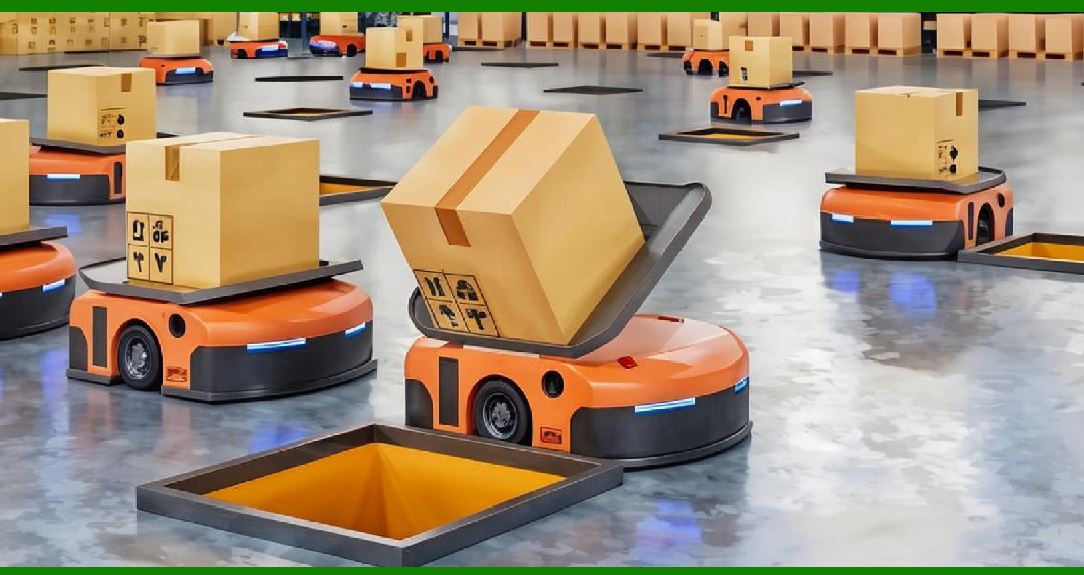
Warehouses and logistics centers are increasingly using robots. SCARA robots are used for order picking and packing. |
One common task is picking items from shelves or bins. SCARA robots use vision cameras to find items and grippers to pick them up. They place the items into boxes or bags. |
Another task is sorting packages. SCARA robots read labels and sort packages by destination. They place packages onto different conveyor belts. |
Another task is packing. SCARA robots place items into boxes and add packing material. They can also seal and label the boxes. |
Another task is palletizing. SCARA robots stack boxes onto pallets. This is usually done by larger robots, but small SCARA robots can palletize small boxes. |
Another task is kitting. SCARA robots gather multiple items for a single order and put them into a tote or box. |
|
10.26 SCARA Robots in Laboratory Automation |
Laboratories use SCARA robots for repetitive tasks that need precision. |
One common task is handling microplates. These are trays with many small wells used for chemical and biological tests. SCARA robots move microplates between machines and place them in readers and washers. |
Another task is pipetting. SCARA robots move pipettes to transfer liquids between wells. They can do this very accurately and repeatedly. |
Another task is picking colonies. SCARA robots pick bacterial colonies from agar plates and place them into wells. This is used in genetics and microbiology. |
Another task is sample preparation. SCARA robots mix, heat, and centrifuge samples. They also add reagents. |
Another task is storage and retrieval. SCARA robots move samples into and out of freezers and incubators. |
Laboratory SCARA robots are often small and quiet. They are designed to work alongside humans in a lab. |
|
10.27 SCARA Robots in Education and Research |
SCARA robots are also used in universities and research labs. They are a good teaching tool because they are simple enough to understand but complex enough to be interesting. |
In education, SCARA robots help students learn about kinematics, control systems, and programming. Students can build a small SCARA robot and write programs to move it. |
In research, SCARA robots are used to study assembly, force control, and human-robot interaction. They are also used to test new algorithms for motion planning and vision. |
Some research SCARA robots are open-source, meaning anyone can download the design and build one. This has made SCARA robots popular in the maker community. |
|
10.28 SCARA Robots in Consumer Products and Toys |
SCARA robots are even used in consumer products. Some toy robots use a SCARA-like arm. Some 3D printers use a SCARA mechanism. Some kitchen appliances use SCARA-like arms for mixing or serving. |
These consumer applications are usually smaller and less precise than industrial SCARAs, but they show how the SCARA design is useful in many areas. |
|
10.29 The Future of SCARA Robots |
SCARA robots have been around for decades, but they are still evolving. Here are some trends. |
One trend is collaborative SCARA robots. These are designed to work safely alongside humans without a fence. They use force sensors and lightweight arms to avoid injury. This opens up new applications in small workshops and labs. |
Another trend is vision integration. Modern SCARA robots often have built-in cameras and software that let them find parts and inspect quality. This makes them more flexible and easier to use. |
Another trend is machine learning. Robots can learn from experience and improve their performance. For example, a SCARA robot can learn the best way to pick up a part by trying different approaches. |
Another trend is modular design. Some SCARA robots are made of modules that can be swapped out. This makes them easier to repair and upgrade. |
Another trend is energy efficiency. New motors and controllers use less power. This reduces operating costs and helps the environment. |
Another trend is connectivity. SCARA robots are being connected to the industrial internet of things. They send data to cloud systems for analysis. This helps with predictive maintenance and production optimization. |
Another trend is miniaturization. Some SCARA robots are becoming very small for use in electronics and medical devices. Others are becoming larger for use in appliance and automotive assembly. |
|
10.30 Detailed Summary of SCARA Robots |
Let us now bring everything together in a detailed summary. |
A SCARA robot, or Selective Compliance Assembly Robot Arm, is a four-joint robot designed for assembly and pick-and-place tasks. It has three rotary joints with parallel axes for horizontal positioning and one linear joint for vertical motion. This design makes it compliant in the horizontal direction and stiff in the vertical direction. |
The parallel rotary axes mean the arm moves in a flat horizontal plane. The linear joint moves the tool up and down. The tool always points down unless a wrist is added. |
The working envelope is a flat ring around the base. The reach is typically 300 to 1,200 millimeters, and the payload is typically 1 to 20 kilograms. The vertical stroke is typically 100 to 400 millimeters. |
The SCARA robot was invented in Japan in the late 1970s by Hiroshi Makino. It became popular in electronics assembly in the 1980s and spread to many industries. |
SCARA robots are different from Cartesian robots, articulated robots, and delta robots. They are faster and more compact than Cartesian robots. They are simpler and more compliant than articulated robots. They are stronger and more compliant than delta robots. |
The main advantages of SCARA robots are speed, accuracy, compactness, horizontal compliance, vertical stiffness, simplicity, reliability, and cost-effectiveness. |
The main limitations are the inability to tilt the tool, limited vertical stroke, limited working envelope, limited horizontal force, limited 3D path capability, and limited payload. |
Compliance is the key feature. Horizontal compliance lets the robot adjust to misalignments during assembly, preventing jams and breakage. Vertical stiffness lets the robot push parts together with force. |
SCARA robots use many end effectors, including grippers, vacuum cups, magnetic grippers, dispensing tools, screwdrivers, welding tools, and vision cameras. |
The control system includes a motion planner, inverse kinematics solver, servo controller, input and output system, and user interface. Programming can be done with a teach pendant, offline software, lead-through, text-based language, or graphical interface. |
Sensors include encoders, force sensors, vision sensors, proximity sensors, limit switches, pressure sensors, and torque sensors. |
Safety measures include fences, light curtains, safety mats, emergency stop buttons, and built-in safety features. Risk assessment is required. |
Maintenance includes lubrication, belt tension checks, battery replacement, and regular inspection. Predictive maintenance uses sensors to monitor health. |
SCARA robots are used in electronics manufacturing for circuit board assembly, soldering, screw fastening, testing, display assembly, and semiconductor handling. |
|
They are used in appliance manufacturing for motor assembly, switch assembly, fan assembly, packaging, and testing. |
They are used in automotive parts manufacturing for electronic control unit assembly, sensor assembly, fuel injector assembly, dashboard assembly, battery assembly, and quality inspection. |
They are used in food and beverage processing for picking and placing, packaging, sorting, assembling, and handling bottles and cans. |
They are used in pharmaceutical and medical manufacturing for syringe assembly, test kit assembly, vial handling, liquid dispensing, and medical device assembly. |
They are used in general manufacturing for pick-and-place, machine tending, kitting, sorting, labeling, testing, dispensing, and screw driving. |
They are used in warehouse and logistics for order picking, package sorting, packing, palletizing, and kitting. |
They are used in laboratory automation for microplate handling, pipetting, colony picking, sample preparation, and storage and retrieval. |
They are used in education and research for teaching kinematics, control, and programming, and for studying assembly and human-robot interaction. |
They are used in consumer products and toys for small robots, 3D printers, and kitchen appliances. |
The future of SCARA robots includes collaborative designs, vision integration, machine learning, modular design, energy efficiency, connectivity, and miniaturization. |
|
In conclusion, the SCARA robot is a remarkable machine. Its simple four-joint design, with three parallel rotary axes and one linear axis, gives it a unique combination of horizontal compliance and vertical stiffness. This makes it perfect for assembly, pick-and-place, and many other tasks. It is fast, accurate, compact, reliable, and cost-effective. It is used in a wide range of industries, from electronics to food to medicine. It has a long history and a bright future. For anyone interested in industrial robots, the SCARA robot is a perfect example of how a clever design can solve a real problem and change the world of manufacturing. |
 cs@easiersoft.com