Chapter 29: Machine Vision |
Chapter Summary |
Machine vision is the technology that gives industrial robots the sense of sight. It allows a robot to find, identify, measure, and inspect objects without human assistance. In the context of industrial automation, machine vision is what makes it possible for robots to work with parts that are not held in precise fixtures, and to handle parts that arrive on moving conveyors, in bins, or in random orientations. This chapter explains how machine vision works in plain language, describes the main types of vision systems used in factories, and then explores a wide range of real applications across industries. The goal is to help the reader understand not only what machine vision does, but why it has become one of the most important enabling technologies in modern robotics. |
|
29.1 What Machine Vision Is and Why It Matters |
Imagine a worker on an assembly line. Before that worker picks up a part, he or she looks at it. The eyes send signals to the brain, and the brain decides: this is the correct part, it is facing the right way, it is not damaged, and it is located at a particular spot. Then the hands move to pick it up. Machine vision is the artificial version of this process. A camera acts as the eye, a computer acts as the brain, and the robot arm acts as the hand. |
Without vision, a robot is blind. It can only repeat a pre-programmed motion again and again. It can pick up a part only if that part is always in exactly the same place, always facing exactly the same direction, and always in exactly the same condition. This is why traditional automation relies heavily on fixtures. A fixture is a mechanical device that holds a part in a fixed, known position. Fixtures are expensive, they take time to design and build, they take up space, and they must be changed whenever the product changes. |
Machine vision removes or greatly reduces the need for fixtures. If a robot can see where a part is, it does not need the part to be in a fixed position. It can find the part wherever it is and adjust its motion accordingly. This single capability unlocks enormous flexibility. It means a robot can pick parts from a conveyor belt that never stops moving. It means a robot can reach into a bin of randomly piled parts and pick one out. It means a robot can inspect a part for defects while handling it. It means a robot can adapt when a product design changes, often with nothing more than a software update. |
The importance of machine vision in industrial robotics can hardly be overstated. In many modern factories, vision is not a luxury or an add-on. It is the central technology that makes flexible automation possible. As product life cycles grow shorter and customer demand for customization grows stronger, the ability to see and adapt becomes more valuable every year. |
|
29.2 The Basic Components of a Machine Vision System |
A machine vision system is made up of several parts that work together. Understanding these parts helps explain both the capabilities and the limitations of vision-guided robots. |
The first component is the camera. The camera captures images of the scene. There are many types of cameras used in industry. Some capture black and white images, some capture color, and some capture information about depth, meaning how far away each point in the scene is. The choice of camera depends on the task. For simple presence or absence checks, a basic black and white camera may be enough. For sorting parts by color, a color camera is needed. For picking randomly piled parts, a depth-sensing camera is often required. |
The second component is the lighting. Lighting is often the most underappreciated part of a vision system. A good image starts with good lighting. If the lighting is poor or inconsistent, even the best camera and the smartest software will struggle. Engineers use many lighting techniques, such as backlighting to create a silhouette, ring lights to illuminate evenly from all sides, and structured light to reveal the shape of a surface. In many real installations, more time is spent designing the lighting than designing the software. |
The third component is the computer or controller. This is where the image is processed. The computer runs algorithms that analyze the image and extract useful information. In modern systems, this processing may happen inside the camera itself, in a separate industrial computer, or in a cloud service. The processing power needed depends on the complexity of the task. Finding a simple mark on a flat surface requires very little power, while recognizing a wide variety of objects in a cluttered scene may require significant computing resources. |
The fourth component is the software. Software is the brain of the vision system. It takes the raw image and turns it into meaningful results, such as the position and orientation of a part, the presence of a defect, or the identity of an object. Software approaches range from traditional rule-based methods to modern machine learning methods. Traditional methods work well when the task is well defined and the conditions are controlled. Machine learning methods, especially deep learning, work well when the task is complex and the conditions vary. |
The fifth component is the communication interface. The vision system must send its results to the robot controller. This happens through a communication link, such as a network connection or a direct signal. The speed and reliability of this link matter a great deal. If the vision system takes too long to report a result, the robot may have already moved past the point where it could use that result. In high-speed applications, timing is everything. |
|
29.3 Two-Dimensional Vision |
Two-dimensional vision, often called 2D vision, is the simplest and most common form of machine vision. A 2D vision system produces a flat image, like a photograph. It can measure position in two directions, usually called horizontal and vertical, and it can measure rotation in the plane of the image. |
Two-dimensional vision is extremely useful for tasks where the part lies flat and the camera looks straight down at it. For example, a 2D camera mounted above a conveyor belt can find the position and rotation of a flat part moving along the belt. The robot then uses this information to pick up the part. This is one of the most common vision-guided robot applications in the world. |
Two-dimensional vision is also widely used for inspection. It can check for the presence of a label, verify that a hole has been drilled, measure the length and width of a part, or read a barcode or a text code. These tasks are sometimes called presence or absence checks, dimensional checks, and identification tasks. |
The strength of 2D vision is its simplicity and low cost. The weakness is that it cannot directly measure depth. If the part is tilted, or if the height of the part matters, a 2D system may not be enough. It can sometimes infer depth from shadows or from the apparent size of known objects, but these methods are limited. For truly three-dimensional tasks, a different approach is needed. |

|
29.4 Three-Dimensional Vision |
Three-dimensional vision, or 3D vision, captures information about depth. It produces a representation of the scene in three dimensions, allowing the robot to understand not just where a part is left and right and up and down, but also how far away it is and how it is tilted. |
There are several ways to capture 3D information. One common method is stereo vision, which uses two cameras placed a small distance apart. Just as human eyes work together to perceive depth, the two cameras see the scene from slightly different angles, and the system calculates depth from the differences between the two images. |
Another method is structured light. A projector shines a pattern of light, often a grid or a set of stripes, onto the scene. The camera observes how the pattern deforms as it falls on the objects. From this deformation, the system calculates the shape and depth of the surfaces. |
A third method is time of flight. A sensor emits a pulse of light and measures how long it takes for the light to return after bouncing off an object. Because the speed of light is known, the distance can be calculated. Time-of-flight sensors are fast and work well over a range of distances. |
A fourth method is laser triangulation. A laser line is projected onto the scene, and a camera observes the line from an angle. The shape of the line reveals the profile of the surface. By moving the laser or the object, a full 3D model can be built up. |
Three-dimensional vision is essential for bin picking, where a robot must reach into a container of randomly piled parts and pick one out. In a bin, parts overlap and obscure one another, and they lie at all angles. Only a 3D vision system can make sense of this complexity. Three-dimensional vision is also used for tasks such as welding, where the robot must follow a seam that may vary in position, and for palletizing, where the robot must place boxes on a stack that may be slightly uneven. |
|
29.5 How Vision Guides a Robot |
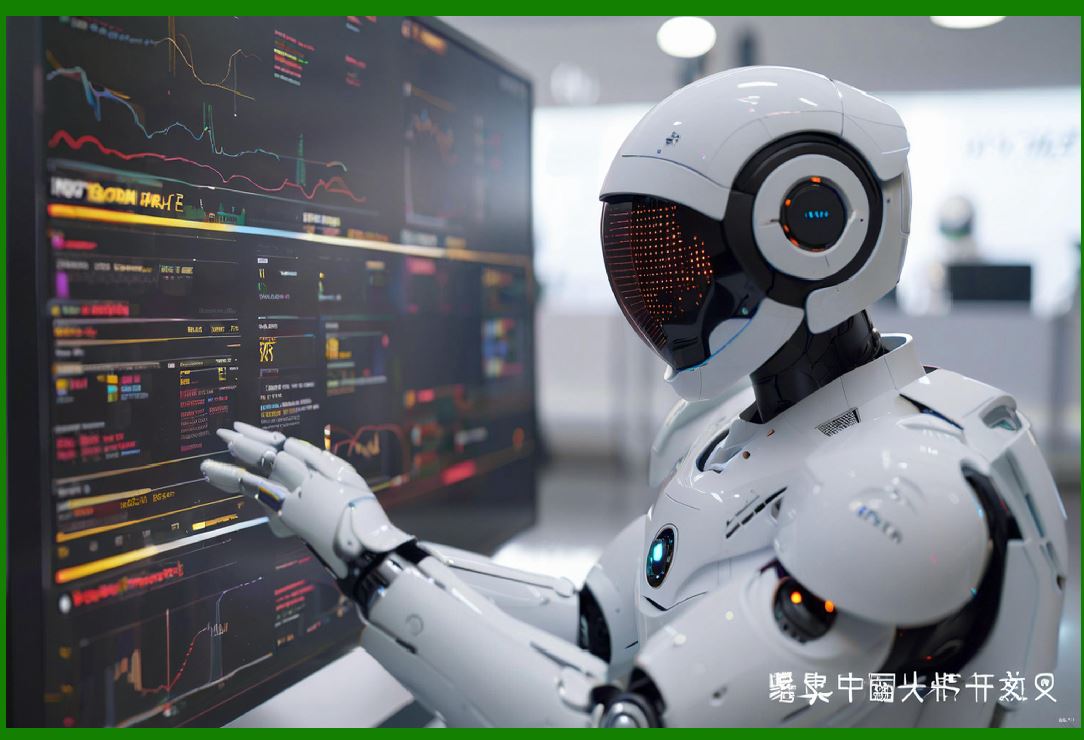
Once a vision system has analyzed a scene, it must tell the robot what to do. This involves a series of steps that connect the world of images to the world of robot motion. |
The first step is calibration. Calibration is the process of determining the relationship between the camera and the robot. The camera sees the world in its own coordinate system, measured in pixels. The robot moves in its own coordinate system, measured in millimeters or inches. Calibration establishes the mathematical relationship between these two systems. Without accurate calibration, the robot will not be able to use the vision data correctly. Calibration is often done by placing a special target, such as a grid of dots, in the robot's workspace and having both the camera and the robot observe it. |
The second step is object recognition and localization. The vision system must identify the object of interest and determine its position and orientation. In simple cases, this may involve finding a specific pattern or shape. In more complex cases, it may involve matching the object against a stored model or using machine learning to recognize it. |
The third step is pose estimation. Pose means the position and orientation of an object in three-dimensional space. For a robot to pick up an object, it must know not only where the object is but also how it is oriented. A part lying flat is easy to pick up, but a part standing on its edge requires a different approach. Pose estimation provides this information. |
The fourth step is coordinate transformation. The vision system reports the object's pose in camera coordinates. The robot needs the pose in robot coordinates. The calibration data is used to transform the pose from one coordinate system to the other. |
The fifth step is motion planning. Once the robot knows where the object is, it must plan a path to reach it. This path must avoid collisions with the bin, the conveyor, or other objects. In simple pick-and-place tasks, the path may be a straight line. In complex tasks, such as bin picking, the path may need to weave around obstacles. |
The sixth step is execution and feedback. The robot moves to the object and attempts to pick it up. In some systems, the vision system checks whether the pick was successful. If the part slipped or was not grasped correctly, the system may try again. This feedback loop makes the system more robust. |
|
29.6 Traditional Vision Algorithms |
Before the rise of deep learning, machine vision relied on traditional algorithms. These algorithms are still widely used today, especially for tasks that are well defined and highly controlled. |
One common traditional technique is thresholding. Thresholding converts a grayscale image into a black and white image by choosing a brightness cutoff. Pixels brighter than the cutoff become white, and pixels darker than the cutoff become black. This is useful for separating objects from the background. |
Another technique is edge detection. Edges are places in the image where brightness changes sharply. These often correspond to the boundaries of objects. Edge detection is used to find the outlines of parts and to measure their dimensions. |
Another technique is blob analysis. A blob is a connected region of similar pixels. Blob analysis is used to count objects, measure their area, and find their centers. It is often used in inspection tasks, such as counting pills in a blister pack. |
Another technique is pattern matching. Pattern matching compares a region of the image against a stored template. It is used to find a specific mark or feature. Traditional pattern matching works well when the object does not rotate or scale, but it becomes more complex when the object can appear in any orientation. |
Another technique is optical character recognition, often called OCR. OCR reads text from an image. It is used to read serial numbers, expiration dates, and other printed information. OCR has become very accurate in recent years, largely due to machine learning. |
Traditional algorithms have the advantage of being fast, predictable, and easy to understand. They work well when the lighting is controlled and the objects are consistent. Their weakness is that they can be fragile. A small change in lighting, a slight variation in the part, or a new type of defect can cause them to fail. This is why machine learning has become so important. |

|
29.7 Machine Learning and Deep Learning in Vision |
Machine learning is a way of building vision systems by showing them examples rather than by writing explicit rules. Instead of telling the computer exactly what a defect looks like, the engineer shows the computer many images of good parts and many images of defective parts. The computer learns to tell the difference on its own. |
Deep learning is a type of machine learning that uses artificial neural networks with many layers. Deep learning has revolutionized machine vision in the past decade. It has made it possible to solve problems that were previously considered too difficult for automation. |
One major application of deep learning is object detection. A deep learning model can look at an image and identify multiple objects within it, drawing a box around each one and labeling it. This is useful for tasks such as picking multiple parts from a cluttered bin or detecting multiple defects on a surface. |
Another application is semantic segmentation. This means labeling every pixel in the image according to what it belongs to. For example, in a scene with a conveyor belt, a robot arm, and several parts, segmentation can label each pixel as belt, arm, or part. This gives the robot a very detailed understanding of the scene. |
Another application is anomaly detection. In many inspection tasks, defects are rare and varied, making it hard to collect examples of every possible defect. Anomaly detection models learn what normal looks like and flag anything that deviates from normal. This is powerful because it can catch defects that were never seen during training. |
Another application is pose estimation using deep learning. A deep learning model can look at an image of a part and directly predict its three-dimensional position and orientation. This is especially useful for parts with complex shapes. |
Deep learning has some disadvantages. It requires large amounts of data, which can be expensive to collect and label. It can be difficult to understand why a deep learning model made a particular decision. And it can sometimes fail in unexpected ways when it encounters situations it has not seen before. Despite these challenges, deep learning has become the dominant approach for complex vision tasks. |
|
29.8 Vision for Inspection and Quality Control |
Inspection is one of the most important applications of machine vision in industry. Manufacturers use vision to check that products meet quality standards, to catch defects before they reach customers, and to gather data for continuous improvement. |
In the electronics industry, vision systems inspect printed circuit boards for missing components, misaligned parts, and solder defects. They check the placement of tiny components that are too small for human eyes to reliably inspect. They verify that connectors are properly seated and that labels are correct. |
In the automotive industry, vision systems inspect car bodies for dents and scratches. They check that doors, hoods, and trunks are aligned correctly. They verify that bolts are present and tightened. They inspect welds for cracks and porosity. They check painted surfaces for defects. A single car may pass through dozens of vision inspection stations during assembly. |
In the pharmaceutical industry, vision systems inspect pills and capsules for defects such as chips, cracks, and discoloration. They verify that blister packs contain the correct number of pills. They check that labels are correct and that expiration dates are legible. They inspect syringes and vials for contamination and proper fill levels. |
In the food and beverage industry, vision systems sort fruits and vegetables by size, color, and quality. They remove defective items from production lines. They check that bottles and cans are filled to the correct level and that caps are properly applied. They verify that labels are present and correctly positioned. |
In the textile industry, vision systems inspect fabric for defects such as holes, stains, and weaving errors. They measure the width of fabric and check patterns for alignment. They sort garments by size and color. |
In the metalworking industry, vision systems inspect machined parts for dimensional accuracy. They check for burrs, cracks, and surface finish defects. They verify that holes are the correct size and position. |
In the glass industry, vision systems inspect bottles, jars, and windows for cracks, bubbles, and other defects. They measure dimensions and check for proper shape. |
In the packaging industry, vision systems verify that boxes contain the correct items, that labels are correct, and that packages are properly sealed. They check barcodes and date codes for readability. |
|
29.9 Vision for Robot Guidance |
Robot guidance is the use of vision to tell a robot where to move. This is different from inspection, where the goal is to judge quality. In guidance, the goal is to provide motion instructions. |
One of the most common guidance applications is pick and place from a conveyor. A camera mounted above the conveyor detects parts as they move past. The vision system calculates each part's position and orientation, accounting for the fact that the part continues to move while the robot is moving toward it. This is called tracking. The robot picks the part from the moving conveyor and places it into a package or another conveyor. This application is used extensively in food processing, electronics assembly, and logistics. |
Another common guidance application is bin picking. A camera looks into a bin of randomly piled parts. The vision system identifies a part that can be picked without colliding with other parts or the bin walls. It calculates the part's pose and sends it to the robot. The robot reaches into the bin, grasps the part, and lifts it out. Bin picking is one of the hardest problems in robotics, and it is a major focus of vision research. |
Another guidance application is assembly. A vision system locates a part on a conveyor or in a tray and guides the robot to pick it up and insert it into another part. This is used in electronics assembly, automotive assembly, and many other industries. Vision is especially valuable when the parts are small or when the tolerances are tight. |
Another guidance application is welding. A vision system scans the joint to be welded and guides the robot along the seam. This is useful when the seam position varies from part to part, as it often does in large structures. Vision-guided welding is used in shipbuilding, construction equipment, and pipeline fabrication. |
Another guidance application is dispensing. A vision system locates the point where adhesive, sealant, or paint should be applied and guides the robot to that point. This is used in electronics, automotive, and aerospace manufacturing. |
Another guidance application is palletizing and depalletizing. A vision system locates boxes on a pallet or a conveyor and guides the robot to pick them up or place them. This is used in logistics, food processing, and many other industries. |

|
29.10 Vision in Logistics and Warehousing |
Logistics and warehousing have become one of the fastest-growing applications of machine vision in robotics. The rise of e-commerce has created enormous demand for systems that can handle a wide variety of items quickly and accurately. |
In a modern warehouse, robots with vision systems pick items from shelves and bins and bring them to packing stations. The vision system identifies the item, determines its pose, and guides the robot's gripper. Because e-commerce warehouses handle thousands of different products, the vision system must be able to recognize and handle a wide variety of shapes, sizes, and materials. Deep learning is often used for this task. |
Vision systems are also used for sorting packages. A camera reads the label on a package and directs it to the correct chute or conveyor. This is used in parcel sorting centers, where thousands of packages per hour must be sorted accurately. |
Vision systems are used for dimensioning and weighing. A 3D camera measures the length, width, and height of a package, and a scale measures its weight. This information is used for shipping charges and for planning how to load trucks. |
Vision systems are used for palletizing and depalletizing. A robot with a vision system can build a pallet of mixed boxes, choosing the best arrangement to maximize stability and use of space. It can also unload a pallet of mixed boxes, identifying each box and placing it on the correct conveyor. |
Vision systems are used for quality checks in logistics. They verify that the correct item is in the correct box, that the box is properly sealed, and that the label is correct and legible. |
|
29.11 Vision in Agriculture and Food Processing |
Agriculture and food processing present special challenges for machine vision. Products are natural and variable, unlike the uniform parts found in manufacturing. Lighting conditions can be difficult. And the products must be handled gently to avoid damage. |
In agriculture, vision systems are used to sort and grade fruits and vegetables. A camera inspects each item as it moves along a conveyor, measuring size, color, shape, and surface defects. Items that do not meet the grade are removed by a pneumatic jet or a robot arm. This is used for apples, oranges, tomatoes, potatoes, and many other crops. |
Vision systems are used for weed removal. A robot with a vision system identifies weeds among crop plants and removes them mechanically or with a targeted spray. This reduces the use of herbicides and is a major focus of agricultural robotics research. |
Vision systems are used for harvesting. A robot with a vision system identifies ripe fruit on a tree or vine and guides a gripper to pick it. This is used for strawberries, apples, peppers, and other crops. Harvesting is difficult because the fruit is often hidden among leaves and branches, and because the fruit must be handled gently. |
In food processing, vision systems are used to cut and portion meat, fish, and poultry. A 3D vision system scans the piece and guides a cutting machine to make the best use of the material. This improves yield and consistency. |
Vision systems are used to decorate cakes and pastries. A vision system locates the top of the cake and guides a robot to apply icing or place decorations. |
Vision systems are used to inspect food packaging for correct sealing, correct labeling, and the presence of foreign objects. |
|
29.12 Vision in Electronics Manufacturing |
Electronics manufacturing is one of the most demanding applications for machine vision. Components are tiny, tolerances are tight, and production volumes are enormous. |
Vision systems are used for component placement. A camera looks at a printed circuit board and identifies the locations where components should be placed. Another camera looks at the component as it is held by the placement head and corrects for any misalignment. The robot then places the component in the correct position. This is done at extremely high speeds, with placement rates of tens of thousands of components per hour. |
Vision systems are used for solder joint inspection. After components are soldered, a vision system inspects each joint for defects such as insufficient solder, excess solder, bridges, and voids. This is often done with 3D vision, because the shape of the solder joint is important. |
Vision systems are used for final assembly inspection. They verify that all components are present, that connectors are properly seated, and that the product meets specifications. |
Vision systems are used for display inspection. They check screens for dead pixels, scratches, and other defects. |
Vision systems are used for semiconductor manufacturing. They inspect wafers for defects, align photomasks, and guide die bonding and wire bonding machines. The precision required in semiconductor manufacturing is extreme, with features measured in nanometers. |

|
29.13 Vision in Automotive Manufacturing |
Automotive manufacturing is a major user of machine vision. A modern car is a complex product, and vision systems help ensure that it is built correctly and safely. |
Vision systems are used in body assembly. They locate panels and guide robots to weld or rivet them together. They inspect the fit and finish of doors, hoods, and trunks. They check that gaps between panels are uniform. |
Vision systems are used in paint shops. They inspect painted surfaces for defects such as runs, sags, and dirt. They guide robots to apply sealant and paint. |
Vision systems are used in powertrain assembly. They guide robots to place engine and transmission components. They inspect for correct assembly and torque. |
Vision systems are used in final assembly. They guide robots to install seats, windshields, and other components. They inspect for correct installation. |
Vision systems are used in quality control. They check that vehicles meet specifications before they leave the factory. They read vehicle identification numbers and verify that the correct parts are installed. |
|
29.14 Vision in Healthcare and Pharmaceuticals |
Healthcare and pharmaceuticals require high levels of accuracy and traceability. Machine vision helps meet these requirements. |
In pharmaceutical manufacturing, vision systems inspect tablets and capsules for defects. They verify that blister packs contain the correct number of pills. They check that bottles are filled to the correct level and that caps are properly applied. They read labels to verify correct product and dosage. |
In medical device manufacturing, vision systems inspect syringes, catheters, and other devices for defects. They verify that components are correctly assembled. They check that packaging is sterile and intact. |
In laboratory automation, vision systems guide robots to handle test tubes, microplates, and other labware. They identify samples and track their locations. |
In surgery, vision systems are used in robotic surgical systems to provide the surgeon with a magnified, high-definition view of the surgical site. They are also used to track instruments and provide guidance. |
|
29.15 Vision in Aerospace and Defense |
Aerospace and defense manufacturing requires extremely high quality and traceability. Machine vision is used extensively in these industries. |
Vision systems are used in composite layup. They inspect layers of carbon fiber for wrinkles, gaps, and foreign objects. They guide robots to place plies in the correct position. |
Vision systems are used in drilling and fastening. They locate holes and guide robots to drill and install fasteners. They inspect holes for correct size and position. |
Vision systems are used in wing and fuselage assembly. They align large components and guide robots to join them. They inspect joints for correct fit. |
Vision systems are used in engine assembly. They inspect turbine blades for defects. They guide robots to place components with extreme precision. |
Vision systems are used in space applications. They guide robots to assemble structures in orbit. They help rovers navigate on other planets. |
|
29.16 Vision in Metals and Heavy Industry |
Metals and heavy industry present harsh conditions for machine vision. High temperatures, dust, and vibration can damage equipment and degrade image quality. |
Vision systems are used in steel mills. They inspect steel slabs, billets, and coils for defects. They measure dimensions and guide cutting and rolling operations. They read labels and track material through the mill. |
Vision systems are used in foundries. They inspect castings for defects such as cracks, porosity, and incomplete fills. They guide robots to remove gates and risers. |
Vision systems are used in welding. They guide robots along seams and inspect welds for defects. They are used in shipbuilding, pipeline construction, and structural steel fabrication. |
Vision systems are used in mining. They guide robots to sort ore from waste. They inspect equipment for wear and damage. |

|
29.17 Vision in Textiles and Apparel |
Textiles and apparel present challenges because materials are flexible and variable. Machine vision is used in several applications. |
Vision systems are used in fabric inspection. They detect defects such as holes, stains, and weaving errors. They measure fabric width and check pattern alignment. |
Vision systems are used in cutting. They locate the pattern on the fabric and guide a cutting machine to cut the correct shapes. This reduces waste and improves accuracy. |
Vision systems are used in sewing. They guide robots to sew seams and attach components. This is challenging because fabric moves and deforms during sewing. |
Vision systems are used in garment sorting. They identify garments by size, color, and style and sort them into the correct bins. |
|
29.18 Vision in Construction and Agriculture Equipment |
Construction and agriculture equipment operate in outdoor environments with variable lighting and weather. Machine vision is increasingly used in these applications. |
Vision systems are used in excavators and loaders. They help the operator see around the machine and avoid obstacles. They guide the machine to dig or load with precision. |
Vision systems are used in tractors and combines. They guide the machine along crop rows and help avoid obstacles. They monitor crop conditions and adjust machine settings. |
Vision systems are used in drones. They map fields, monitor crops, and guide precision spraying. |
|
29.19 Vision in Retail and Service Robotics |
Retail and service robotics is a growing field. Machine vision is essential for these applications. |
Vision systems are used in shelf scanning. A robot moves through a store and scans shelves to check inventory and verify prices. This improves stock accuracy and reduces labor. |
Vision systems are used in customer service. A robot greets customers, answers questions, and guides them to products. Vision helps the robot recognize people and navigate safely. |
Vision systems are used in food preparation. A robot with a vision system can prepare simple meals, such as salads or pizzas. Vision helps the robot identify ingredients and place them correctly. |
Vision systems are used in cleaning. A robot with a vision system can navigate a building and clean floors. Vision helps the robot avoid obstacles and detect dirt. |
|
29.20 Vision in Collaborative Robotics |
Collaborative robots, often called cobots, are designed to work safely alongside humans. Machine vision plays an important role in making this possible. |
Vision systems help cobots detect the presence of humans. If a human enters the cobot's workspace, the cobot can slow down or stop to avoid a collision. This is often done with 3D vision, which can detect the position and movement of people. |
Vision systems help cobots identify parts. A cobot can pick up a part from a tray or conveyor and hand it to a human worker. Vision ensures that the cobot picks the correct part and holds it in a way that is safe for the human to take. |
Vision systems help cobots adapt to changes. If a part is not in the expected position, the cobot can use vision to find it. This makes cobots more flexible and easier to use. |
|
29.21 Vision and Robot Programming |
Machine vision is changing how robots are programmed. In the past, programming a robot required specialized skills and a lot of time. Vision is making programming easier and more intuitive. |
One approach is hand guiding. A human takes the robot by the hand and moves it through the desired path. The robot records the path and repeats it. Vision can be used to refine the path, ensuring that the robot follows the correct trajectory even if the part is not exactly where the human expected. |
Another approach is programming by demonstration. A human shows the robot how to perform a task, and the robot learns from the demonstration. Vision helps the robot understand what the human is doing and generalize to new situations. |
Another approach is vision-based calibration. A robot can use vision to calibrate itself, determining the relationship between its joints and the world. This reduces the need for manual calibration and makes the robot easier to set up. |
Another approach is simulation. A robot can be programmed in a virtual environment, and vision can be used to transfer the program to the real robot. This reduces downtime and allows programs to be tested before they are deployed. |
|
29.22 Challenges and Limitations of Machine Vision |
Machine vision is powerful, but it is not perfect. Understanding its limitations helps engineers design better systems and avoid common pitfalls. |
Lighting is a major challenge. Vision systems depend on consistent, controlled lighting. Changes in ambient light, shadows, and reflections can cause failures. Engineers must design lighting carefully and often must enclose the vision station to control the environment. |
Variation is another challenge. Real-world objects vary in color, texture, and shape. A vision system trained on one set of parts may fail on another set. Deep learning can help, but it requires large amounts of data and careful validation. |
Speed is a challenge in high-speed applications. The vision system must capture, process, and communicate results fast enough for the robot to act. This requires fast cameras, fast computers, and fast communication. |
Accuracy is a challenge in precision applications. The vision system must measure position and orientation accurately enough for the robot to perform the task. This requires good calibration, good optics, and good algorithms. |
Robustness is a challenge in harsh environments. Dust, heat, vibration, and moisture can damage cameras and degrade image quality. Engineers must choose equipment that can withstand these conditions and protect it appropriately. |
Cost is a challenge for small manufacturers. A full machine vision system can be expensive, including cameras, lighting, computers, software, and integration. However, costs have come down significantly in recent years, and vision is now accessible to a much wider range of companies. |
|
29.23 Integration of Vision with Other Sensors |
Machine vision is often used together with other sensors to provide a more complete picture of the robot's environment. |
Force and torque sensors can tell the robot how much force it is applying. This is useful in assembly, where the robot must insert a part with the correct amount of force. Vision tells the robot where the part is, and force sensing tells it when the part is seated. |
Tactile sensors can tell the robot when it has touched an object. This is useful in grasping, where the robot must hold an object securely without crushing it. Vision tells the robot where the object is, and tactile sensing tells it when the grasp is secure. |
Distance sensors, such as ultrasonic or infrared sensors, can tell the robot how far away an object is. This is useful in navigation and obstacle avoidance. Vision provides detailed information about the scene, and distance sensors provide a simple, reliable measure of proximity. |
Inertial sensors can tell the robot how it is moving. This is useful in mobile robots and in applications where the robot must maintain stability. Vision helps the robot understand its environment, and inertial sensing helps it understand its own motion. |

|
29.24 The Future of Machine Vision in Robotics |
The future of machine vision in robotics is bright. Several trends are shaping the field. |
One trend is the increasing use of deep learning. Deep learning is making vision systems more capable and more flexible. As data becomes more available and computing power continues to grow, deep learning will be applied to more and more tasks. |
Another trend is the integration of vision with other technologies. Vision is being combined with artificial intelligence, cloud computing, and the Internet of Things to create smarter, more connected systems. A robot with vision can share what it sees with other robots and with human workers, enabling new levels of collaboration. |
Another trend is the miniaturization of vision systems. Cameras and computers are becoming smaller and cheaper. This is making it possible to put vision on smaller robots and in more places. |
Another trend is the improvement of 3D vision. 3D cameras are becoming faster, more accurate, and more affordable. This is making 3D vision practical for more applications, including bin picking and assembly. |
Another trend is the development of event cameras. Unlike traditional cameras, which capture full frames at a fixed rate, event cameras capture only changes in the scene. This makes them very fast and very efficient. Event cameras are particularly useful for tracking fast-moving objects and for applications where latency must be minimal. |
Another trend is the use of vision for human-robot collaboration. Vision is helping robots understand human intentions and respond appropriately. This is making robots safer and easier to work with. |
Another trend is the use of vision for autonomous mobile robots. Vision is helping mobile robots navigate warehouses, hospitals, and other environments. This is enabling new applications in logistics, healthcare, and service. |
|
29.25 Detailed Summary |
This chapter has explored machine vision in industrial robotics, covering its principles, components, applications, and future directions. The following is a detailed summary of the key points. |
Machine vision is the technology that gives robots the ability to see. It is what allows robots to work with unfixtured parts, to handle parts on moving conveyors, and to adapt to changes in their environment. Without vision, robots can only repeat pre-programmed motions in highly controlled settings. With vision, robots can find, identify, measure, and inspect objects, making them far more flexible and useful. |
A machine vision system consists of cameras, lighting, computers, software, and communication interfaces. Cameras capture images, lighting makes the images usable, computers process the images, software extracts meaning, and communication links send results to the robot. Each component must be chosen and designed carefully for the task at hand. |
Two-dimensional vision captures flat images and is useful for tasks where parts lie flat and the camera looks straight down. It is widely used for pick and place from conveyors, for inspection, and for identification. Three-dimensional vision captures depth information and is essential for tasks such as bin picking, welding, and palletizing, where parts are not flat or not in fixed positions. |
Vision guides robots through a series of steps: calibration, object recognition and localization, pose estimation, coordinate transformation, motion planning, and execution with feedback. Calibration establishes the relationship between the camera and the robot. Object recognition identifies the object of interest. Pose estimation determines its position and orientation. Coordinate transformation converts the pose into robot coordinates. Motion planning determines how the robot will reach the object. Execution carries out the plan, with feedback to correct errors. |
Traditional vision algorithms include thresholding, edge detection, blob analysis, pattern matching, and optical character recognition. These algorithms are fast and predictable but can be fragile when conditions vary. Machine learning, and especially deep learning, has become the dominant approach for complex tasks. Deep learning models can detect objects, segment scenes, detect anomalies, and estimate pose. They require large amounts of data and careful validation but can solve problems that were previously impossible. |
Inspection is one of the most important applications of machine vision. Vision systems inspect products in electronics, automotive, pharmaceutical, food and beverage, textile, metalworking, glass, and packaging industries. They check for defects, verify dimensions, read labels, and ensure quality. |
Robot guidance is another major application. Vision guides robots in pick and place from conveyors, bin picking, assembly, welding, dispensing, and palletizing. These applications are used in manufacturing, logistics, and many other fields. |
|
Logistics and warehousing have become major users of vision-guided robots. Vision helps robots pick items from shelves and bins, sort packages, dimension and weigh packages, and palletize and depalletize. The rise of e-commerce has driven rapid growth in this area. |
Agriculture and food processing use vision to sort and grade produce, remove weeds, harvest crops, cut and portion meat, decorate baked goods, and inspect packaging. These applications are challenging because natural products vary and must be handled gently. |
Electronics manufacturing uses vision for component placement, solder joint inspection, final assembly inspection, display inspection, and semiconductor manufacturing. These applications demand extreme precision and speed. |
Automotive manufacturing uses vision for body assembly, paint inspection, powertrain assembly, final assembly, and quality control. A single car may pass through dozens of vision stations. |
Healthcare and pharmaceuticals use vision for inspecting tablets and capsules, verifying blister packs, checking fill levels, reading labels, inspecting medical devices, and guiding laboratory automation. |
Aerospace and defense use vision for composite layup, drilling and fastening, wing and fuselage assembly, engine assembly, and space applications. |
Metals and heavy industry use vision for inspecting steel, castings, and welds, and for guiding cutting, rolling, and sorting operations. |
Textiles and apparel use vision for fabric inspection, cutting, sewing, and garment sorting. |
Construction and agriculture equipment use vision for excavators, loaders, tractors, combines, and drones. |
Retail and service robotics use vision for shelf scanning, customer service, food preparation, and cleaning. |
Collaborative robotics uses vision to detect humans, identify parts, and adapt to changes, making robots safer and easier to work with. |
Vision is also changing robot programming, making it easier through hand guiding, programming by demonstration, vision-based calibration, and simulation. |
Machine vision has challenges and limitations. Lighting, variation, speed, accuracy, robustness, and cost are all factors that engineers must consider. Vision is often integrated with other sensors, such as force, tactile, distance, and inertial sensors, to provide a more complete picture. |
|
The future of machine vision in robotics is bright. Deep learning, integration with other technologies, miniaturization, improved 3D vision, event cameras, human-robot collaboration, and autonomous mobile robots are all trends that will shape the field in the years to come. |
In conclusion, machine vision is a cornerstone of modern industrial robotics. It enables robots to work with unfixtured parts, to handle parts on moving conveyors, and to adapt to a wide range of tasks and environments. As vision technology continues to improve and become more affordable, its applications will continue to expand, making robots more capable, more flexible, and more valuable in every industry. |
 cs@easiersoft.com