Chapter 3: The ISO 8373 Standard |
Summary |
The ISO 8373 standard is the international vocabulary that gives the robotics field a common language. Its most important contribution is a simple but powerful distinction: a machine is a robot only if it can be reprogrammed to perform different tasks. A single-purpose transfer machine, no matter how complex or automated, is not a robot under this definition. This chapter explains that distinction in plain language and then shows how it plays out across many industries. The goal is to help readers see why the definition matters in real factories, warehouses, hospitals, farms, and laboratories. The chapter begins with an overview, then explores the reprogrammability requirement through practical examples, and ends with a detailed summary. |
|
1. Introduction: Why a Vocabulary Standard Matters |
Every technical field needs a shared vocabulary. Without one, engineers, buyers, safety inspectors, and regulators cannot communicate clearly. In robotics, the problem is especially acute because the word 'robot' is used loosely in popular culture. A toy that walks across a floor is called a robot. A dishwasher is sometimes called a robot. A welding arm in a car factory is called a robot. A software bot that answers chat messages is called a robot. These uses are not wrong in everyday speech, but they are useless for engineering, procurement, and safety. |
ISO 8373 exists to solve this problem. It is a vocabulary standard, not a design standard. It does not tell you how to build a robot. It tells you what words mean when you talk about robots. The standard defines terms such as robot, industrial robot, service robot, collaborative robot, end effector, manipulator, and reprogrammable. These definitions are used by manufacturers, integrators, safety bodies, and standards organizations around the world. |
The most consequential definition in ISO 8373 is the definition of an industrial robot. That definition includes three key ideas: a manipulator, an automatic control system, and reprogrammability. The first two ideas are easy to accept. The third idea, reprogrammability, is the one that separates robots from fixed automation. This chapter focuses on that third idea. It explains what reprogrammability means, why it matters, and how it changes the way we classify machines in real industries. |

|
2. The Core Distinction: Reprogrammable vs. Single-Purpose |
The ISO 8373 vocabulary distinguishes robots from fixed automation through the reprogrammability requirement. A machine that can be retasked in software qualifies as a robot. A single-purpose transfer machine does not. |
This sentence is short, but it carries a great deal of weight. To understand it, we need to unpack two terms: fixed automation and reprogrammability. |
Fixed automation is a machine or system designed to perform one specific task, or a small set of closely related tasks, in a fixed sequence. The sequence is determined by the mechanical structure, the cam profiles, the hard-wired relay logic, or the fixed program in a controller that is not intended to be changed by the user. A classic example is a transfer machine in an engine plant. It moves a cylinder block through a series of stations, drilling, boring, and milling in a fixed order. The machine may be enormous, expensive, and highly automated. It may have dozens of motors and hundreds of sensors. But it cannot be retasked to make a different part without major mechanical rebuilding. Under ISO 8373, it is not a robot. It is fixed automation. |
Reprogrammability means the machine can be given a new task by changing its software or its program, without changing its physical structure. The same arm, the same motors, the same gearboxes, and the same sensors can be used to weld one day and to palletize the next. The change is made in code, not in metal. This is the defining feature of a robot. |
It is important to note that reprogrammability does not require the robot to be intelligent. A robot does not need to learn, plan, or adapt on its own. It only needs to be capable of accepting a new program that changes its motion or its task. A simple pick-and-place arm with a teach pendant is a robot if the user can teach it new positions and new sequences. A CNC machine that can run different part programs is not usually called a robot because its motion is constrained to a cutting process, but the principle of programmability is similar. The ISO 8373 definition is careful to focus on the manipulator and the control system, not on the complexity of the task. |
This distinction has practical consequences. It affects how machines are classified for safety standards. It affects how they are counted in industrial statistics. It affects how they are bought and sold. It affects how they are insured. It affects how they are regulated in workplaces. A fixed automation machine and a robot may look similar on the factory floor, but they are treated differently by engineers, safety officers, and regulators. |
|
3. What ISO 8373 Actually Says About Robots |
To avoid confusion, it is helpful to state the core ideas of ISO 8373 in plain language. The standard defines an industrial robot as a machine that has a manipulator, usually with several axes, and an automatic control system. The control system must be programmable. The machine must be able to perform tasks such as welding, painting, assembly, palletizing, or machine tending. It may be fixed in place or mobile. It may be operated by a person through a teach pendant or a computer interface. |
The standard also defines a service robot as a robot that performs tasks outside of industrial manufacturing. Service robots may be professional or personal. A surgical robot, a floor-cleaning robot, a milking robot, and a warehouse mobile robot are all service robots under this vocabulary. They share the reprogrammability requirement. A floor-cleaning robot that can only follow one fixed path with no ability to change its route is closer to fixed automation. A floor-cleaning robot that can be given a new map and a new schedule is a robot. |
The standard also defines a collaborative robot, often called a cobot. A cobot is a robot designed to work alongside humans in a shared space. It must meet safety requirements that allow it to operate without a fence in certain conditions. The reprogrammability requirement still applies. A cobot that can only perform one fixed motion is not a cobot in the full sense. It is a fixed automation device with a collaborative shape. |
The vocabulary also distinguishes between a robot and a robot system. A robot system includes the robot, the end effector, the fixtures, the sensors, the communication interfaces, and the software that together perform a task. This distinction matters because many real applications are systems, not just arms. The reprogrammability requirement applies to the robot itself, but the system as a whole must also be flexible enough to support new tasks. |

|
4. Why Reprogrammability Is the Deciding Factor |
Why did ISO 8373 choose reprogrammability as the deciding factorThere are several reasons. |
First, reprogrammability captures the economic value of robots. The main reason factories buy robots is not that robots are fast or strong, although they often are. The main reason is that robots can be reused. A fixed automation machine is a sunk cost tied to one product. When the product changes, the machine becomes scrap. A robot can be reprogrammed and redeployed. This makes it a flexible asset. The reprogrammability requirement reflects the economic reality that distinguishes robots from single-purpose machines. |
Second, reprogrammability captures the safety challenge of robots. A fixed automation machine has a predictable motion. Its hazards are fixed and can be guarded once. A robot can be given a new program, which means its motion can change. Safety systems must account for the possibility of new motions, new speeds, and new paths. This is why robot safety standards are different from machinery safety standards. The reprogrammability requirement is the reason robot safety is a distinct field. |
Third, reprogrammability captures the integration challenge of robots. A robot is not a standalone product. It is part of a system that includes end effectors, fixtures, sensors, and software. Because the robot can be reprogrammed, the system must be designed to support change. Cables must be routed to allow new motion. Fixtures must be adaptable. Software must be modular. The reprogrammability requirement forces engineers to think about the whole system, not just the arm. |
Fourth, reprogrammability captures the legal and regulatory distinction. In many countries, a robot is defined in law by its programmability. This affects workplace safety rules, insurance, and liability. A fixed automation machine and a robot may both be dangerous, but the legal duties of the employer, the integrator, and the manufacturer may differ. The ISO 8373 definition provides a common reference for these legal distinctions. |

|
5. How Reprogrammability Plays Out in Real Industries |
The best way to understand the ISO 8373 distinction is to look at real applications. The following sections describe how the reprogrammability requirement appears in different industries. Each section gives examples of machines that qualify as robots and machines that do not. |
5.1 Automotive Manufacturing |
The automotive industry is the largest user of industrial robots. In a typical car body shop, hundreds of robot arms weld, seal, and handle parts. These arms are robots because they can be reprogrammed. When a car model changes, the same arms can be given new welding paths and new gripper positions. The end effectors may be changed, but the arm itself is reused. This is the essence of reprogrammability. |
In the same plant, there are also transfer machines. A transfer line for engine blocks may have dozens of stations. It moves the block from one station to the next using a fixed mechanism. The stations drill, bore, and mill in a fixed sequence. The transfer line is not a robot. It cannot be retasked to make a different engine without major rebuilding. It is fixed automation. |
There are also painting robots. A painting robot can be reprogrammed to paint a different car body with a different color and a different path. The same arm can be used for different models. This is reprogrammability in action. A paint booth that uses a fixed reciprocating machine to paint a single panel shape is not a robot. It is fixed automation. |
There are also collaborative robots in automotive assembly. A cobot may help a worker install a dashboard or a seat. The cobot can be reprogrammed to assist with a different task on a different model. This flexibility is why cobots are increasingly used in final assembly, where product variety is high. |

|
5.2 Electronics Manufacturing |
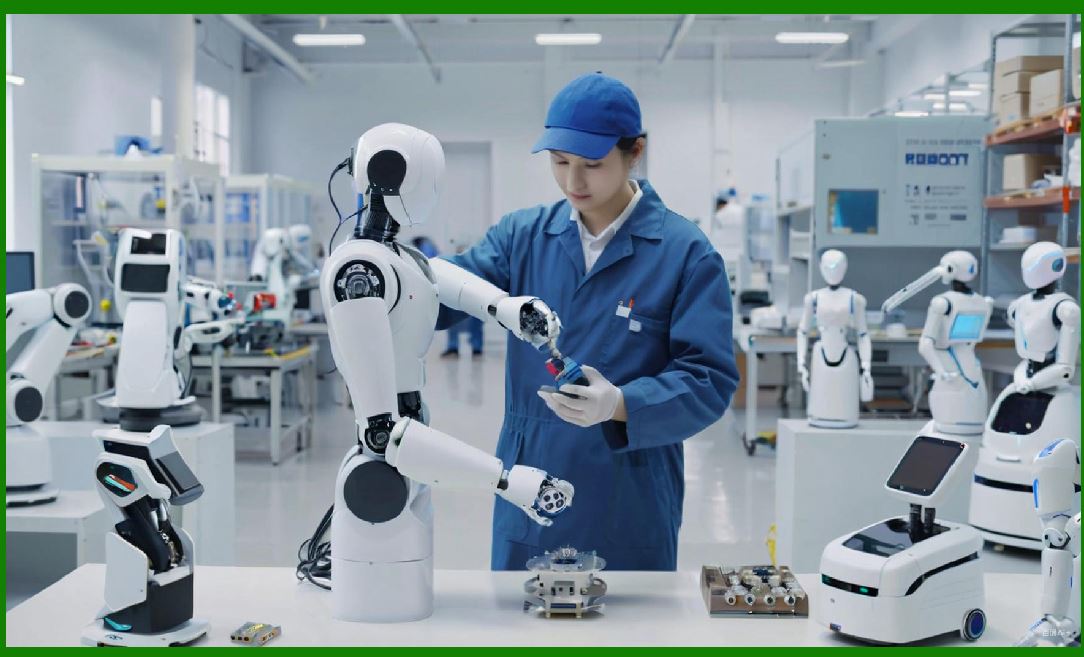
Electronics manufacturing uses many robots for pick-and-place, soldering, dispensing, and testing. A pick-and-place robot can be reprogrammed to place different components on different circuit boards. The same machine can be used for a new product by loading a new program and new feeders. This is a robot under ISO 8373. |
A wave soldering machine, by contrast, is fixed automation. It performs one process, soldering, with a fixed set of parameters. It may be adjustable, but it is not reprogrammable in the sense of performing a different task. It is a process machine, not a robot. |
A dispensing robot that applies glue or thermal paste can be reprogrammed to follow a different path on a different board. It is a robot. A stencil printer that prints solder paste through a fixed stencil is fixed automation. It cannot be retasked without a new stencil. |
In electronics, the line between robot and fixed automation can be subtle. A machine that places components may have a programmable motion system, but if it is designed for only one board and cannot be retasked, it may be classified as fixed automation. The key question is whether the user can change the task in software without changing the physical structure. |
|
5.3 Food and Beverage |
Food and beverage manufacturing uses robots for palletizing, packaging, picking, and processing. A palletizing robot can be reprogrammed to stack different boxes in different patterns. The same arm can handle a new product by loading a new program. This is a robot. |
A bottle-filling line is typically fixed automation. It fills bottles of one size at a fixed rate. It may be adjustable for different bottle sizes, but the adjustment is mechanical, not programmable in the sense of a new task. It is not a robot. |
A meat processing plant may use a robot to cut or debone. These robots are highly specialized, but they are still robots if they can be reprogrammed for different cuts or different carcass sizes. A fixed conveyor with a fixed saw is not a robot. |
Food safety and hygiene add constraints. Robots in food plants must be washdown capable. This affects their design but not their classification. If they are reprogrammable, they are robots. |

|
5.4 Warehousing and Logistics |
Warehousing and logistics have become a major growth area for robots. Mobile robots move shelves, pallets, and parcels. A mobile robot that can be given a new route and a new destination is a robot. A conveyor system that moves parcels along a fixed path is fixed automation. |
A robotic arm in a warehouse may pick items from a bin and place them in a box. If it can be reprogrammed to pick different items and place them in different boxes, it is a robot. If it is a dedicated machine that can only pick one item type in one orientation, it is closer to fixed automation. |
Automated storage and retrieval systems are often fixed automation. They move pallets in and out of fixed locations. They may be controlled by software, but their motion is fixed. They are not usually classified as robots under ISO 8373 unless they have a manipulator that can be reprogrammed. |
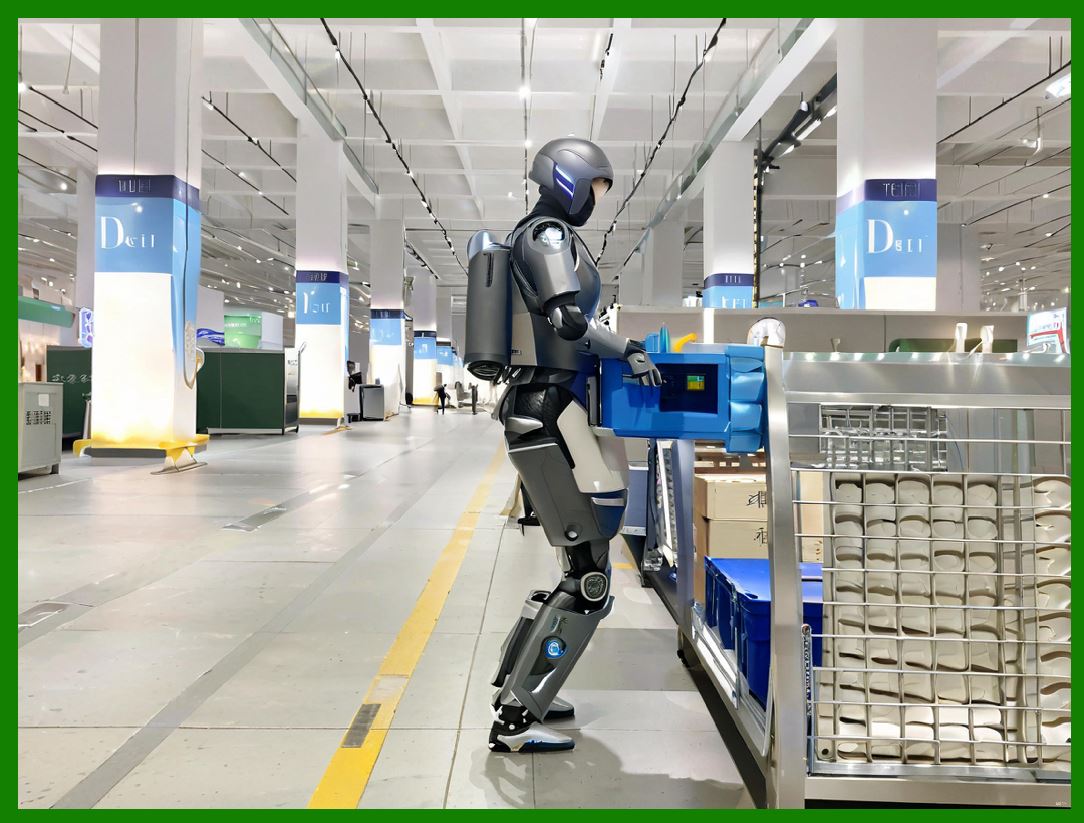
The distinction matters in logistics because the economic case for robots depends on flexibility. A warehouse that handles many product types needs robots that can be retasked. A warehouse that handles one product type may be better served by fixed automation. |
|
5.5 Agriculture |
Agriculture uses robots for harvesting, planting, spraying, and monitoring. A harvesting robot that can pick different fruits and vegetables is a robot if it can be reprogrammed for different crops. A combine harvester is a complex machine, but it is not usually classified as a robot because its task is fixed: it cuts and threshes grain. It may have automatic controls, but it is not reprogrammable in the ISO 8373 sense. |
A milking robot is a good example. It attaches teat cups to a cow, milks the cow, and detaches. It can be reprogrammed for different cows and different milking schedules. It is a robot. A fixed milking parlor with manual attachment is not a robot. |
A spraying robot that can be reprogrammed to follow different rows and different spray patterns is a robot. A boom sprayer with a fixed nozzle pattern is fixed automation. |
Agriculture is challenging for robots because the environment is unstructured. This makes reprogrammability even more valuable. A robot that can be retasked for different fields and different crops is more useful than a single-purpose machine. |

|
5.6 Healthcare and Surgery |
Healthcare uses robots for surgery, rehabilitation, pharmacy, and laboratory work. A surgical robot is a robot because it can be reprogrammed for different procedures. The same arm can be used for different surgeries by loading a different program and using different instruments. This is reprogrammability. |
A fixed imaging machine, such as a CT scanner, is not a robot. It performs a fixed task: it rotates around the patient and captures images. It may have programmable parameters, but it is not a manipulator that can be retasked for a different physical task. |
A rehabilitation robot can be reprogrammed for different exercises and different patients. It is a robot. A fixed exercise machine is not. |
A pharmacy robot can be reprogrammed to pick different medications and assemble different prescriptions. It is a robot. A pill counting machine that only counts pills is fixed automation. |
|
5.7 Laboratories and Research |
Laboratories use robots for sample handling, testing, and analysis. A laboratory robot can be reprogrammed to perform different assays and different protocols. It is a robot. A fixed analyzer that runs one type of test is fixed automation. |
Research robots are often designed for flexibility. A mobile robot in a research lab can be reprogrammed for new experiments. It is a robot. A fixed test rig is not. |
5.8 Construction and Mining |
Construction and mining use robots for drilling, excavation, and inspection. A drilling robot that can be reprogrammed for different hole patterns is a robot. A fixed drill rig is fixed automation. |
Mining trucks with autonomous driving are sometimes called robots, but they are not manipulators. They are mobile machines with programmable routes. Under ISO 8373, they may be classified as service robots if they are reprogrammable. The key is whether they can be retasked in software. |

|
5.9 Aerospace |
Aerospace uses robots for drilling, riveting, painting, and inspection. A drilling robot that can be reprogrammed for different wing panels is a robot. A fixed riveting machine is fixed automation. |
Aerospace parts are often large and complex. Robots are used because they can be reprogrammed for different parts. This flexibility is essential in low-volume, high-variety production. |
5.10 Consumer Products and Services |
Consumer products include floor-cleaning robots, lawn-mowing robots, and educational robots. A floor-cleaning robot that can be given a new map and a new schedule is a robot. A fixed vacuum system built into a building is not. |
A lawn-mowing robot that can be reprogrammed for different yard shapes is a robot. A push mower is not. |
Educational robots are designed to be reprogrammed. They are robots by definition. A fixed toy that only walks in one pattern is not a robot under ISO 8373, even if it is called a robot in marketing. |

|
6. Common Misunderstandings About the ISO 8373 Definition |
There are several common misunderstandings about the ISO 8373 definition. Addressing them helps clarify the reprogrammability requirement. |
6.1 Automation Is Not the Same as Robotics |
Many people use 'automation' and 'robotics' as synonyms. They are not. Automation is a broad term that includes fixed automation, programmable automation, and flexible automation. Robotics is a subset of automation. A machine can be highly automated without being a robot. A transfer line is highly automated but not a robot. A robot is a specific type of programmable machine with a manipulator. |
6.2 Programmability Is Not the Same as Intelligence |
A robot does not need to be intelligent. It only needs to be reprogrammable. A robot can be blind, dumb, and repetitive. It can follow a fixed path until it is reprogrammed. The intelligence is in the programmer, not the robot. This is an important point because many people expect robots to be smart. Under ISO 8373, smartness is not required. |

|
6.3 A Robot Can Be Fixed in Place |
A robot does not need to be mobile. Most industrial robots are fixed to the floor. They are still robots because they can be reprogrammed. Mobility is not part of the definition. |
6.4 A Robot Can Be Simple |
A robot does not need to have many axes. A simple two-axis pick-and-place arm can be a robot if it is reprogrammable. The number of axes is not the deciding factor. |
6.5 A Robot Can Be Part of a Larger System |
A robot is often part of a robot system. The system may include fixed automation. The presence of fixed automation in the system does not change the classification of the robot. The robot is still a robot if it is reprogrammable. |

|
7. The Role of ISO 8373 in Safety and Regulation |
The ISO 8373 definition has a direct impact on safety and regulation. Safety standards for robots, such as ISO 10218 and ISO TS 15066, build on the vocabulary of ISO 8373. They define requirements for robot systems, collaborative operation, and safeguarding. Without a clear definition of what a robot is, these standards would be difficult to apply. |
Regulators use the definition to determine which machines are subject to robot-specific rules. For example, a fixed automation machine may be covered by general machinery safety rules. A robot may be covered by robot safety rules, which include requirements for programming, teaching, and restarting. The distinction matters for employers, workers, and inspectors. |
Insurance companies use the definition to assess risk. A robot that can be reprogrammed presents different risks than a fixed machine. The insurance policy may reflect this difference. |
|
8. The Role of ISO 8373 in Procurement and Integration |
Procurement teams use ISO 8373 to specify what they are buying. A buyer who needs a flexible machine will specify a robot. A buyer who needs a single-purpose machine will specify fixed automation. The definition helps avoid confusion. |
Integrators use the definition to design systems. They know that a robot must be reprogrammable, so they design the system to support change. This includes designing fixtures that can be adjusted, cables that can be rerouted, and software that can be updated. |

|
9. The Role of ISO 8373 in Education and Research |
Educators use ISO 8373 to teach robotics. Students learn that a robot is not just a machine that moves. It is a machine that can be reprogrammed. This helps students understand the difference between robotics and automation. |
Researchers use the definition to classify their work. A paper on a new robot must describe how the robot is reprogrammable. A paper on a fixed automation machine is not a robotics paper in the same sense. |

|
10. The Limits of the ISO 8373 Definition |
The ISO 8373 definition is useful, but it has limits. It does not cover every machine that people call a robot. It does not address software robots, which are sometimes called bots. It does not address artificial intelligence in detail. It does not address autonomous weapons. It is a vocabulary standard, not a complete taxonomy. |
The definition also leaves room for interpretation. What counts as reprogrammableHow much change is requiredA machine that can be adjusted with a screwdriver is not reprogrammable in the software sense. A machine that can be given a new program is. The line is usually clear, but not always. |
Despite these limits, the ISO 8373 definition is the best available common language for robotics. It is widely used and widely accepted. It provides a foundation for safety, regulation, procurement, and education. |

|
11. Detailed Summary |
The ISO 8373 standard is the international vocabulary for robotics. Its most important contribution is the distinction between robots and fixed automation. A machine is a robot if it can be reprogrammed to perform different tasks. A single-purpose transfer machine is not a robot, even if it is highly automated. |
This distinction matters because it captures the economic, safety, integration, and legal realities of robotics. Robots are flexible assets. They can be reused. They can be retasked. They present different safety challenges than fixed machines. They require different integration approaches. They are treated differently by regulators and insurers. |
The reprogrammability requirement plays out across many industries. In automotive manufacturing, welding and painting robots are reprogrammable, while transfer lines are not. In electronics, pick-and-place robots are reprogrammable, while wave soldering machines are not. In food and beverage, palletizing robots are reprogrammable, while filling lines are not. In warehousing, mobile robots are reprogrammable, while conveyors are not. In agriculture, milking robots are reprogrammable, while combine harvesters are not. In healthcare, surgical robots are reprogrammable, while CT scanners are not. In laboratories, sample-handling robots are reprogrammable, while fixed analyzers are not. In construction and mining, drilling robots are reprogrammable, while fixed rigs are not. In aerospace, drilling robots are reprogrammable, while fixed riveting machines are not. In consumer products, floor-cleaning robots are reprogrammable, while fixed vacuum systems are not. |
The definition is not perfect. It does not cover software bots or artificial intelligence in detail. It leaves room for interpretation. But it is the best common language available. It helps engineers, buyers, safety officers, and regulators communicate clearly. It helps distinguish between two types of machines that look similar but are fundamentally different. |
|
For readers of this book, the key takeaway is simple. When you see a machine and wonder if it is a robot, ask one question: can it be retasked in softwareIf the answer is yes, it is a robot under ISO 8373. If the answer is no, it is fixed automation. This single question is the foundation of the vocabulary that the rest of this book builds upon. |
 cs@easiersoft.com