Chapter 7: Articulated Robots |
Chapter Summary |
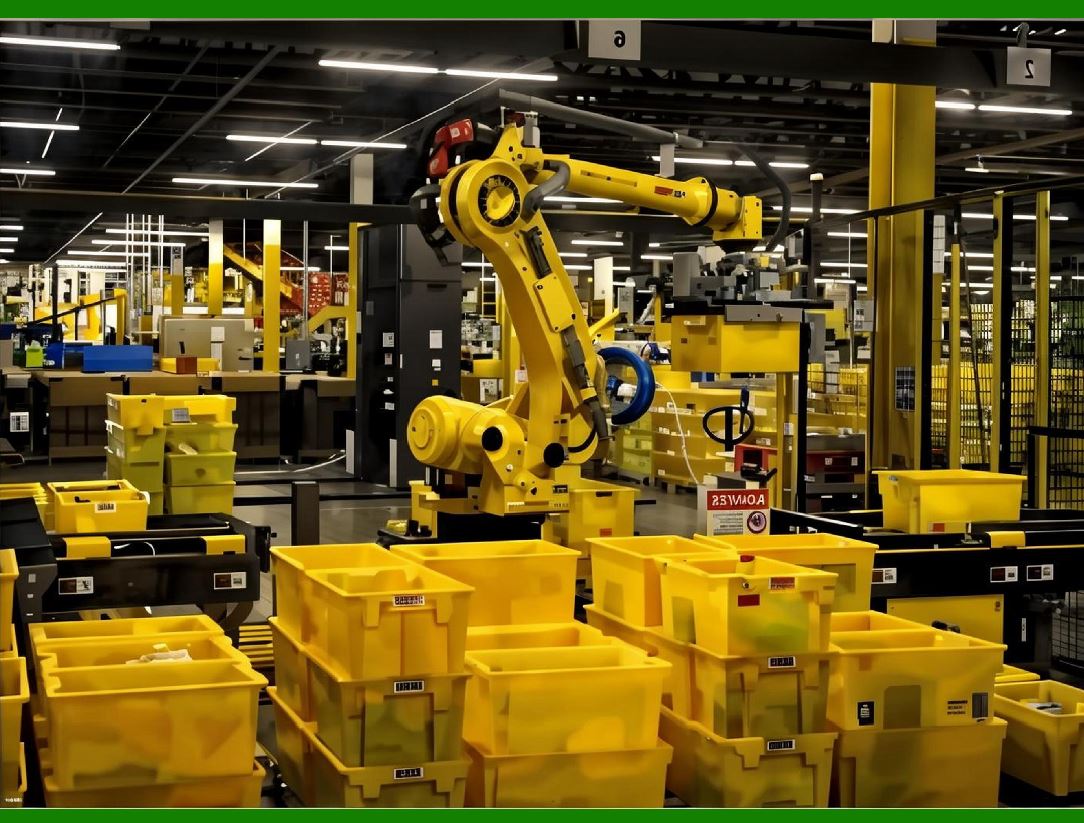
Articulated robots are the most widely used industrial robot configuration in the world. They are built from a series of rotating joints connected in sequence, much like the human arm. The most common version has six axes, which gives it the ability to reach almost any point within its working envelope from almost any angle. This chapter explains how articulated robots are built, why their joint arrangement matters, and how they compare with other configurations. The main focus, however, is on real applications across many industries, including automotive manufacturing, electronics assembly, food processing, metalworking, plastics, foundry work, logistics, healthcare, aerospace, and many others. By the end of the chapter, the reader should understand not only what an articulated robot is but also why it has become the default choice for so many demanding tasks. |
|
7.1 What Makes an Articulated Robot Different |
An articulated robot is a manipulator whose links are connected by a series of joints that rotate relative to one another. The word articulated comes from the Latin word for jointed, and that is exactly what this design is: a chain of jointed segments. The arrangement mimics the human arm, where the shoulder, elbow, and wrist work together to position the hand in space. |
The most familiar articulated robot has six axes. Each axis is a joint that can rotate. The first three axes are usually called the arm axes. They are responsible for positioning the wrist in space. The last three axes are called the wrist axes. They are responsible for orienting the tool or end effector. When all six axes work together, the robot can place its tool at a chosen point and also choose the angle at which the tool approaches that point. This is what engineers call full six degree of freedom positioning. |
The key advantage of this design is flexibility. A robot with six rotating joints can reach into confined spaces, approach a workpiece from below or from the side, and fold itself into a compact posture when needed. Other configurations, such as Cartesian robots that move along straight rails, or SCARA robots that move mainly in a horizontal plane, cannot match this versatility. That is why articulated robots dominate industries where parts are complex, where access is difficult, and where the same robot must perform many different tasks. |
|
7.2 A Short History and Why the Design Became Dominant |
The first industrial robot, installed in the early 1960s, was an articulated arm. It was used for simple tasks such as picking up and placing parts. It had a limited number of axes and was controlled by a simple program. Over the following decades, improvements in motors, gearboxes, controllers, and sensors made articulated robots faster, more accurate, and more reliable. |
The automotive industry was the first major adopter. Car bodies are large, heavy, and awkward to reach. An articulated robot could be mounted on the floor, on a wall, or on a ceiling, and could reach into the car body to weld, paint, or handle parts. As the automotive industry grew, so did the demand for articulated robots. Other industries soon followed. |
Today, articulated robots are made in many sizes. Small units can lift a few kilograms and fit on a bench. Large units can lift several hundred kilograms and reach several meters. Some are designed for clean rooms, some for food handling, some for harsh environments such as foundries and welding shops. The basic jointed arm design remains the same, but the details are adapted to the task. |
|
7.3 The Main Parts of an Articulated Robot |
A typical articulated robot has a base, a rotating body, a lower arm, an upper arm, a wrist, and a mounting flange for the tool. The base is bolted to the floor or to a pedestal. The first axis rotates the whole body left and right. The second axis tilts the lower arm up and down. The third axis tilts the upper arm up and down. The fourth axis rotates the wrist around the arm axis. The fifth axis tilts the wrist up and down. The sixth axis rotates the tool flange. |
Each joint is driven by a motor, usually an electric servo motor. The motor turns a gearbox that multiplies torque and reduces speed. The gearbox is often a cycloidal drive or a harmonic drive, which provides high reduction in a compact package. Sensors in each joint report the angle of the joint to the controller. The controller uses this information to calculate where the tool is and how to move it. |
The arm links are usually made of cast aluminum or steel. They must be stiff enough to resist bending under load, but light enough to move quickly. Cables for power and signals run through the arm or along its outside. In some designs, the cables are routed internally to protect them from dust, water, and physical damage. |

|
7.4 Why Six Axes Matter |
Six axes give a robot the ability to reach a point in space and also to orient the tool in any direction. This is not just a convenience. Many industrial tasks require the tool to approach the workpiece at a specific angle. For example, when welding two metal plates together, the welding torch must be perpendicular to the seam, or at a controlled angle, to produce a good weld. When painting a car door, the spray gun must be kept at a constant distance and angle to avoid uneven paint. When inserting a screw, the driver must be aligned with the hole. A robot with fewer axes cannot always do this. |
Some tasks require even more than six axes. For example, a robot mounted on a moving rail has an extra axis. A robot holding a workpiece on a positioner may have an extra axis in the positioner. These extra axes are called external axes. They allow the robot to work on very large parts or to keep the workpiece in the best position for the robot to reach. |
It is also possible to have redundant robots with seven or more axes. These robots can reach around obstacles more easily and can change their posture without moving the tool. However, they are more complex and more expensive, so six axis robots remain the most common. |
|
7.5 Common Mounting Positions |
Articulated robots are versatile in how they can be mounted. The most common mounting is on the floor. The robot stands upright and reaches forward and upward. This is suitable for many tasks, such as machine tending, palletizing, and assembly. |
Another common mounting is on the ceiling or on an overhead gantry. In this position, the robot hangs upside down. This is useful when the robot needs to reach down into a work area, such as in a welding cell where the parts are below the robot. It saves floor space and allows the robot to reach into places that a floor mounted robot cannot. |
Wall mounting is also possible. The robot is attached to a vertical surface and reaches out horizontally. This is useful in tight spaces, such as between machines. Some robots are designed to be mounted on a slope or on a moving platform, such as an automated guided vehicle. In all cases, the robot controller must be told how the robot is mounted so that it can calculate the correct joint angles. |

|
7.6 The Working Envelope |
Every articulated robot has a working envelope, which is the volume of space that the tool can reach. The shape of the envelope depends on the lengths of the arm links and the range of motion of each joint. For a typical six axis robot, the envelope looks like a complex, rounded shape that surrounds the robot. It is not a simple sphere because the joints have limits. |
The working envelope is important when choosing a robot. The robot must be able to reach all the points where it needs to work, plus some extra space for approach and retreat. If the robot cannot reach a point, the task cannot be done without moving the robot or the workpiece. Engineers use simulation software to check the envelope and to plan robot motions before the robot is installed. |
It is also important to note that the robot may not be able to reach a point from every angle. Some points near the edge of the envelope may only be reachable with the arm fully extended. In that posture, the robot may be less stiff and less accurate. Engineers must consider not just whether a point is reachable, but also whether it is reachable with a good posture. |

|
7.7 Speed, Payload, and Accuracy |
Articulated robots are available in a wide range of speeds, payloads, and accuracies. Small robots can move very fast and are used for tasks such as picking and placing small electronic parts. Large robots move more slowly but can lift heavy loads. The payload is the mass that the robot can carry at the tool flange, including the weight of the tool itself. If the payload is exceeded, the robot may not be able to move accurately, and the joints may be damaged. |
Accuracy is the ability of the robot to go to a commanded point. Repeatability is the ability to return to the same point again and again. Articulated robots are usually very repeatable, often within a fraction of a millimeter. Absolute accuracy is more difficult because of manufacturing tolerances, gear backlash, and deflection under load. For tasks such as offline programming, where the robot path is generated on a computer and then downloaded to the robot, absolute accuracy is important. Many robots can be calibrated to improve absolute accuracy. |
|
7.8 The Importance of the End Effector |
The end effector is the tool at the end of the robot arm. It is the part that actually does the work. The robot itself is just a positioning device. The end effector determines what the robot can do. Common end effectors include grippers, welding torches, paint spray guns, screwdrivers, drills, milling cutters, vacuum cups, and magnetic grippers. |
The choice of end effector is critical. A gripper must be able to hold the workpiece securely without damaging it. A welding torch must be able to deliver the right amount of heat and filler metal. A paint gun must produce the right spray pattern. The end effector must also be compatible with the robot in terms of weight, size, and mounting flange. In many applications, the end effector is designed specifically for the task, and it may include sensors, cameras, or other devices. |

|
7.9 Controllers and Programming |
The robot controller is the computer that controls the robot. It reads the program, calculates the joint angles, and sends commands to the motors. It also monitors the robot for errors, such as overloads or collisions. Modern controllers are powerful and can handle complex motion planning, sensor integration, and communication with other machines. |
Programming an articulated robot can be done in several ways. Online programming means using a teach pendant to move the robot to each point and record the position. This is common for simple tasks. Offline programming means using software on a computer to create the robot path, which is then downloaded to the robot. This is common for complex tasks and for tasks where the robot must be kept in production. Some robots can be programmed by guiding the arm by hand, which is called lead through programming. This is useful for tasks such as painting, where the motion is smooth and continuous. |
|
7.10 Safety |
Articulated robots can move quickly and with great force. Safety is therefore a major concern. Traditional safety measures include fences, light curtains, and interlocked gates. When a person enters the robot cell, the robot stops. In recent years, collaborative robots have been developed. These are articulated robots designed to work safely alongside humans. They use sensors and lightweight arms to detect contact and stop before injuring a person. Collaborative robots are often used for tasks such as assembly, machine tending, and inspection. |
Even with collaborative robots, a risk assessment is required. The robot must be installed and programmed so that it does not create hazards. The end effector must be designed so that it does not pinch or crush. The speed and force of the robot must be limited. Safety is not just a matter of technology; it is also a matter of training and procedure. |
|
7.11 Applications in the Automotive Industry |
The automotive industry is the largest user of articulated robots. Robots are used in almost every stage of car manufacturing. In the body shop, robots weld the car body together. They hold the metal panels in place and apply spot welds or laser welds. The robots are large and powerful, and they work at high speed. They are mounted on pedestals or on overhead gantries. Some robots carry welding guns, while others carry grippers to move panels. |
In the paint shop, robots apply paint to the car body. Painting is a difficult task for humans because of the fumes and the repetitive motion. Robots can paint with consistent quality and can reach all parts of the body. They are often mounted on rails or on moving conveyors so that they can follow the car as it moves. The robots are designed to be explosion proof because paint solvents are flammable. |
In the assembly shop, robots install parts such as seats, windshields, and batteries. They use grippers and vacuum cups to handle the parts. Some robots work alongside humans, while others work in fully automated cells. In the final inspection, robots may use cameras to check the fit and finish of the car. |
Articulated robots are also used in the manufacture of automotive components. For example, they are used to weld exhaust systems, to assemble transmissions, to handle engine blocks, and to load and unload machining centers. The automotive industry demands high reliability and high speed, and articulated robots meet these demands. |

|
7.12 Applications in Electronics and Semiconductor Manufacturing |
The electronics industry uses articulated robots for many tasks. Small articulated robots are used to pick and place electronic components on printed circuit boards. They are fast and accurate, and they can work in clean rooms. They are also used to assemble small devices such as smartphones and laptops. In these applications, the robot may use a vacuum nozzle or a small gripper to handle the parts. |
In semiconductor manufacturing, articulated robots are used to handle silicon wafers. The wafers are fragile and must be handled in a clean environment. The robots are designed to be clean room compatible, with special bearings and lubricants that do not produce particles. They move wafers between cassettes, process chambers, and inspection stations. Some robots are designed to work in vacuum, where they must not outgas or create contamination. |
Articulated robots are also used in the testing of electronic products. They can plug cables into connectors, press buttons, and perform other repetitive tasks. They can be equipped with sensors to measure force, torque, or electrical signals. This allows them to test products automatically and to detect defects. |

|
7.13 Applications in Food and Beverage Processing |
The food and beverage industry uses articulated robots for tasks such as picking, packing, palletizing, and processing. Food products are often delicate and irregular in shape, so the robot must be able to handle them gently. Vision systems are often used to locate the products and to guide the robot. The robot may use soft grippers, vacuum cups, or scoops to pick up the products. |
In meat processing, robots are used to cut, trim, and debone meat. This is a difficult task because the meat is soft and variable. Robots with force sensors and vision systems can adapt to the shape of the meat and cut it accurately. In bakery, robots are used to pick and place bread, cakes, and pastries. They can also decorate cakes and apply toppings. In beverage processing, robots are used to palletize bottles, cans, and cases. They can handle heavy loads and work at high speed. |
Food safety is a major concern. Robots used in food processing must be made of materials that are easy to clean and that do not harbor bacteria. They must be able to withstand washdown with water and cleaning chemicals. Stainless steel and food grade plastics are common. The robots must also be designed to prevent lubricants from contaminating the food. |
|
7.14 Applications in Metalworking and Machining |
Articulated robots are used in metalworking for tasks such as welding, cutting, grinding, deburring, and polishing. Welding is one of the most common applications. Robots can perform spot welding, MIG welding, TIG welding, and laser welding. They can weld complex shapes and can work in hazardous environments. They are often used in the fabrication of metal structures, such as frames, brackets, and enclosures. |
Cutting is another common application. Robots can carry plasma torches, laser heads, or waterjet nozzles. They can cut complex shapes from metal plates and tubes. They can also cut holes and slots. Grinding and deburring are used to remove sharp edges and to smooth surfaces. Robots can carry grinding wheels, belt sanders, or deburring tools. They can apply consistent pressure and can work on complex shapes. |
Polishing is used to create a smooth, shiny surface. Robots can carry polishing pads and can apply polishing compound. They can follow complex paths and can maintain consistent pressure. This is important for products such as faucets, handles, and trim pieces. |
In machining, articulated robots are used to load and unload machine tools. They can pick up raw parts, place them in the machine, and remove finished parts. They can also change tools and clean the machine. This reduces the need for human operators and increases productivity. |

|
7.15 Applications in Plastics and Rubber |
The plastics and rubber industry uses articulated robots for tasks such as injection molding, blow molding, and extrusion. In injection molding, robots are used to remove parts from the mold, to trim flash, and to place inserts. They can work quickly and can handle hot parts. They can also apply release agents and inspect parts. |
In blow molding, robots are used to handle the parison and to remove the finished bottle or container. They can also trim and deflash the parts. In extrusion, robots are used to cut the extruded profile to length and to stack the pieces. They can also handle the material before and after extrusion. |
Rubber processing is similar. Robots are used to handle rubber compounds, to load and unload presses, and to trim and inspect parts. They can work in dirty and hot environments. They can also apply adhesives and assemble rubber components. |
|
7.16 Applications in Foundry and Die Casting |
Foundries and die casting shops are harsh environments. There is heat, dust, and molten metal. Articulated robots are used to handle parts, to pour molten metal, to remove castings from dies, and to clean and finish castings. They are often protected by heat shields, covers, and special lubricants. They may also be designed to work in high ambient temperatures. |
In die casting, a robot may be used to ladle molten metal into the shot sleeve. It must move quickly and accurately to avoid spills. It may also be used to remove the casting from the die and to quench it in a cooling bath. After casting, the robot may trim the flash, grind the gates, and inspect the part. This reduces the exposure of human workers to heat and fumes. |
In sand casting, robots are used to handle sand molds and cores. They can also pour molten metal into the molds. They can remove the casting from the mold and clean the sand off. They can also grind and finish the casting. |

|
7.17 Applications in Logistics and Warehousing |
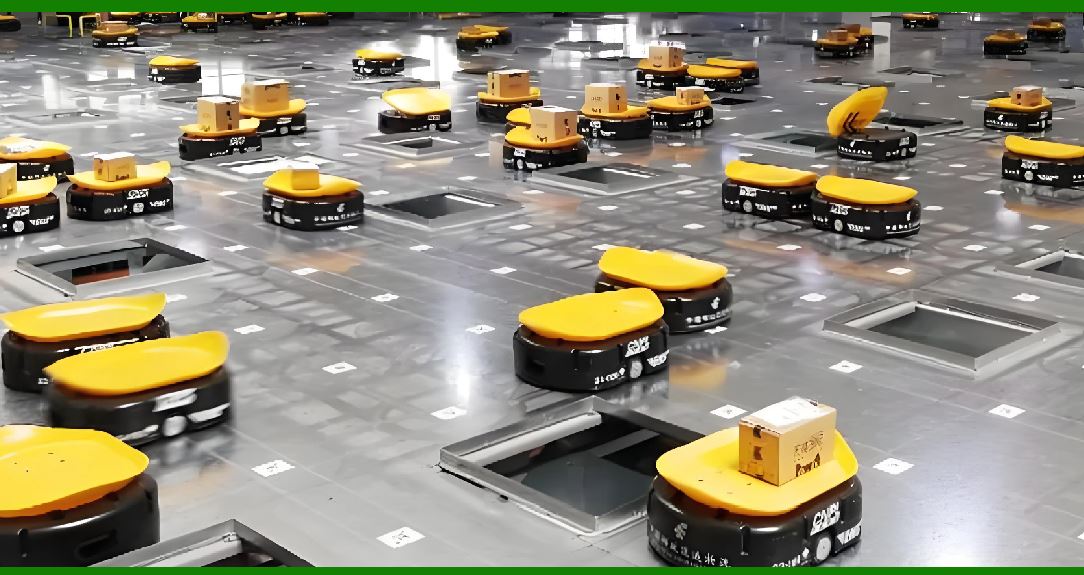
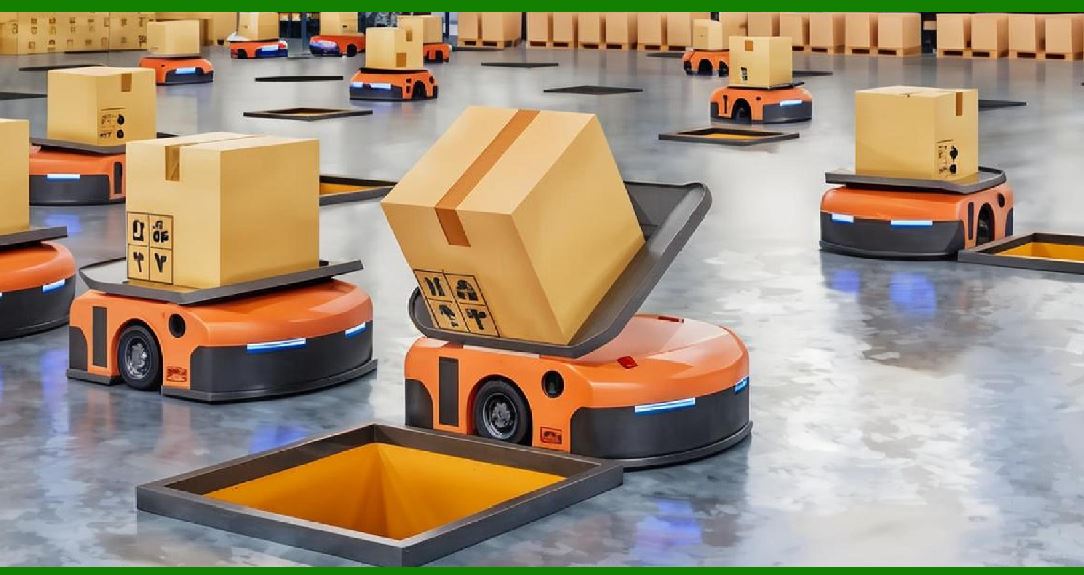
Articulated robots are used in logistics and warehousing for tasks such as palletizing, depalletizing, order picking, and sorting. Palletizing is the process of stacking cases or bags onto a pallet. A robot with a gripper or vacuum cup can pick up a case and place it on the pallet in a precise pattern. It can build a stable pallet load and can work at high speed. Depalletizing is the reverse process. The robot removes cases from a pallet and places them on a conveyor. |
Order picking is the process of selecting items from shelves or bins to fill an order. Articulated robots with vision systems can identify items and pick them up. They can place them in a carton or on a conveyor. Sorting is the process of separating items by destination. Robots can read labels or barcodes and sort the items accordingly. |
In e commerce warehouses, articulated robots are used to pick items from shelves and place them in bins. They may travel on mobile platforms or be mounted on overhead gantries. They work alongside humans and can handle a wide variety of items. |
|
7.18 Applications in Healthcare and Laboratories |
Articulated robots are used in healthcare for tasks such as surgery, rehabilitation, and laboratory automation. Surgical robots are articulated arms that are controlled by a surgeon. They can hold instruments and move them with great precision. They can filter out hand tremor and can work through small incisions. This reduces trauma and speeds recovery. Examples include robots for prostate surgery, heart surgery, and orthopedic surgery. |
Rehabilitation robots are used to help patients recover from stroke or injury. They can guide the patient's arm or leg through a range of motion. They can provide resistance and can measure progress. They can also be used for gait training. |
In laboratories, articulated robots are used to handle samples, to pipette liquids, and to perform tests. They can work in clean rooms and can handle hazardous materials. They can also work overnight and on weekends, increasing throughput. They are often integrated with analytical instruments and laboratory information systems. |

|
7.19 Applications in Aerospace and Defense |
The aerospace industry uses articulated robots for tasks such as drilling, riveting, welding, and painting. Aircraft structures are large and complex, and they require many holes to be drilled and many rivets to be installed. Robots can do this quickly and accurately. They can also apply sealant and paint. They can work on wings, fuselage sections, and engine parts. |
In defense, articulated robots are used to manufacture vehicles, weapons, and equipment. They can also be used to handle hazardous materials, such as explosives and radioactive materials. They can be teleoperated, meaning a human controls them from a safe distance. They can also be autonomous, following a preprogrammed path. |
Aerospace and defense applications often require high accuracy and high reliability. The robots must be able to work with tight tolerances and must be able to operate in difficult environments. They may also need to be certified for safety and quality. |

|
7.20 Applications in Construction and Agriculture |
Articulated robots are beginning to be used in construction and agriculture. In construction, robots can be used to lay bricks, to tie rebar, to weld steel, and to paint walls. They can work in dangerous environments and can reduce the need for human labor. They can also be used to inspect bridges and buildings. |
In agriculture, articulated robots are used to pick fruits and vegetables, to prune plants, and to apply pesticides. They can use vision systems to identify ripe fruit and to pick it without damaging the plant. They can work in fields and greenhouses. They can also be used in livestock management, such as feeding and milking. |
These applications are still developing, but they show the versatility of articulated robots. As sensors and artificial intelligence improve, robots will be able to do more tasks in these industries. |

|
7.21 Applications in Education and Research |
Articulated robots are used in education and research to teach robotics and to develop new technologies. Small robots are used in universities and schools to teach programming, kinematics, and control. They are safe and easy to use. They can be equipped with different end effectors and sensors. They can also be used for competitions, such as robot soccer and robot sumo. |
In research, articulated robots are used to study human motion, to develop new control algorithms, and to test new sensors. They can be used to simulate manufacturing processes and to evaluate new designs. They can also be used in fields such as biomechanics, where they help to understand how the human body moves. |

|
7.22 Applications in Entertainment and Service |
Articulated robots are used in entertainment for shows, movies, and theme parks. They can be used to move props, to control cameras, and to perform on stage. They can be programmed to move in sync with music and lights. They can also be used in interactive exhibits, where visitors can control them. |
In service industries, articulated robots are used for tasks such as cleaning, serving food, and providing information. They can be used in hotels, restaurants, and airports. They can also be used in hospitals to deliver supplies and to disinfect rooms. These applications are growing as robots become more capable and more affordable. |

|
7.23 Choosing an Articulated Robot |
When choosing an articulated robot, engineers must consider many factors. The first is the payload. The robot must be able to lift the tool and the workpiece. The second is the reach. The robot must be able to reach all the points where it needs to work. The third is the accuracy and repeatability. The robot must be able to perform the task within the required tolerances. The fourth is the speed. The robot must be able to work fast enough to meet production requirements. The fifth is the environment. The robot must be able to withstand the conditions in which it will work, such as heat, dust, water, or chemicals. The sixth is the mounting. The robot must be able to be mounted in the available space. The seventh is the controller and programming. The robot must be easy to program and must be compatible with the existing systems. The eighth is the cost. The robot must be affordable and must provide a good return on investment. The ninth is the support. The robot manufacturer must provide good service and spare parts. |

|
7.24 Integration and Installation |
Integrating an articulated robot into a production line is a complex task. It involves designing the workcell, selecting the end effector, programming the robot, and connecting it to other machines. It also involves safety systems, such as fences, light curtains, and interlocks. The robot must be calibrated and tested before it is put into production. |
Installation begins with a site survey. Engineers check the floor for level and strength. They check the power supply and the compressed air supply. They check the environment for temperature, humidity, and dust. They also check the access for delivery and installation. |
The robot is then mounted and connected. The controller is programmed and the end effector is attached. The robot is then taught the path and the tasks. It is tested at low speed and then at full speed. Safety systems are checked. Operators are trained. Finally, the robot is put into production. |

|
7.25 Maintenance and Troubleshooting |
Articulated robots require regular maintenance to keep them working properly. This includes checking the lubrication, the belts, the cables, and the connectors. It also includes checking the accuracy and the repeatability. The robot should be cleaned and inspected regularly. Worn parts should be replaced. |
Troubleshooting involves identifying the cause of a problem and fixing it. Common problems include motor failures, gearbox wear, cable breaks, and sensor faults. The controller may display an error code that helps to identify the problem. Maintenance technicians use special tools and software to diagnose and repair the robot. |
Preventive maintenance is important. It can reduce downtime and extend the life of the robot. It can also improve safety and quality. Many robot manufacturers offer maintenance contracts and remote monitoring services. |
|
7.26 The Future of Articulated Robots |
The future of articulated robots is bright. They will become more capable, more intelligent, and more affordable. They will be able to work more closely with humans, thanks to advances in sensors and artificial intelligence. They will be able to learn new tasks by demonstration and by trial and error. They will be able to adapt to changes in their environment and to handle unstructured tasks. |
They will also become more connected. They will communicate with other machines, with cloud services, and with each other. They will be part of the industrial internet of things. This will allow them to be monitored and controlled remotely. It will also allow them to share data and to learn from each other. |
They will also become more energy efficient. They will use lighter materials and more efficient motors. They will recover energy during braking. They will be designed for recycling and for reduced environmental impact. |
|
7.27 A Detailed Summary of Applications |
Articulated robots are used in a wide range of industries. In the automotive industry, they weld, paint, assemble, and inspect cars and components. In electronics, they assemble circuit boards, handle wafers, and test products. In food and beverage, they pick, pack, palletize, and process food. In metalworking, they weld, cut, grind, deburr, and polish metal parts. In plastics and rubber, they remove parts from molds, trim flash, and assemble components. In foundries and die casting, they handle molten metal, remove castings, and finish parts. In logistics and warehousing, they palletize, depalletize, pick orders, and sort items. In healthcare and laboratories, they assist in surgery, rehabilitation, and sample handling. In aerospace and defense, they drill, rivet, weld, and paint aircraft and vehicles. In construction and agriculture, they lay bricks, tie rebar, pick fruits, and prune plants. In education and research, they teach robotics and develop new technologies. In entertainment and service, they perform in shows, serve food, and provide information. |
The common thread is that articulated robots are flexible, accurate, and reliable. They can be used for many different tasks and can be adapted to many different environments. They are a key tool in modern manufacturing and will continue to be important in the future. |
|
7.28 Conclusion |
Articulated robots are the workhorses of industrial automation. Their jointed design, inspired by the human arm, gives them the flexibility to reach into confined spaces and to approach workpieces from many angles. With six axes, they can position and orient tools with great precision. They are available in many sizes and configurations, and they can be mounted in many ways. They are used in almost every industry, from automotive to healthcare, from food to aerospace. They are supported by powerful controllers, advanced sensors, and a wide range of end effectors. They are safe when properly installed and programmed, and they can work alongside humans in collaborative applications. As technology advances, articulated robots will become even more capable, more intelligent, and more integrated into our lives. For anyone interested in industrial robotics, understanding articulated robots is essential. They are the foundation of modern automation and will remain so for many years to come. |
 cs@easiersoft.com