Chapter 8: Articulated Advantages |
8.1 Chapter Summary |
The articulated robot is the most widely used mechanical configuration in modern industry. Its design mimics the human arm, using a series of rotary joints connected by rigid links to position and orient a tool or end effector in three-dimensional space. This chapter explains why that design has become so dominant. The core advantages are a large working envelope relative to the robot's physical size, fast movement capability, flexible mounting options including floor, wall, and ceiling positions, and the ability to achieve almost any end-effector orientation because joint ranges often exceed plus or minus 360 degrees. Rather than focusing on mathematics or engineering formulas, this chapter concentrates on real applications across many industries. It shows how articulated robots weld car bodies, assemble electronics, package food, handle pharmaceuticals, serve warehouses, assist surgeons, explore space, and perform dozens of other tasks. The chapter begins with a brief overview of the advantages, then examines each advantage in detail with practical examples, and ends with a detailed summary that ties the discussion together. |
|
8.2 Introduction: Why Articulated Robots Dominate |
If you walk into almost any modern factory, you will see them. They look like mechanical arms, often painted yellow, orange, white, or gray. Some are small enough to sit on a tabletop. Others are larger than a person and can lift hundreds of kilograms. They weld, paint, assemble, pack, palletize, inspect, and polish. They work in car plants, electronics factories, food processing lines, pharmaceutical clean rooms, warehouses, hospitals, and even on the International Space Station. These are articulated robots. |
The word 'articulated' means jointed. An articulated robot is built from a series of links connected by rotary joints, much like the shoulder, elbow, and wrist of a human arm. The first joint usually rotates the whole arm around a vertical axis. The second joint raises or lowers the upper arm. The third joint bends the elbow. Additional joints in the wrist orient the tool. Because each joint can rotate through a wide range, often more than a full turn, the robot can reach around obstacles, flip its wrist over, and approach a task from almost any direction. |
This configuration is not the only one available. There are Cartesian robots that move along straight rails, SCARA robots that work mainly in a horizontal plane, delta robots that use parallel linkages for extremely fast pick-and-place, and cylindrical robots that combine rotation and linear motion. Each has strengths. But the articulated robot offers a combination of reach, speed, flexibility, and orientation capability that no other single configuration matches. That is why it accounts for a large share of the industrial robot market and why it appears in so many different industries. |
The purpose of this chapter is to explain the advantages of the articulated design in plain language and to illustrate those advantages with real applications. The chapter avoids formulas and tables. It uses examples from automotive manufacturing, electronics, food and beverage, pharmaceuticals, logistics, aerospace, healthcare, agriculture, construction, entertainment, and other fields. By the end, the reader should understand not only what an articulated robot can do but also why its particular mechanical arrangement makes those tasks possible. |

|
8.3 A Brief Overview of the Advantages |
Before examining each advantage in depth, it is useful to list them briefly. |
First, articulated robots have a large working envelope relative to their physical size. A single arm mounted on a base can reach forward, backward, sideways, up, and down, covering a volume that is much larger than the machine itself. This makes them efficient users of floor space. |
Second, they move fast. Rotary joints driven by electric motors can accelerate and decelerate quickly. This speed translates into high throughput in tasks such as picking, placing, welding, and packaging. |
Third, they can be mounted in different orientations. A articulated robot can be bolted to the floor, hung from a ceiling, attached to a wall, or mounted on a moving platform. This flexibility allows engineers to fit robots into crowded production lines and to use space that would otherwise be wasted. |
Fourth, they can achieve arbitrary end-effector orientation. Because the wrist joints often rotate more than 360 degrees, the tool can be pointed in almost any direction without the arm having to take a long path around the workpiece. This is essential for welding, painting, drilling, and inspection tasks where the tool must follow complex curves. |
Fifth, they are versatile. The same robot can be reprogrammed to perform different tasks. A robot that welds one day can be fitted with a gripper and used for machine tending the next. This reprogrammability extends the life of the equipment and reduces the need for specialized machines. |
Sixth, they are precise and repeatable. Modern articulated robots can position a tool with accuracy measured in fractions of a millimeter and repeat that position millions of times. This makes them suitable for electronics assembly, surgical assistance, and other high-precision work. |
Seventh, they can handle heavy payloads. Large articulated robots can lift hundreds of kilograms, making them useful in foundries, forging shops, and construction. |
Eighth, they are reliable. With proper maintenance, an articulated robot can run for many years, often for tens of thousands of hours, with minimal downtime. |
These advantages combine to make articulated robots the workhorse of industrial automation. The following sections explore each advantage in more detail, with examples from many industries. |
|
8.4 Advantage One: Large Working Envelope |
The working envelope of a robot is the volume of space that its end effector can reach. For an articulated robot, this envelope is shaped roughly like a sphere or a pear, extending from the base outward and around. Because the arm can bend at the elbow and rotate at the shoulder, it can reach both near and far, high and low, left and right. A robot with a relatively small footprint can cover a surprisingly large volume. |
Consider a typical six-axis articulated robot with a reach of about 1.5 meters. Its working envelope might extend from just behind its base to a point 1.5 meters away in any horizontal direction, and from below its base to well above its head. If you imagine a sphere 3 meters in diameter centered near the robot's shoulder, you are close to visualizing the reachable space. The robot itself might occupy a square meter of floor space. That ratio of reach to footprint is a major advantage in crowded factories. |
This large envelope means fewer robots are needed to cover a work area. In a car body assembly line, for example, a single articulated robot mounted on a pedestal can reach multiple welding points on a vehicle frame. Instead of installing several specialized welders, engineers can use one robot that moves its arm to each point in sequence. The robot can weld the left side, then rotate and weld the right side, then reach over the top. This reduces cost and complexity. |
In a warehouse, a articulated robot mounted on a mobile base can reach shelves at different heights and depths. Its arm can extend into a pallet, pick a box, retract, and place the box on a conveyor. Because the envelope is large, the robot does not need to move its base for every pick. It can serve a whole section of shelving from one position. |
In agriculture, articulated robots are used to pick fruit from trees. The robot's arm can reach into the canopy, rotate its wrist to match the angle of the fruit, and gently grasp it. A large working envelope allows one robot to cover several trees, reducing the number of machines needed in an orchard. |
In space, the Canadarm and similar robotic arms have used articulated designs to reach around spacecraft and satellites. The arm can extend far from its base, inspect the hull, and grasp payloads. The large envelope relative to the base is essential when the base is a spacecraft with limited attachment points. |
The large working envelope also allows articulated robots to work in cells with other equipment. A robot can reach over a conveyor, around a fixture, or into a machine tool. It can load and unload parts from different sides. This flexibility is difficult to achieve with simpler configurations that move only in straight lines. |

|
8.5 Advantage Two: Fast Movement |
Articulated robots are fast. Their rotary joints are driven by electric motors, often through gear reducers, and the arm is designed to be stiff but lightweight. As a result, the robot can accelerate quickly, move at high speed, and stop precisely. In many applications, speed is measured in cycles per minute or parts per hour, and articulated robots excel at both. |
In electronics manufacturing, articulated robots are used to pick tiny components from feeders and place them on circuit boards. The robot's arm can move from one feeder to another in a fraction of a second, orient the component, and place it with high accuracy. The speed of the articulated design helps electronics factories produce millions of devices per year. |
In food packaging, articulated robots pick products from a conveyor and place them into boxes or trays. The robot may perform hundreds of picks per minute. Its ability to accelerate and decelerate smoothly is important because food products can be delicate. The robot can move quickly without damaging the product. |
In automotive welding, articulated robots move welding guns along seams at high speed. A single robot can complete dozens of welds in a minute. The speed of the robot helps car manufacturers produce a vehicle every few seconds on a moving assembly line. |
In warehouse logistics, articulated robots mounted on mobile platforms move through aisles, pick items from shelves, and place them into totes. The robot's arm can extend, grasp, and retract quickly, allowing the mobile robot to serve many shelves in a short time. |
Speed is not only about raw velocity. It is also about acceleration and settling time. An articulated robot can start and stop quickly because its joints are balanced and its motors are powerful. This reduces the time spent waiting for the robot to stabilize before it performs a task. In high-speed assembly, even a few milliseconds saved per cycle can add up to significant production gains over a year. |
Fast movement also enables articulated robots to work in collaboration with humans. In a collaborative cell, a robot might move quickly to a safe position and then slow down when a human is nearby. The ability to change speed smoothly is a safety feature as well as a productivity feature. |

|
8.6 Advantage Three: Floor, Wall, and Ceiling Mounting Options |
One of the most practical advantages of articulated robots is that they can be mounted in almost any orientation. The base can be bolted to the floor, hung from a ceiling, attached to a wall, or mounted on a column, a rail, or a mobile platform. This flexibility allows engineers to fit robots into spaces where a floor-mounted robot would not work. |
Ceiling mounting is common in food packaging and electronics assembly. By hanging the robot from above, engineers free up floor space for conveyors, workers, and other equipment. The robot reaches down to pick and place products. This is especially useful in clean rooms where floor space is limited and where keeping the floor clear makes cleaning easier. |
Wall mounting is used in machine tending. A robot mounted on a wall can reach into a machine tool, load a part, and retract. The wall mount keeps the robot out of the way of operators and chip conveyors. It also allows the robot to work in a narrow aisle where a floor-mounted robot would block traffic. |
Floor mounting is the most common because it is simple and stable. A heavy base bolted to a concrete floor provides a rigid foundation for the arm. Floor-mounted robots are used in welding, palletizing, assembly, and many other tasks. |
In some applications, the robot is mounted on a linear rail or a mobile base. This combines the reach of the articulated arm with the travel of a rail or vehicle. For example, a robot on a rail can serve several machines along a production line. A robot on a mobile base can move through a warehouse, picking and placing items. The mounting flexibility of the articulated design makes these hybrid systems possible. |
Mounting orientation also affects the robot's working envelope and payload capacity. A ceiling-mounted robot may have a slightly different reachable space than a floor-mounted one because gravity acts differently on the arm. Engineers must consider these factors when designing a cell. But the fundamental ability to mount the robot in different orientations is a major advantage. |
In aerospace manufacturing, articulated robots are sometimes mounted on overhead gantries to work on large aircraft structures. The robot hangs down and moves along the gantry, reaching different parts of the fuselage. This would be impossible with a floor-mounted robot because the aircraft is too large. |
In construction, articulated robots are mounted on trucks or scaffolding to perform tasks such as bricklaying, painting, or inspection. The ability to mount the robot on a mobile platform allows it to work at different heights and locations. |

|
8.7 Advantage Four: Arbitrary End-Effector Orientation |
The wrist of an articulated robot typically has two or three joints. These joints allow the end effector to be oriented in almost any direction. Many articulated robots have wrist joints that can rotate more than 360 degrees, meaning the tool can spin continuously without hitting a limit. This is a critical advantage for tasks that require complex tool paths. |
In welding, the robot must hold the welding gun at a specific angle to the seam. As the seam curves, the robot must rotate its wrist to keep the correct angle. If the wrist could not rotate freely, the robot would have to stop, reposition its arm, and start again. With a wide wrist range, the robot can follow the seam smoothly and continuously. |
In painting, the robot must point the spray gun at the surface from the correct distance and angle. Car bodies have complex curves. The robot's wrist rotates to keep the gun perpendicular to the surface as it moves along the body. This ensures an even coat of paint. The ability to orient the gun arbitrarily is essential for a quality finish. |
In drilling and milling, the robot must hold the tool perpendicular to the surface. As the robot moves around a workpiece, its wrist rotates to maintain the correct orientation. This allows the robot to drill holes at different angles without repositioning the workpiece. |
In inspection, the robot may carry a camera or a sensor. The wrist rotates to point the sensor at the area of interest. For example, a robot inspecting an aircraft wing might need to look at both the top and bottom surfaces. The wrist can flip the sensor over without the arm having to make a large movement. |
In assembly, the robot may need to insert a part into a hole at a particular angle. The wrist rotates to align the part with the hole. If the hole is in a difficult location, the robot can approach from an unusual direction. This flexibility is one reason articulated robots are used in electronics assembly, where components must be placed at precise angles. |
In medical robotics, articulated arms are used to hold surgical instruments. The wrist joints allow the surgeon to move the instrument with many degrees of freedom, mimicking the human wrist. This is important for minimally invasive surgery, where the instrument must reach into the body through a small incision and then move in different directions. |
The ability to orient the end effector arbitrarily also makes articulated robots useful for tasks such as polishing, grinding, and deburring. The robot can follow the contour of a part and keep the tool at the correct angle. This is difficult with simpler robot configurations. |

|
8.8 Advantage Five: Versatility and Reprogrammability |
An articulated robot is a general-purpose machine. It can be programmed to perform many different tasks. The same robot can weld, paint, assemble, pack, inspect, and more, simply by changing the end effector and the program. This versatility extends the useful life of the robot and reduces the need for specialized equipment. |
In a small factory, a single articulated robot might be used for several jobs. In the morning, it might load parts into a CNC machine. In the afternoon, it might deburr those parts. At night, it might palletize finished products. The robot does not care what task it performs, as long as it has the right tool and the right instructions. |
In large factories, articulated robots are often arranged in cells. Each cell performs a specific task, but the robots can be reprogrammed if the product changes. When a car manufacturer introduces a new model, the welding robots can be reprogrammed to weld the new body. This is much cheaper than replacing the robots. |
In research and education, articulated robots are used to teach robotics, computer vision, and artificial intelligence. Students can program the robot to pick and place objects, draw pictures, or play games. The same robot can be used for many different experiments. |
In service industries, articulated robots are being developed for tasks such as cooking, cleaning, and assisting the elderly. These robots need to be versatile because they will encounter many different situations. The articulated design allows them to reach, grasp, and manipulate a wide variety of objects. |
Versatility also means that articulated robots can be integrated with other technologies. They can be equipped with cameras, force sensors, and grippers that allow them to adapt to their environment. They can be connected to networks and controlled by software that plans their motions. This makes them suitable for smart factories and Industry 4.0 applications. |

|
8.9 Advantage Six: Precision and Repeatability |
Articulated robots are precise. They can position a tool at a specific point in space with an accuracy of a fraction of a millimeter. They can repeat that position millions of times without significant deviation. This precision is essential for many modern manufacturing tasks. |
In electronics assembly, articulated robots place tiny components on circuit boards. The components may be smaller than a grain of rice. The robot must place them in the correct position and orientation. Any error could cause the circuit to fail. Articulated robots achieve the required precision through rigid construction, high-resolution encoders, and advanced control algorithms. |
In automotive manufacturing, articulated robots assemble engines and transmissions. They tighten bolts to precise torque values, insert pistons into cylinders, and align gears. The precision of the robot ensures that the engine runs smoothly and reliably. |
In aerospace, articulated robots drill holes in aircraft wings and fuselages. The holes must be positioned with extreme accuracy to ensure that the parts fit together properly. The robot can drill thousands of holes with consistent quality. |
In medical robotics, articulated arms are used for surgery. The robot can hold a surgical instrument steady and move it with sub-millimeter precision. This allows surgeons to perform delicate procedures with less risk of error. |
In pharmaceutical manufacturing, articulated robots handle vials, syringes, and other containers. They must move these items without contaminating them and with precise positioning. The robot's repeatability ensures that every dose is handled correctly. |
Precision is not only about position. It is also about force and motion. Articulated robots can be equipped with force sensors that allow them to apply a specific amount of force. This is useful for tasks such as polishing, where the robot must press the tool against the surface with a controlled force. |
Repeatability is the ability of the robot to return to the same position over and over. A good articulated robot can repeat its position within a few thousandths of a millimeter. This is important for tasks that require many identical operations, such as welding, assembly, and packaging. |

|
8.10 Advantage Seven: Payload Capacity |
Articulated robots come in many sizes. Small robots can lift a few kilograms. Large robots can lift hundreds of kilograms. This range of payload capacity makes articulated robots useful in many industries. |
In foundries, large articulated robots lift heavy castings and place them into machines. The robot must be strong enough to handle the weight and robust enough to withstand heat and dust. Articulated robots are well suited to this environment because their joints can be sealed and their arms can be made from heavy-duty materials. |
In forging, articulated robots move hot metal billets from a furnace to a press. The robot must withstand high temperatures and heavy loads. The articulated design allows the robot to reach into the furnace, grasp the billet, and place it in the press with precision. |
In construction, articulated robots lift and place heavy blocks, bricks, and panels. They can be mounted on trucks or scaffolding and used to build walls and structures. The payload capacity of the robot determines how large a piece it can handle. |
In logistics, articulated robots palletize heavy boxes and bags. A robot at the end of a production line can pick up a bag of cement or a box of canned goods and stack it on a pallet. The robot can handle many items per minute, reducing the need for manual labor. |
In agriculture, articulated robots lift and move heavy produce, such as melons or pumpkins. They can also handle bags of fertilizer or feed. The payload capacity of the robot must be matched to the task. |
Payload capacity is not just about lifting. It is also about accelerating and decelerating the load. A heavy load puts stress on the robot's joints and structure. Engineers must choose a robot that can handle the load at the required speed and with the required precision. Articulated robots are available in a wide range of payload capacities, so it is usually possible to find a model that fits the application. |

|
8.11 Advantage Eight: Reliability and Durability |
Articulated robots are reliable. They are built to run for many years with minimal maintenance. In factories, robots often operate twenty-four hours a day, seven days a week. They may perform millions of cycles without failure. This reliability is a major reason why manufacturers invest in articulated robots. |
The reliability of an articulated robot comes from several factors. The joints are designed to be robust. The motors and gear reducers are selected for long life. The arm is made from strong materials. The controller monitors the robot's condition and alerts operators if something is wrong. Regular maintenance, such as lubrication and inspection, keeps the robot in good condition. |
In automotive plants, articulated robots often run for ten or fifteen years before they are retired. Even then, they may be refurbished and used in less demanding applications. This long life reduces the cost of ownership and makes robots a good investment. |
In electronics manufacturing, articulated robots run in clean rooms for many years. They must be reliable because downtime is expensive. A single robot failure can stop an entire production line. |
In food processing, articulated robots run in wet and cold environments. They must be designed to withstand washing and sanitation. Stainless steel versions of articulated robots are available for these applications. |
In hazardous environments, such as nuclear facilities or chemical plants, articulated robots are used to handle materials that would be dangerous for humans. The robots must be reliable because maintenance may be difficult or impossible. Articulated robots are often chosen for these tasks because they are robust and can be designed for remote operation. |
Reliability also means safety. A reliable robot is less likely to malfunction and cause an accident. Articulated robots are equipped with safety features such as emergency stops, limit switches, and collision detection. These features help protect workers and equipment. |

|
8.12 Applications in the Automotive Industry |
The automotive industry is one of the largest users of articulated robots. Car manufacturing involves many tasks that are repetitive, dangerous, or require high precision. Articulated robots excel at these tasks. |
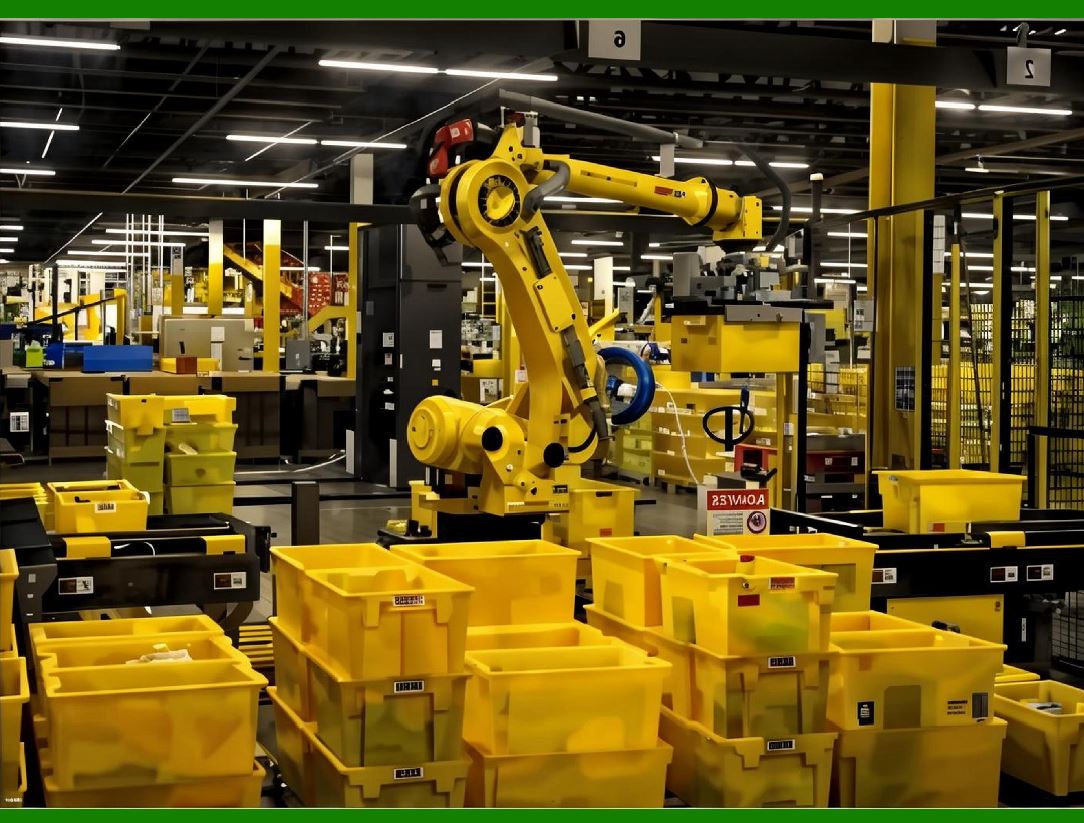
Welding is the most common application. A car body is made from hundreds of stamped metal parts that must be joined together. Articulated robots carry welding guns and weld the parts at thousands of points. The robots are fast, precise, and repeatable. They can weld in positions that would be difficult for a human, such as underneath the body or inside the frame. |
Painting is another major application. Car bodies must be painted evenly and without defects. Articulated robots carry spray guns and move along the body, applying paint in a controlled pattern. The robots can reach all surfaces, including the roof, the doors, and the interior. They can also change colors quickly, reducing downtime. |
Assembly is a growing application. Articulated robots install seats, windshields, engines, and other components. They use grippers and tools to handle parts and fasten them to the body. The robots can work alongside humans, handing them tools or parts as needed. |
Inspection is another task. Articulated robots carry cameras and sensors to inspect welds, paint, and assembled parts. They can detect defects that would be difficult for a human to see. This improves quality and reduces warranty costs. |
Palletizing is common at the end of the line. Articulated robots pick up finished parts or boxes and stack them on pallets for shipping. They can handle heavy loads and work at high speed. |
The automotive industry has driven many advances in articulated robot technology. Manufacturers demand faster, more precise, and more reliable robots. They also demand robots that can work collaboratively with humans. These demands have led to improvements in motors, gear reducers, controllers, and sensors. |
|
8.13 Applications in Electronics Manufacturing |
Electronics manufacturing requires extreme precision and speed. Articulated robots are used to assemble circuit boards, test devices, and package products. |
In circuit board assembly, articulated robots pick components from feeders and place them on boards. The components are tiny, and the placement must be accurate. The robot's wrist rotates to orient the component correctly. The robot can place thousands of components per hour. |
In device testing, articulated robots move probes to test points on a circuit board. The robot must position the probe accurately and apply the correct force. The robot can test many boards in a short time. |
In packaging, articulated robots pick finished devices and place them into boxes or trays. They can also apply labels, seal boxes, and palletize products. The robots are often mounted on ceilings or walls to save floor space. |
In clean rooms, articulated robots handle silicon wafers and other sensitive materials. They must not generate particles or contaminate the environment. Special versions of articulated robots are designed for clean room use. |
In electronics repair, articulated robots can be used to disassemble devices and replace components. This is a growing application as electronic waste increases and recycling becomes more important. |
The electronics industry values articulated robots for their speed, precision, and flexibility. As devices become smaller and more complex, the demands on robots increase. Articulated robots continue to evolve to meet these demands. |
|
8.14 Applications in Food and Beverage |
The food and beverage industry uses articulated robots for picking, packing, palletizing, and processing. These robots must be able to withstand harsh cleaning chemicals and frequent washdowns. They must also be safe for contact with food. |
In picking and packing, articulated robots pick products from a conveyor and place them into boxes, trays, or bags. The products may be fragile, such as cookies or fruits, or heavy, such as bottles or cans. The robot's gripper is designed to handle the product without damaging it. |
In palletizing, articulated robots stack boxes or bags on pallets. They can handle heavy loads and work at high speed. They are often used at the end of a production line to prepare products for shipping. |
In processing, articulated robots cut, slice, and portion food products. They can use knives, saws, or other tools. The robot's precision ensures that each portion is the same size. |
In beverage bottling, articulated robots handle bottles and cans. They can load them into cases, place them on conveyors, and palletize them. The robots must be fast and reliable because bottling lines run at high speed. |
In dairy, articulated robots handle cheese, butter, and yogurt. They must be designed for clean room conditions and must be able to withstand frequent washing. |
In bakeries, articulated robots handle bread, pastries, and cakes. They can pick delicate items and place them into packages. They can also decorate cakes with icing. |
The food industry is increasingly turning to articulated robots because they improve food safety, reduce waste, and increase productivity. Robots do not get tired or distracted, and they can work in cold or hot environments that would be uncomfortable for humans. |
|
8.15 Applications in Pharmaceuticals and Healthcare |
The pharmaceutical and healthcare industries use articulated robots for tasks that require precision, cleanliness, and safety. |
In pharmaceutical manufacturing, articulated robots handle vials, syringes, and capsules. They fill vials with liquid, cap them, and place them into trays. They must work in clean rooms and follow strict regulations. Articulated robots are well suited to these tasks because they can be designed for clean room use and can be programmed to follow precise procedures. |
In laboratory automation, articulated robots prepare samples, run tests, and analyze results. They can work with tiny volumes of liquid and can perform many tests in parallel. This increases the speed of research and reduces the risk of human error. |
In healthcare, articulated robots assist surgeons during operations. They hold instruments, position cameras, and perform tasks with sub-millimeter precision. The surgeon controls the robot, which scales down the surgeon's movements and filters out hand tremors. This allows for minimally invasive surgery with smaller incisions and faster recovery times. |
In rehabilitation, articulated robots help patients recover from strokes and injuries. They guide the patient's arm or leg through exercises and provide resistance or assistance as needed. The robot can measure the patient's progress and adjust the therapy accordingly. |
In elder care, articulated robots are being developed to assist with daily tasks such as fetching items, preparing meals, and providing companionship. These robots need to be safe, reliable, and easy to use. The articulated design allows them to reach and manipulate objects in a human-like way. |
In hospital logistics, articulated robots transport supplies, medications, and linens. They can navigate through corridors and use elevators. They reduce the burden on hospital staff and allow nurses and doctors to focus on patient care. |
|
8.16 Applications in Logistics and Warehousing |
Logistics and warehousing are rapidly growing markets for articulated robots. The rise of e-commerce has created a need for fast, flexible, and efficient order fulfillment. |
In warehouses, articulated robots pick items from shelves and place them into totes or boxes. They can be mounted on mobile bases and move through aisles to reach different shelves. They use cameras and sensors to identify items and avoid obstacles. |
In sortation, articulated robots sort packages by destination. They pick packages from a conveyor and place them into chutes or bins. They can handle a wide variety of package sizes and shapes. |
In palletizing, articulated robots stack boxes on pallets for shipping. They can build stable pallets by placing boxes in specific patterns. They can also stretch-wrap the pallets. |
In unloading, articulated robots remove boxes from trucks and containers. They can reach into the truck, pick up a box, and place it on a conveyor. This reduces the physical strain on workers. |
In order picking, articulated robots work alongside humans. They bring shelves to pickers or pick items directly. This reduces the time workers spend walking and searching for items. |
In inventory management, articulated robots can scan shelves and count items. They can fly or drive through the warehouse and use cameras to read barcodes. This improves inventory accuracy. |
The logistics industry values articulated robots for their flexibility. They can be reprogrammed to handle new products and new layouts. They can work in existing warehouses without major modifications. This makes them a good investment for companies that need to adapt to changing demands. |

|
8.17 Applications in Aerospace and Defense |
Aerospace and defense manufacturing involves large structures, difficult materials, and strict quality requirements. Articulated robots are used for drilling, milling, inspection, and assembly. |
In aircraft manufacturing, articulated robots drill holes in wings and fuselages. They must be accurate and repeatable because the holes must align perfectly. The robots are often mounted on gantries or mobile platforms to reach different parts of the aircraft. |
In composite manufacturing, articulated robots lay up carbon fiber tapes. They move a tape head over a mold and place the tape in precise patterns. The robot's wrist rotates to follow the contour of the mold. This process is used to make strong, lightweight parts for aircraft. |
In inspection, articulated robots carry sensors to check for defects in composite structures. They can use ultrasound, thermography, or other methods. The robot moves the sensor over the surface and records the data. This is faster and more reliable than manual inspection. |
In space, articulated robots such as the Canadarm and the European Robotic Arm perform tasks on spacecraft and satellites. They can move payloads, inspect the exterior, and assist astronauts during spacewalks. The articulated design allows them to reach around the spacecraft and work in microgravity. |
In defense, articulated robots are used to handle hazardous materials, defuse bombs, and perform surveillance. They can be teleoperated or autonomous. The articulated design allows them to reach into confined spaces and manipulate objects with precision. |
Aerospace and defense applications often require robots that can work in extreme conditions. Articulated robots can be designed to withstand temperature extremes, vacuum, radiation, and vibration. This makes them suitable for space and military use. |
|
8.18 Applications in Agriculture |
Agriculture is an emerging market for articulated robots. Farms are facing labor shortages and increasing demands for efficiency. Articulated robots can help with planting, harvesting, and processing. |
In harvesting, articulated robots pick fruits and vegetables. They use cameras and sensors to identify ripe produce and grippers to pick it without damage. The robot's arm can reach into the plant canopy and rotate its wrist to match the angle of the fruit. |
In planting, articulated robots place seeds or seedlings into the soil. They can work at high speed and with great precision. This improves germination rates and reduces waste. |
In weeding, articulated robots identify weeds and remove them. They can use mechanical tools or lasers. This reduces the need for herbicides. |
In pruning, articulated robots cut branches and vines. They can follow the shape of the plant and make precise cuts. This improves plant health and yield. |
In livestock management, articulated robots feed animals, clean barns, and monitor health. They can work in dirty and dangerous environments that would be unpleasant for humans. |
In food processing, articulated robots sort, grade, and package agricultural products. They can handle delicate items such as berries and eggs. They can also work in cold storage. |
Agriculture is a challenging environment for robots. Fields are uneven, weather is variable, and plants are irregular. Articulated robots are being developed with rugged designs and advanced sensors to meet these challenges. |

|
8.19 Applications in Construction |
Construction is a labor-intensive industry with many tasks that are dangerous or repetitive. Articulated robots are beginning to be used for bricklaying, welding, painting, and inspection. |
In bricklaying, articulated robots pick up bricks, apply mortar, and place them in a wall. They can work faster and more accurately than humans. They can also work at heights without scaffolding. |
In welding, articulated robots weld steel beams and columns. They can reach difficult positions and produce strong, consistent welds. This improves the safety and quality of structures. |
In painting, articulated robots paint walls and ceilings. They can reach high areas and apply paint evenly. This reduces the need for scaffolding and ladders. |
In inspection, articulated robots carry cameras and sensors to check for cracks, corrosion, and other defects. They can access areas that are difficult or dangerous for humans. |
In demolition, articulated robots break concrete and remove debris. They can work in hazardous environments and reduce the risk to workers. |
Construction robots must be rugged and mobile. Articulated robots can be mounted on tracked or wheeled bases and moved around a site. They can be powered by batteries or cables. They must be able to withstand dust, rain, and temperature changes. |

|
8.20 Applications in Entertainment and Service |
Articulated robots are also used in entertainment and service industries. They appear in movies, theme parks, museums, and hotels. |
In filmmaking, articulated robots move cameras along precise paths. They can repeat the same movement many times, allowing filmmakers to combine shots. They can also move props and actors. |
In theme parks, articulated robots animate figures and vehicles. They can move in realistic ways and interact with guests. They are used in rides, shows, and exhibits. |
In museums, articulated robots guide visitors, provide information, and demonstrate technology. They can be programmed to speak and gesture. |
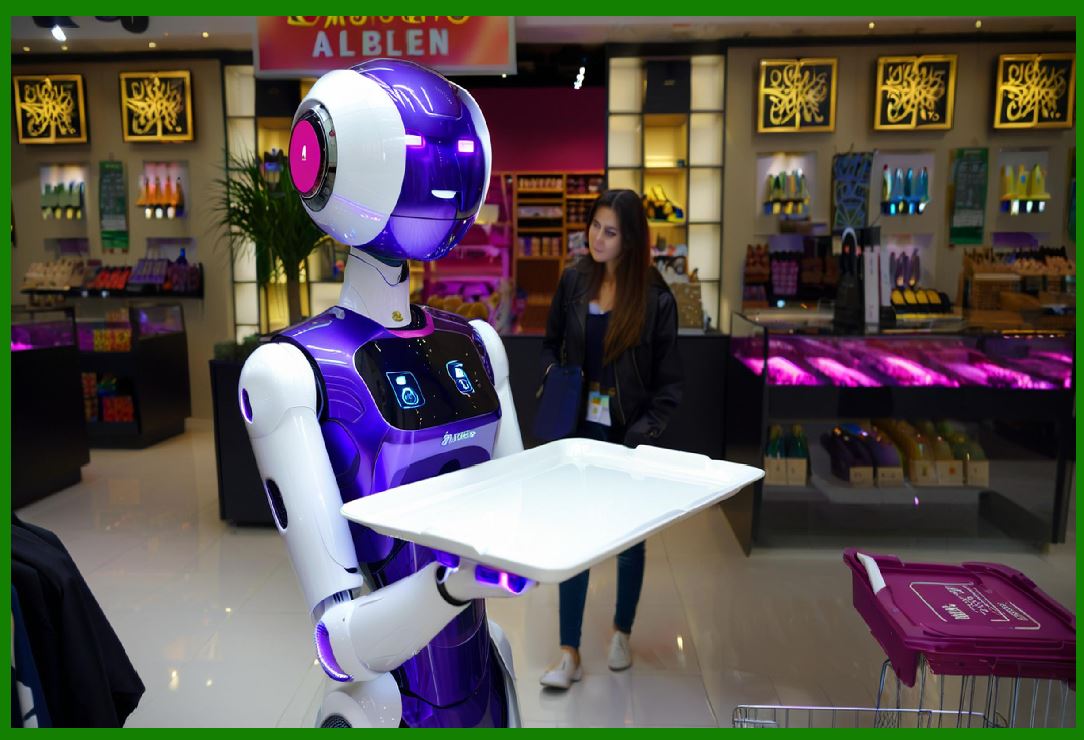
In hotels, articulated robots deliver room service, carry luggage, and provide information. They can navigate through lobbies and corridors and interact with guests. |
In restaurants, articulated robots cook, serve, and clean. They can prepare simple dishes and deliver them to tables. They can also work in kitchens where space is limited. |
In retail, articulated robots stock shelves, assist customers, and manage inventory. They can scan shelves and identify items that need restocking. |
Service robots must be safe around humans. They are often equipped with sensors that detect people and avoid collisions. They may also have soft materials and rounded edges to reduce the risk of injury. |
|
8.21 Applications in Research and Education |
Articulated robots are widely used in research and education. Universities, research institutes, and schools use them to study robotics, artificial intelligence, and control systems. |
In research, articulated robots are used to test new algorithms for motion planning, grasping, and manipulation. They are also used to study human-robot interaction and collaborative robotics. |
In education, articulated robots teach students about mechanics, electronics, and programming. They provide hands-on experience with real hardware. Students can program the robot to perform tasks such as picking and placing, drawing, or playing games. |
In competitions, articulated robots are used in events such as RoboCup and the DARPA Robotics Challenge. Teams program robots to perform complex tasks under time pressure. These competitions drive innovation and inspire students. |
In outreach, articulated robots are used to demonstrate technology to the public. They can be seen at science fairs, museums, and maker spaces. They help people understand what robots can do and how they work. |
Research and education often require robots that are flexible and easy to program. Articulated robots meet these requirements because they can be equipped with different end effectors and controlled by open software platforms. |

|
8.22 Applications in Space and Extreme Environments |
Articulated robots are used in space and other extreme environments where humans cannot easily work. They can operate in vacuum, extreme temperatures, and high radiation. |
In space, articulated robots perform tasks such as moving payloads, inspecting spacecraft, and assisting astronauts. The Canadarm, the European Robotic Arm, and the Japanese Experiment Module Remote Manipulator System are all articulated robots. They have been used to build and maintain the International Space Station. |
In underwater exploration, articulated robots work in deep oceans. They can manipulate tools, collect samples, and inspect pipelines. They must withstand high pressure and corrosion. |
In nuclear facilities, articulated robots handle radioactive materials. They can work in areas where radiation levels are too high for humans. They can also help with decommissioning and cleanup. |
In mining, articulated robots drill, load, and haul materials. They can work in underground mines where conditions are dangerous. They can also operate in extreme heat or cold. |
In disaster response, articulated robots search for survivors, assess damage, and deliver supplies. They can enter buildings that are unsafe for humans. They can also work in flooded or collapsed structures. |
Extreme environments require robots that are robust, reliable, and able to operate without human intervention. Articulated robots can be designed for these conditions, making them valuable tools for exploration and recovery. |
|
8.23 Comparing Articulated Robots with Other Configurations |
To fully appreciate the advantages of articulated robots, it is useful to compare them with other common configurations. |
Cartesian robots move in straight lines along three axes. They are simple, accurate, and easy to program. However, they have a limited working envelope and cannot easily orient a tool at arbitrary angles. They are best for tasks such as pick-and-place in a rectangular work area. |
SCARA robots have two parallel rotary joints that move in a horizontal plane, plus a vertical axis. They are fast and precise for assembly tasks. However, they have a limited ability to orient the tool and cannot reach as far as articulated robots. |
Delta robots use parallel linkages to move a platform at high speed. They are excellent for picking and placing small items. However, they have a relatively small working envelope and limited orientation capability. |
Cylindrical robots combine a rotary base with a vertical column and a horizontal arm. They can reach around a cylindrical work area. However, they cannot orient the tool as freely as articulated robots. |
Articulated robots combine the reach of a Cartesian robot with the orientation capability of a human arm. They can work in a large envelope, move fast, and point the tool in almost any direction. They can be mounted in different orientations and are versatile enough to perform many tasks. These advantages explain why articulated robots are the most popular configuration for general industrial applications. |

|
8.24 Limitations and Considerations |
No robot configuration is perfect. Articulated robots have some limitations that engineers must consider. |
First, they are more complex than Cartesian robots. They have more joints, more motors, and more sensors. This complexity can make them more expensive and harder to maintain. |
Second, their accuracy can be affected by the load they carry. A heavy payload can cause the arm to deflect, reducing precision. Engineers must choose a robot with enough payload capacity and stiffness for the task. |
Third, their working envelope is not a simple shape. It can be difficult to program a path that avoids obstacles and reaches all required points. Simulation software is often used to plan robot motions. |
Fourth, articulated robots can be dangerous. Their fast movements and high payloads can cause serious injury. Safety measures such as fences, light curtains, and collision detection are required. |
Fifth, they require a skilled workforce to program and maintain. This can be a barrier for small companies. However, new software tools and collaborative robots are making articulated robots easier to use. |
Despite these limitations, articulated robots are the best choice for many applications. Their advantages outweigh their drawbacks, especially in complex tasks that require reach, speed, and orientation capability. |

|
8.25 The Future of Articulated Robots |
The future of articulated robots is bright. Several trends are shaping their development. |
First, robots are becoming more collaborative. New articulated robots are designed to work safely alongside humans. They have force sensors, soft materials, and advanced control algorithms that allow them to detect and avoid people. This opens up new applications in small factories, workshops, and service industries. |
Second, robots are becoming more intelligent. They use cameras, artificial intelligence, and machine learning to recognize objects, plan paths, and adapt to changes. This makes them easier to program and more versatile. |
Third, robots are becoming more connected. They are part of the Industrial Internet of Things, sharing data with other machines and systems. This allows for predictive maintenance, remote monitoring, and optimized production. |
Fourth, robots are becoming more mobile. Articulated robots are being mounted on mobile bases, allowing them to move through factories and warehouses. This combines the reach of the arm with the mobility of a vehicle. |
Fifth, robots are becoming more affordable. As technology improves and production volumes increase, the cost of articulated robots is decreasing. This makes them accessible to more businesses. |
Sixth, robots are becoming more specialized. New articulated robots are being designed for specific industries, such as food, pharmaceuticals, and electronics. They have features that meet the unique requirements of these industries. |
These trends will expand the use of articulated robots into new areas and create new opportunities for automation. |

|
8.26 Detailed Summary |
This chapter has explained the advantages of articulated robots and illustrated them with applications across many industries. The key points can be summarized as follows. |
Articulated robots have a large working envelope relative to their size. They can reach forward, backward, sideways, up, and down, covering a volume much larger than the machine itself. This makes them efficient users of floor space and allows one robot to serve multiple workstations. Examples include welding car bodies, picking fruit in orchards, and reaching around spacecraft. |
Articulated robots move fast. Their rotary joints and powerful motors allow them to accelerate and decelerate quickly, achieving high throughput. They are used in electronics assembly, food packaging, automotive welding, and warehouse logistics, where speed is essential. |
Articulated robots can be mounted on the floor, wall, or ceiling. This flexibility allows engineers to fit them into crowded production lines and to use space that would otherwise be wasted. Ceiling mounting is common in food and electronics, wall mounting in machine tending, and floor mounting in general applications. They can also be mounted on rails or mobile platforms. |
Articulated robots can achieve arbitrary end-effector orientation. Their wrist joints often rotate more than 360 degrees, allowing the tool to be pointed in almost any direction. This is essential for welding, painting, drilling, inspection, and assembly tasks that require complex tool paths. |
Articulated robots are versatile and reprogrammable. The same robot can perform different tasks by changing the end effector and the program. This extends the life of the equipment and reduces the need for specialized machines. |
Articulated robots are precise and repeatable. They can position a tool with accuracy measured in fractions of a millimeter and repeat that position millions of times. This makes them suitable for electronics, automotive, aerospace, medical, and pharmaceutical applications. |
Articulated robots can handle heavy payloads. Large models can lift hundreds of kilograms, making them useful in foundries, forging, construction, and logistics. |
Articulated robots are reliable and durable. With proper maintenance, they can run for many years with minimal downtime. They are used in automotive plants, electronics clean rooms, food processing, and hazardous environments. |
The chapter then surveyed applications in many industries. In automotive, articulated robots weld, paint, assemble, inspect, and palletize. In electronics, they assemble circuit boards, test devices, and package products. In food and beverage, they pick, pack, palletize, and process. In pharmaceuticals and healthcare, they handle vials, assist surgeons, and support rehabilitation. In logistics and warehousing, they pick, sort, palletize, and manage inventory. In aerospace and defense, they drill, inspect, and work in space. In agriculture, they harvest, plant, weed, and process. In construction, they lay bricks, weld, paint, and inspect. In entertainment and service, they animate figures, guide visitors, and deliver room service. In research and education, they teach and enable experiments. In space and extreme environments, they perform tasks that humans cannot. |
The chapter also compared articulated robots with Cartesian, SCARA, delta, and cylindrical configurations. Articulated robots offer the best combination of reach, speed, orientation, and flexibility for general industrial applications. |
|
Finally, the chapter discussed limitations and future trends. Articulated robots are complex, can be dangerous, and require skilled programming. However, advances in collaboration, intelligence, connectivity, mobility, and affordability are making them more capable and accessible. |
In conclusion, the articulated robot is the most versatile and widely used industrial robot configuration. Its advantages in working envelope, speed, mounting options, and end-effector orientation make it suitable for an enormous range of tasks. As technology advances, articulated robots will continue to spread into new industries and new applications, improving productivity, safety, and quality around the world. |
 cs@easiersoft.com