Chapter 9: Articulated Disadvantages | Summary | Articulated robots, often called articulated arm robots or jointed-arm robots, are among the most versatile and widely used industrial robots in the world. They dominate fields such as automotive welding, assembly, machine tending, painting, and palletizing. Their popularity comes from their ability to reach into complex spaces, rotate their wrists in many directions, and mimic the motion of a human arm. However, every design choice has a cost. The very feature that makes articulated robots so flexible, namely their series of rotary joints, also creates significant disadvantages. This chapter explains those disadvantages in plain language. It focuses on three core problems: complex kinematics that make inverse solutions difficult, end-effector pose determination that is often non-intuitive, and control computations that are relatively heavy. Rather than relying on formulas or tables, the chapter uses real-world examples from many industries to show how these disadvantages appear in practice. It also explains why engineers still choose articulated robots despite these drawbacks, and how they work around the limitations. By the end of this chapter, you should understand not only what the disadvantages are, but also why they matter on the factory floor, in warehouses, in hospitals, and in other application areas. | 
| 1. Introduction: Why Articulated Robots Are Both Loved and Challenged | Articulated robots are the workhorses of modern industry. If you have seen a car being assembled, a smartphone being polished, or a package being sorted in a large warehouse, you have probably seen an articulated robot. These robots typically have six rotary joints, sometimes more, arranged in a serial chain. The first joint usually rotates the whole arm around a vertical axis. The second and third joints raise and lower the arm. The fourth, fifth, and sixth joints form a wrist that can orient a tool in many directions. This arrangement gives the robot a large workspace and excellent dexterity. | But this flexibility comes at a price. Because each joint adds another degree of freedom, the mathematics needed to control the robot becomes more complicated. The robot's controller must constantly solve two related problems. The first is forward kinematics: given the angles of all joints, where is the toolThe second is inverse kinematics: given a desired position and orientation of the tool, what joint angles are neededForward kinematics is usually manageable. Inverse kinematics is where the trouble begins. For articulated robots, inverse solutions are often difficult, sometimes have multiple answers, and sometimes have no answer at all. In addition, the pose of the end-effector, meaning its position and orientation in space, is not always easy for a human operator to predict just by looking at the robot. Finally, the control computations are relatively heavy compared to simpler robot designs such as Cartesian or SCARA robots. These three disadvantages are the focus of this chapter. | 
| 2. Understanding the Three Core Disadvantages | 2.1 Complex Kinematics Make Inverse Solutions Difficult | Kinematics is the study of motion without considering the forces that cause it. In robotics, kinematics describes how the joints and links of a robot move relative to one another. An articulated robot has a serial chain of joints. Each joint adds a variable, usually an angle. The position and orientation of the end-effector depend on all these angles together. This creates a complex, nonlinear relationship. | The forward problem is straightforward in concept: if you know all the joint angles, you can calculate the tool position step by step from the base to the tip. The inverse problem is much harder: if you know where you want the tool to be, you must find a set of joint angles that puts it there. For a six-joint articulated robot, the inverse problem can have up to eight or even sixteen different solutions for the same tool pose. Some of these solutions may be physically impossible because of joint limits. Some may cause the robot to collide with itself or with surrounding objects. Some may require the robot to pass through a singularity, a configuration where small changes in joint angles cause huge changes in tool position or where two joints align and the robot loses a degree of freedom. | In practice, this means that a robot programmer cannot simply say 'move the tool to this point and orient it this way' and expect the robot to figure it out instantly. The controller must search for a valid solution, check joint limits, avoid singularities, and choose the best path. This takes time and computing power. In many industrial applications, the robot must make these decisions in milliseconds while moving at high speed. The more complex the kinematics, the harder this becomes. | 
| 2.2 End-Effector Pose Determination Is Non-Intuitive | Even when the inverse solution exists, understanding the robot's pose is not always intuitive. In a Cartesian robot, the axes are linear and perpendicular. If you want the tool to move one meter to the left, you move one linear axis. If you want it to move up, you move another. The relationship between joint motion and tool motion is easy to see. In an articulated robot, the joints are rotary. A small rotation of the first joint can swing the whole arm in a wide arc. A rotation of the wrist can twist the tool in a way that is hard to visualize. Two different sets of joint angles can produce the same tool position but with different elbow configurations. The robot might reach a point with its elbow up or elbow down, with its wrist flipped or not flipped. These are called configuration changes or posture changes. | For a human operator, this non-intuitive behavior creates several problems. First, teaching a path by manually moving the robot, a process called lead-through teaching, can be confusing because the operator may not realize which joints are moving. Second, when the robot is controlled by a joystick or a teach pendant, the operator may need to think in terms of joint angles rather than Cartesian directions. Third, when the robot is working near obstacles, it can be difficult to predict whether the elbow or the forearm will hit something. Fourth, when two robots work together, their poses must be coordinated, and the non-intuitive nature of articulated arms makes this coordination harder. | 
| 2.3 Control Computations Are Relatively Heavy | Control computations for articulated robots are heavier than for simpler robots because the controller must continuously solve kinematic and dynamic problems. Kinematics deals with motion, while dynamics deals with forces and torques. For an articulated robot, the dynamic equations are coupled. The motion of one joint affects the forces on all other joints. The robot's inertia changes as the arm extends or retracts. Gravity acts differently on each joint depending on the pose. Friction, flexibility, and payload variations add further complexity. | To keep the robot stable and accurate, the controller must calculate the required torque for each joint many times per second. This involves matrix multiplications, trigonometric functions, and iterative solutions. In a six-axis articulated robot, the controller may need to perform thousands of floating-point operations per millisecond. This is not a problem for modern computers, but it is a relative disadvantage compared to a Cartesian robot, where the axes are independent and the control problem is much simpler. It also means that articulated robots often require more expensive controllers, more sensors, and more careful tuning. In high-speed applications, the computational load can limit the robot's maximum speed or accuracy. | 
| 3. How These Disadvantages Appear in Different Industries | The three disadvantages described above are not just theoretical. They show up in real applications every day. This section gives many examples from different industries. Each example explains how the disadvantage affects the use of articulated robots and what engineers do to work around it. | 3.1 Automotive Industry | The automotive industry is the largest user of articulated robots. They are used for spot welding, arc welding, painting, sealing, gluing, and assembly. In a typical car body shop, hundreds of articulated robots work together on a single production line. | In spot welding, the robot must place a welding gun at hundreds of points on the car body. Each point has a specific position and orientation. The inverse kinematics problem is difficult because the robot must reach around the car body, avoid the clamps and other robots, and maintain a good welding angle. Multiple solutions may exist, but many of them cause collisions. The robot programmer must carefully choose the configuration. If the robot changes from elbow-up to elbow-down in the middle of a path, the welding gun may twist unexpectedly. This is the non-intuitive pose problem. | In painting, the robot must follow the contour of the car body at a constant distance and speed. The paint gun must be oriented perpendicular to the surface. The inverse kinematics must be solved continuously as the robot moves along the path. The control computations are heavy because the robot must coordinate six joints while maintaining a smooth motion. Any jerk or vibration can cause an uneven paint finish. Engineers use specialized controllers and offline programming software to solve these problems. The software simulates the robot's motion, checks for collisions, and generates joint trajectories that avoid singularities. | In assembly, articulated robots are used to install seats, windshields, and engines. These tasks require high precision and force control. The inverse kinematics must be solved accurately, and the control computations must include force feedback. If the robot's pose is not intuitive, the programmer may need extra time to teach the correct approach. In many cases, the robot is guided by vision systems that measure the actual position of the part and adjust the robot's path in real time. This adds even more computation. | 
| 3.2 Electronics and Semiconductor Manufacturing | The electronics industry uses articulated robots for wafer handling, chip placement, soldering, and testing. These applications require extreme precision, often measured in micrometers. The robot must move quickly and smoothly without vibration. | In wafer handling, the robot picks up a silicon wafer from a cassette and places it on a processing stage. The wafer is fragile and must not be contaminated. The robot's end-effector is often a thin blade that slides under the wafer. The inverse kinematics must be solved so that the blade approaches the wafer at the correct angle. If the robot's pose is not intuitive, the blade may hit the cassette or the wafer. The control computations must be very precise because the clearance between the wafer and the cassette is very small. | In chip placement, the robot must pick up a tiny component and place it on a printed circuit board. The component must be aligned with pads that are only a fraction of a millimeter wide. The robot's wrist must rotate to the correct orientation. Because the inverse kinematics can have multiple solutions, the robot may choose a configuration that is mathematically correct but mechanically awkward. For example, the wrist may be twisted near its limit, leaving no room for fine adjustment. Engineers solve this by using a robot with a spherical wrist, which simplifies the inverse kinematics, or by using a SCARA robot for planar tasks. But when three-dimensional orientation is needed, an articulated robot is often the only choice. | 
| 3.3 Food and Beverage Industry | The food and beverage industry uses articulated robots for picking, packing, palletizing, and decorating. These robots often work in harsh environments with water, steam, and cleaning chemicals. They must be fast, hygienic, and reliable. | In pick-and-place applications, the robot picks up items from a conveyor belt and places them into boxes or trays. The items may be randomly oriented, so the robot must use vision to determine their pose. The inverse kinematics must be solved quickly because the conveyor is moving. The control computations are heavy because the robot must track the moving items and synchronize its motion with the conveyor. If the robot's pose is not intuitive, the programmer may have difficulty teaching the correct pick and place positions. In many cases, the robot is taught by demonstration: a human operator guides the robot through the motion, and the controller records the joint angles. But if the operator does not understand the robot's configuration, the taught path may be inefficient or may cause collisions. | In palletizing, the robot stacks boxes on a pallet. The boxes may be heavy and the pallet may be high. The robot must reach the top of the pallet without hitting the boxes already placed. The inverse kinematics must be solved for each box position. The control computations must include the payload weight, which changes as the robot picks up and puts down boxes. Engineers use specialized palletizing software that generates the joint trajectories automatically. The software checks for singularities and chooses the best configuration. But even with software, the non-intuitive nature of the articulated arm can cause problems. For example, the robot may need to rotate its wrist by a large amount between two box positions, which takes time and may cause the wrist to reach its limit. | 
| 3.4 Pharmaceutical and Healthcare Industry | The pharmaceutical industry uses articulated robots for dispensing, mixing, filling, and packaging. These applications require high accuracy, cleanliness, and traceability. In hospitals, articulated robots are used for surgery, rehabilitation, and laboratory automation. | In laboratory automation, the robot handles test tubes, pipettes, and microplates. The robot must move precisely from one station to another. The inverse kinematics must be solved for each station. The control computations must be gentle because the liquids may splash or the samples may be damaged. If the robot's pose is not intuitive, the programmer may need to spend extra time verifying that the robot will not hit the lab equipment. In many labs, the robot works alongside humans. Safety is critical. The robot must be able to detect unexpected contact and stop quickly. This requires additional sensors and control algorithms, which add to the computational load. | In surgery, articulated robots such as the da Vinci system are used to perform minimally invasive procedures. The robot's arms are inserted through small incisions in the patient's body. The surgeon controls the robot from a console. The robot must translate the surgeon's hand movements into precise motions of the surgical instruments. The inverse kinematics is complex because the robot must operate inside a confined space with limited visibility. The control computations are heavy because the robot must filter out hand tremor and scale the motion. The non-intuitive pose problem is handled by the console, which gives the surgeon a three-dimensional view and a natural mapping of hand movements to instrument movements. But even with these aids, the surgeon must learn how to use the robot, and the robot's limitations must be understood. | 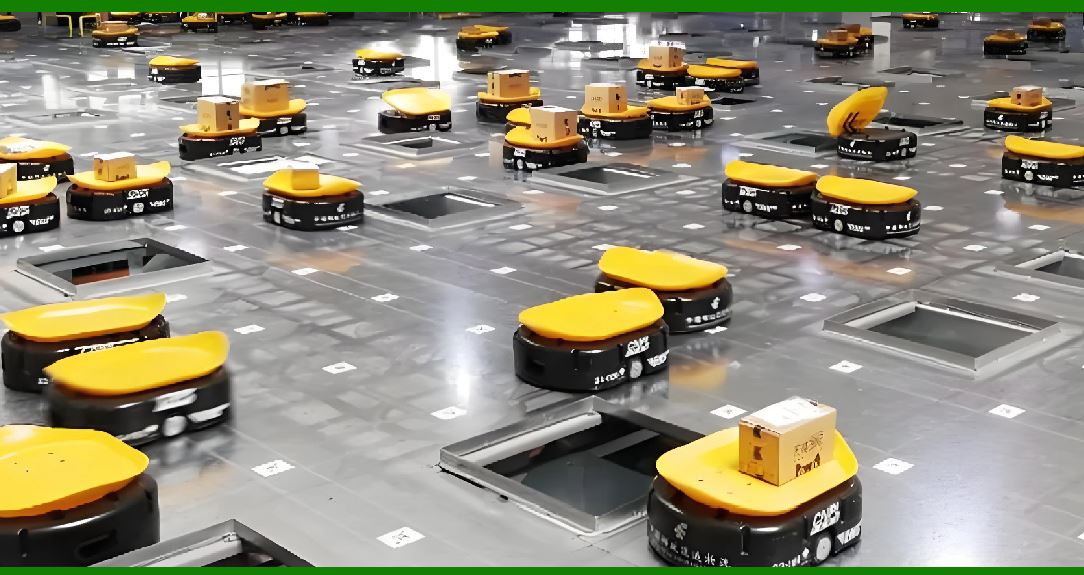
| 3.5 Logistics and Warehousing | The logistics industry uses articulated robots for order picking, sorting, and palletizing. In large warehouses, mobile robots and articulated arms work together to move goods from shelves to packing stations. | In order picking, the robot must pick items of different shapes and sizes from shelves or bins. The robot's end-effector may be a suction cup, a gripper, or a magnetic tool. The inverse kinematics must be solved for each item. The control computations must be fast because the robot may need to pick hundreds of items per hour. If the robot's pose is not intuitive, the programmer may have difficulty optimizing the path. For example, the robot may need to reach into a deep bin. The elbow may hit the side of the bin, or the wrist may not be able to rotate enough to grasp the item. Engineers use suction cups with flexible joints or grippers with multiple fingers to reduce the need for precise orientation. They also use vision systems to locate the items and plan the grasp. | In sorting, the robot must pick packages from a conveyor and place them into chutes or bags. The packages may be randomly oriented and may vary in weight. The inverse kinematics must be solved quickly, and the control computations must include the dynamics of the moving packages. The non-intuitive pose problem can cause the robot to choose a configuration that is not optimal for the next pick. Engineers use software that looks ahead and plans the robot's motion over a sequence of picks. This is called trajectory planning. It requires significant computation but improves throughput. | 
| 3.6 Aerospace and Defense | The aerospace industry uses articulated robots for drilling, riveting, painting, and inspection. These applications require high accuracy and repeatability. The parts are often large and expensive, so mistakes are costly. | In drilling, the robot must place a drill at a precise point on the aircraft skin. The drill must be perpendicular to the surface. The inverse kinematics must be solved for each hole. The control computations must include the force of the drill pushing against the surface. If the robot's pose is not intuitive, the programmer may need to use a simulation to verify that the robot can reach all the holes without collision. In some cases, the robot is mounted on a mobile platform or a rail to extend its reach. This adds another degree of freedom and makes the inverse kinematics even more complex. | In riveting, the robot must place a rivet and then upset it with a tool. The robot must coordinate both sides of the aircraft panel. This often requires two articulated robots working together. The inverse kinematics must be solved for both robots, and the control computations must synchronize their motions. The non-intuitive pose problem is handled by a shared coordinate system and a calibration procedure. But even with these tools, the setup time is long and the programming is complex. | 
| 3.7 Metal Fabrication and Machine Tending | The metal fabrication industry uses articulated robots for welding, cutting, grinding, and machine tending. In machine tending, the robot loads and unloads parts from a CNC machine or a press. The robot must move the part into the machine and then remove it after processing. | The inverse kinematics must be solved for the load and unload positions. The control computations must include the weight of the part and the force of the machine. If the robot's pose is not intuitive, the programmer may have difficulty teaching the robot to avoid the machine's door and fixtures. In many cases, the robot is equipped with a double gripper so that it can swap parts quickly. This adds complexity because the robot must rotate its wrist to present the correct gripper. The non-intuitive pose problem can cause the robot to twist its wrist in a way that hits the machine. Engineers use simulation software to check the motion and to optimize the gripper design. | 
| 3.8 Plastics and Injection Molding | The plastics industry uses articulated robots for removing parts from injection molding machines, trimming, and assembly. The robot must reach into the mold, grasp the part, and pull it out. The inverse kinematics must be solved for the mold position. The control computations must be fast because the mold cycle time is short. If the robot's pose is not intuitive, the programmer may have difficulty teaching the robot to avoid the mold and the ejection system. In many cases, the robot is mounted on top of the machine or beside it. The reach and orientation of the robot must be carefully planned. Engineers use specialized end-effectors that can grip the part without requiring precise orientation. They also use software that generates the robot path automatically from the mold design. | 
| 3.9 Glass and Ceramics | The glass industry uses articulated robots for handling, cutting, and polishing. Glass sheets are large, heavy, and fragile. The robot must support the glass while moving it. The inverse kinematics must be solved for the pick and place positions. The control computations must include the flexibility of the glass and the risk of breakage. If the robot's pose is not intuitive, the programmer may need to use a simulation to verify that the robot will not twist the glass. In polishing, the robot must follow the contour of the glass and apply a constant force. This requires force control, which adds to the computational load. | 
| 3.10 Textile and Apparel | The textile industry uses articulated robots for cutting, sewing, and folding. These tasks are difficult to automate because the materials are flexible and unpredictable. The robot must handle fabric that may stretch, wrinkle, or slip. The inverse kinematics must be solved for each piece of fabric. The control computations must include vision and force feedback. If the robot's pose is not intuitive, the programmer may have difficulty teaching the robot to manipulate the fabric. In many cases, the robot is used for simple tasks such as picking up a piece of fabric and placing it on a cutting table. More complex tasks such as sewing are still done by humans because the robot cannot easily handle the variability of the fabric. | 
| 3.11 Agriculture and Food Processing | The agricultural industry uses articulated robots for harvesting, sorting, and packing. In harvesting, the robot must pick fruits or vegetables from a plant. The robot must identify the fruit, determine its pose, and grasp it without damaging it. The inverse kinematics must be solved for each fruit. The control computations must include vision and force feedback. If the robot's pose is not intuitive, the programmer may have difficulty teaching the robot to reach into the plant. In sorting, the robot must pick items from a conveyor and place them into categories. The items may be irregular in shape and may vary in color. The robot must use vision to identify them. The inverse kinematics must be solved quickly, and the control computations must be fast enough to keep up with the conveyor. | 
| 3.12 Construction and Demolition | The construction industry uses articulated robots for bricklaying, welding, and demolition. These applications are challenging because the environment is unstructured and the robot must work outdoors. The inverse kinematics must be solved for each brick or weld. The control computations must include the effects of wind, vibration, and uneven ground. If the robot's pose is not intuitive, the programmer may need to use a simulation to verify that the robot can reach the work area without hitting the scaffolding or the building. In demolition, the robot must break concrete or remove debris. The robot must be robust and able to withstand dust and impact. The control computations must include force feedback to avoid damaging the robot. | 
| 3.13 Mining and Exploration | The mining industry uses articulated robots for drilling, loading, and inspection. These robots often work underground or in hazardous environments. The inverse kinematics must be solved for the tunnel or the ore face. The control computations must include the effects of dust, humidity, and temperature. If the robot's pose is not intuitive, the programmer may need to use a simulation to verify that the robot can reach the work area without hitting the tunnel walls. In exploration, the robot may be used to inspect pipes or tanks. The robot must be able to navigate in confined spaces. The inverse kinematics must be solved for the inspection position, and the control computations must be accurate enough to detect small defects. | 
| 3.14 Energy and Utilities | The energy industry uses articulated robots for inspection, maintenance, and repair of power plants, pipelines, and wind turbines. These applications often require the robot to work at height or in dangerous environments. The inverse kinematics must be solved for the inspection or repair position. The control computations must include the effects of wind, vibration, and temperature. If the robot's pose is not intuitive, the programmer may need to use a simulation to verify that the robot can reach the work area without hitting the structure. In nuclear plants, the robot must be radiation-hardened, which adds to the cost and complexity. The control computations must be reliable and fault-tolerant. | 
| 4. Why These Disadvantages Matter in Practice | The three disadvantages described above have real consequences. They affect cost, time, safety, and quality. This section explains why they matter and gives examples. | 4.1 Cost | Articulated robots are often more expensive than simpler robots because they require more complex controllers, more sensors, and more sophisticated software. The inverse kinematics problem must be solved by the controller, which requires more computing power. The non-intuitive pose problem means that programmers need more training and more time to teach the robot. The heavy control computations mean that the robot may need a more powerful controller and more frequent maintenance. In some applications, the cost of the robot is only a small part of the total cost. The cost of programming, integration, and maintenance can be much higher. For example, in a small job shop, a Cartesian robot may be sufficient for a simple pick-and-place task. An articulated robot would be overkill and would cost more to program and maintain. | 4.2 Time | The inverse kinematics problem can slow down the robot's motion because the controller must search for a valid solution. The non-intuitive pose problem can slow down the programming because the programmer must spend time understanding the robot's configuration. The heavy control computations can slow down the robot's response time, which may limit the robot's speed. In high-speed applications such as picking and packing, even a small delay can reduce throughput. For example, in a warehouse, a robot that picks 1,000 items per hour may need to pick 1,100 items per hour to meet demand. If the control computations are too heavy, the robot may not be able to keep up. Engineers may need to upgrade the controller or simplify the task. | 
| 4.3 Safety | The non-intuitive pose problem can create safety risks. If the programmer does not understand the robot's configuration, the robot may move in an unexpected way and hit a person or an object. The inverse kinematics problem can create safety risks if the robot chooses a solution that causes a collision. The heavy control computations can create safety risks if the controller is overloaded and cannot respond quickly to an emergency stop. In collaborative applications, where the robot works alongside humans, safety is even more critical. The robot must be able to detect contact and stop quickly. This requires additional sensors and control algorithms, which add to the computational load. Engineers use safety-rated controllers, force-torque sensors, and vision systems to reduce the risk. But even with these measures, the fundamental disadvantages of articulated robots must be understood and managed. | 4.4 Quality | The three disadvantages can affect the quality of the work. The inverse kinematics problem can cause the robot to choose a solution that is not optimal for the task. For example, in welding, the robot may choose a configuration that causes the welding gun to be at the wrong angle, which can cause a weak weld. The non-intuitive pose problem can cause the programmer to teach a path that is not smooth, which can cause vibration and poor surface finish. The heavy control computations can cause the robot to lag behind the desired path, which can cause dimensional errors. In precision applications such as semiconductor manufacturing, even a small error can ruin the product. Engineers use calibration, vision feedback, and advanced control algorithms to improve quality. But these add cost and complexity. | 
| 5. How Engineers Work Around These Disadvantages | Despite the disadvantages, articulated robots are widely used because they are so flexible. Engineers have developed many techniques to work around the problems. This section describes some of the most common techniques. | 5.1 Offline Programming and Simulation | Offline programming allows the programmer to create and test the robot's path on a computer before running it on the real robot. Simulation software models the robot, the workcell, and the workpiece. The programmer can see the robot's motion in three dimensions and check for collisions, singularities, and joint limits. The software can also calculate the cycle time and optimize the path. This reduces the time needed for online teaching and improves safety. It also helps the programmer understand the robot's pose. For example, in automotive welding, offline programming is used to generate the paths for hundreds of robots. The software checks that each robot can reach its welding points without hitting the car body or other robots. It also checks that the robot does not pass through a singularity, which could cause a sudden motion. | 5.2 Vision Systems | Vision systems allow the robot to see the workpiece and adjust its path in real time. This reduces the need for precise teaching and helps the robot handle variation. In bin picking, a camera locates the parts in a bin, and the robot plans a grasp. The vision system provides the position and orientation of the part, and the robot's controller solves the inverse kinematics. This is computationally heavy, but it allows the robot to work with parts that are randomly oriented. In assembly, vision systems guide the robot to the correct position and check the result. This improves quality and reduces the need for expensive fixtures. | 
| 5.3 Force Control | Force control allows the robot to sense the force it exerts on the workpiece and adjust its motion accordingly. This is useful for tasks such as grinding, polishing, and assembly. In grinding, the robot must apply a constant force to the surface. Force control allows the robot to follow the contour of the workpiece even if the workpiece is not perfectly positioned. In assembly, force control allows the robot to insert a peg into a hole even if the hole is slightly misaligned. Force control adds sensors and control algorithms, which increase the computational load. But it also makes the robot more robust and versatile. | 5.4 Redundant Robots | A redundant robot has more joints than are needed to achieve a given pose. For example, a seven-axis articulated robot has one extra degree of freedom compared to a six-axis robot. This extra freedom can be used to avoid obstacles, avoid singularities, or optimize the robot's posture. The inverse kinematics problem becomes even more complex because there are infinitely many solutions. But the extra freedom can make the robot more flexible and easier to use in cluttered environments. Engineers use optimization algorithms to choose the best solution. Redundant robots are used in applications such as painting, welding, and inspection. | 
| 5.5 Specialized Wrists | A spherical wrist has three joints that intersect at a single point. This simplifies the inverse kinematics because the position and orientation problems can be separated. Many six-axis articulated robots use a spherical wrist. This makes the inverse solution easier to find and reduces the computational load. However, a spherical wrist may not be suitable for all applications. For example, a robot that needs to reach into a confined space may need a different wrist design. Engineers choose the wrist design based on the task requirements. | 5.6 Better Controllers | Modern controllers are much faster and more powerful than older controllers. They can solve the inverse kinematics and dynamics problems in real time, even for complex robots. They can also run advanced algorithms for collision avoidance, path planning, and force control. This reduces the impact of the heavy control computations. However, better controllers cost more, and they require more skilled programmers to configure and maintain. In some cases, the controller is integrated with the robot, and the manufacturer provides the software. In other cases, the controller is a separate unit that must be programmed by the integrator. | 
| 5.7 Task Simplification | In some applications, the disadvantages of articulated robots can be reduced by simplifying the task. For example, if the robot only needs to move in a plane, a SCARA robot may be a better choice. If the robot only needs to move in a straight line, a Cartesian robot may be a better choice. If the robot only needs to pick and place, a delta robot may be a better choice. Engineers choose the robot type based on the task requirements. Articulated robots are used when the task requires complex three-dimensional motion and orientation. By understanding the disadvantages, engineers can choose the right robot for the job and avoid unnecessary complexity. | 
| 6. Detailed Summary | This chapter has explained the three core disadvantages of articulated robots: complex kinematics that make inverse solutions difficult, end-effector pose determination that is non-intuitive, and control computations that are relatively heavy. It has shown how these disadvantages appear in many industries, including automotive, electronics, food and beverage, pharmaceutical and healthcare, logistics and warehousing, aerospace and defense, metal fabrication, plastics, glass, textiles, agriculture, construction, mining, and energy. It has also explained why these disadvantages matter in terms of cost, time, safety, and quality. Finally, it has described how engineers work around the disadvantages using offline programming, vision systems, force control, redundant robots, specialized wrists, better controllers, and task simplification. | The key takeaway is that articulated robots are not perfect. Their flexibility comes at a price. The inverse kinematics problem is difficult because the relationship between joint angles and tool pose is nonlinear and can have multiple solutions. The pose problem is non-intuitive because the joints are rotary and the robot can reach the same point in different configurations. The control problem is heavy because the controller must solve kinematics and dynamics in real time. These disadvantages do not mean that articulated robots should be avoided. They mean that engineers must understand them and manage them. With the right tools and techniques, articulated robots can be used effectively in a wide range of applications. But when the task is simple, a simpler robot may be a better choice. | In the next chapter, we will look at the advantages of articulated robots in more detail and compare them with other robot types. We will also discuss how to choose the right robot for a given application. By understanding both the advantages and disadvantages, you will be better prepared to design, program, and use industrial robots in the real world. |
|
 cs@easiersoft.com