Industrial Robots: A Comprehensive Technical Overview and Application Guide |
Part I: Foundations and Frameworks |
Chapter 1: Defining the Industrial Robot |
An industrial robot is an automatically controlled, reprogrammable, multipurpose manipulator programmable in three or more axes, designed for manufacturing and logistics environments . |
Chapter 2: The Historical Arc |
The field began with the Unimate arm at a General Motors die-casting plant in 1961, evolving through decades of servo control, mechanism design, and industrial networking advances . |
Chapter 3: The ISO 8373 Standard |
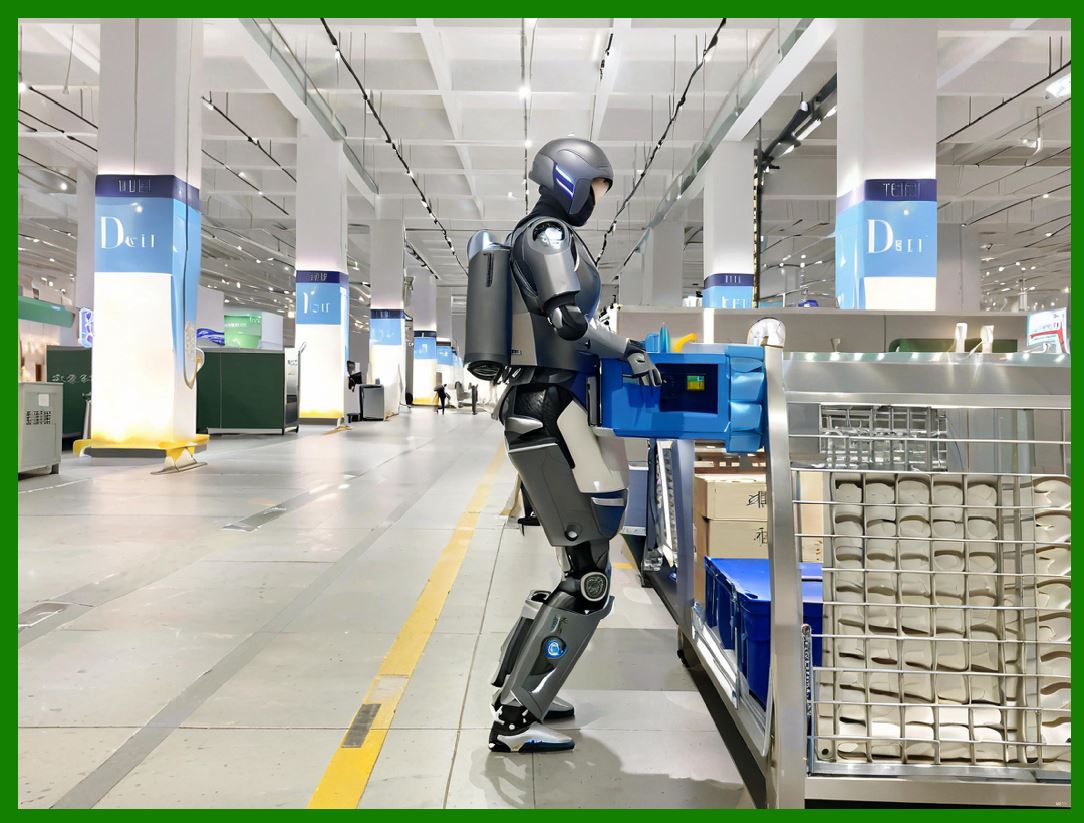
The ISO 8373 vocabulary distinguishes robots from fixed automation through the reprogrammability requirement---a machine that can be retasked in software qualifies as a robot; a single-purpose transfer machine does not . |
|
Chapter 4: The Robot System vs. the Robot |
The robot itself comprises the manipulator, drives, sensors, controller, and programming interface. The end effector and workpiece fixtures belong to the wider robot system . |
Chapter 5: Degrees of Freedom |
A body requires six degrees of freedom---three translational and three rotational---to move arbitrarily in space. Industrial manipulators must have at least three axes per ISO 8373 . |
Chapter 6: The Six-Axis Standard |
Six-axis articulated robots with revolute joints throughout dominate welding, painting, and general handling, providing full position and orientation control within a roughly spherical workspace . |

|
Part II: Mechanical Configurations |
Chapter 7: Articulated Robots |
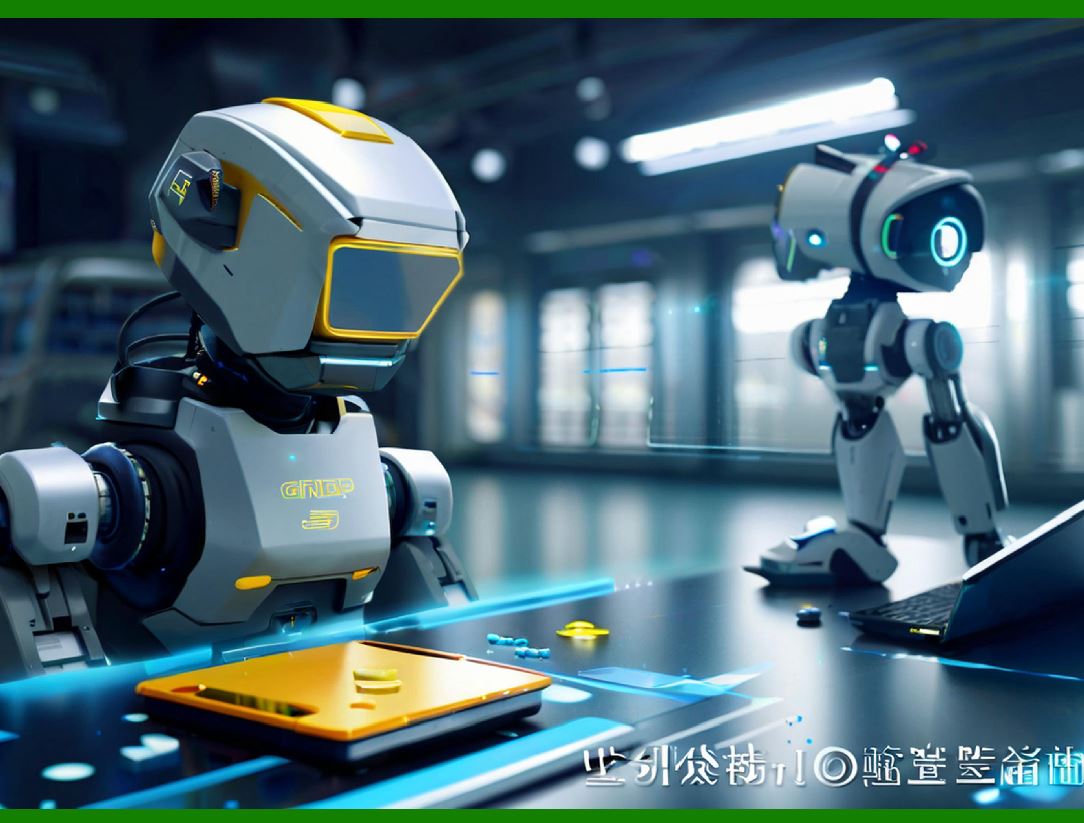
Articulated robots consist of sequentially connected joints mimicking the human arm. Six axes provide flexibility to reach hard-to-reach points that other configurations cannot access . |
Chapter 8: Articulated Advantages |
Advantages include large working envelopes, fast movement, floor/wall/ceiling mounting options, and arbitrary end-effector orientation with joint ranges often exceeding (+-)360 . |
Chapter 9: Articulated Disadvantages |
Complex kinematics make inverse solutions difficult, end-effector pose determination is non-intuitive, and control computations are relatively heavy . |
|
Chapter 10: SCARA Robots |
Selective Compliance Assembly Robot Arm robots have three revolute joints with parallel axes for planar positioning, plus a linear joint for vertical motion. They are compliant horizontally and stiff vertically . |
Chapter 11: SCARA Advantages |
SCARA robots offer high speed (up to 10 m/s in Adept models), precision, and compact dimensions. Their short linkages enable stable high-speed movement . |
Chapter 12: SCARA Disadvantages |
Limited payload capacity, restricted workspace due to linkage constraints, and inability to twist or flip objects are the primary limitations . |

|
Chapter 13: Delta Robots |
Parallel-link mechanisms with all actuators on a fixed base achieve very low moving mass and cycle times in tenths of a second. Carbon fiber arms facilitate high acceleration within a dome-shaped work envelope . |
Chapter 14: Delta Advantages |
Minimal space consumption, extremely high speed, and suitability for high-throughput pick-and-place make delta robots ideal for packaging and sorting lines . |
Chapter 15: Delta Disadvantages |
Low payload capacity remains the primary constraint. Payload typically ranges from 6 to 8 kg in commercial food-grade models . |

|
Chapter 16: Cartesian and Gantry Robots |
Linear robots with three perpendicular axes trade workspace efficiency for straightforward kinematics and large payload capacity. They can move heavy loads over distances exceeding 4 meters . |
Chapter 17: Cartesian Advantages |
Simple three-axis programming, positioning accuracy to 0.1 mm, and high load capacity make Cartesian robots valuable for material handling and machine tending . |
Chapter 18: Cartesian Disadvantages |
Bulky installation requirements and susceptibility to dirt contamination in open mechanisms lead to high wear . |

|
Chapter 19: Cylindrical Robots |
These three-axis robots have a cylindrical work envelope, with two linear axes and one rotational axis. Applications include pipe welding, spot welding, and machine tool maintenance . |
Chapter 20: Spherical Robots |
The first industrial robot type used for welding and machining, spherical robots have two rotational axes and one linear axis, creating a spherical working envelope with long reach . |

|
Part III: Performance Metrics |
Chapter 21: Payload |
Payload defines the maximum mass the robot can manipulate at the end effector without performance degradation. Articulated robots range from 12 to 20 kg in mid-size models, while collaborative robots now reach 45 kg . |
Chapter 22: Reach |
Horizontal reach determines the accessible workspace. Mid-size articulated robots offer 1650-1850 mm; extended-reach delta models achieve 1600 mm . |
Chapter 23: Repeatability |
Repeatability, typically quoted between 0.02 and 0.1 mm for mid-size articulated arms, defines how consistently the robot returns to a programmed position . |

|
Chapter 24: Cycle Time |
Delta robots achieve the fastest cycle times measured in tenths of a second, followed by SCARA robots, while Cartesian and articulated robots are slower but carry higher payloads . |
Part IV: Control and Programming |
Chapter 25: The Controller |
The controller closes servo loops on each joint, resolves inverse kinematics mapping tool pose to joint angles, and generates trajectories respecting velocity, acceleration, and jerk limits . |
Chapter 26: Teaching by Demonstration |
Historically dominant programming method where an operator jogs the arm to positions recorded as waypoints, supplemented by vendor-specific offline languages . |

|
Chapter 27: Offline Programming |
Simulation packages generate and validate paths against CAD models of the cell before deployment, reducing downtime . |
Chapter 28: Force Control and Compliance |
Force control extends feasible tasks to assembly, deburring, and polishing where position control alone would jam or damage parts . |
Chapter 29: Machine Vision |
Vision supplies part location and inspection, enabling robots to work with unfixtured parts on moving conveyors . |

|
Part V: Safety and Collaboration |
Chapter 30: Traditional Safety |
Fences, interlocked gates, light curtains, and safety-rated controllers force protective stops when humans enter the workspace . |
Chapter 31: Collaborative Operation |
Fenceless operation limits hazard through safety-rated monitored stop, hand guiding, speed and separation monitoring, or power and force limiting . |
Chapter 32: ISO/TS 15066 |
The biomechanical limits underpinning power and force limiting originated in this technical specification and have been folded into the 2025 ISO 10218 revision . |

|
Chapter 33: Collaborative Robot Applications |
Cobots enable torque-controlled assembly, inspection, and machine tending in shared human-robot workspaces across automotive and electronics . |
Part VI: Automotive Applications |
Chapter 34: Body-in-White Welding |
Spot welding remains the dominant articulated robot application in automotive body assembly, with hundreds of robots per line . |
Chapter 35: Sealing and Gluing |
Precision adhesive application for acoustic measures and structural bonding. Volkswagen Emden uses robolink articulated arm robots for battery console gluing . |

|
Chapter 36: Painting |
Articulated robots with explosion-proof enclosures handle automotive painting, offering consistency and reduced human exposure to solvents . |
Chapter 37: Chassis Assembly |
Collaborative robots perform high-precision screw-driving in confined spaces, with real-time joint load monitoring for torque strategy optimization . |
Chapter 38: FPC Insertion for Displays |
Force-controlled cobots sense micro-contact forces and adjust paths in real time for flexible printed circuit assembly in vehicle displays . |

|
Chapter 39: EV Charging Automation |
Cobots identify charging-port positions, automatically plug and unplug charging guns, and monitor force data to prevent damage . |
Chapter 40: Engine Assembly |
Cobot integration in engine assembly reduced annual operating costs by $41,602 with ROI in 1 year 9 months, while ensuring correct torque sequences . |

|
Part VII: Electronics and Semiconductor Applications |
Chapter 41: IC Component Placement |
SCARA robots are indispensable for repetitive, accurate pick-and-place of integrated circuit components onto PCBs, valued for speed, precision, and mechanical design . |
Chapter 42: Screwdriving |
Articulated and SCARA robots perform precision screwdriving in electronics assembly, with torque monitoring for quality assurance . |
Chapter 43: Miniature Component Handling |
Vision-guided delta robots achieve accurate placement of miniature components, improving first-pass yield rates significantly . |

|
Part VIII: Food and Pharmaceutical Applications |
Chapter 44: Primary Food Handling |
Washdown-compatible delta robots with hygienic design handle primary food products. FANUC DR-3iB/6 STAINLESS is IP69K rated and meets USDA/FDA standards . |
Chapter 45: High-Speed Pick and Place |
Vision-guided delta systems improve pick accuracy to over 99% on fast-moving, disorganized product flows, reducing errors in food and beverage packaging . |
Chapter 46: Pharmaceutical Sorting |
Delta robots facilitate regulatory compliance by reducing human contact, leading to 90% decrease in potential contamination events . |
Chapter 47: Case Packing |
Extended-reach delta robots with 1600 mm horizontal reach handle products across wide conveyors and pack into tall boxes . |

|
Part IX: Logistics and Material Handling |
Chapter 48: Palletizing and Depalletizing |
Articulated and Cartesian robots handle palletizing tasks across manufacturing and warehouse environments . |
Chapter 49: Order Fulfillment |
Robotic piece-picking systems increasingly handle warehouse order fulfillment with vision-guided grasping . |
Chapter 50: Machine Tending |
Robots load and unload injection molding, casting, and CNC machines, eliminating hazardous manual handling . |

|
Chapter 51: Heavy Load Transport |
Chinese autonomous heavy-load transport vehicles with hundred-ton capacity operate in port and industrial environments . |
Part X: Extreme and Non-Standard Environments |
Chapter 52: Wall-Climbing Robots |
'Mechanical spiders' with autonomous route planning complete rust removal, inspection, and painting on petrochemical storage tank exteriors, replacing human 'spidermen' at height . |
Chapter 53: Welding Automation |
Arc welding robots operate in high-temperature, fume-heavy environments, addressing chronic labor shortages in hazardous welding positions . |

|
Chapter 54: Wind Turbine Manufacturing |
Mobile robot assistants project laser guidance for cable tray assembly, reducing processing time by 37% (from 40 to 25 minutes) without manual adjustments . |
Chapter 55: Outdoor Inspection |
Quadruped robots perform 24-hour security patrols and hydrological inspection, autonomously avoiding obstacles and uploading real-time water quality data . |
Chapter 56: Shipbuilding |
Wall-climbing robots perform hull rust removal and painting in shipyards, eliminating scaffolding and rope access hazards . |

|
Part XI: Comparative Analysis |
Chapter 57: Speed vs. Payload Trade-off |
Delta robots offer the highest speed with lowest payload; Cartesian robots offer the highest payload with moderate speed; articulated robots balance both . |
Chapter 58: Precision Hierarchy |
SCARA robots excel in planar precision; delta robots achieve 99%+ pick accuracy with vision; articulated robots provide 0.02-0.1 mm repeatability . |
Chapter 59: Workspace Efficiency |
Delta robots consume minimal space with dome-shaped envelopes; Cartesian robots require substantial floor area; articulated robots offer large spherical workspaces . |

|
Chapter 60: Programming Complexity |
Cartesian robots are simplest to program along three axes; SCARA and delta are moderately complex; articulated robots require the most sophisticated kinematic solutions . |
Chapter 61: Flexibility Spectrum |
Articulated robots are most versatile, capable of one model serving completely different tasks; SCARA and delta robots are task-specific; Cartesian robots serve narrow applications well . |

|
Part XII: AI Integration |
Chapter 62: AI-Powered Perception |
Deep learning enables robots to perceive and respond to environments for quality control, sorting, bin picking, and palletizing . |
Chapter 63: Autonomous Mobility |
SLAM using multi-sensor data allows robots to navigate factory floors while avoiding obstacles . |
Chapter 64: Natural Language Processing |
NLP enables voice command understanding and human-robot interaction, giving rise to more intuitive collaborative robots . |

|
Chapter 65: Predictive Maintenance |
Machine learning anticipates problems and enables predictive maintenance, reducing unplanned downtime . |
Chapter 66: Physical AI |
Robots integrate sensor data for real-time action, moving from digital reasoning to physical execution . |
Chapter 67: Agentic AI |
Agentic AI combines analytical AI for decision-making and generative AI for adaptability, enabling independent robot operation . |

|
Chapter 68: Sim-to-Real Transfer |
NVIDIA Omniverse, Isaac Sim, and Isaac Lab accelerate the robot development lifecycle through synthetic data generation and simulation-based training . |
Chapter 69: Reinforcement-Enhanced LLM Programming |
RELLM-IRP combines LLM semantic decomposition with hierarchical reinforcement learning, achieving 25-30x convergence acceleration and 95%+ task completion accuracy . |
Chapter 70: Safety-Constrained Optimization |
Control Barrier Functions and Constrained Policy Optimization ensure collision avoidance, torque limits, and safety compliance in AI-driven robots . |

|
Part XIII: Industry Evolution and Future |
Chapter 71: Industry 4.0 to Industry 5.0 |
The transition moves from efficiency-centric automation to human-centric, resilient, and sustainable manufacturing . |
Chapter 72: Human-Centric Design |
Industry 5.0 repositions robots as collaborative partners, emphasizing worker enhancement and ergonomic improvement . |
Chapter 73: Digital Twins |
Virtual replicas of physical systems enable monitoring, simulation, and adaptive control throughout the robot lifecycle . |

|
Chapter 74: Cyber-Physical Integration |
Robots increasingly function as cyber-physical systems with real-time data exchange and cloud connectivity . |
Chapter 75: Sustainability Imperative |
Energy efficiency, circularity, and reduced material waste are becoming strategic robot deployment criteria . |
Chapter 76: Edge Deployment |
Pruning and quantization reduce model size by 45%, inference latency by 47%, and power consumption by 36% for on-robot AI . |
|
Chapter 77: Standards Evolution |
ISO/IEC TR 5469 paves the way for safety-related systems using AI technologies . |
Chapter 78: The Trust Imperative |
As robots become autonomous, errors transition from software problems to physical problems, demanding data quality and integrity assurance . |
Chapter 79: Market Trajectory |
Nearly 4.7 million industrial robots operate globally. Chinese brands now cover 253 industry categories, over half of all national economic sectors . |
|
Chapter 80: Toward Generalist Robots |
The trajectory points toward generalist-specialist robots capable of reasoning and performing wide-ranging tasks across industries, trained in simulation before deployment . |
*This article synthesizes technical specifications, application examples, comparative advantages, and AI integration trends from IEEE, Nature, IEC, and industry sources to provide a comprehensive reference for understanding industrial robotics in 2026.* |
 cs@easiersoft.com