1. Introduction to Robotics and Barcode Technology |
In today's fast-paced, competitive business environment, the integration of robotics and barcode technology has become essential for enhancing operational efficiency, improving accuracy, and reducing human error. The synergy between robotics and barcode technology is driving automation in various sectors, including manufacturing, warehousing, logistics, healthcare, and retail. By combining the precision and reliability of robotics with the speed and accuracy of barcode technology, businesses can streamline their processes, optimize workflows, and achieve higher levels of productivity. |
1.1 Robotics: A Definition |
Robotics involves the design, construction, operation, and use of robots to perform tasks that were traditionally carried out by humans. Robots can range from simple, repetitive machines to complex, artificial intelligence (AI)-powered systems capable of making decisions, adapting to dynamic environments, and collaborating with humans in sophisticated ways. In many industries, robots are used for tasks such as assembly, material handling, inspection, packaging, and even surgical operations. |
1.2 Barcode Technology: A Definition |
Barcode technology refers to the use of printed codes that can be scanned to quickly and accurately retrieve information from a database. Barcodes are made up of parallel lines and spaces, each representing different data values. There are two primary types of barcodes: 1D barcodes (linear barcodes) and 2D barcodes (matrix barcodes). The most commonly known barcode is the UPC (Universal Product Code), found on most retail products. Barcode scanners interpret these codes to provide fast and accurate identification of items, enhancing inventory control, asset management, and data processing. |

|
2. The Role of Robotics in Automated Systems |
2.1 Robotic Systems in Manufacturing |
In manufacturing, robotics plays a critical role in automating repetitive and precise tasks. From assembly lines to quality control, robots help reduce production times and costs while increasing consistency and output. They can perform tasks like welding, painting, and assembling products with high precision, reducing the risk of human error and improving product quality. |
2.2 Robotic Material Handling |
Material handling is a significant part of many industries, including warehouses, factories, and logistics centers. Robotics enhances the efficiency of material handling by using autonomous guided vehicles (AGVs), robotic arms, and drones to move items between locations. These robots can be programmed to follow specific paths or can work in unstructured environments by using sensors and cameras to navigate obstacles. |
2.3 Integration of Robotics with Barcode Technology in Manufacturing |
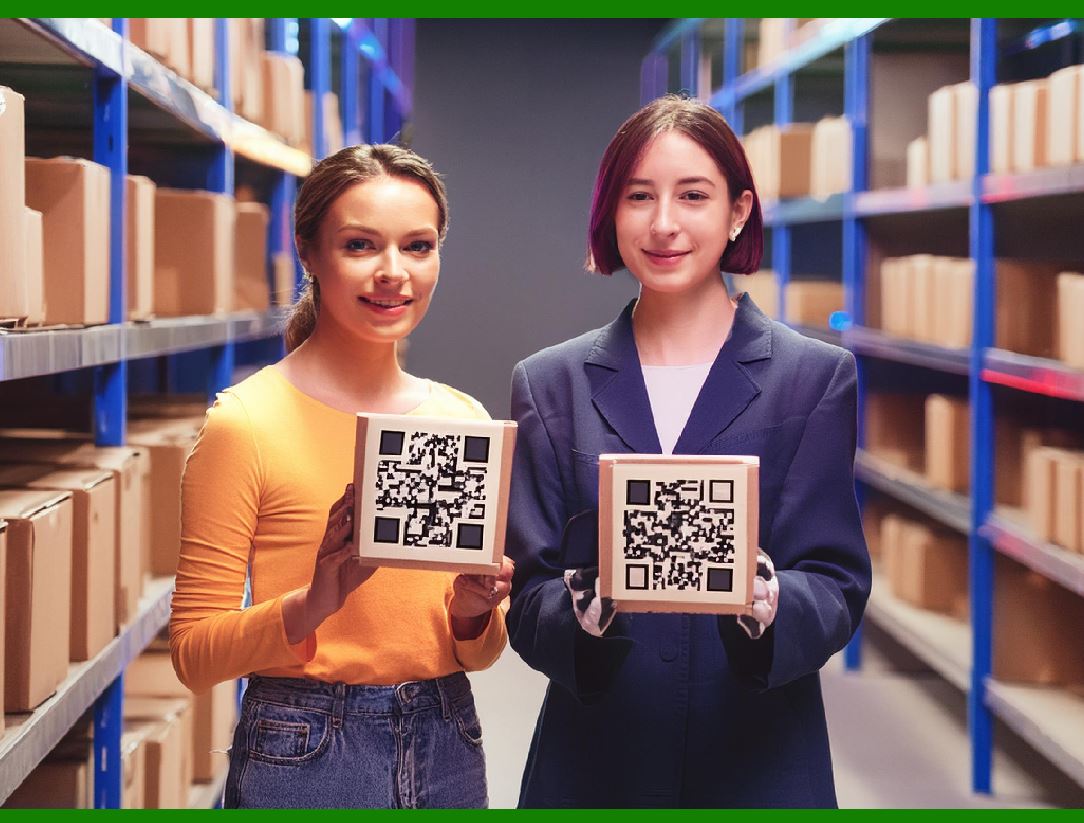
In manufacturing settings, the integration of robotics with barcode technology can streamline the supply chain by enabling robots to quickly and accurately track and manage parts and products. For example, barcode scanners embedded in robotic arms or AGVs can help identify parts on the production line, ensuring that the correct items are picked, placed, or assembled without human intervention. This integration eliminates the need for manual data entry and reduces the chances of inventory errors. |
|
3. The Role of Barcode Technology in Automated Systems |
3.1 Barcode Scanning in Warehousing |
Barcode technology is widely used in warehouses for inventory management. By scanning barcodes attached to products, warehouse workers can instantly retrieve information about stock levels, product location, and other critical details. This allows businesses to maintain accurate records of inventory, reduce stockouts, and streamline the picking and packing process. |
3.2 Enhancing Accuracy with Barcode Scanning |
Manual data entry in warehouses is often prone to human error. However, with barcode scanning, businesses can reduce the chances of mistakes and ensure that items are scanned correctly during the receiving, storing, picking, and shipping processes. Barcode technology provides real-time data, making it easier to track the movement of inventory and monitor product locations. |
3.3 Barcode Technology in Retail |
In retail, barcode scanning enables quick and accurate checkout processes, inventory tracking, and price verification. Barcode labels are attached to products, and when scanned at the point of sale (POS), they automatically retrieve product information, pricing, and stock levels from the connected database. Barcode technology also supports RFID (Radio Frequency Identification), which can further improve tracking and management of items in large retail operations. |

|
4. Synergy Between Robotics and Barcode Technology |
4.1 Automated Inventory Management |
The combination of robotics and barcode technology enables businesses to create fully automated systems for inventory management. Robots can transport items within a warehouse or manufacturing plant, while barcode scanners attached to the robots ensure that each item is correctly identified and recorded. For example, a robot might pick up an item from one location and transport it to another while scanning the barcode to update the inventory system in real time. |
4.2 Improving Speed and Efficiency |
Integrating robotics with barcode scanning technology increases speed and efficiency. Robots can pick, transport, and place items much faster than human workers, and barcode scanning allows for real-time data updates with minimal effort. The ability of robots to automatically scan barcodes and transfer data to central systems significantly reduces delays and errors, which are often associated with manual processes. |
4.3 Streamlining Supply Chain Processes |
In supply chain management, robotics and barcode technology work together to improve the flow of goods from suppliers to customers. Robots equipped with barcode scanners can pick and pack products more efficiently, while barcode labels ensure accurate tracking and identification. This integration enables real-time updates to inventory systems, providing stakeholders with up-to-date information on stock levels, order statuses, and product locations. |
4.4 Quality Control and Error Reduction |
Quality control is critical in any production environment. The combination of robotics and barcode technology allows for enhanced quality control by ensuring that only the correct components are used in production and that the right items are shipped to customers. For example, barcode scanners can verify that the correct parts are assembled into products, and robotic arms can be programmed to halt production if errors are detected. |
|
5. Types of Robotics and Barcode Technology Integration |
5.1 Robotic Arms and Barcode Scanners |
Robotic arms are often used in manufacturing and warehousing to perform tasks such as picking, placing, and assembling. By integrating barcode scanners into the robotic arm, manufacturers can ensure that each task is performed with precision. For example, a robotic arm could pick up a component from a storage bin, scan its barcode to verify its identity, and then place it in the correct location on an assembly line. |
5.2 Autonomous Guided Vehicles (AGVs) and Barcode Technology |
Autonomous guided vehicles (AGVs) are used in large facilities, such as warehouses and factories, to transport goods. These robots can navigate through predefined paths or dynamically adjust their routes based on the environment. AGVs equipped with barcode scanners can identify the products they are transporting, ensuring that they are correctly logged into the inventory system. This integration eliminates the need for manual scanning, making inventory management more efficient. |
5.3 Drones and Barcode Scanning for Inventory Management |
Drones are increasingly used in warehouses for inventory management. These drones can fly through storage areas, scan barcodes on shelves, and update inventory systems in real time. Drones can quickly scan a large number of barcodes, reducing the time required for manual stocktaking and minimizing human error. This technology is particularly useful in large-scale warehouses or retail spaces where traditional methods of inventory counting would be time-consuming. |

|
6. Benefits of Integrating Robotics and Barcode Technology |
6.1 Increased Efficiency and Productivity |
By automating tasks that would typically require human workers, robotics and barcode technology integration increases the speed of operations and reduces labor costs. Robots can work around the clock without the need for breaks, which enhances productivity. Barcode scanning ensures that the correct products are moved or processed with minimal errors, further improving efficiency. |
6.2 Cost Savings |
While the initial investment in robotics and barcode technology can be high, the long-term benefits often outweigh the costs. Automation reduces the need for manual labor, which helps cut costs related to hiring, training, and managing workers. Additionally, barcode technology improves inventory accuracy, helping businesses avoid costly stockouts or overstocking. |
6.3 Enhanced Accuracy and Reliability |
The integration of robotics and barcode technology ensures that tasks are performed with high precision and minimal error. Barcode scanners can automatically identify products, reducing the risk of human error associated with manual data entry. Robotics further enhances this accuracy by performing tasks consistently and without fatigue. |
6.4 Scalability and Flexibility |
Robotics and barcode technology allow businesses to scale their operations more easily. As demand increases, companies can add more robots or expand their barcode scanning infrastructure to meet the growing needs of their operations. This scalability is particularly important in industries like retail and logistics, where demand can fluctuate rapidly. |
6.5 Improved Customer Satisfaction |
The integration of robotics and barcode technology can lead to better customer service. Faster processing times, more accurate order fulfillment, and improved inventory management ensure that customers receive the right products on time. In industries like e-commerce, this can lead to higher customer satisfaction and increased loyalty. |
|
7. Challenges in Integrating Robotics and Barcode Technology |
7.1 High Initial Investment |
One of the main challenges businesses face when integrating robotics and barcode technology is the high initial cost. Robotics systems and barcode scanners require significant investment in both hardware and software. Small and medium-sized enterprises (SMEs) may find it difficult to justify the cost, particularly if their operations are not large enough to achieve substantial cost savings in the short term. |
7.2 Technological Compatibility and Integration |
Integrating robotics with barcode technology requires careful planning to ensure compatibility between different systems. Businesses must ensure that their barcode scanners and robotics systems can communicate seamlessly with their existing enterprise resource planning (ERP) systems, warehouse management software (WMS), and other technological infrastructures. |
7.3 Staff Training |
While robotics and barcode technology can significantly improve efficiency, employees need to be trained to use and maintain these systems. This can involve learning to operate new software, troubleshoot technical issues, and understand the full capabilities of the integrated systems. Proper training is essential to ensure that businesses can take full advantage of the benefits of automation. |

|
8. Future Trends and Innovations |
8.1 AI-Powered Robotics |
In the future, the integration of artificial intelligence (AI) with robotics and barcode technology will lead to even more sophisticated automation systems. AI algorithms can enable robots to adapt to changing environments, make real-time decisions, and learn from their actions, making them more flexible and capable of performing complex tasks. |
8.2 Increased Use of RFID Technology |
Radio Frequency Identification (RFID) is a technology that is often seen as an evolution of barcode scanning. RFID tags do not require direct line-of-sight for scanning, and they can store more data than traditional barcodes. In the future, we may see a greater integration of RFID technology with robotics to further improve inventory management and supply chain automation. |
8.3 Enhanced Robotics Mobility |
Advances in robotics mobility will likely lead to more flexible and capable robots that can operate in dynamic, unstructured environments. This could open up new possibilities for integrating robotics and barcode technology in a wider range of applications, from healthcare to retail to field operations. |

|
9. Conclusion |
The integration of robotics and barcode technology is revolutionizing industries by enhancing operational efficiency, reducing errors, and improving productivity. From manufacturing to warehousing to retail, businesses are leveraging these technologies to streamline processes and create more responsive, scalable operations. While there are challenges associated with the implementation of these systems, the benefits far outweigh the costs, making robotics and barcode technology integration a critical component of future business success. |

|
Case Studies of Integrating Robotics and Barcode Technology |
1. Amazon Robotics: Revolutionizing Warehouse Operations |
1.1 Background |
Amazon, one of the largest e-commerce platforms in the world, has been at the forefront of using robotics and barcode technology to enhance its warehousing and order fulfillment operations. The company utilizes robots extensively in its fulfillment centers (FCs) to speed up picking, sorting, and packing tasks. |
1.2 The Integration of Robotics and Barcode Technology |
Amazon has implemented autonomous mobile robots (AMRs) known as Kiva robots (now called Amazon Robotics). These robots are designed to navigate Amazon's massive fulfillment centers, locate shelves with items, and bring them to human workers at packing stations. |
Each shelf that the Kiva robots carry is tagged with a barcode. As the robot approaches a shelf, it uses a combination of sensors and barcode scanning technology to identify the location and type of items on the shelf. The robot brings the shelf to the human worker, who scans the barcode on the item to verify it before packing and shipping. |
1.3 Benefits |
Speed: The Kiva robots dramatically increase the speed of order fulfillment. They can transport shelves to workers much faster than human workers can travel across the warehouse to retrieve items. |
Reduced Errors: With the integration of barcode technology, the accuracy of order picking is significantly enhanced. Scanning barcodes ensures that the right products are picked and packed. |
Improved Efficiency: The robots reduce the time spent walking around the warehouse to retrieve products, optimizing the human workers' time for more productive tasks, such as packing and quality checks. |
Scalability: Amazon can scale up its operations quickly by adding more robots and expanding the barcode scanning network, which ensures that it can handle peak periods like Prime Day and the holiday season. |
1.4 Challenges |
High Initial Investment: The initial investment in robotics and barcode technology was substantial, though the long-term savings have proven to be significant. |
Maintenance: While robots are autonomous, they require regular maintenance to ensure they are running at optimal performance. |

|
2. Zara: Enhancing Retail Operations with Robotics and Barcode Scanning |
2.1 Background |
Zara, a global fashion retailer under the Inditex group, is known for its innovative supply chain and inventory management practices. The company operates hundreds of stores worldwide and handles a vast inventory of fashion products, making efficiency and speed critical to its operations. |
2.2 The Integration of Robotics and Barcode Technology |
Zara has integrated robotics into its distribution centers to enhance stock management and reduce the time required to get products from warehouses to stores. The company uses robotic shuttles and conveyor belts, along with barcode scanning technology, to manage its inventory. |
Automated Shelving: Zara employs automated vertical shelves that use robotic systems to move products in and out. Each item is tagged with a barcode, which is scanned by robots that store or retrieve the items. |
Barcode Scanning at Receiving and Picking: When products arrive at Zara's warehouses, they are immediately scanned with barcode scanners. The information is instantly updated in the inventory management system, reducing the time spent on manual data entry. |
Real-Time Inventory Updates: In-store inventory systems are integrated with Zara's warehouse system. The barcode scanning ensures that every item's location and stock level are updated in real time. |
2.3 Benefits |
Increased Speed of Replenishment: The integration of robotics and barcode scanning technology allows Zara to replenish stock faster and more accurately. This is particularly important for maintaining fast fashion cycles where trends change rapidly. |
Improved Stock Accuracy: Barcode scanning reduces the risk of human error in stock counting, ensuring that items are in the right location and that stock levels are correctly updated. |
Cost Reduction: The use of robotics reduces the need for manual labor in the warehouse, helping Zara cut costs associated with human workers and improve operational efficiency. |
Enhanced Customer Experience: With better stock management, Zara can ensure that popular items are quickly replenished in stores, improving customer satisfaction. |
2.4 Challenges |
System Integration: The integration of robotics and barcode technology with existing IT systems can be complex, requiring careful planning and execution. |
Space Constraints: Although Zara's warehouse systems are highly efficient, they require significant space. Optimizing warehouse layouts for robotic systems and barcode scanning infrastructure can be challenging in smaller facilities. |
|
3. BMW Group: Automating Manufacturing with Robotics and Barcode Scanning |
3.1 Background |
BMW, a leading global automobile manufacturer, uses robotics and automation to streamline its manufacturing processes, reduce production costs, and maintain high-quality standards. The integration of robotics and barcode technology is essential in ensuring that parts are available at the right time and in the right location on the assembly line. |
3.2 The Integration of Robotics and Barcode Technology |
BMW uses robotic arms and automated guided vehicles (AGVs) to move parts and components around its manufacturing plants. The integration of barcode scanning technology ensures that the right parts are picked, transported, and assembled. |
Barcode Tracking of Components: Every part and component used in the assembly of a car is tagged with a barcode. As parts move through the supply chain, they are scanned to ensure that the correct part reaches the right station at the right time. |
Robots and Barcode Scanning for Assembly: At various points in the assembly line, robots are used to retrieve parts from storage or supply areas. Barcode scanners verify that the parts being used are the correct ones before assembly begins. |
Automated Guided Vehicles (AGVs): AGVs transport parts around the facility. Each vehicle is equipped with a barcode scanner that verifies the parts it is carrying, ensuring that only the correct components are transported to the relevant sections of the production line. |
3.3 Benefits |
Improved Efficiency: The integration of robotics and barcode technology speeds up the assembly process by automating the movement and verification of parts. This reduces bottlenecks and increases overall throughput. |
Enhanced Accuracy: Barcode scanning ensures that each part is correctly identified and delivered to the right location, reducing the risk of assembly errors. |
Cost Savings: Automation and barcode technology reduce the need for manual labor, which lowers production costs. Additionally, the system's high accuracy helps minimize material wastage. |
Reduced Downtime: With barcode technology tracking parts, inventory levels are optimized, ensuring that there are no disruptions in the production line due to shortages. |
3.4 Challenges |
Complexity of Integration: Integrating barcode systems with robotic arms and AGVs requires significant technological expertise and careful planning. |
High Capital Investment: The cost of implementing advanced robotics and barcode scanning technology is substantial, though the return on investment is seen over time through increased efficiency and reduced error rates. |

|
4. DHL: Optimizing Logistics with Robotics and Barcode Scanning |
4.1 Background |
DHL, a global leader in logistics and supply chain management, uses robotics and barcode scanning extensively in its warehouses to optimize the picking, sorting, and shipping of packages. The company operates numerous warehouses across the globe and handles millions of parcels every day. |
4.2 The Integration of Robotics and Barcode Technology |
DHL has deployed a variety of robotic systems, including robotic arms, AGVs, and sorting robots, in its warehouses. The company uses barcode scanning to track packages and ensure that each parcel is correctly processed. |
Barcode Scanning for Package Tracking: Every package is labeled with a barcode. As packages move through the warehouse, barcode scanners automatically read the codes, ensuring that each parcel is tracked in real time. |
Robotic Sorting and Picking: Robots are used to pick packages from storage shelves, and barcode scanners verify the items. Sorting robots, using barcode information, ensure packages are directed to the correct shipping areas. |
AGVs for Material Handling: AGVs transport parcels throughout the warehouse. Each AGV is equipped with barcode scanning technology, ensuring that the correct parcels are picked up and transported to the appropriate destinations. |
4.3 Benefits |
Increased Efficiency: Robotics and barcode technology enable DHL to process packages faster. Automated sorting and picking reduce the time required to move packages from one point to another. |
Real-Time Tracking: Barcode scanning ensures that every package is accurately tracked, providing real-time data for both customers and logistics managers. |
Reduced Human Error: By automating many manual tasks, DHL reduces the chances of errors in sorting, picking, and delivery, enhancing accuracy and improving customer satisfaction. |
Scalability: The integration of robotics and barcode technology allows DHL to quickly scale operations to handle increased volumes during peak periods, such as holidays or promotions. |
4.4 Challenges |
Initial Investment: While the use of robotics and barcode scanning offers long-term benefits, the initial setup costs for these technologies are high. |
System Integration: Integrating new robotic systems with existing warehouse management software and barcode scanning infrastructure requires careful planning and coordination. |
|
5. Ocado: Advancing Grocery Logistics with Robotics and Barcode Technology |
5.1 Background |
Ocado, an online grocery retailer based in the UK, uses cutting-edge technology to fulfill orders from its customers. The company has heavily invested in automation and robotics to create efficient and scalable solutions for online grocery fulfillment. |
5.2 The Integration of Robotics and Barcode Technology |
Ocado's fulfillment centers are equipped with advanced robotic picking systems and barcode scanners to process online grocery orders. |
Robotic Picking: Ocado uses robots that pick groceries from shelves in its fulfillment centers. Each product is labeled with a barcode, which the robot scans to ensure it is the correct item for the customer's order. |
Automated Sorting Systems: Once the robot picks an item, it is placed on a conveyor system where barcode scanners track each item's progress through the sorting system. The barcode ensures that the right products are packed and shipped to the customer. |
Real-Time Inventory Updates: As each item is scanned, inventory levels are updated in real time, ensuring that Ocado's system always reflects current stock availability. |
5.3 Benefits |
Efficiency and Speed: The integration of robotics and barcode technology enables Ocado to fulfill customer orders quickly, often with same-day delivery. |
Accuracy: Barcode scanning ensures that every order is accurately picked and packed, minimizing the chances of sending the wrong items to customers. |
Cost Savings: Automation reduces the need for manual labor, helping Ocado cut costs and pass the savings on to customers. |
Scalability: Ocado's automated system can easily scale to accommodate fluctuations in demand, such as during holidays or special promotions. |
5.4 Challenges |
Complexity: Developing and maintaining Ocado's robotic and barcode scanning systems requires a significant level of technical expertise and investment in research and development. |
Initial Setup Costs: The cost of setting up Ocado's automated fulfillment centers is high, though the company benefits from long-term efficiencies. |

|
Conclusion |
These case studies illustrate how integrating robotics and barcode technology can provide significant benefits in terms of efficiency, accuracy, and scalability across various industries. From e-commerce giants like Amazon and Ocado to manufacturing leaders like BMW, the combination of robotics and barcode scanning is revolutionizing logistics, warehouse management, and production processes, driving greater operational efficiencies and helping businesses stay competitive in a rapidly evolving marketplace. |
 cs@easiersoft.com