1. Introduction to Maintenance Robots |
Maintenance robots have become an integral part of modern infrastructure management and are revolutionizing the way critical systems are maintained, inspected, and repaired. These robots are designed to perform tasks that would typically be hazardous, time-consuming, and expensive if done by human workers. Their primary function is to inspect, monitor, and repair infrastructure, including pipelines, power lines, bridges, and other essential structures. With advancements in robotics, artificial intelligence (AI), and automation, maintenance robots have evolved to be highly efficient, precise, and capable of operating in environments that are otherwise difficult or dangerous for human workers. |
The core advantage of maintenance robots is their ability to reduce risks to human lives. They can enter environments that are hazardous, such as confined spaces, elevated structures, or locations with high radiation, toxic chemicals, or extreme weather conditions. Additionally, these robots enhance operational efficiency by reducing downtime and the need for manual inspections, which can be both labor-intensive and costly. |
Among the various types of maintenance robots, one of the standout innovations is Flyability's Elios, a drone specifically designed to inspect hard-to-reach and confined spaces. It provides a perfect example of how robotics is being applied to infrastructure maintenance, especially for tasks that require agility, precision, and safety. |

|
2. Types of Maintenance Robots |
Maintenance robots can be broadly categorized into several types based on their application and functionality. The most common categories include: |
1.Inspection Robots: These robots are primarily used to inspect infrastructure, gather data, and monitor the condition of critical assets. They often utilize a combination of cameras, sensors, and artificial intelligence (AI) to detect anomalies such as cracks, corrosion, leaks, or other signs of wear and tear. These robots are often used in pipelines, power lines, and bridges, where human inspection would be difficult or dangerous. |
2.Repair Robots: These robots go beyond simple inspection and can perform minor repairs or assist human workers in larger repair operations. For example, in pipelines, robots might be used to seal small leaks, apply coatings, or carry out initial assessments before a human team takes over for more substantial repairs. These robots may be equipped with tools like welding equipment, spray nozzles, or robotic arms. |
3.Flying Drones: Drones, particularly those used for infrastructure maintenance, are equipped with cameras, thermal sensors, LiDAR, and other advanced tools that help assess the condition of hard-to-reach locations like rooftops, power lines, or wind turbines. Flying robots, especially the indoor drones like Flyability's Elios, are designed to inspect confined spaces like tanks, pipes, or vaults where traditional robots or human inspectors might not be able to operate safely. |
4.Ground-Based Robots: These robots are often used in outdoor environments like pipelines or railways, where they can move autonomously or be manually controlled. They typically rely on wheels, tracks, or legs for movement and can be equipped with specialized sensors and tools to perform maintenance tasks. |
5.Swarming Robots: A more futuristic concept, swarming robots operate in large groups, autonomously coordinating with each other to inspect or repair large-scale infrastructure systems. The idea is that these robots can cover vast areas quickly, exchange information, and work together to accomplish tasks more efficiently than individual robots. |
Each category of maintenance robots offers unique advantages depending on the specific needs of the infrastructure being maintained. |

|
3. Importance of Maintenance Robots |
Maintenance robots serve several critical roles in modern infrastructure, including improving safety, increasing efficiency, reducing costs, and extending the lifespan of critical assets. The following are key reasons for the growing importance of maintenance robots: |
1.Safety: One of the most compelling reasons to use maintenance robots is to reduce the risks faced by human workers. Tasks such as inspecting pipelines, bridges, or power lines can often involve dangerous environments, including toxic gases, high altitudes, and exposure to radiation. Robots can safely operate in these hazardous conditions, minimizing the risk of injury or death for human workers. |
2.Efficiency: Robots can perform inspections or maintenance tasks faster and more consistently than humans. They can operate continuously, without needing breaks or rest, and can carry out highly precise tasks. This can significantly reduce the time required for infrastructure inspections, leading to faster repairs and less downtime for critical systems. |
3.Cost Savings: Although the initial investment in maintenance robots can be high, the long-term savings are substantial. Robots reduce the need for human workers to perform hazardous tasks, which can lower the number of accidents and reduce labor costs. Additionally, robots can operate more efficiently, often identifying problems before they become critical and reducing the cost of repairs. |
4.Precision and Data Collection: Maintenance robots are equipped with advanced sensors, cameras, and AI, which allow them to collect vast amounts of data. This data can be used to predict the condition of infrastructure, perform preventative maintenance, and even optimize the design of future structures. Robots can perform detailed inspections that might be too difficult or time-consuming for human workers, providing a level of precision that is difficult to achieve manually. |
5.Sustainability: By ensuring that infrastructure remains in good condition, maintenance robots help extend the lifespan of buildings, bridges, pipelines, and other critical systems. This contributes to sustainability by reducing the need for new construction materials and minimizing waste. |
|
4. Flyability's Elios: A Case Study in Indoor Inspection Robotics |
Flyability's Elios is a revolutionary robot designed to inspect hard-to-reach and confined spaces, making it a perfect example of how maintenance robots are transforming infrastructure management. The Elios drone was specifically created to inspect indoor environments, such as tanks, pipes, and other confined areas, where traditional drones or human inspectors would struggle to operate safely. |
The Elios drone is designed with several unique features that make it ideal for such environments: |
1.Protective Cage: One of the standout features of the Elios drone is its protective cage, which surrounds the drone's body. This cage allows the drone to fly safely in confined spaces without damaging its surroundings or itself. The cage also makes it possible for the drone to bounce off walls, ceilings, and other surfaces without crashing, giving it the freedom to navigate complex environments that would otherwise be impossible for a regular drone. |
2.High-End Sensors and Cameras: The Elios is equipped with high-definition cameras and a range of sensors that allow it to capture detailed images and data of the environment it is inspecting. These cameras are capable of both visual and thermal imaging, providing the operator with a comprehensive view of the infrastructure's condition. This makes it easier to detect issues such as leaks, cracks, corrosion, or insulation damage, which might otherwise go unnoticed. |
3.Autonomous Navigation: The Elios drone is capable of navigating autonomously within confined spaces using its onboard sensors. It can map out the environment and avoid obstacles in real-time. The drone also has a flight mode that allows it to remain stable in the air even in environments with high airflow or other disturbances. |
4.Data Collection and Reporting: The drone's sensors and cameras are not just for inspection purposes-they also collect valuable data that can be used for predictive maintenance. The data gathered can be analyzed using AI algorithms to identify potential issues before they become critical, allowing operators to take preventive action. Additionally, the drone can generate detailed inspection reports that can be easily shared with maintenance teams or other stakeholders. |
5.Remote Control and Real-Time Monitoring: The Elios drone can be operated remotely, allowing operators to control it from a safe distance. This is particularly important in hazardous environments where human presence is limited or restricted. The drone's real-time video feed and data transmission allow operators to monitor the inspection process live and make decisions based on the information provided. |

|
5. Applications of Elios and Maintenance Robots in Various Industries |
Maintenance robots like Elios are applicable in a wide range of industries where infrastructure needs to be regularly inspected and maintained. Some of the key sectors where these robots are used include: |
1.Oil and Gas Industry: In the oil and gas sector, infrastructure such as pipelines, storage tanks, and offshore platforms require regular inspection and maintenance. Traditional inspection methods often involve shutting down operations and sending workers into hazardous environments, which can be expensive and dangerous. Robots like Elios can perform inspections without the need for shutdowns, significantly reducing operational downtime and the risks to human workers. |
2.Power Generation and Utilities: Power plants, electrical substations, and transmission lines require regular inspection to ensure that the infrastructure is in good condition. Drones and other maintenance robots can access hard-to-reach locations like high-voltage transmission lines or cooling towers, where human inspectors would be at risk. Robots can also monitor power plants for signs of wear and tear, ensuring that maintenance is performed before problems escalate. |
3.Aerospace and Aviation: In aerospace, routine inspections of aircraft are necessary for safety and compliance. Robots can be used to inspect engines, wings, and other critical parts of an airplane, reducing the time required for inspections and increasing the frequency with which inspections can be performed. Drones are particularly useful for inspecting aircraft in hangars or remote locations. |
4.Construction and Civil Infrastructure: Bridges, roads, tunnels, and other civil infrastructure need constant monitoring and maintenance. Robots can be used to inspect structures for cracks, corrosion, or other signs of deterioration, enabling early detection of problems and reducing the risk of accidents. The ability to carry out these inspections autonomously also reduces the burden on human workers. |
5.Mining and Industrial Applications: In mining operations, robots can be used to inspect equipment, tunnels, and ventilation systems. In hazardous environments such as deep mines, the use of robots minimizes the need for human workers to enter dangerous spaces. Robots can also perform maintenance tasks such as cleaning, lubrication, and minor repairs. |

|
6. Future Developments in Maintenance Robotics |
The field of maintenance robotics is constantly evolving, with new advancements in AI, machine learning, robotics design, and sensor technology continuing to push the boundaries of what is possible. Some of the key areas where significant developments are expected include: |
1.Increased Autonomy: As AI technology improves, robots will become increasingly autonomous, requiring less human intervention. Future robots may be able to perform more complex tasks without needing constant supervision, such as autonomous repair and adaptive maintenance based on real-time data. |
2.Collaborative Robotics: In the future, robots may work more closely with human operators in collaborative environments. These 'cobots' will be able to assist human workers in performing repairs or inspections, sharing data, and even performing tasks that require human-level dexterity, such as precision welding or assembly. |
3.Advanced Data Analytics: The integration of advanced data analytics will allow robots to not only collect inspection data but also analyze and predict maintenance needs. By processing vast amounts of data from multiple sources, robots will be able to identify patterns and trends that human workers might overlook. |
4.Swarm Robotics: Swarm robotics, where multiple robots work together to complete large-scale tasks, could become more common. These robots will communicate with each other in real-time, coordinating efforts to inspect or repair infrastructure more efficiently than individual robots. |
5.Self-Repairing Robots: In the future, robots may have the ability to self-repair or recover from malfunctions autonomously. This would allow them to continue working without the need for human intervention, improving reliability and reducing downtime. |

|
7. Conclusion |
Maintenance robots like Flyability's Elios are changing the landscape of infrastructure management by making it safer, more efficient, and more cost-effective. These robots are able to operate in environments that would be challenging, dangerous, or impossible for human workers, from inspecting bridges and pipelines to performing repairs in confined spaces. As the technology continues to advance, maintenance robots will play an even more vital role in ensuring the longevity and safety of our infrastructure systems. |
The integration of drones, AI, and advanced sensors will continue to enhance the capabilities of these robots, making them more autonomous, precise, and capable of handling increasingly complex tasks. With their ability to reduce risks, save time, and provide valuable data for predictive maintenance, maintenance robots are set to become an essential tool in industries ranging from oil and gas to civil engineering, aerospace, and beyond. |

|
Examples of practical applications of this type of robot. |
Maintenance robots, particularly drones and ground-based robots designed for inspection and repair, have found practical applications across a wide range of industries. These robots are invaluable in tasks that involve inspecting, monitoring, and maintaining critical infrastructure in environments that are hazardous, difficult to reach, or require high precision. Below are some practical examples of how these robots are used in various sectors: |
1. Pipeline Inspections and Maintenance |
Example: Oil and Gas Industry |
In the oil and gas industry, pipelines transport crucial materials such as oil, gas, and chemicals over long distances, often through rugged terrain or remote locations. Regular inspections are necessary to ensure the integrity of pipelines and detect potential issues such as leaks, cracks, or corrosion. Traditional inspection methods require shutting down sections of the pipeline and sending human workers into potentially dangerous environments. |
Practical Use: Maintenance robots, such as crawlers and drones, are used to inspect pipelines both on the ground and in hard-to-reach places like underground or underwater pipelines. Drones equipped with high-definition cameras, thermal sensors, and gas detectors can fly along the length of a pipeline, identifying leaks or heat anomalies that might indicate a problem. Robotic crawlers, which can be inserted into pipelines, inspect internal surfaces for cracks or buildup. These robots can operate without interrupting the flow of materials, providing real-time data that helps to schedule repairs before a major failure occurs. |
Example: Offshore Platforms |
For offshore oil rigs and platforms, maintenance robots are used to inspect and repair underwater structures like pipelines, risers, and support beams. Drones and remotely operated vehicles (ROVs) equipped with cameras and sensors can explore underwater facilities and report any damage or deterioration caused by corrosion, marine growth, or storms. These robots can work in hazardous conditions such as high-pressure environments, reducing the need for human divers, which can be risky and expensive. |

|
2. Inspection of Power Lines and Electrical Substations |
Example: Electricity Transmission Networks |
Electricity transmission lines and power stations require frequent inspection to ensure safe and efficient operation. Power lines are often located in remote areas, making inspections dangerous and costly. In addition, power substations can be difficult to access due to their size and the high-voltage environments in which they operate. |
Practical Use: Flying drones, like those used in power line inspections, are equipped with high-resolution cameras, thermal imaging, and LiDAR (Light Detection and Ranging) to detect faults like damaged conductors, overgrown vegetation, or equipment malfunctions. These drones can fly along transmission lines, capturing real-time data to be analyzed for issues that may require maintenance, reducing downtime and preventing outages. In some cases, drones are also equipped with power-line detection systems to determine faults in the system or overheating of cables. |
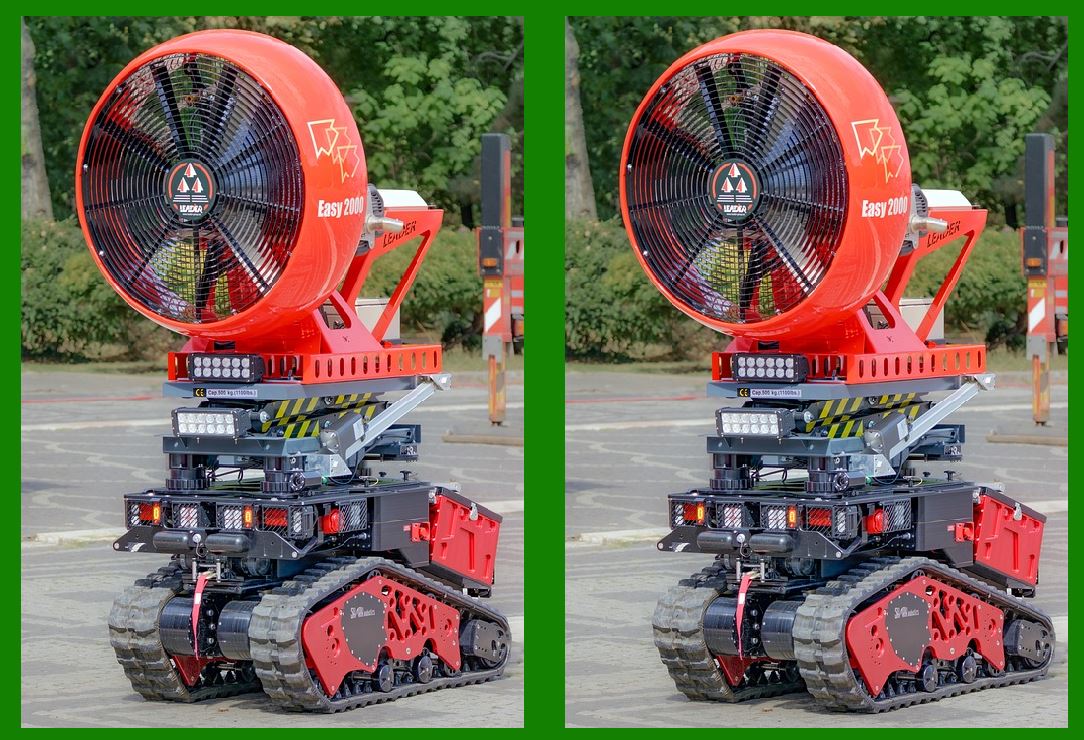
For power substations, ground-based robots and drones with specialized tools can be deployed to inspect transformers, circuit breakers, and other critical equipment. Robots can be used to detect early signs of malfunction, corrosion, or wear and tear that could compromise the reliability of the power grid. |
|
3. Bridge Inspections and Maintenance |
Example: Highway and Railway Bridges |
Bridges, especially those that are old or in high-traffic areas, require regular inspections to detect cracks, corrosion, and structural weaknesses. Traditional inspections often involve scaffolding, cranes, and manual assessments, which are time-consuming, costly, and potentially dangerous. |
Practical Use: Maintenance robots, including drones and ground-based vehicles, are increasingly used for bridge inspections. Drones equipped with high-resolution cameras and ultrasonic sensors can fly over or underneath bridges to capture images of structural elements like beams, cables, and supports. They can also use infrared thermography to detect heat anomalies in concrete, which can indicate internal cracks or other structural issues. In cases where more detailed inspection is required, robotic crawlers may be used to access hard-to-reach areas of the bridge or even perform minor repairs, such as applying coatings or sealing small cracks. |
Some advanced robots are designed to crawl along the underside of a bridge or climb vertical surfaces to access locations that would be difficult for human workers to reach, such as high arches or narrow spaces between components. |

|
4. Inspection and Cleaning of Wind Turbines |
Example: Wind Energy Industry |
Wind turbines, especially those located in offshore wind farms, require regular inspections and maintenance to ensure optimal performance. These turbines are located at great heights, often in harsh environmental conditions, making inspections risky and difficult. |
Practical Use: Maintenance drones equipped with high-definition cameras, thermal sensors, and inspection tools are used to assess the condition of turbine blades, towers, and other components. These drones can fly around and even land on the blades to check for cracks, wear, or ice buildup. Thermal sensors are used to detect overheating or other signs of malfunction in the turbine's electrical components. |
In some cases, robots are designed to climb the towers themselves, reaching the nacelle (the housing that contains the generator) to perform repairs or routine maintenance, such as cleaning sensors, checking for rust, or lubricating moving parts. Robots can also assist in performing minor repairs, such as replacing or fixing lights and sensors on the blades or turbine tower. |

|
5. Building and Facility Inspections |
Example: Industrial Plants and Commercial Buildings |
Industrial plants, commercial buildings, and large facilities require regular inspection to ensure safety and compliance with building codes. Inspecting elements like ventilation systems, cooling towers, and fire suppression systems can be challenging due to their size or the presence of hazardous materials. |
Practical Use: Drones and ground-based robots are used to inspect ventilation systems, HVAC units, and other hard-to-reach areas inside buildings or industrial plants. For example, Flyability's Elios drone can be used to inspect confined spaces such as air ducts, ventilation shafts, and tanks, providing high-resolution imagery and real-time data about their condition. These drones can also be used to inspect the roofs of large buildings for damage or wear caused by storms, pollutants, or other environmental factors. |
Maintenance robots equipped with specialized tools can also be used to clean and maintain equipment, such as cleaning filters in air conditioning units or removing buildup from machinery. This helps to prevent operational inefficiencies and extend the life of critical systems. |

|
6. Nuclear Power Plant Inspections |
Example: Nuclear Industry |
Nuclear power plants are highly regulated and require frequent inspections to ensure the safety of both the workers and the environment. These plants contain areas with high radiation levels, toxic gases, and other hazardous conditions, making traditional human inspections dangerous. |
Practical Use: Robots and drones are increasingly used to perform inspections inside nuclear reactors and other hazardous areas. Robots with radiation sensors and cameras can move through areas of high radiation to assess structural integrity or detect leaks of radioactive materials. For example, small robotic crawlers can be deployed inside cooling systems or pipes to check for corrosion or blockages. Drones can fly inside reactors to monitor the condition of the containment walls and other key infrastructure, providing real-time video feeds and data without exposing human workers to radiation. |
Additionally, maintenance robots can be used to inspect the external components of nuclear plants, such as steam generators, turbines, and storage tanks, where they can detect signs of wear, cracks, or leaks. In many cases, robots can perform tasks autonomously, reducing the risk of human error and exposure to dangerous environments. |

|
7. Mining Equipment Inspection and Maintenance |
Example: Underground and Open-Pit Mining |
In both underground and open-pit mining operations, maintenance robots are used to inspect mining equipment, tunnels, and other critical infrastructure. These areas can be dangerous due to the presence of toxic gases, falling debris, or unstable ground conditions. |
Practical Use: Ground-based robots, such as autonomous mobile robots (AMRs) or crawler robots, are used to inspect mining equipment such as drills, conveyor belts, and pumps. These robots can access areas that are difficult for human workers to reach, including tunnels or shafts, and use sensors and cameras to check for wear, misalignment, or equipment malfunctions. In some cases, robots are also used to perform minor repairs, such as clearing blockages or lubricating moving parts. |
In open-pit mining, drones are used to survey the terrain and assess the health of mining equipment located at high altitudes or on steep slopes. These drones can capture real-time data to help operators plan maintenance and repairs more effectively. |
|
8. Inspection of Telecommunication Towers |
Example: Mobile Network and Communication Infrastructure |
Telecommunication towers, which support antennas for mobile phones, internet, and other communication systems, require regular inspections to ensure they are free from damage, corrosion, or wear that could affect signal quality or safety. |
Practical Use: Drones equipped with cameras and thermal sensors are used to inspect telecommunication towers. These drones can fly up to the towers, inspect structural components like steel cables, antennas, and the tower itself for corrosion, wear, or mechanical issues. They can also inspect the power equipment that powers the antenna system. By using drones instead of human workers, the cost of sending teams to these often remote locations is significantly reduced, and safety risks are minimized. |
In addition to visual inspections, drones can be equipped with thermal imaging to detect overheating components or electrical issues that could indicate equipment failure. |

|
9. Inspection and Cleaning of Solar Panels |
Example: Solar Power Farms |
Solar power farms are becoming an increasingly common source of renewable energy. However, solar panels need regular cleaning and maintenance to ensure their efficiency and prevent dirt, debris, or weather conditions from affecting their performance. |
Practical Use: Drones and robotic systems are used to clean and inspect solar panels, especially in large solar farms. Drones can fly over solar panels and capture detailed images of the panels' surfaces to identify potential issues such as dirt buildup, cracks, or malfunctions. These robots can also use specialized brushes or cleaning solutions to remove dirt from the panels, improving their efficiency without human intervention. Drones equipped with thermal sensors can also detect hotspots that may indicate electrical problems, allowing maintenance teams to address issues before they lead to panel failure. |

|
Conclusion |
Maintenance robots are becoming indispensable tools for industries that require frequent inspections, maintenance, and repairs of critical infrastructure. By reducing the risks associated with human labor in hazardous environments, improving operational efficiency, and enhancing the accuracy of inspections, these robots are transforming the way infrastructure is maintained across various sectors, including oil and gas, energy, construction, aerospace, and telecommunications. As technology advances, these robots will continue to play a central role in ensuring the safety, reliability, and sustainability of modern infrastructure systems. |
 cs@easiersoft.com